Entity · Concept
Kapporet
A reference page linking a name, group, or concept to the materials that discuss it.
Gold object placed above the biblical Ark, associated with divine speech and the annual purification rite. Its description, ritual function, translations, and relationship to cherubim require distinct kinds of evidence.
Estimated reading time: 5 min Published Last reviewed:
Share article
Text
Introduction
The kapporet (HebrewHebrewA Northwest Semitic language of the Canaanite group, encompassing Iron Age epigraphy, Biblical, Rabbinic, medieval and Modern Hebrew; its scripts and pronunciations changed over time.Glossary · Click to read the explanation כַּפֹּרֶת, kappōret) is the gold object placed above the Ark of the CovenantArk of the CovenantPortable sacred chest in the Hebrew Bible, associated with the covenant tablets and divine presence. Descriptions and roles differ in Exodus, Deuteronomy, Samuel, and Kings. It is distinct from Noah’s vessel.Glossary · Click to read the explanation in the Torah’s sanctuary instructions. It is associated both with divine speech between the cherubimCherubimCherubim as Eden’s guardians, Ark and Temple figures, and beings in Ezekiel’s vision: a plural name, varying descriptions, and the limits of ancient visual comparisons.Glossary · Click to read the explanation and with the blood ritualRitualAn organised or distinguished practice meaningful to a community; it may leave traces, but its form alone does not reveal an associated doctrine.Glossary · Click to read the explanation of Leviticus 16. Calling it a “cover” describes its position; calling it a “mercy seat” already introduces an interpretation. Neither expression should collapse the chest, its gold covering, and the divine presence into a single object. [1][2]
What Exodus actually describes
Exodus 25:10–22 distinguishes an acacia-wood chest overlaid with gold from a kapporet made of pure gold. The latter measures two and a half cubits by one and a half, matching the chest’s length and width. Its thickness is not specified. Two hammered-gold cherubim occupy its ends; their faces turn towards one another and towards the kapporet, while their wings spread above it. This provides relationships and dimensions, not a complete drawing of the creatures’ bodies. Exodus 37:6–9 repeats the fabrication instructions as an account of their execution. [1]
The text places the testimony inside the chest and the kapporet above it; 1 Kings 8:9 identifies the Ark’s contents as two stone tablets. [1][5] It does not expressly call the kapporet a chair or describe a seated statue upon it. Its culminating statement is instead a promise of encounter and speech:
The remainder of the verse specifies the space between the two cherubim. Thus the most secure reading concerns the location from which God addresses MosesMosesCentral figure in Exodus, Torah traditions and the Qur’an; childhood accounts differ in detail.Glossary · Click to read the explanation. A throne interpretation must be argued from the wider imagery; it is not simply the translation of this sentence. [1]
Cover, purification, and the translation problem
The difficulty is not whether the object stands above the Ark, which Exodus states, but how that physical relationship bears on its name. Christophe Nihan favours a derivation connected with purification rather than a Hebrew verb meaning “cover”; Rachel Adelman also surveys covering and expiation interpretations. The ritual context is stronger evidence for function than an etymology alone. [3][4]
“Cover” therefore remains a useful physical description without settling whether the object was conceived as an ordinary removable lid. “Atonement cover” foregrounds its ritual role. In Exodus 25:17 the Greek has ἱλαστήριον ἐπίθεμα, “expiatory cover,” while the Latin has propitiatorium. French propitiatoire belongs to this terminological tradition. The familiar English “mercy seat” must not be read backwards as proof that the Hebrew instructions describe a chair. Nor does an expiatory translation by itself tell us precisely how an ancient worshipper understood the rite. [1][9]
What happens in Leviticus 16
Leviticus 16:2 warns Aaron not to enter behind the curtain whenever he chooses: divine appearance above the kapporet makes approach dangerous. Verses 12–13 prescribe coals and incense, whose cloud covers the kapporet. The cloud of appearance in verse 2 and the explicitly produced incense cloud in verse 13 are related elements of the passage, but should not be silently treated as identical descriptions. [2]
In verses 14–15 Aaron brings the bull’s blood, sprinkles it on the kapporet towards the east and seven times before it, then performs the corresponding rite with the people’s goat. Verse 16 explains the ritual’s purpose:
Here “purge” interprets kipper through its stated object and cause: the sanctuary and the people’s impurities. The chapter also speaks of expiation for persons, but this particular action is not described merely as changing an individual’s feelings or washing the chest. The ritual proceeds through the sanctuary, tent, and altar; the living goat that bears away transgressions is a distinct part of the sequence. Verses 29–34 establish an annual observance on the tenth day of the seventh month. “Once a year” names that occasion, not one single physical entry during its complex proceedings. [2]
Cherubim and comparative images
The large cherubim of Solomon’s inner room are a different description: 1 Kings 6:23–28 makes them ten cubits high and of olive wood overlaid with gold. They are not the two hammered-gold figures at the ends of the kapporet. Similar imagery does not license combining the two passages into one archaeological reconstruction. [5]
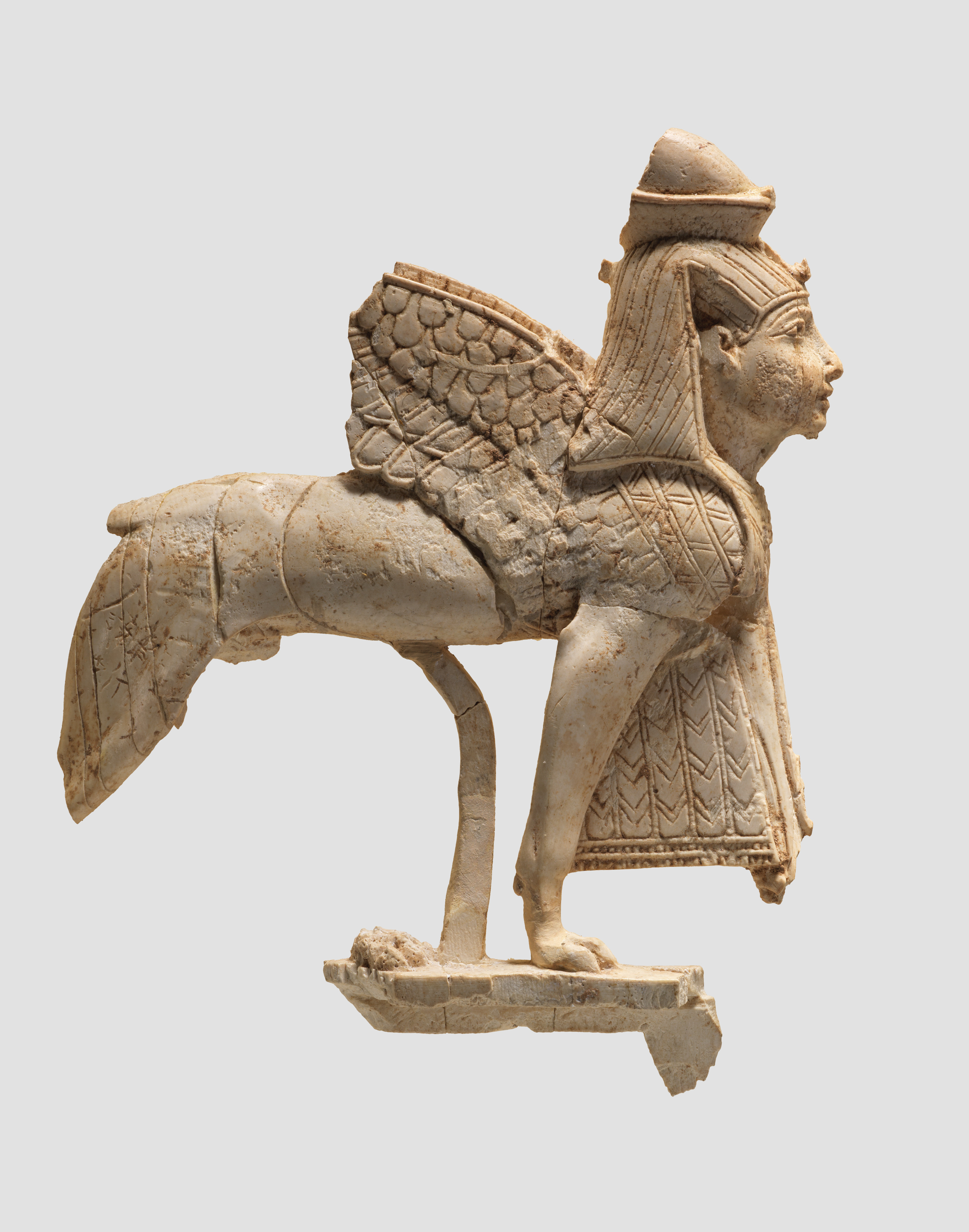
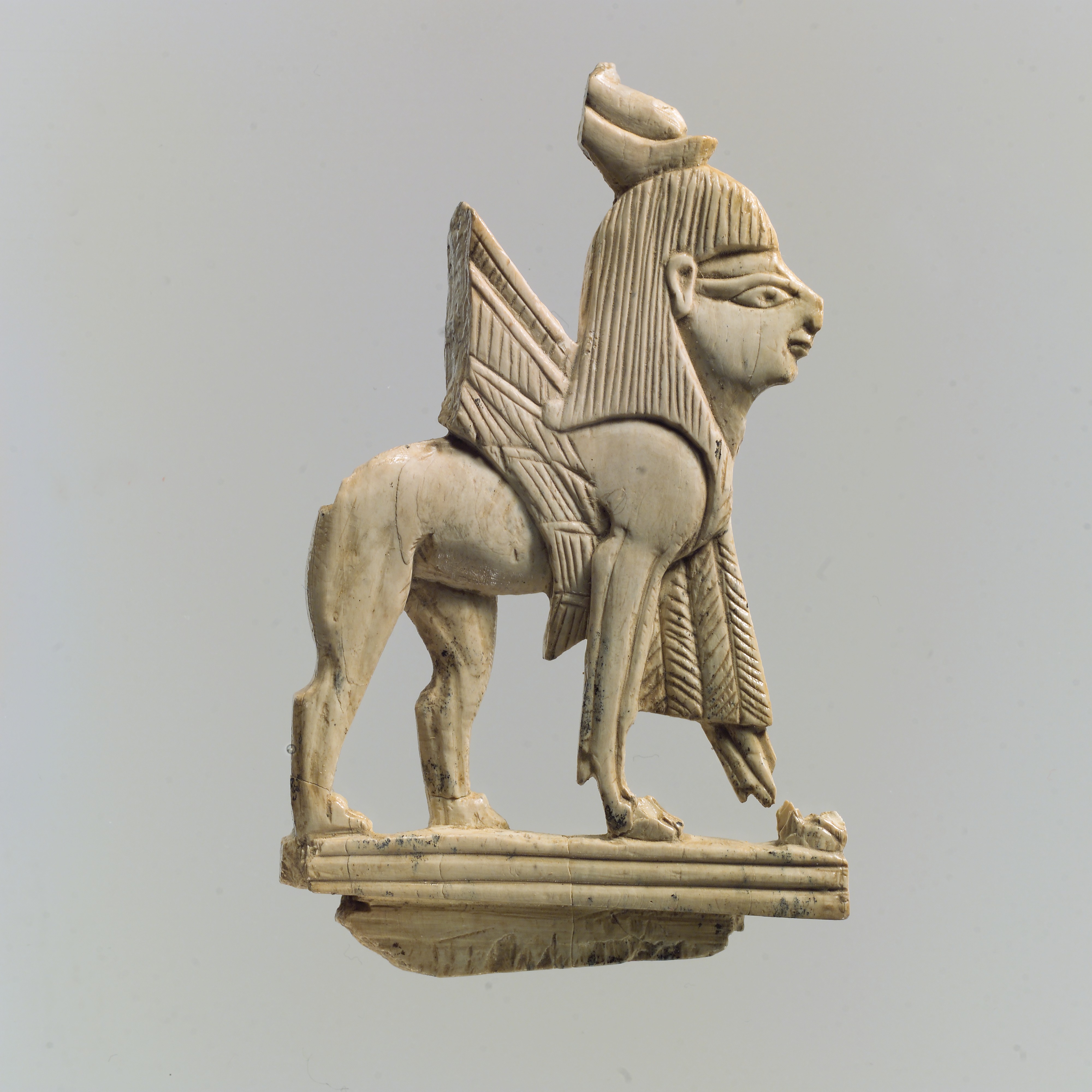
The cover photograph shows an ivory winged sphinx from Nimrud, dated by the Metropolitan Museum to approximately the ninth–eighth centuries BCE, object 61.197.3. It establishes that winged composite beings belonged to the region’s visual repertoire. It does not identify the body of a biblical cherub, reconstruct the kapporet, or depict an object from JerusalemJerusalemJerusalem is a city of religious importance in Judaism, Christianity and IslamGlossary · Click to read the explanation. [6]
Narrative setting is not a manufacturing date
Exodus and Leviticus locate these instructions in the wilderness world of Moses and Aaron. That narrative setting differs from the composition of the priestly texts: their dating before or after the sixth-century-BCE Babylonian exileBabylonian exileJudean deportations to Babylonia and the kingdom’s collapse in the early sixth century BCE; several phases, not everyone removed or returned at once.Glossary · Click to read the explanation remains debated. A literary sequence is not a securely dated history of the object. [7]
The quotations above follow the Masoretic wordingMasoretic TextThe Hebrew Bible’s transmission tradition combining its consonantal text, transmitted vocalization and accentuation, and Masorah notes. The consonantal text has ancient roots; surviving codices that bring these layers together in their Masoretic form are medieval.Glossary · Click to read the explanation in a modern electronic edition, not a surviving wilderness manuscript. Medieval codices belong to a much later stage of transmission; the Aleppo Codex, for example, dates to about 930 CE and has lost most of its Torah portion. That date concerns a textual witness, not the origin of the practice. Read at the level its evidence permits, the kapporet is a precisely situated ritual object in literary descriptions, with a less securely recoverable material history. [1][8]
References and notes (9)
- Exodus 25:10–22; 37:6–9. Hebrew text, Sefaria, Miqra according to the Masorah. Both passages read in full. Cover and cherubim: 25:17–21; encounter and speech: 25:22. The quotation is the opening clause, retaining vowel points but omitting cantillation; no restored words. Translations are editorial. Return to the text ↑
- Leviticus 16. Hebrew text, Sefaria, Miqra according to the Masorah. Entire chapter read. Cloud and entry: 2, 12–13; blood and purification: 14–20; living goat: 21–22; annual occasion: 29–34. Quotation opens 16:16, without restoration; “purge” is contextual. The text does not prescribe seven sprinklings on the cover itself. Return to the text ↑
- Christophe Nihan, From Priestly Torah to Pentateuch (Mohr Siebeck, 2007), pp. 44–47. These publisher-preview pages read; not the whole book. Etymology and placement: 45–46. Return to the text ↑
- Rachel Adelman, “Atoning for the Golden Calf with the Kapporet,” TheTorah.com (2019). Opening, translation, and ritual sections read to the beginning of the boundary-line discussion; used here for the name and its translations, not a historical reconstruction. Return to the text ↑
- 1 Kings 6:23–28; 8:6–9. Hebrew text, Sefaria. 1 Kings 6 and 8:1–13 read. Large gold-overlaid olive-wood cherubim belong to the room; the Ark is placed beneath them. Return to the text ↑
- The Metropolitan Museum of Art, Openwork furniture plaque with winged sphinx, 61.197.3. Object record read and photograph checked against museum source; Nimrud, ca. ninth–eighth centuries BCE. Comparative evidence, not Jerusalem cherubim. Return to the text ↑
- Maria J. Metzler, The Ark of the Covenant and Divine Rage in the Hebrew Bible (Harvard University dissertation, 2016), pp. 52–53. Pages read on disputed dating and relationships of priestly and Deuteronomistic texts; dissertation not read in full. Return to the text ↑
- Yad Ben-Zvi, “The Aleppo Codex.” Full page read: ca. 930 CE and loss of most of the Torah. A transmission landmark, not a claim that the quoted verses survive in this codex. Return to the text ↑
- Exodus 25:17, Septuagint and Vulgate, Deutsche Bibelgesellschaft. Object terms checked in verse 17: Greek ἱλαστήριον ἐπίθεμα and Latin propitiatorium. Short translation is editorial. Return to the text ↑
Suggest a correction · Suggest a source for this record
Cite this record
IL Archive, «Kapporet», https://ilarchive.com/en/entities/kapporet
Continue reading