Study
Jericho’s Plastered Skulls: Faces of the Dead and the Limits of Ancestor Interpretation
An extended study of a topic, with evidence and references.
- Timeline
- From 8200 BCE to 6000 BCE
- Region
- The Levant / Jericho
From bone and plaster to imaging and facial reconstruction: evidence for mortuary treatment and hypotheses about memory, kinship and worship.
Share article
Text
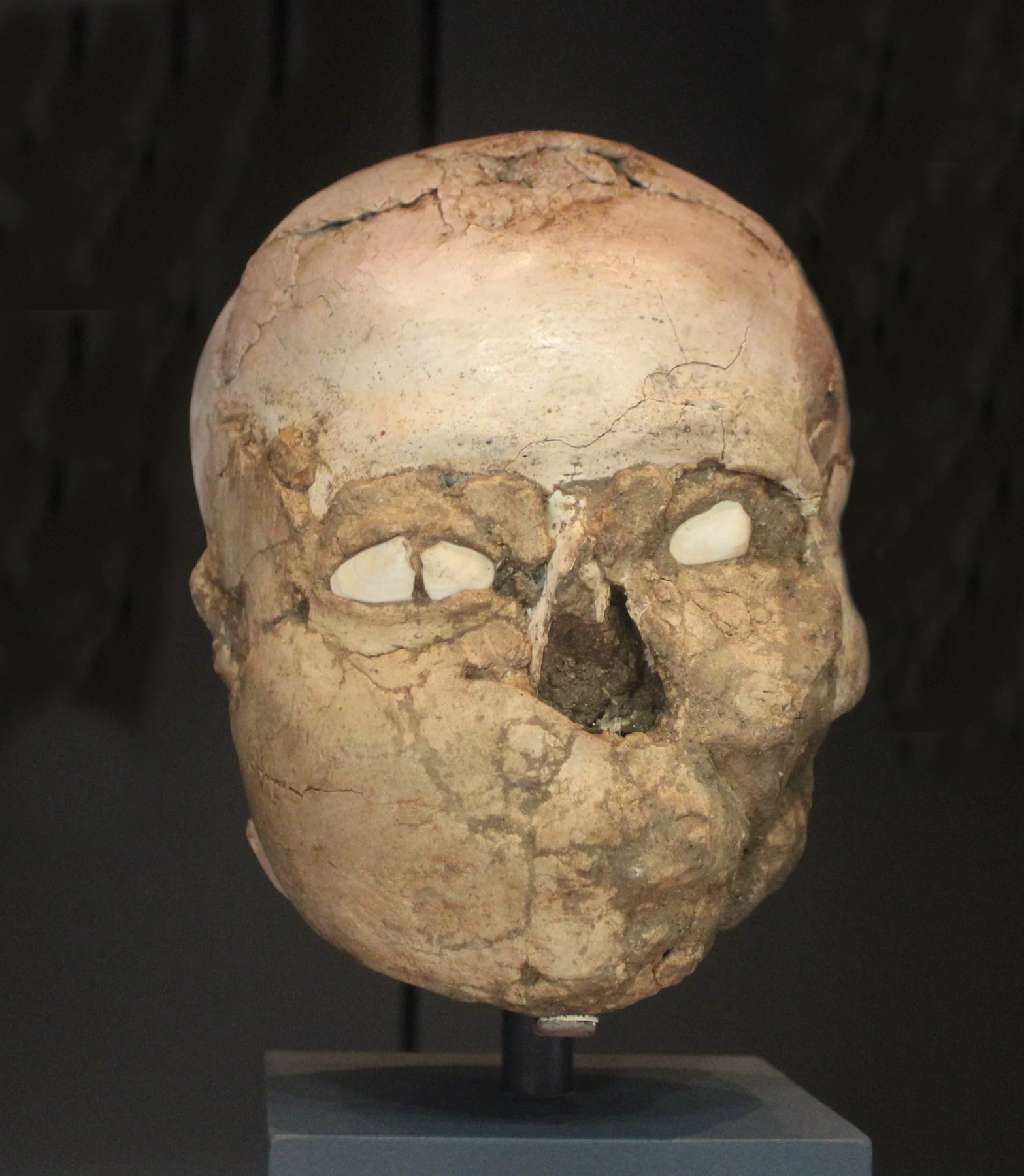
In some Neolithic mortuary practices, a head did not remain merely part of a buried body. A skull was retrieved and a face modeled over it with plaster; shells could occupy the eyes. Calling it the face of an ancestor is tempting, but that phrase contains interpretation as well as description. We must distinguish bone, treatment and the purpose attributed to the treatment.
Jericho before later narratives
JerichoJericho / Tell es-SultanArchaeological mound near present-day Jericho in Palestine’s Jordan Valley, preserving early Neolithic settlement and Bronze Age layers.Glossary · Click to read the explanation’s plastered skullsPlastered skullsHuman skulls with material added to model a face, sometimes with shell eyes; postmortem treatment distinct from modification during life.Glossary · Click to read the explanation belong to Pre-Pottery NeolithicPre-Pottery NeolithicA regional term for early Neolithic phases in Southwest Asia before the local spread of pottery; it does not imply an absence of settlement, architecture or cereal processing.Glossary · Click to read the explanation traditions, particularly phase B. They long precede the kingdoms and biblical narratives associated with the city. Later peoples and doctrines cannot simply explain remains thousands of years older.[1]
A site holds many layers that need not share a language or religious institution. Continuity of a place name in our memory does not establish continuity of inhabitants’ identities or their understanding of death.
A modeled face on human bone
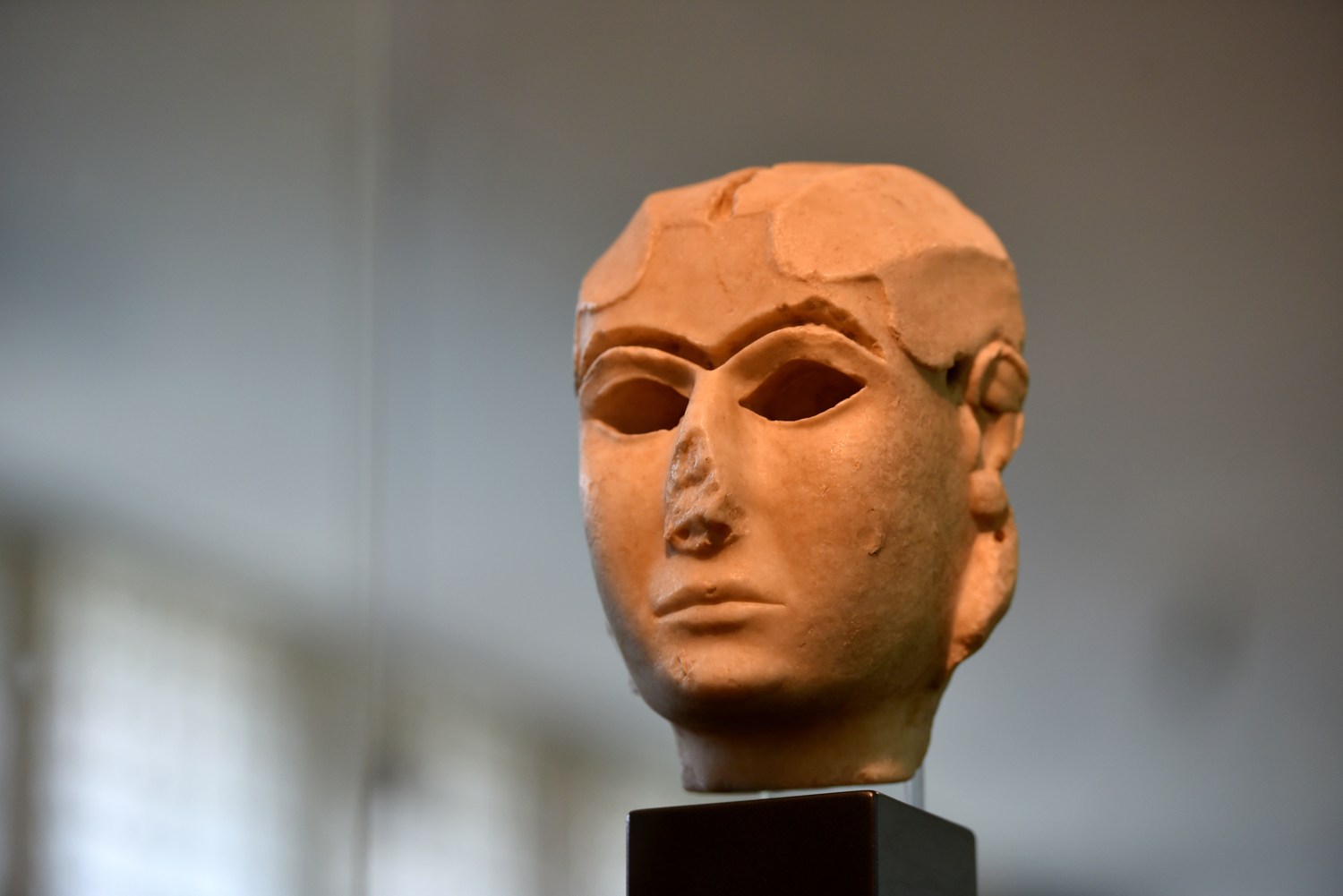
A plastered skullPlastered skullsHuman skulls with material added to model a face, sometimes with shell eyes; postmortem treatment distinct from modification during life.Glossary · Click to read the explanation is not a head sculpted entirely from raw material. Human bone is part of the object; added material forms the face, sometimes with shell eyes. Bodily remains become part of a manufactured image.[1]
The image alone does not establish resemblance to the living individual. It may preserve features or conform to a recognized way of making a new face. Calling it an early photograph, or treating every contour as a precise anatomical measurement, goes beyond the evidence.
Treatment in life and after death
A radiographic study identified childhood modification in a Jericho cranium. This is different from applying plaster after death. Both processes can occur in one individual, without proving that they served one identical purpose.[2]
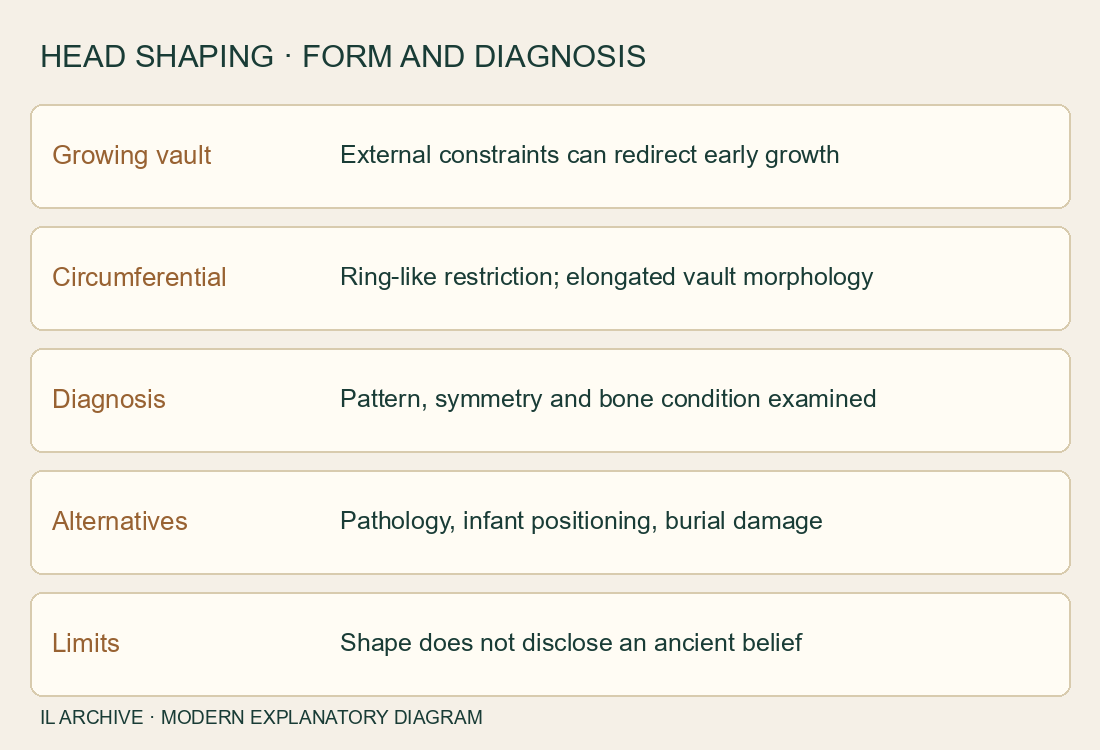
An unusual shape cannot always be explained by plastering, nor does every plastered skull imply childhood head modification. Bone and added material require separate analysis. A body’s history begins before death, not merely at burial.
What imaging reveals
Computed tomography examines features hidden beneath plaster without removing the face. It opens questions about cranial structure, condition and internal materials and allows interpretations based only on surfaces to be reconsidered.[3]
It cannot photograph a maker’s intention. Imaging may revise biological estimates or treatment details; it cannot extract a ritualRitualAn organised or distinguished practice meaningful to a community; it may leave traces, but its form alone does not reveal an associated doctrine.Glossary · Click to read the explanation’s name or a deity’s identity from bone. Technical precision does not remove uncertainty about motives.
Ancestors: plausible, but not everything
Keeping a deceased person’s head and giving it a face is compatible with relationships among living people, dead people and collective memory. Ancestor interpretations therefore deserve consideration. Yet ancestor need not mean biological grandfather, and remembering does not automatically mean worshipping.[2][3]
Faces might have renewed belonging, standing or a dead person’s presence. No maker’s text supplies the individuals’ names, relationships and ceremonies. Ancestors remain an interpretation with supporting observations, rather than a complete recovered creed.
Ancient face and modern reconstruction
A modern museum project reconstructed a Jericho individual’s face using imaging and modeling. That result, based on anatomical knowledge and assumptions, must be distinguished from the face made by the ancient community.[4]
Both make an absent person visible, but their evidence and aims differ. A discrepancy does not prove that an ancient craftsperson failed: exact anatomical likeness may not have been the principal purpose.
Faces do not supply divine names
These skulls belong within the history of mortuary treatment, not a securely traced origin story for a later named deity. Plaster, shells and cranial shape identify neither one god nor a universal ritual for every nearby village.
The stronger conclusion is concrete. People chose skilled treatment of some human remains and made faces that cannot be reduced to disposal of a corpse. Between that action and its meaning, archaeology meets the history of memory: we can trace what people made, while their explanatory words remain absent.
Connected readings
Living above the dead · House and ancestors at Çatalhöyük · Why shape children’s skulls?
References and notes
- British Museum catalog of the Jericho plastered skull, a witness to the Pre-Pottery Neolithic B tradition. British Museum 1954,0215.1 Return to the text ↑
- Published abstract of the radiographic study identifying childhood modification and connecting mortuary treatment with life practices; the paywalled full article was not consulted. Fletcher, Pearson & Ambers, 2008; CAJ 18(3), 309–325; abstract consulted Return to the text ↑
- Museum account of internal imaging and interpretive limits; technique distinguished from ancestor interpretation. Alexandra Fletcher, British Museum, 2014 Return to the text ↑
- Museum presentation of facial reconstruction using imaging and modeling; modern reconstruction differs from the ancient plaster face. British Museum, 2017; face reconstruction Return to the text ↑
Suggest a correction · Suggest a source for this record
Cite this record
IL Archive, «Jericho’s Plastered Skulls: Faces of the Dead and the Limits of Ancestor Interpretation», Edition 1, https://ilarchive.com/en/studies/jericho-plastered-skulls
Continue reading