The Epic of Gilgamesh Chapter 3
The Guardian of the Forest
The beauty of the cedar woodland gives way to fear as the friends draw nearer to its guardian. What they do there leaves them with a question to answer to Enlil. The choice at the heart of the episode comes after the winds turn the encounter in their favour.
Watch the filmSourcesTurn the pages with the arrows, the arrow keys or a swipe.
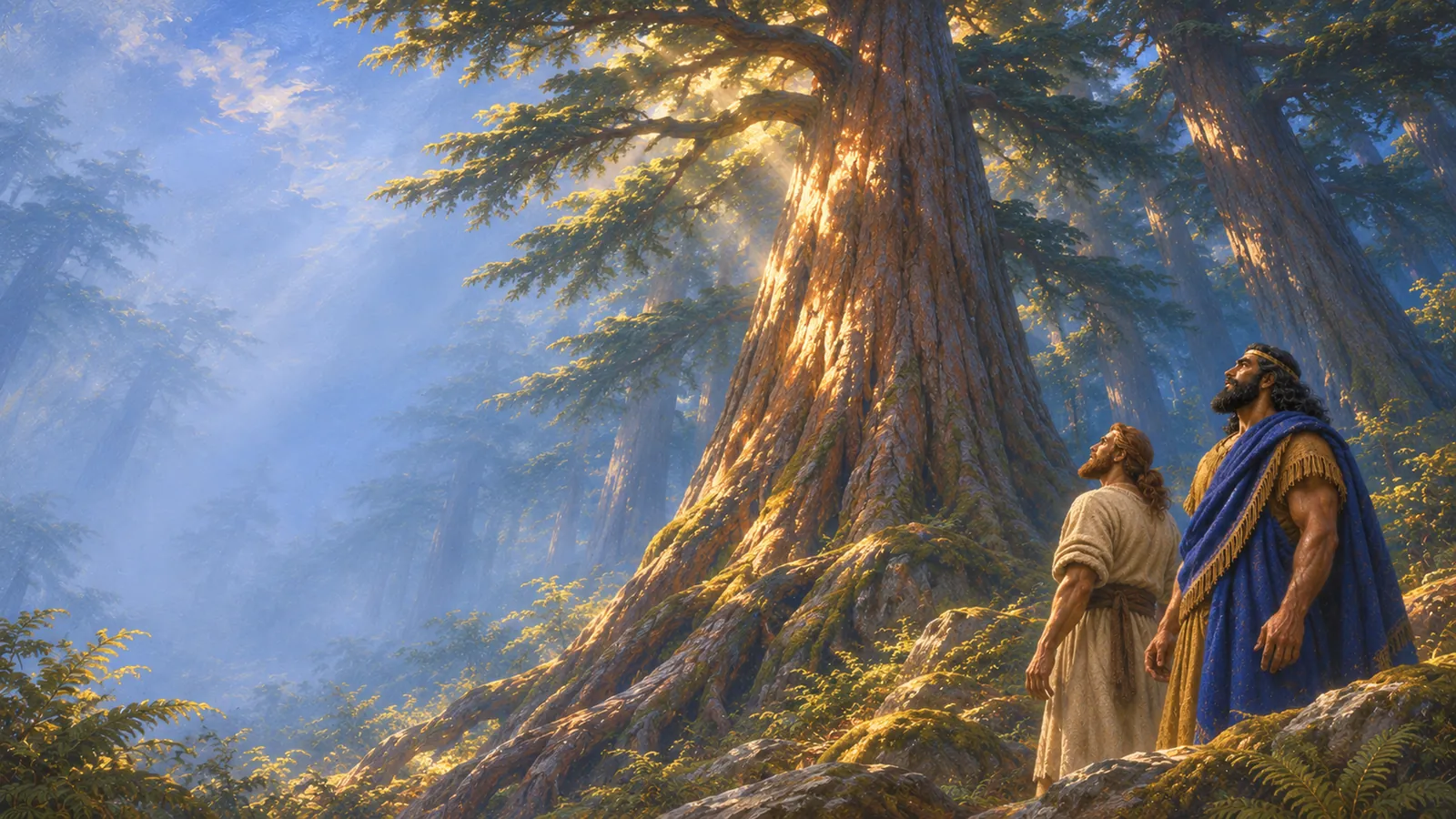
THE CEDARS
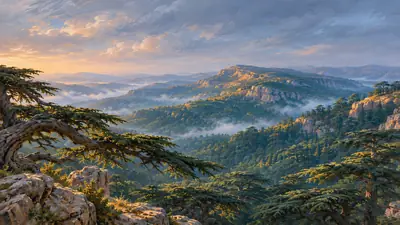
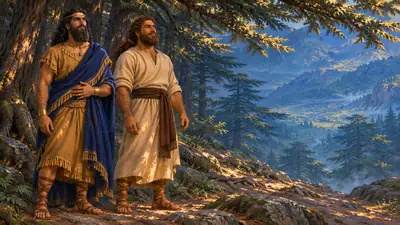
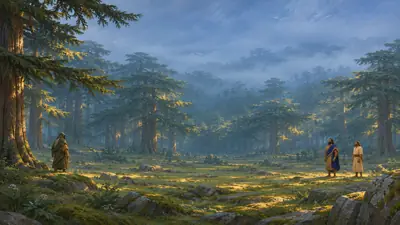
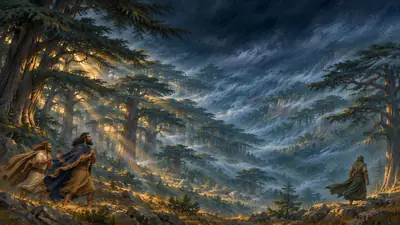
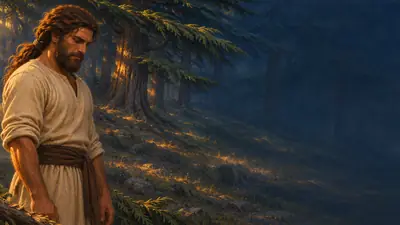
The two friends stood beneath trees taller than any roof in Uruk. They looked up along the trunks, then toward the way that led between them.

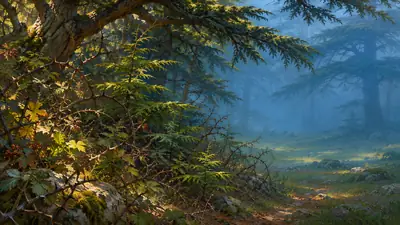
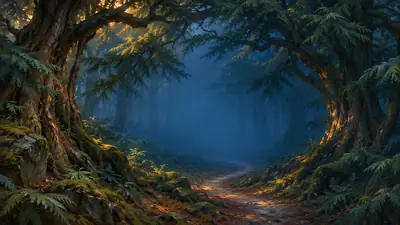
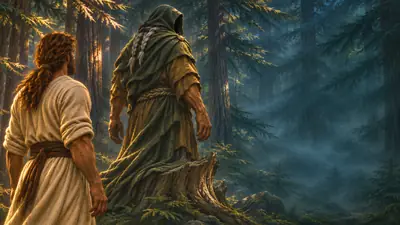
There was a way into that deep woodland. A track bore the signs of someone who came and went there, the guardian of the forest, Humbaba.
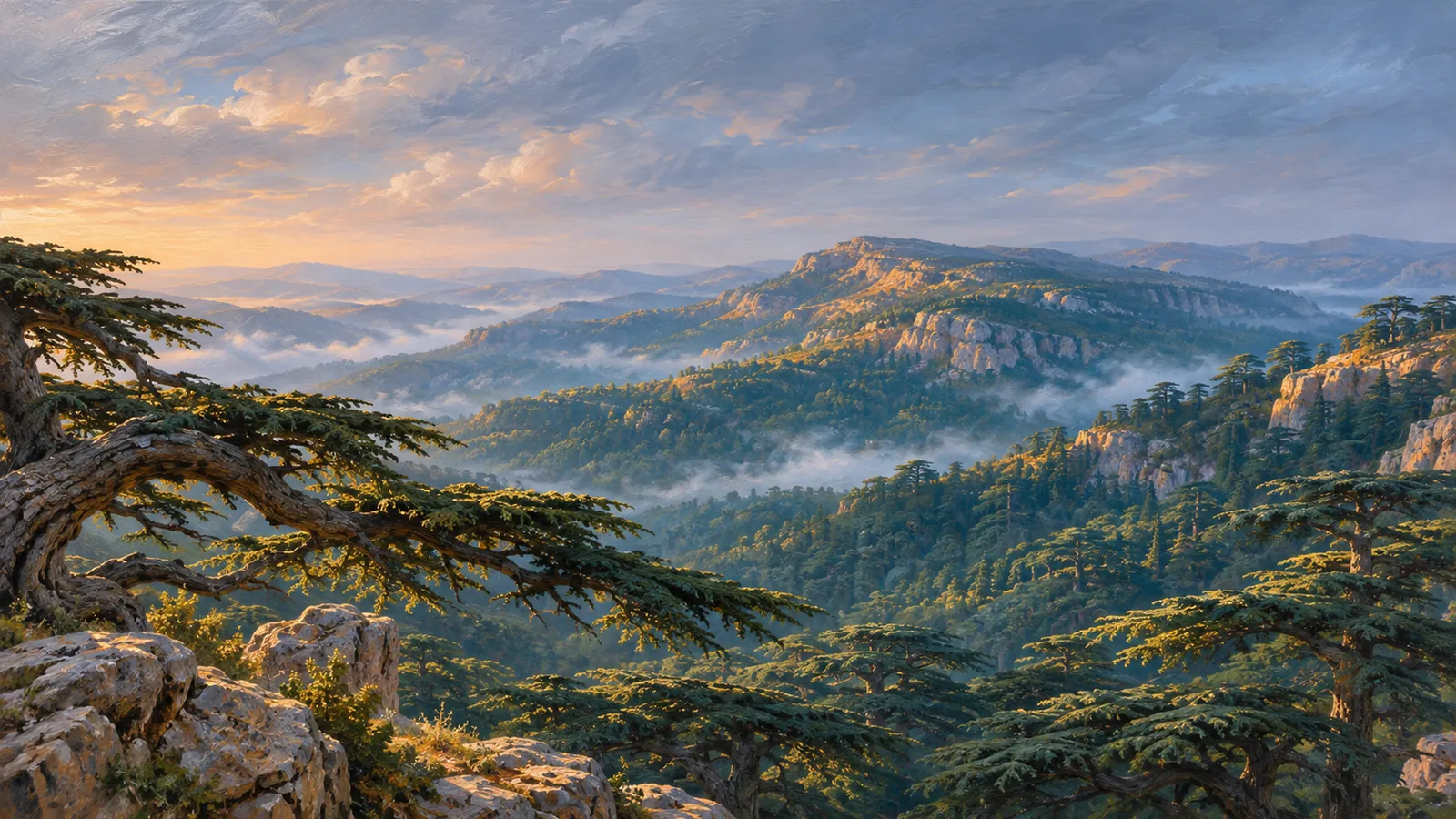
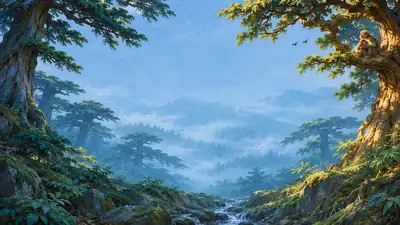
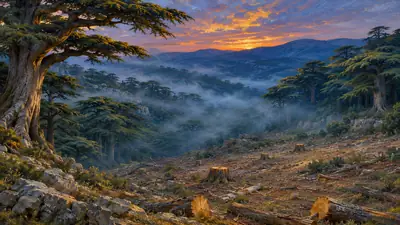
There before them lay the mountain of the cedars. In the old poem it is a dwelling of the gods, with deep shade and trees in abundance.
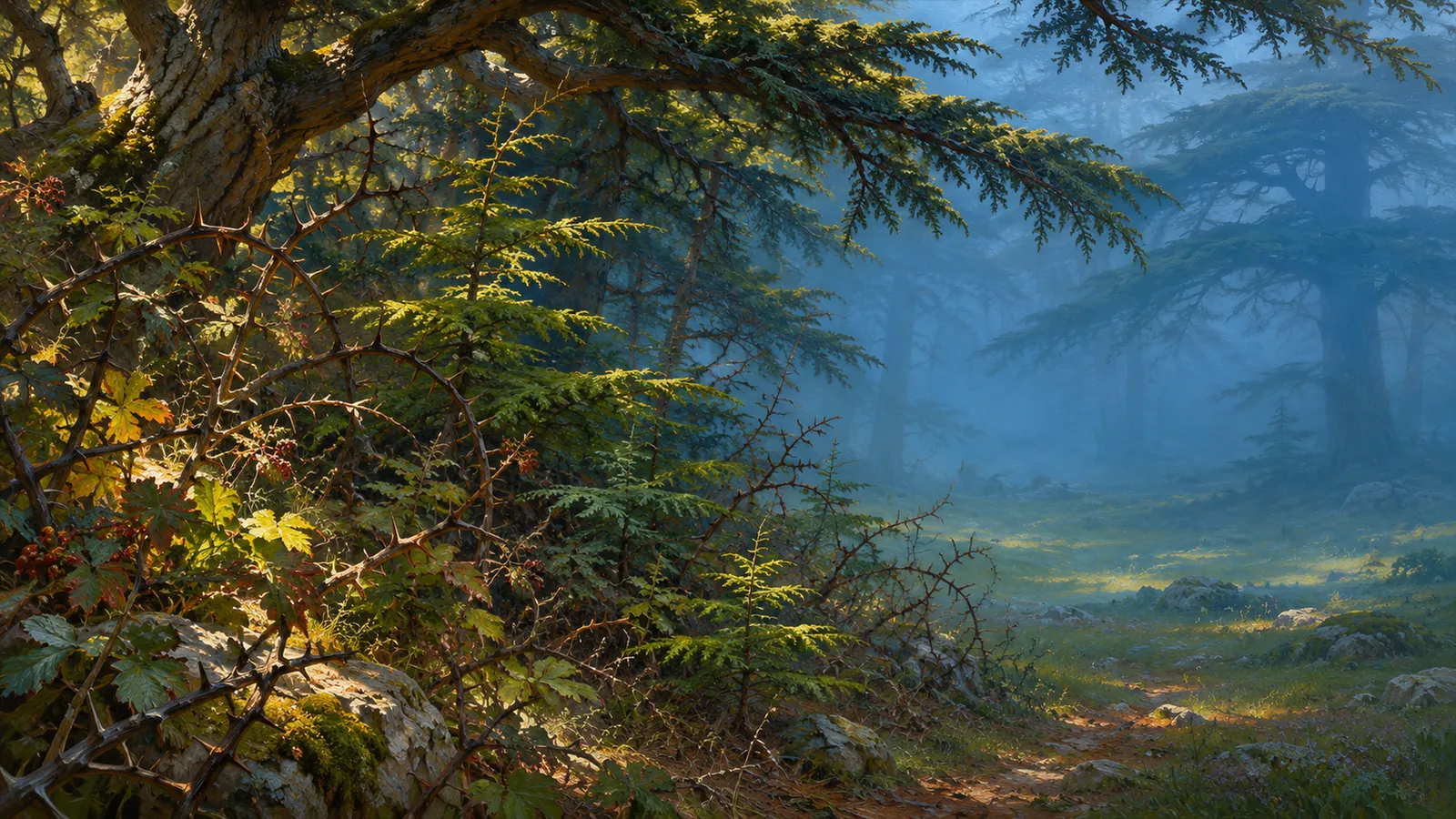
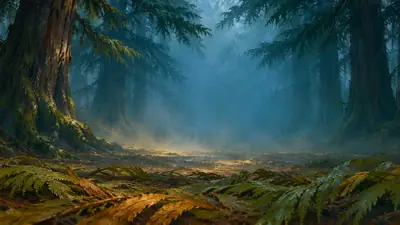
The woodland crowded close around the beaten trail. Away from that way in, young trees and thorny undergrowth tangled so deeply that a traveller could scarcely pass.
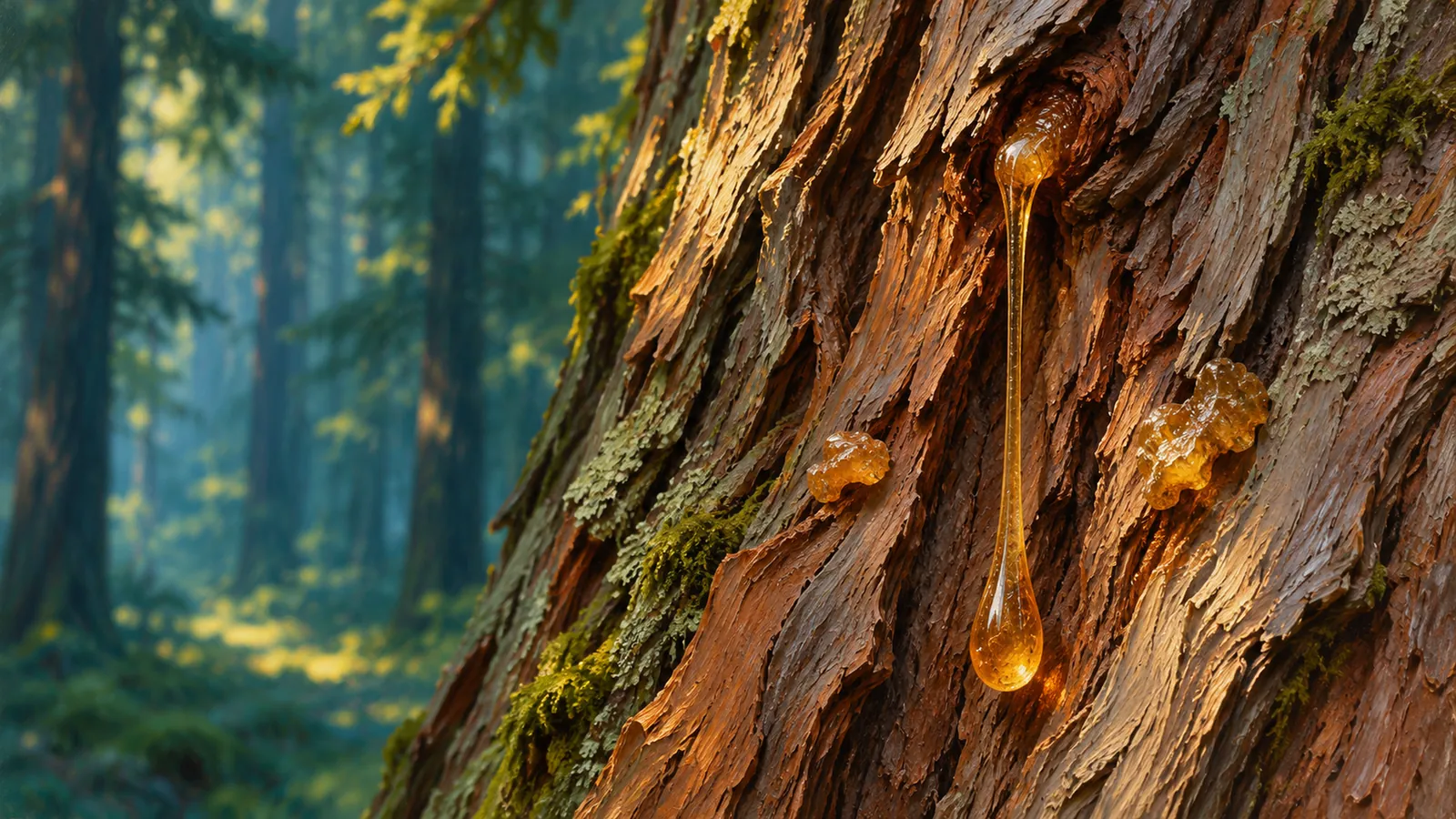
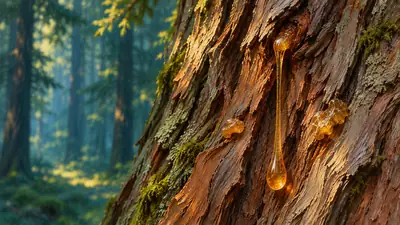
Heavy resin collected high on the cedars. Drops clung to the rough bark and came trickling down, until their scent seemed to fill the woodland air.
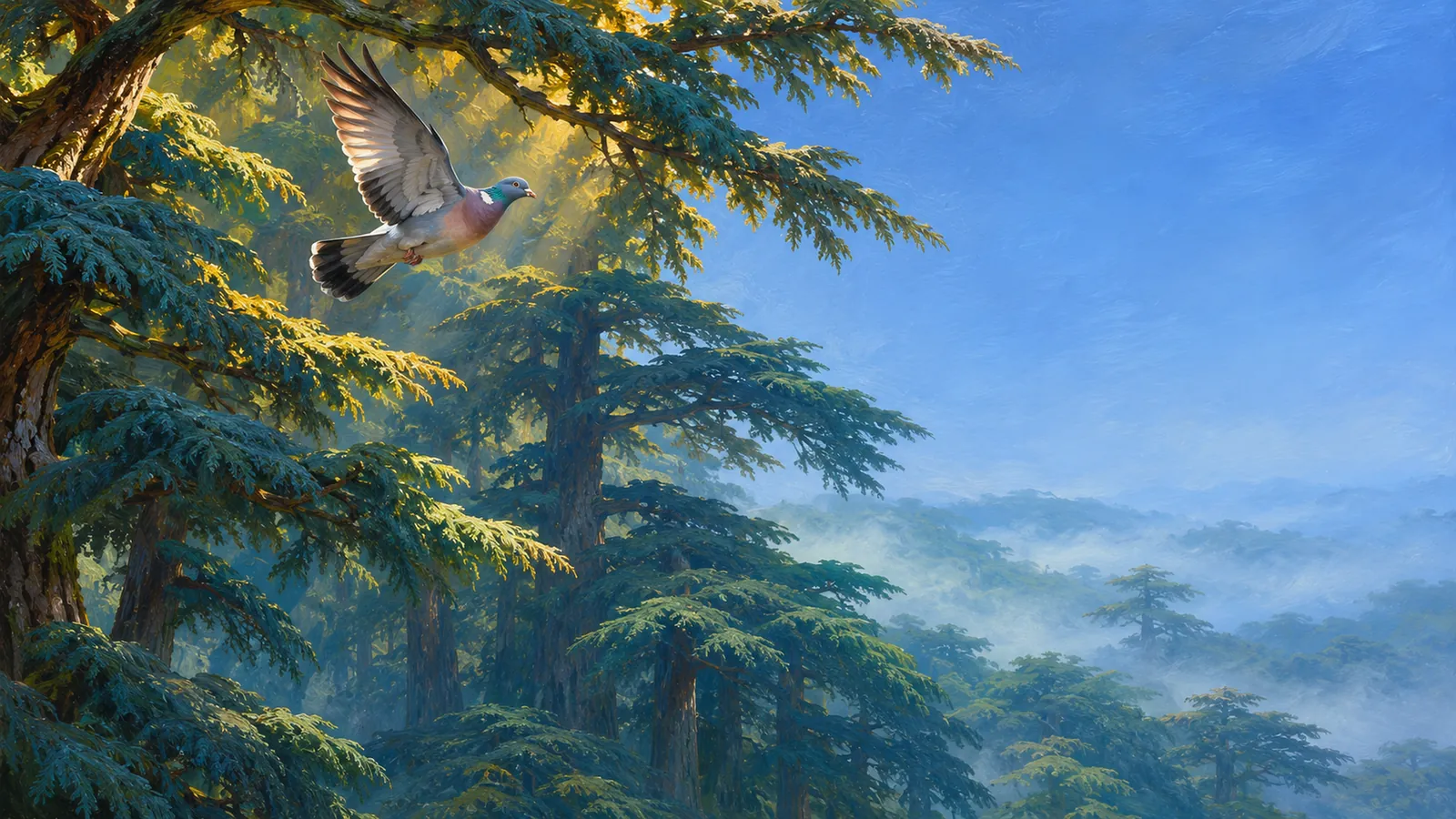
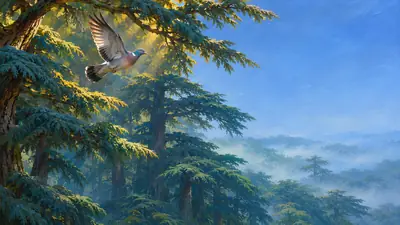
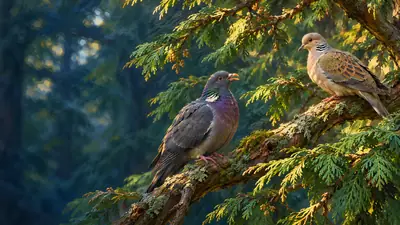
A bird began to call among the trees, and other sounds came back from the branches. The forest had its own voices, long before the travellers spoke.
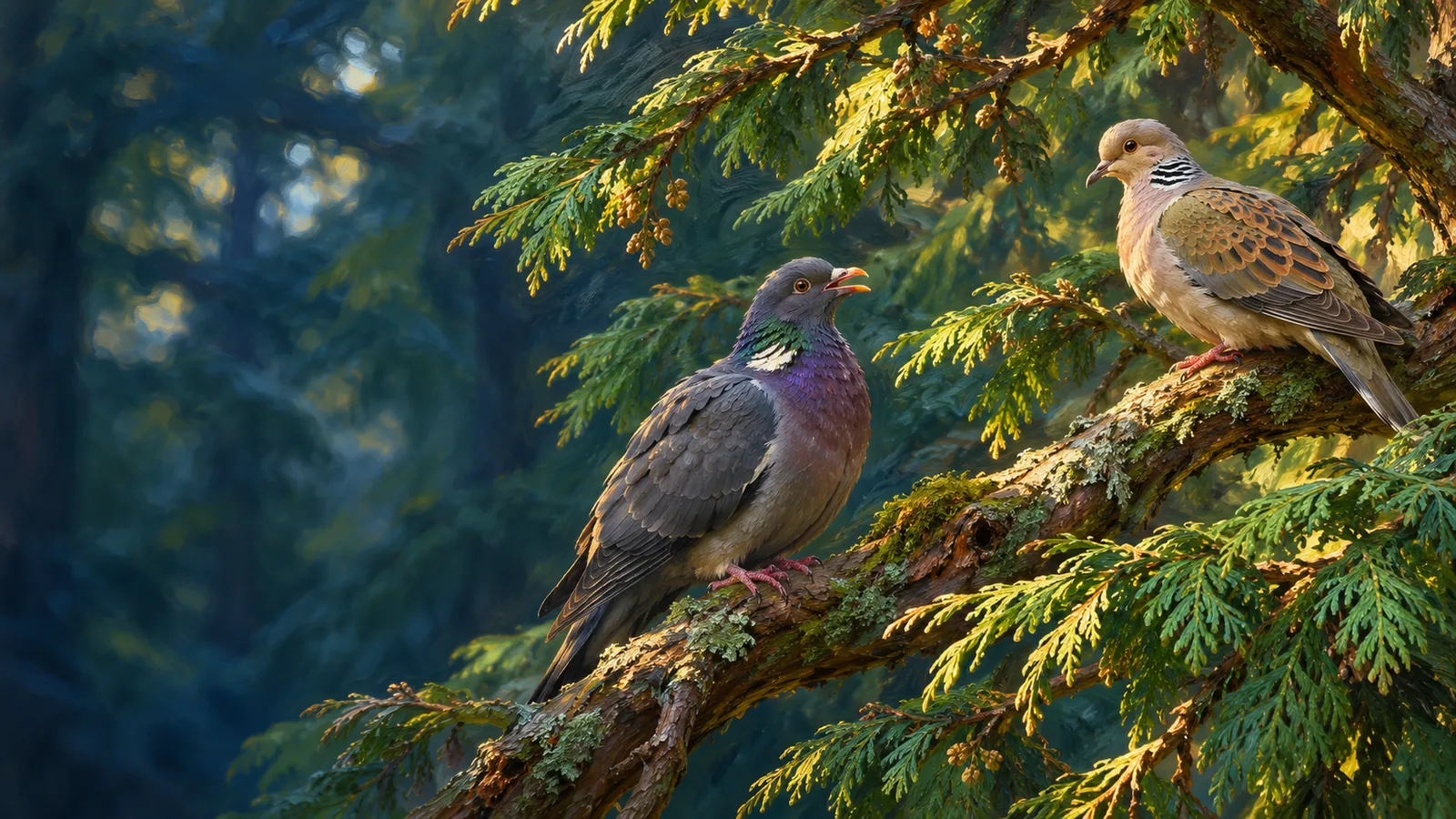
The calls came from different heights among the branches. The old poem listens long enough to pick out the wood pigeon and the answering call of a dove.
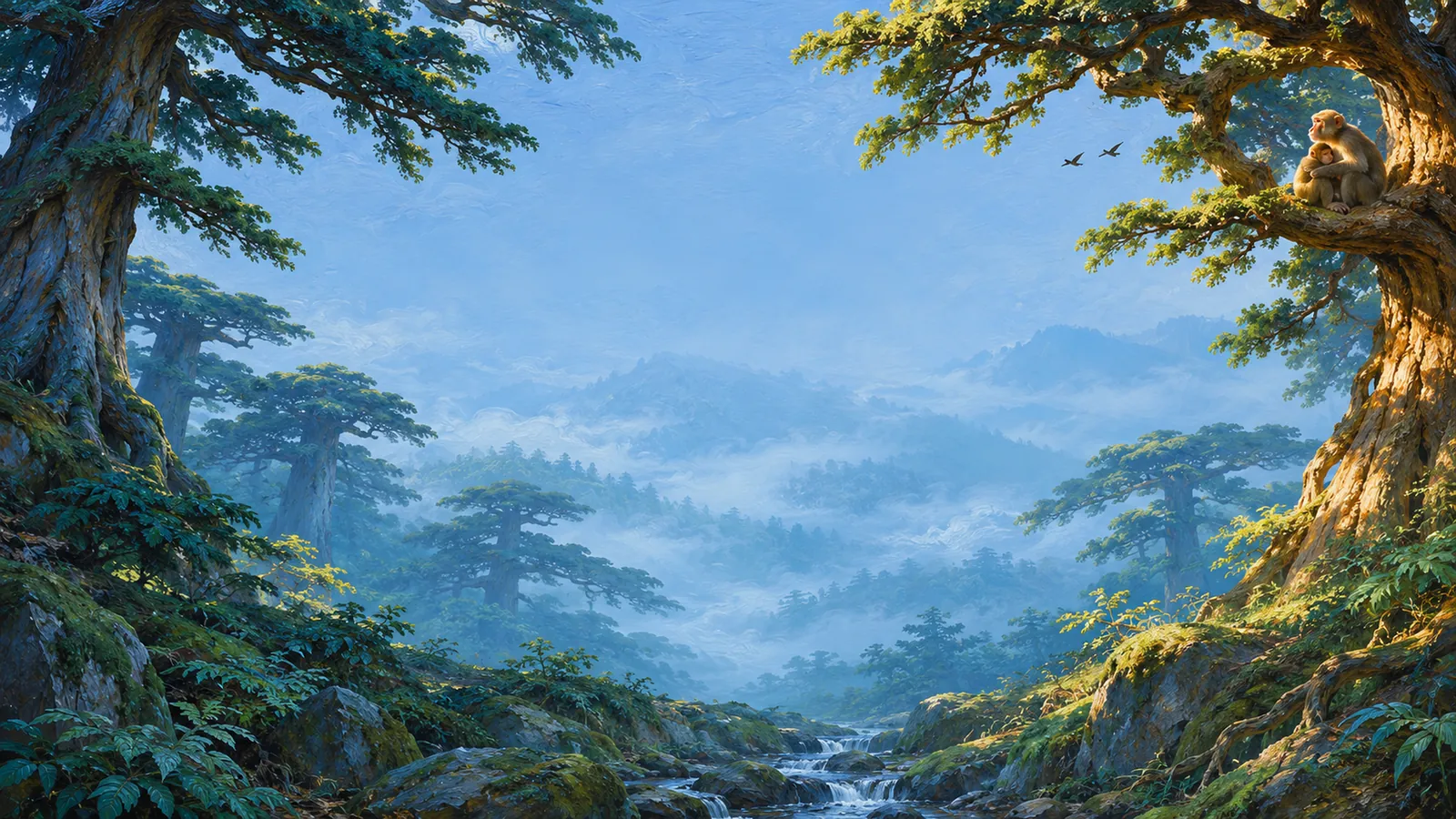
The sounds of the woodland carried on together like a group of musicians. The poem gives this daily chorus to the forest where Humbaba keeps watch.
TERROR
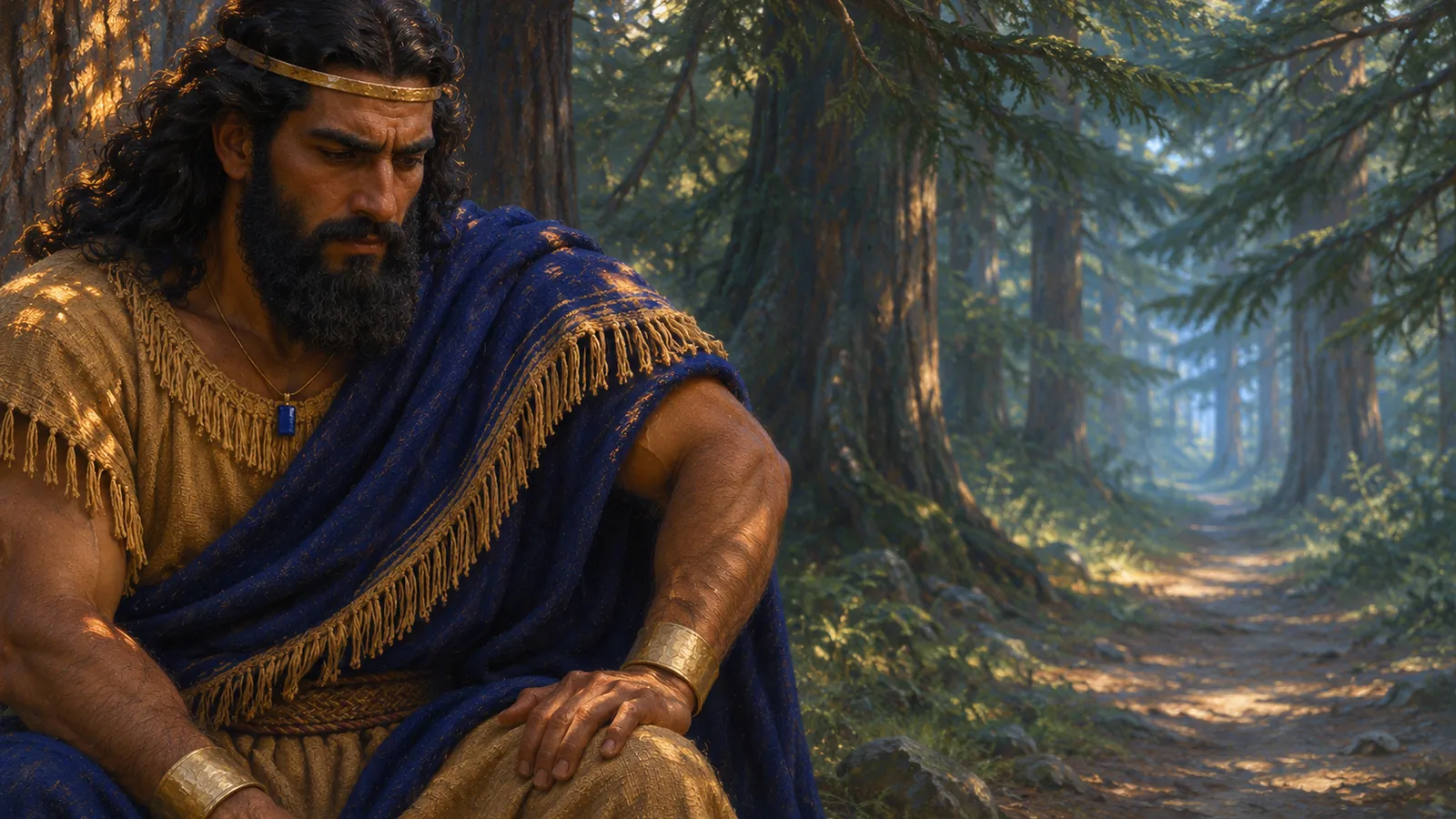
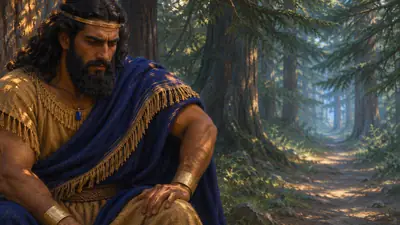
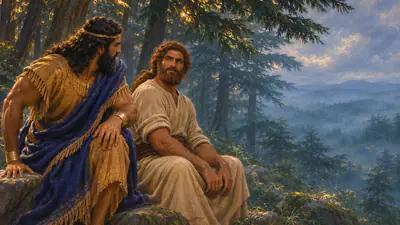
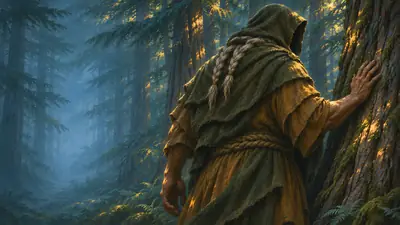
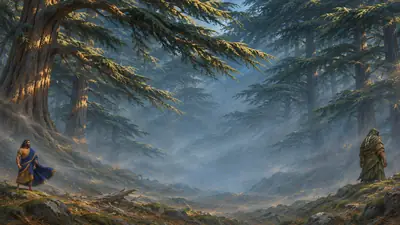
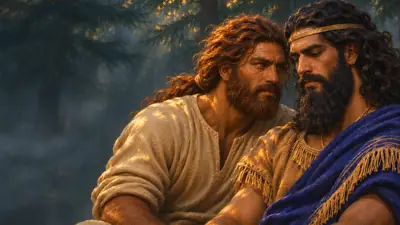
As the cedar shade fell over him, fear took hold of Gilgamesh. There was a stiffness in his arms, and his legs no longer felt strong enough to carry him.
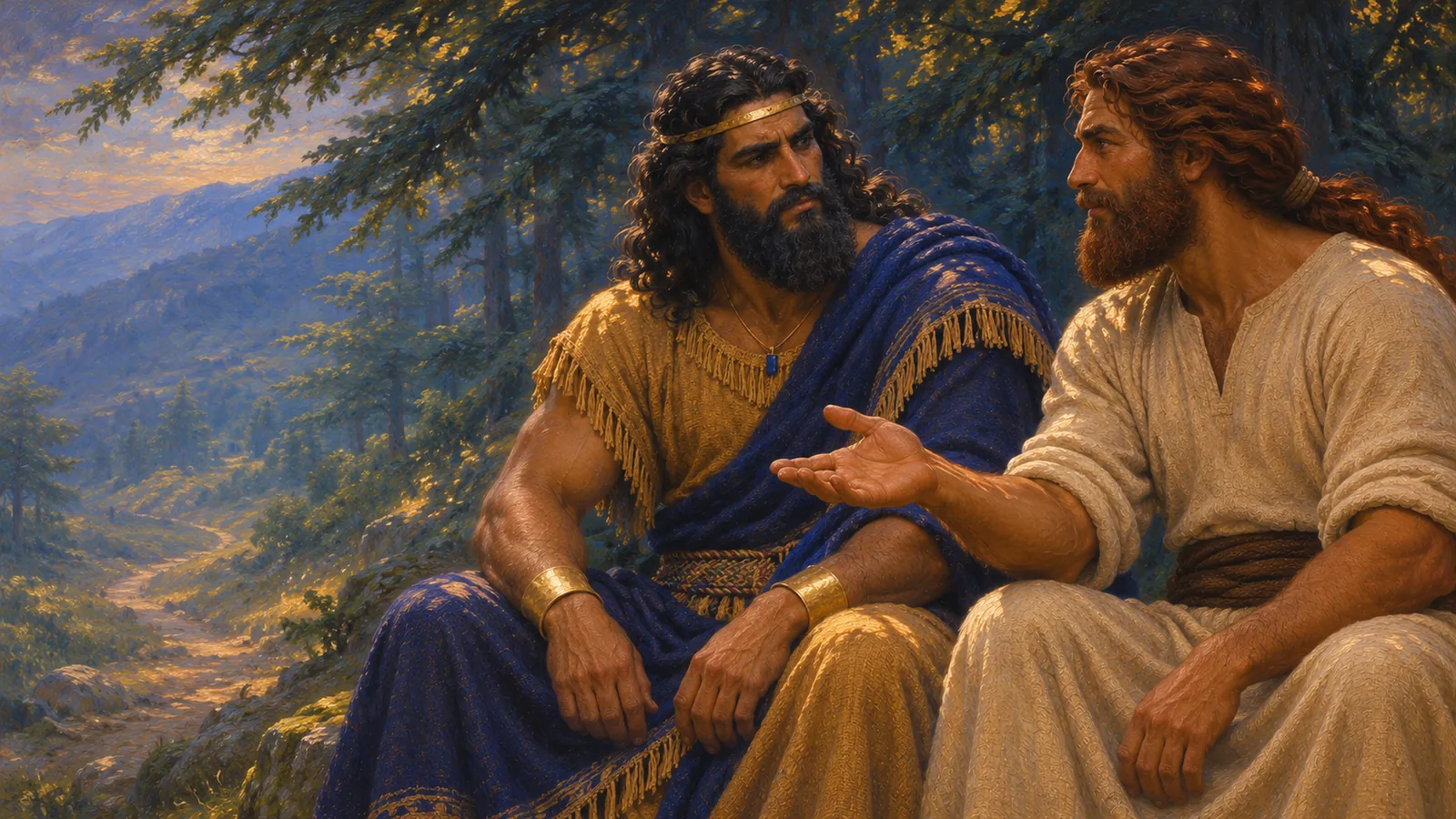
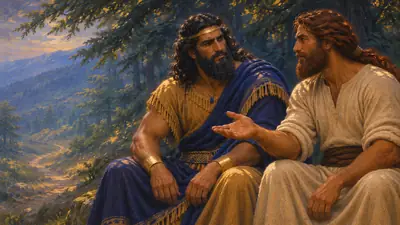
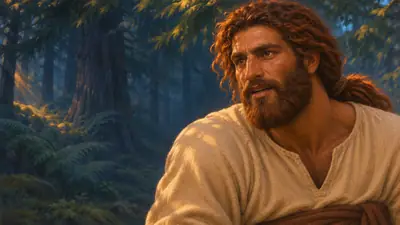
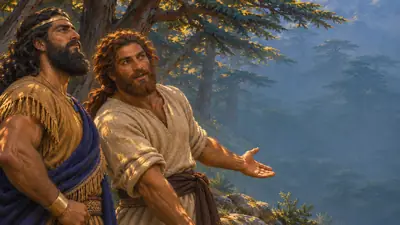
Enkidu spoke into the silence that had fallen between them. He urged his friend to gather himself and go with him into the heart of the forest.
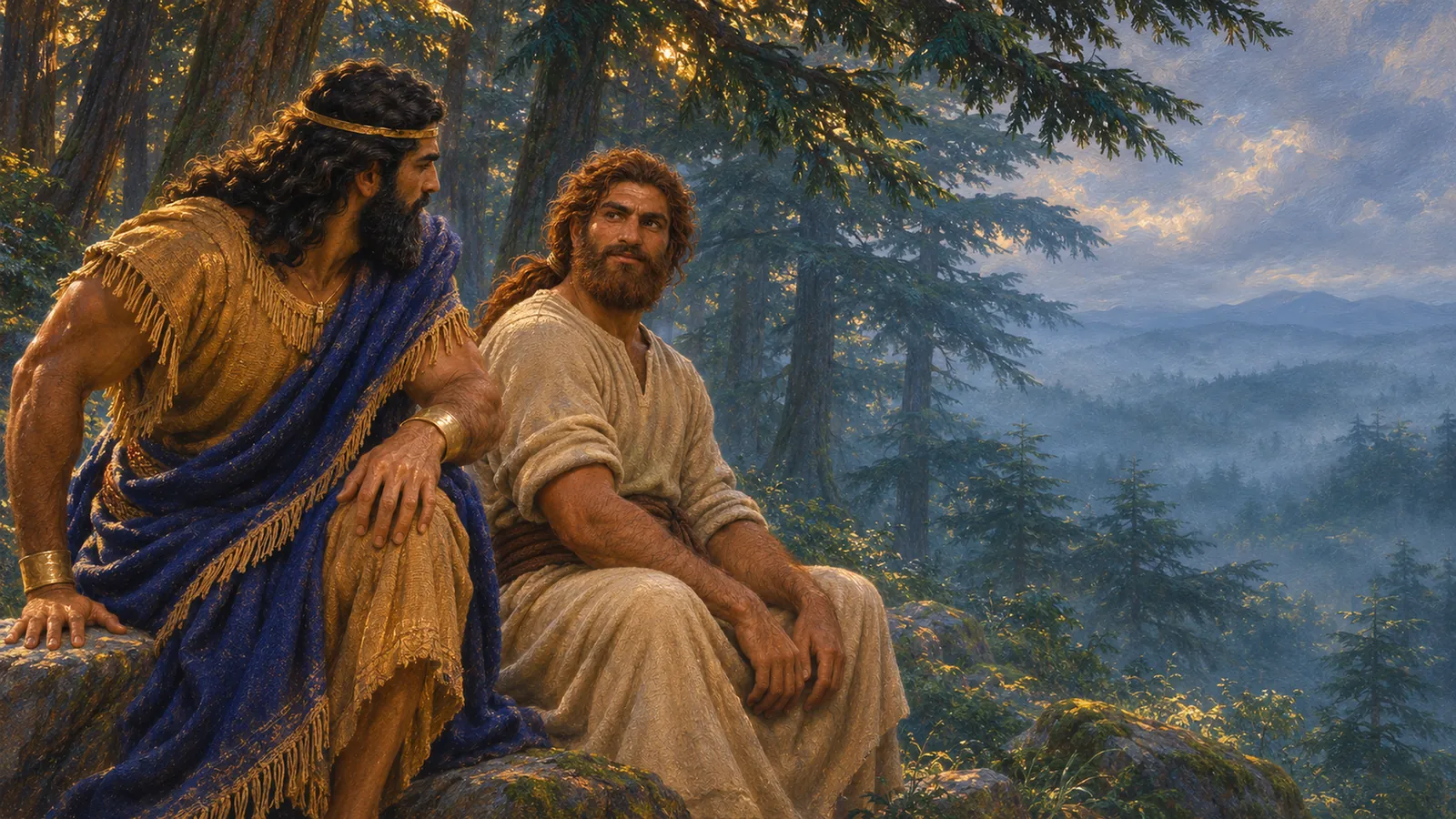
Gilgamesh reminded his friend of the mountains they had already crossed. Here, beneath the trees, how had the two of them come to tremble?
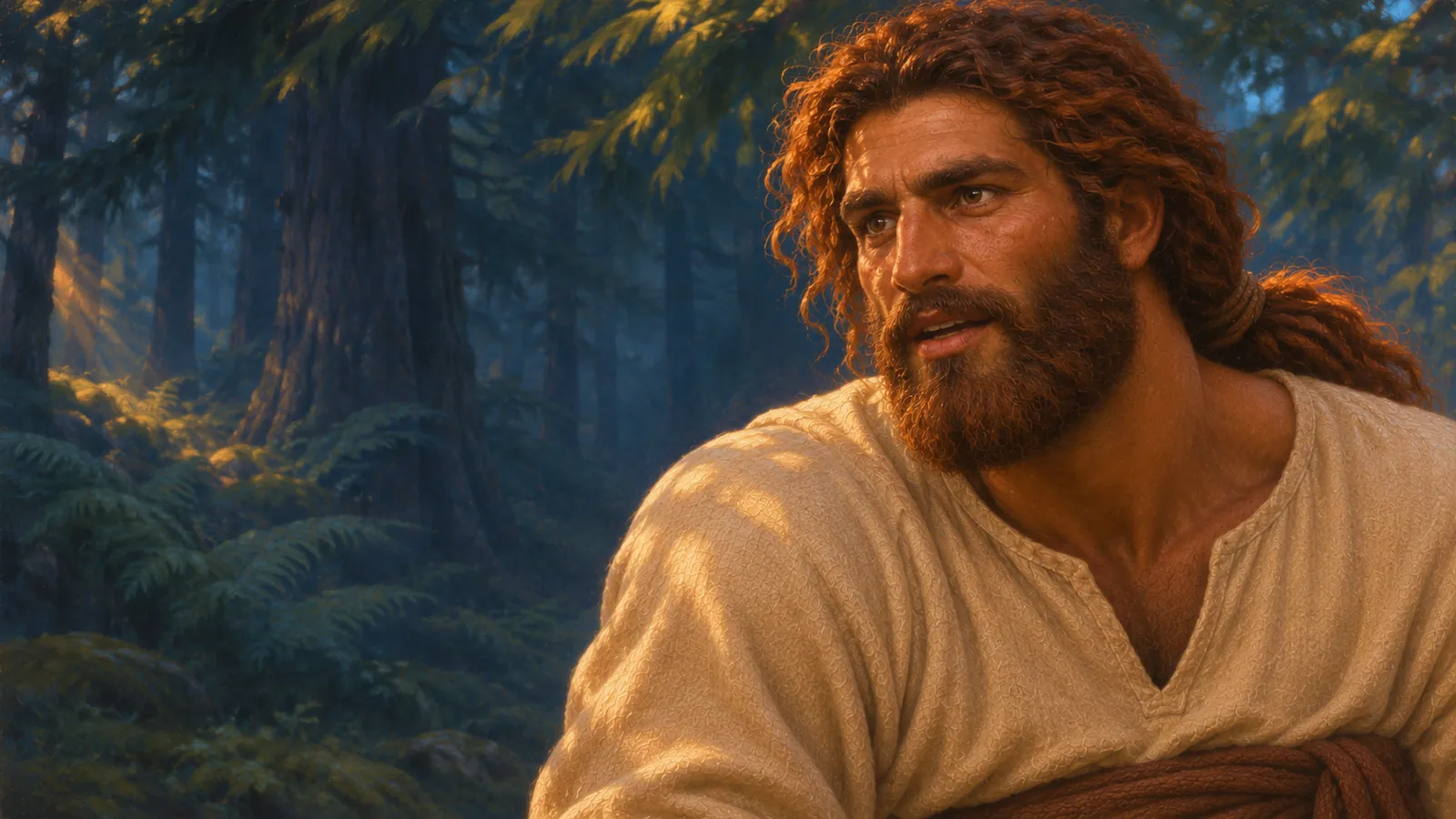
Enkidu called on the courage his friend had shown before. He wanted the trembling to leave Gilgamesh’s legs, and the strength to come back into his arms.
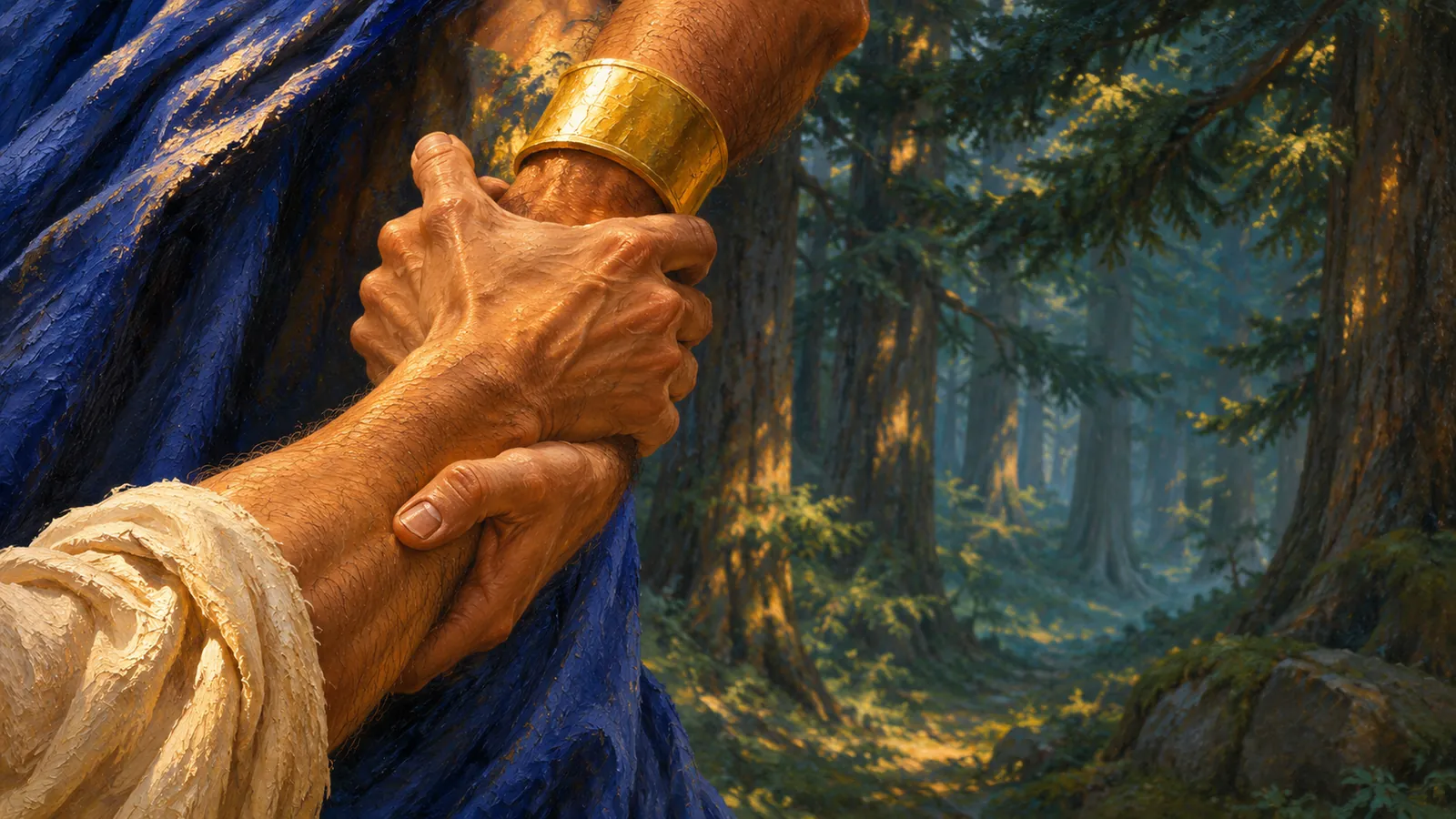
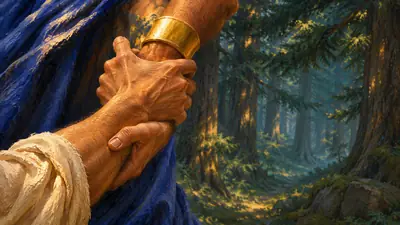
Gilgamesh asked his friend to take hold of him. The last words of the line are broken, but the motion toward one another survives before the tablet breaks again.
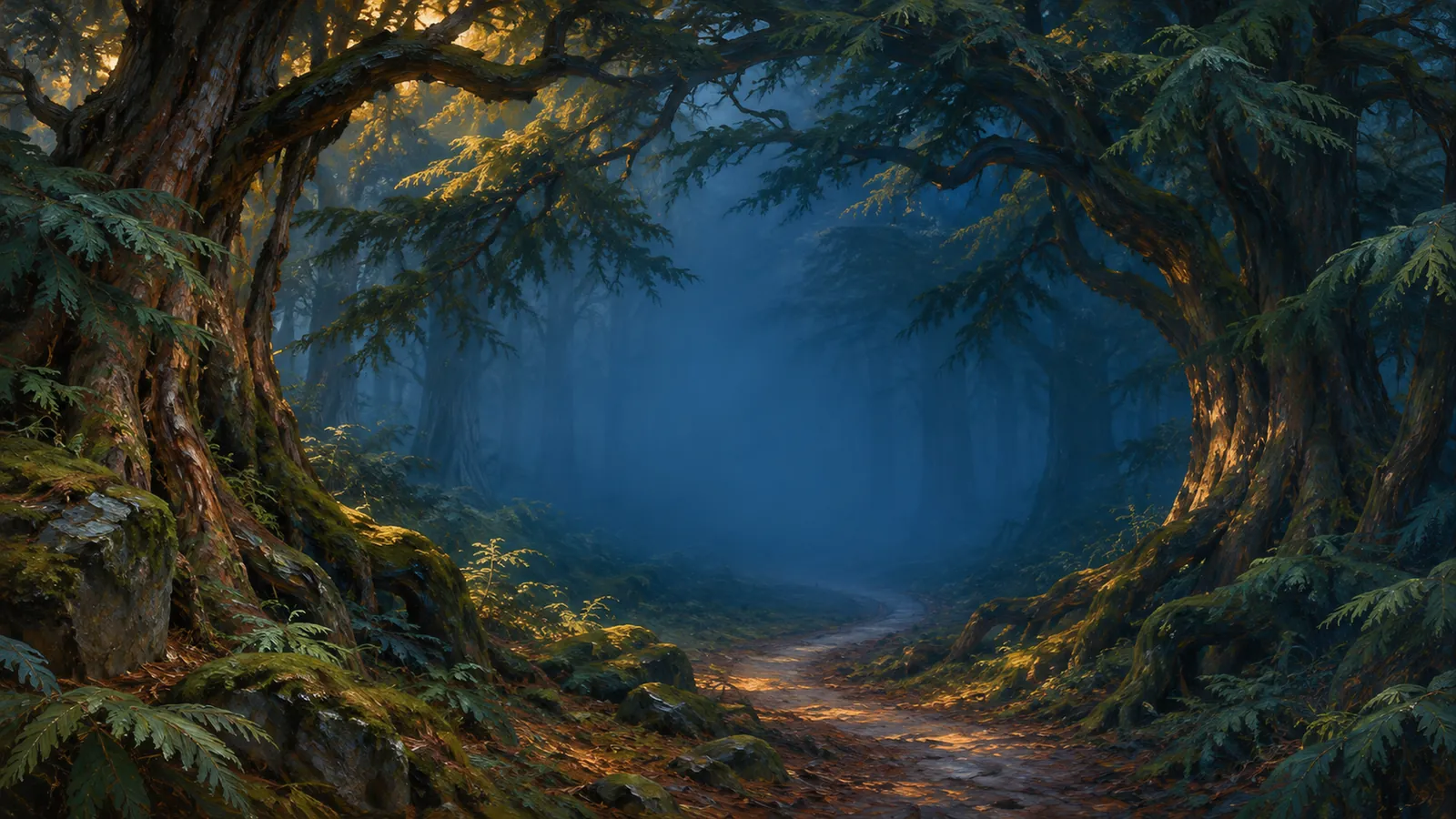
Part of the old tablet is missing here. When the words return, the story is with the guardian, deep among the trees they had come to see.
HUMBABA
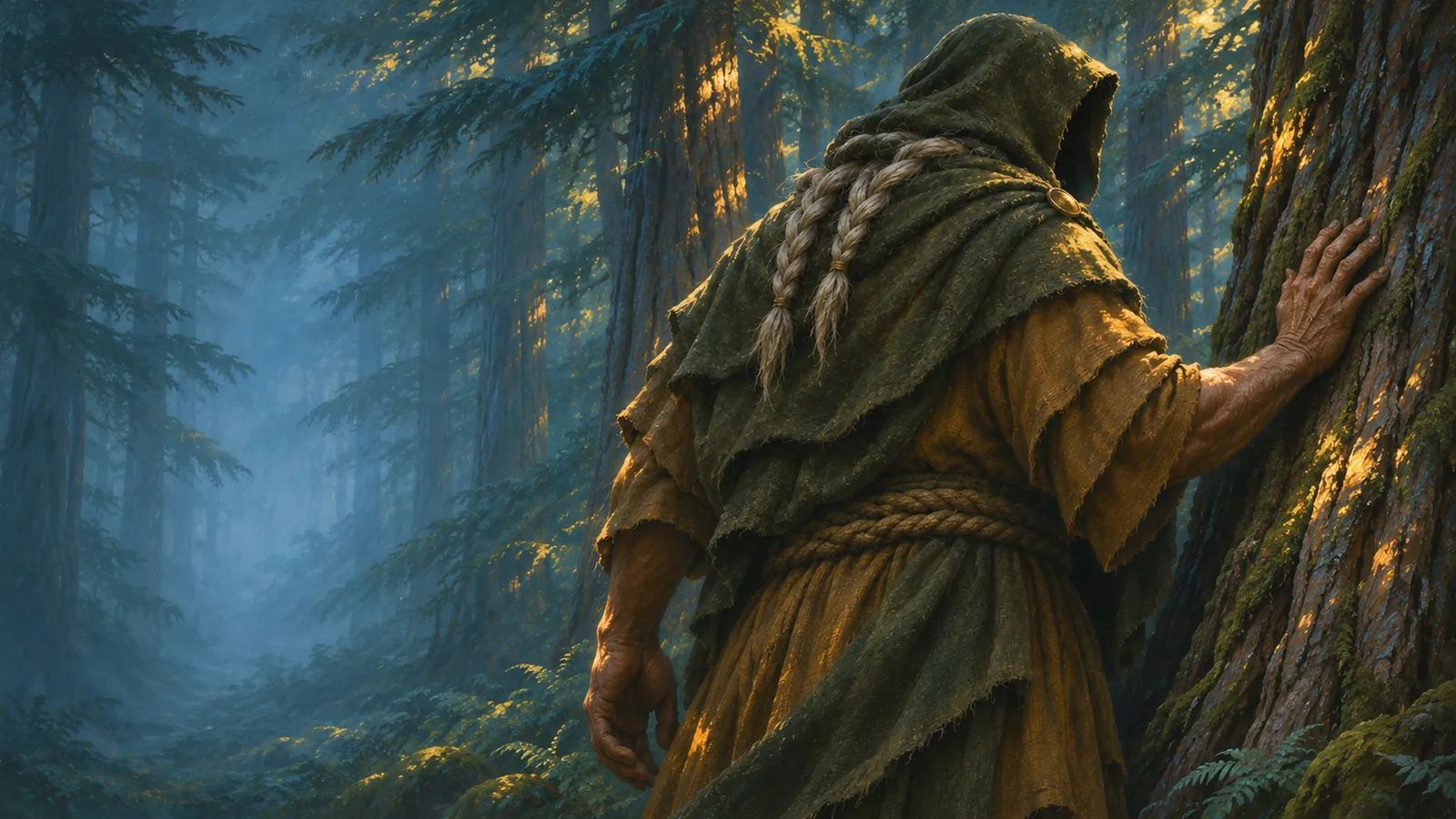
Humbaba speaks to himself in a passage that survives only in pieces. His words are hard to follow, but for a moment the forest belongs to his point of view.
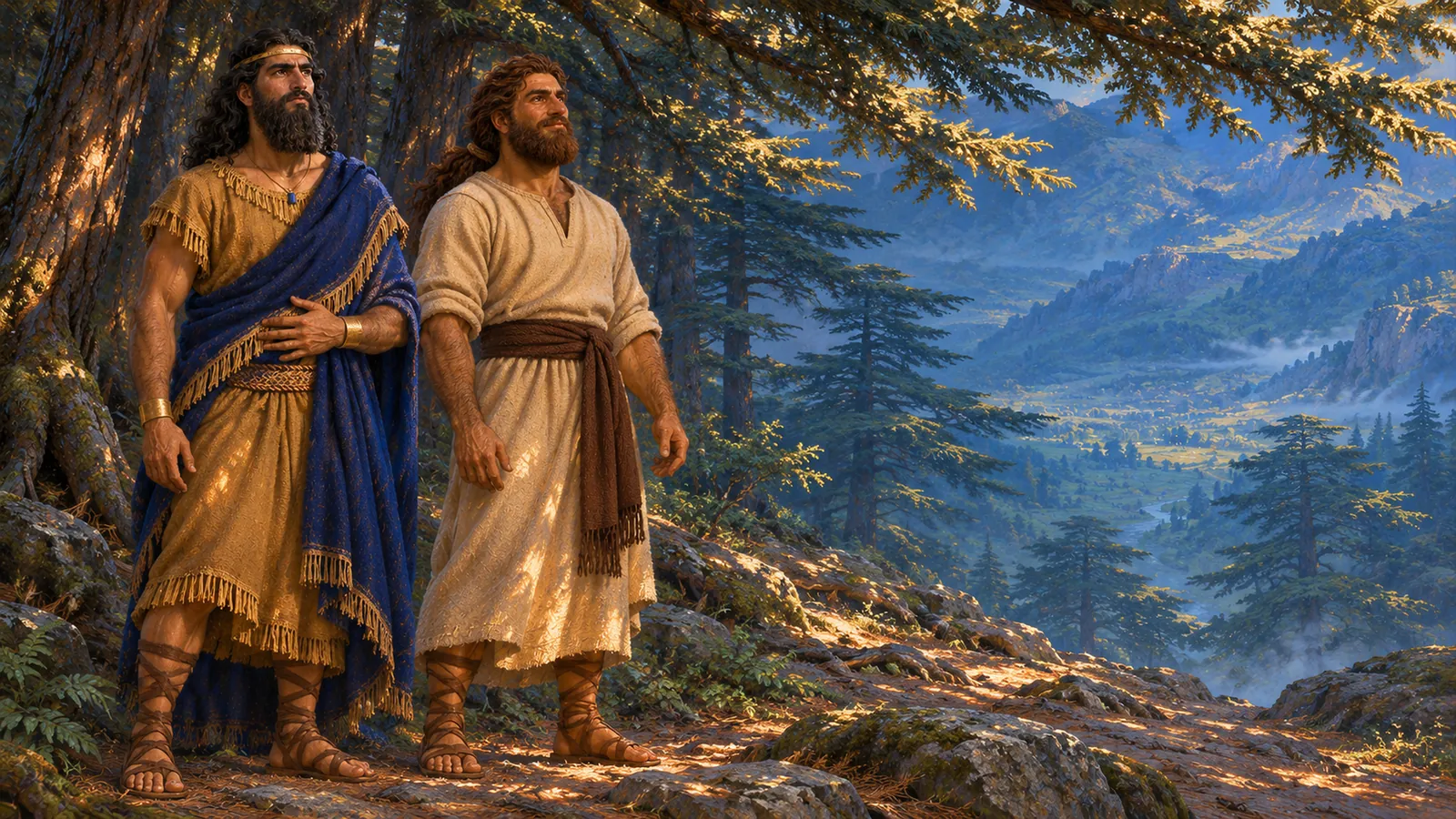
Enkidu spoke of how much more two companions could do together. A man alone might falter, and a second man could help him keep his footing.
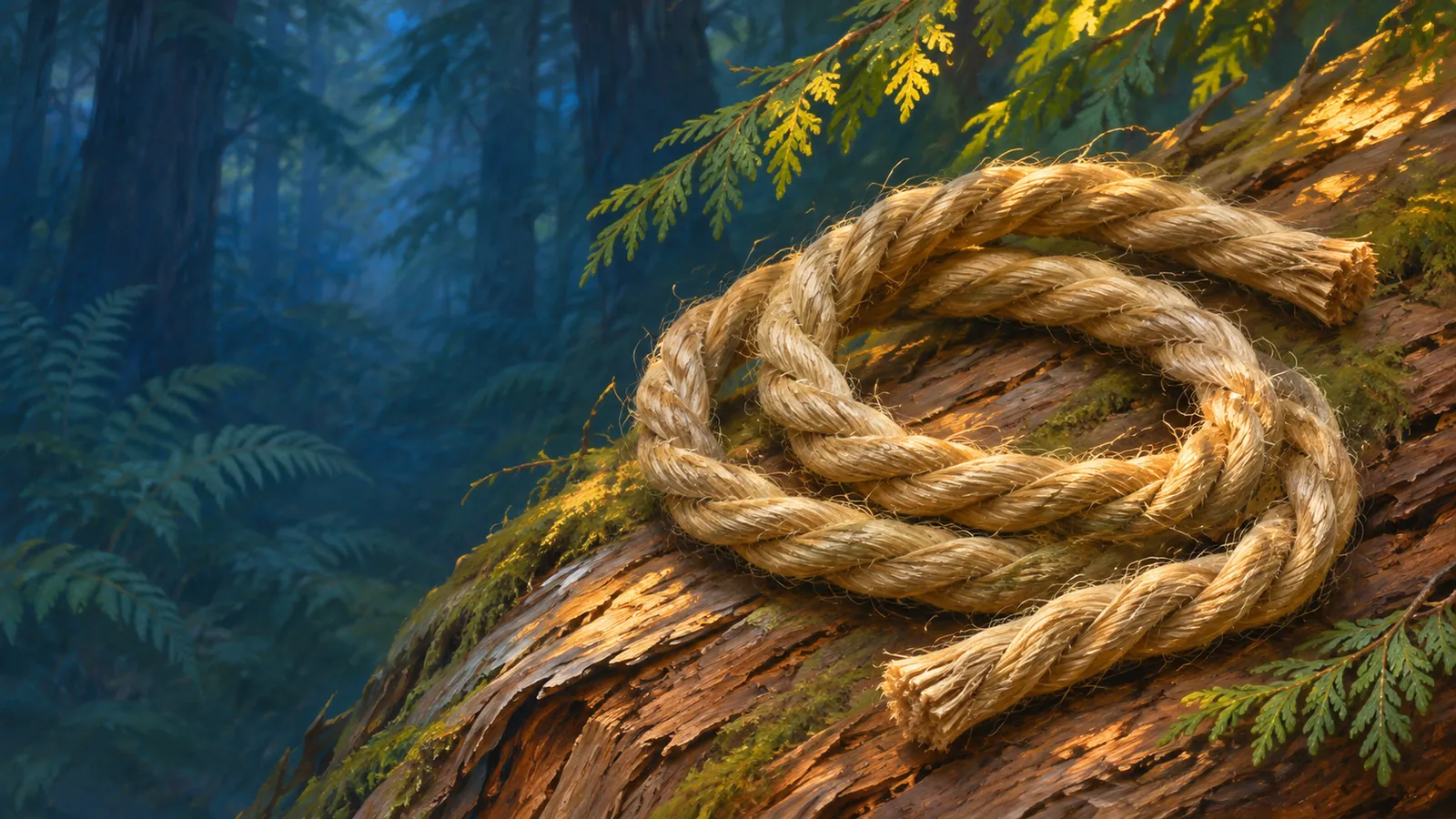
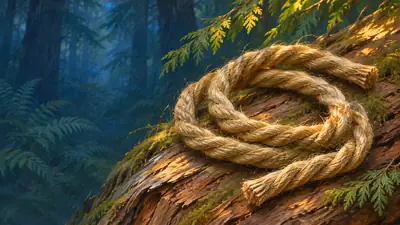
He gave the thought a shape his friend would know: three strands worked together in a cord are hard to break. The forest would test the strength of their bond.
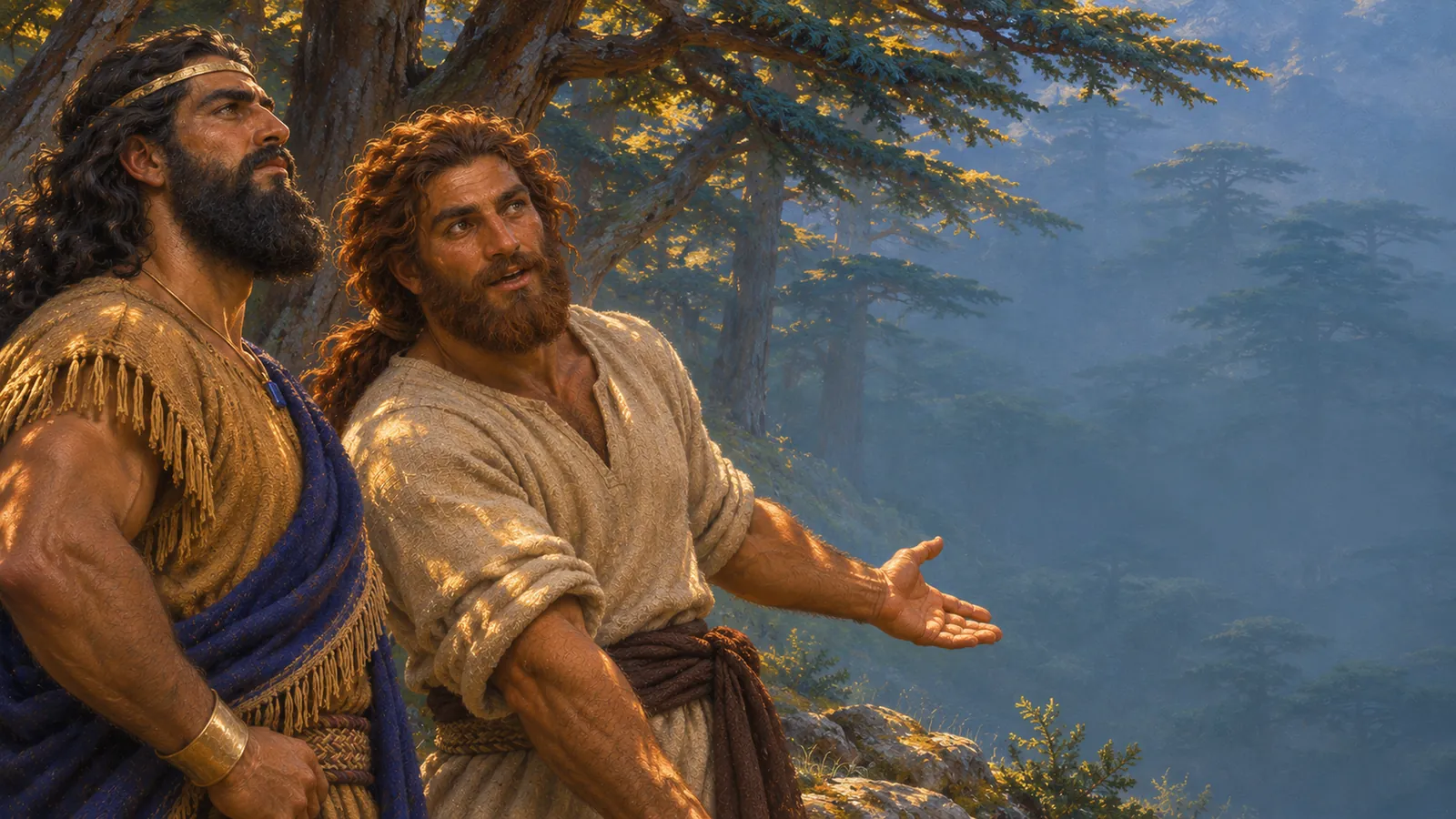
What could stand against the storm around the guardian? In these damaged lines, Enkidu turns Gilgamesh’s thoughts toward Shamash and the winds that might come to his help.
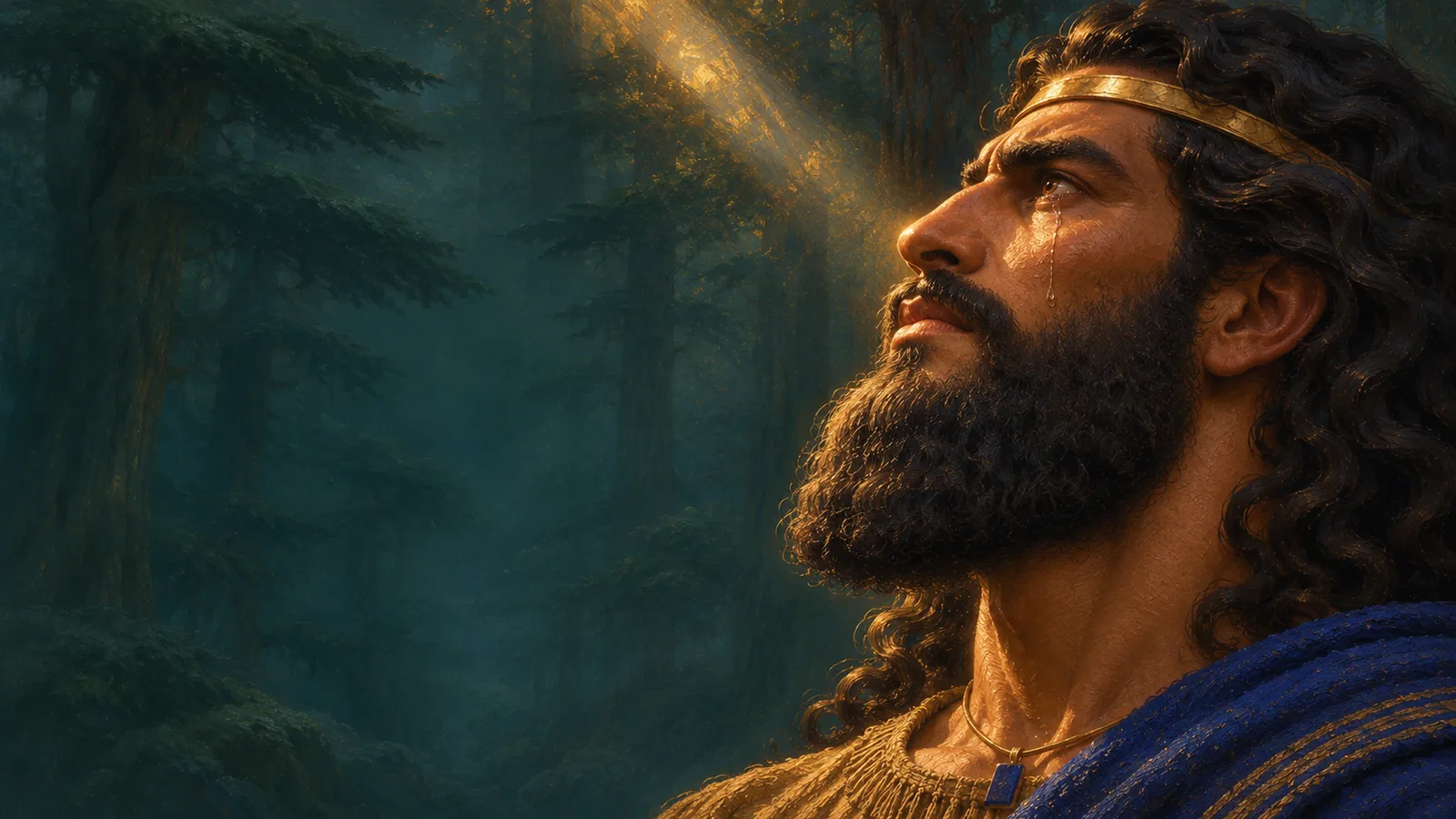
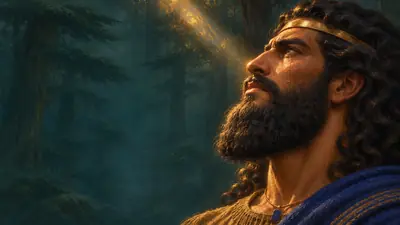
Gilgamesh looked up toward the sun. Tears came as he prayed to Shamash, and the light reached him even here below the height of the cedars.
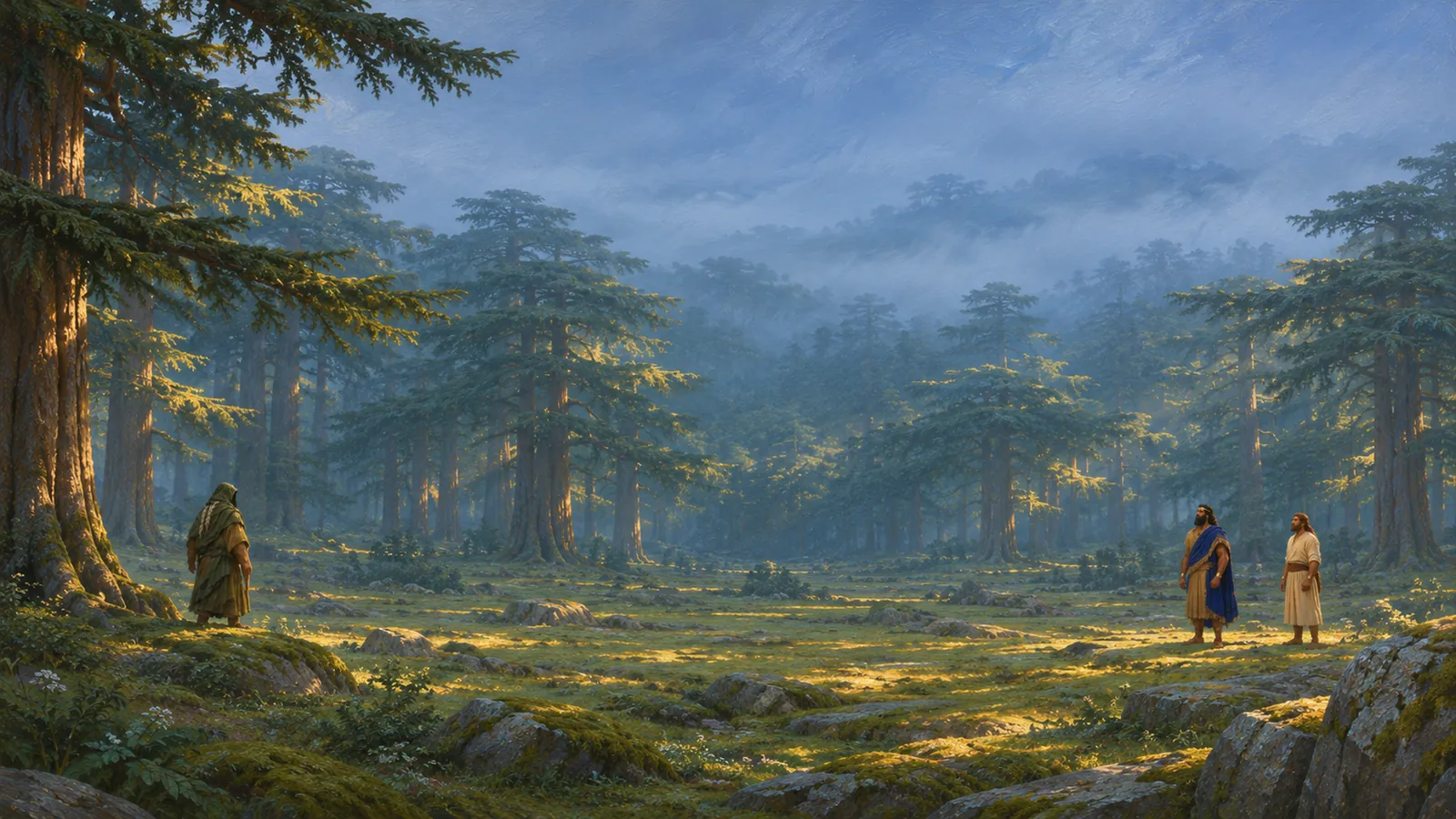
THE GUARDIAN
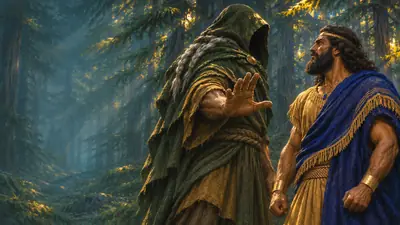
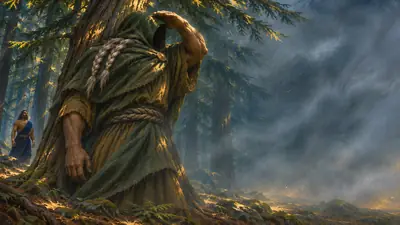
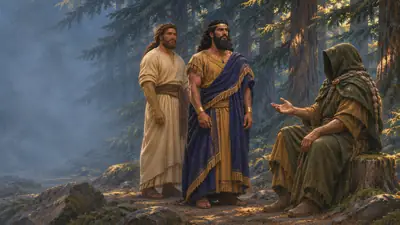
When the confrontation begins, the guardian is there before them. The man they heard from far away now addresses the friends who have entered his forest.
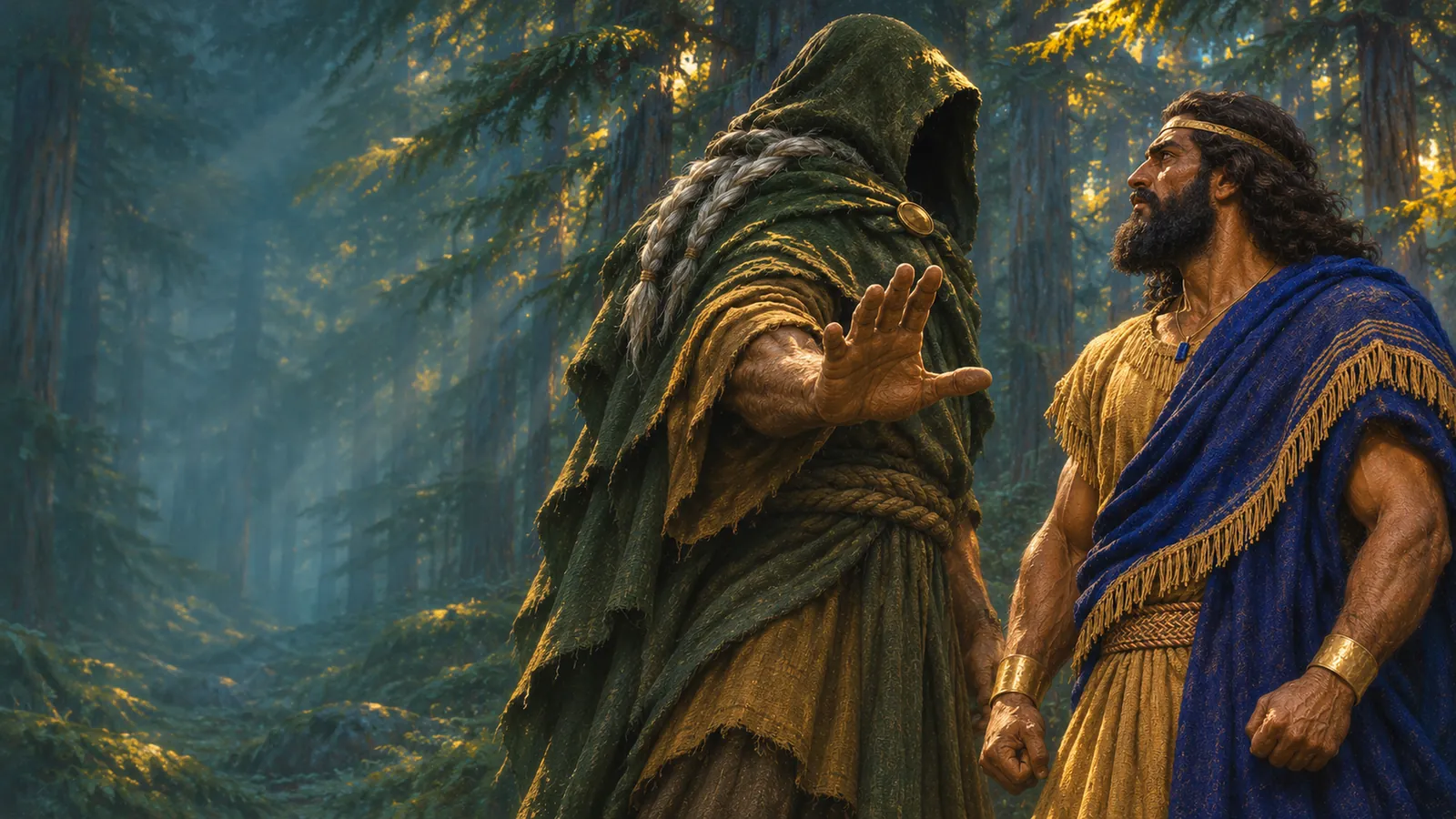
Humbaba had words for the king who had come so far to face him. His challenge changed the weight of the silence under the trees.
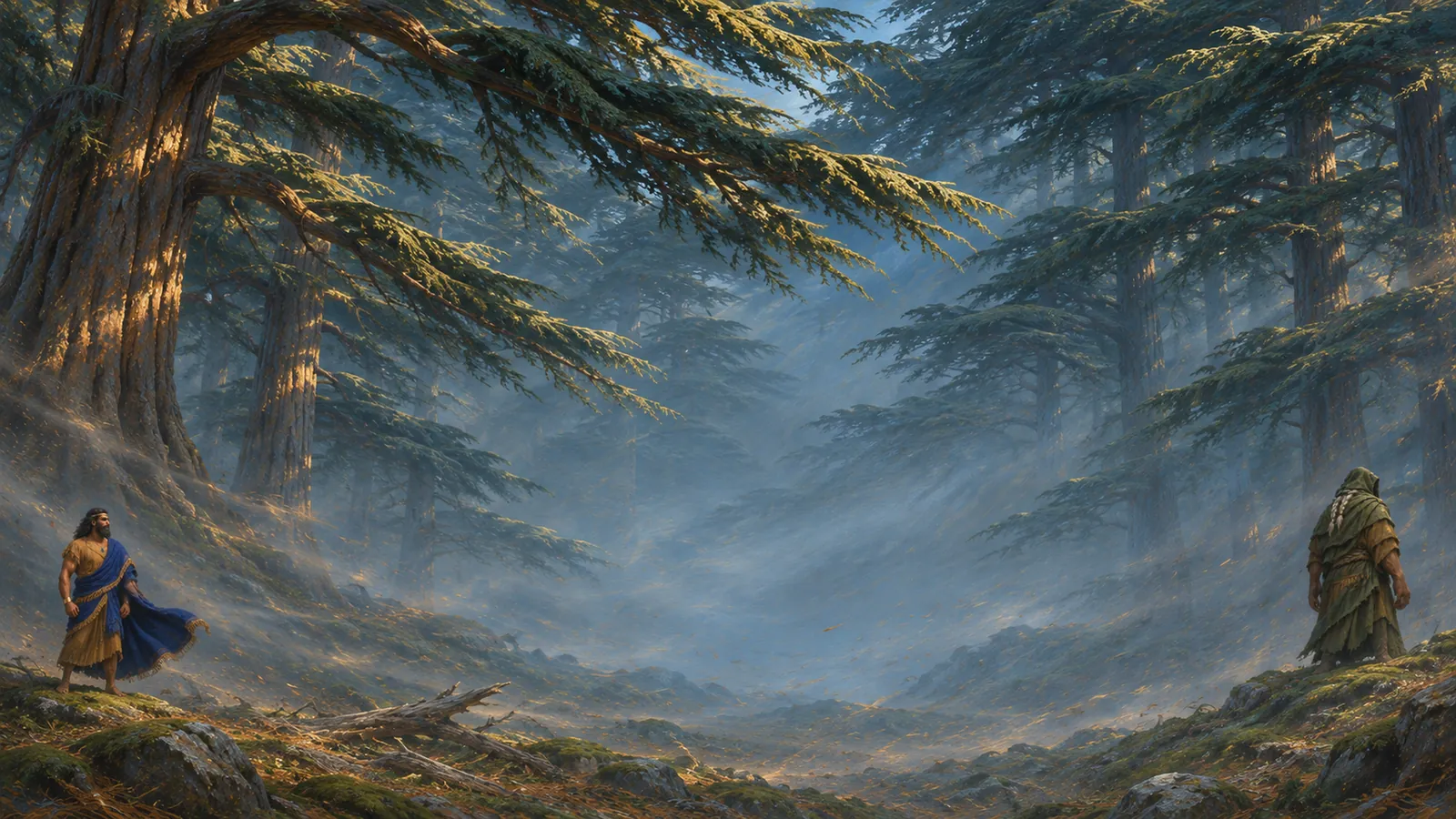
TURMOIL
Gilgamesh met Humbaba in the forest. The poem gives the encounter a reach beyond the two figures, as the land around them seems to feel its force.
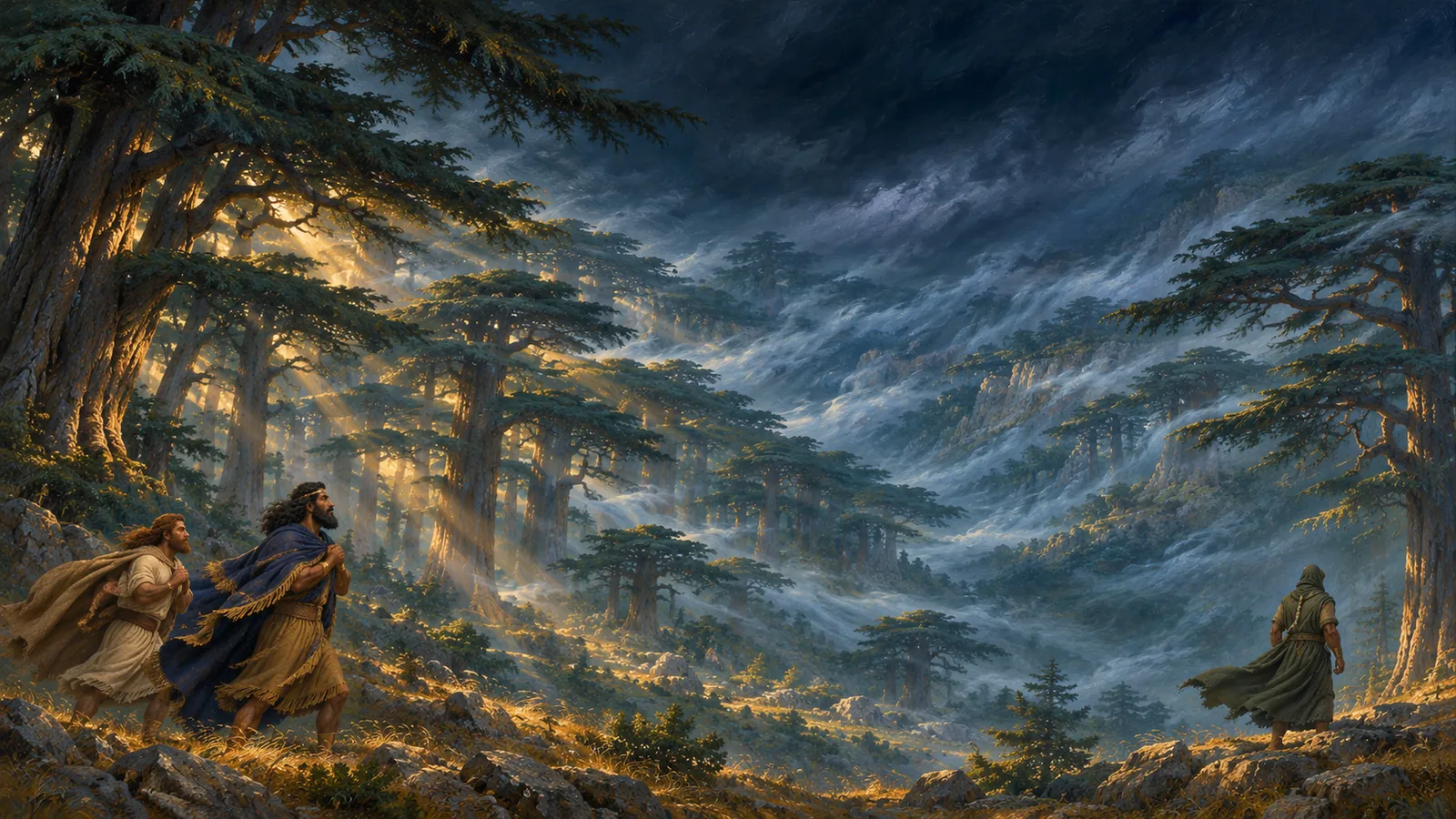
Then the winds of Shamash swept in. The branches and dust moved together, and the guardian found himself in the path of a force he could not turn aside.
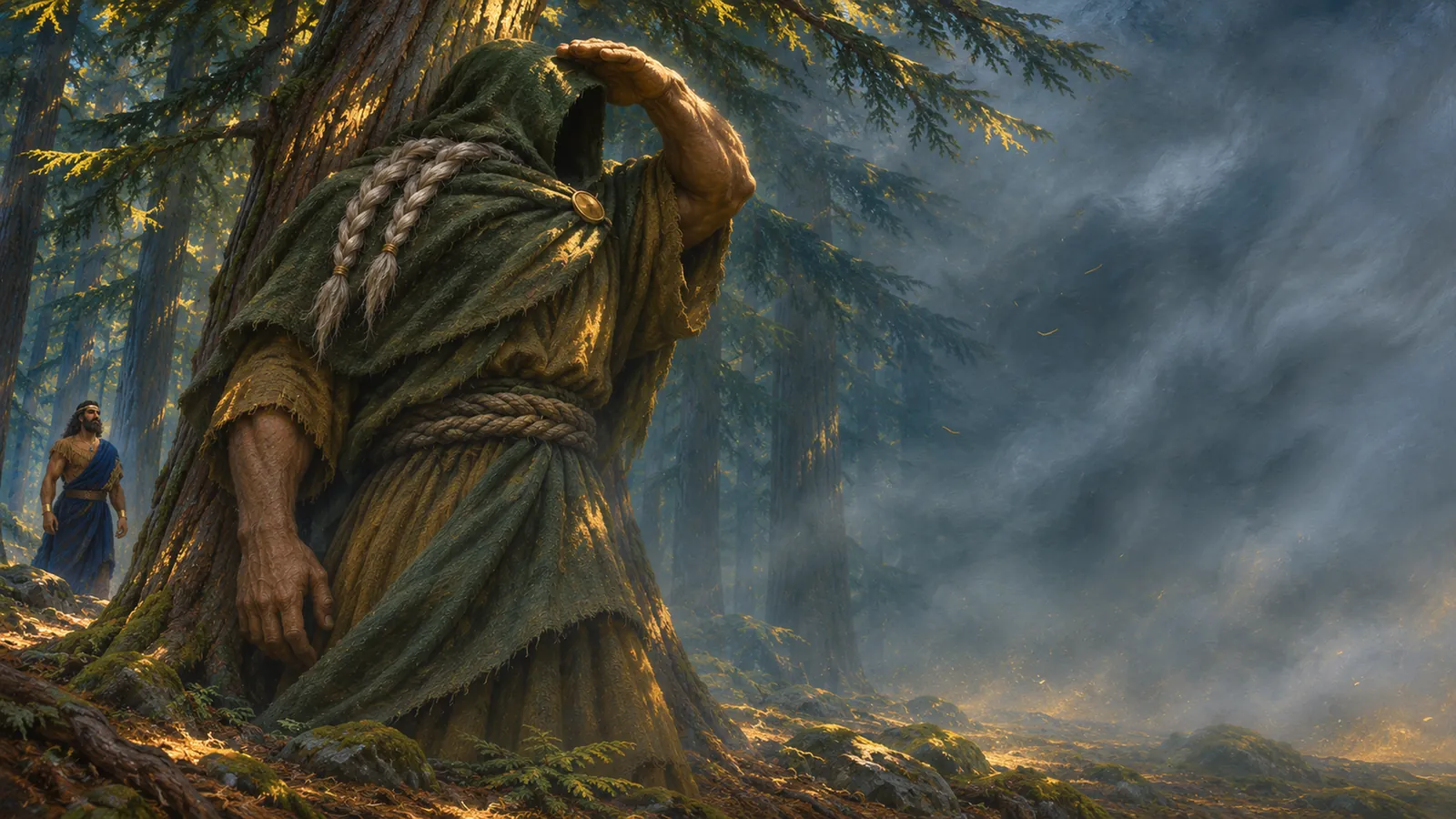
The winds blinded Humbaba, and his advantage was gone. Gilgamesh, who had scarcely found the strength to walk farther into the trees, could now overcome him.
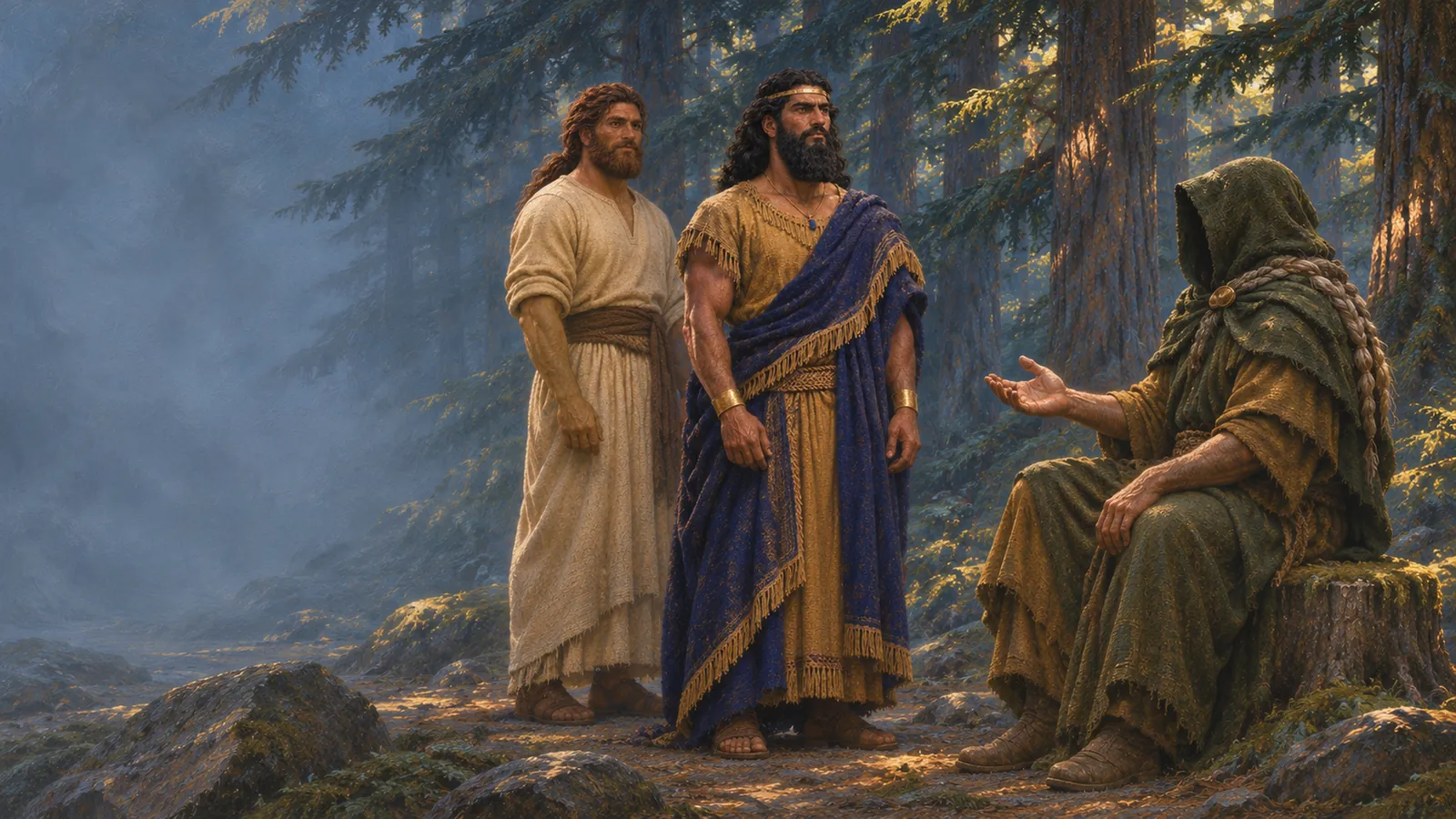
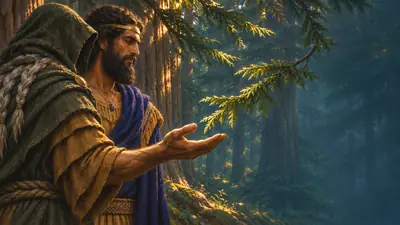
Humbaba turned from challenge to pleading. He asked Gilgamesh to let him live, and the forest fell quiet around the two who now had to decide.
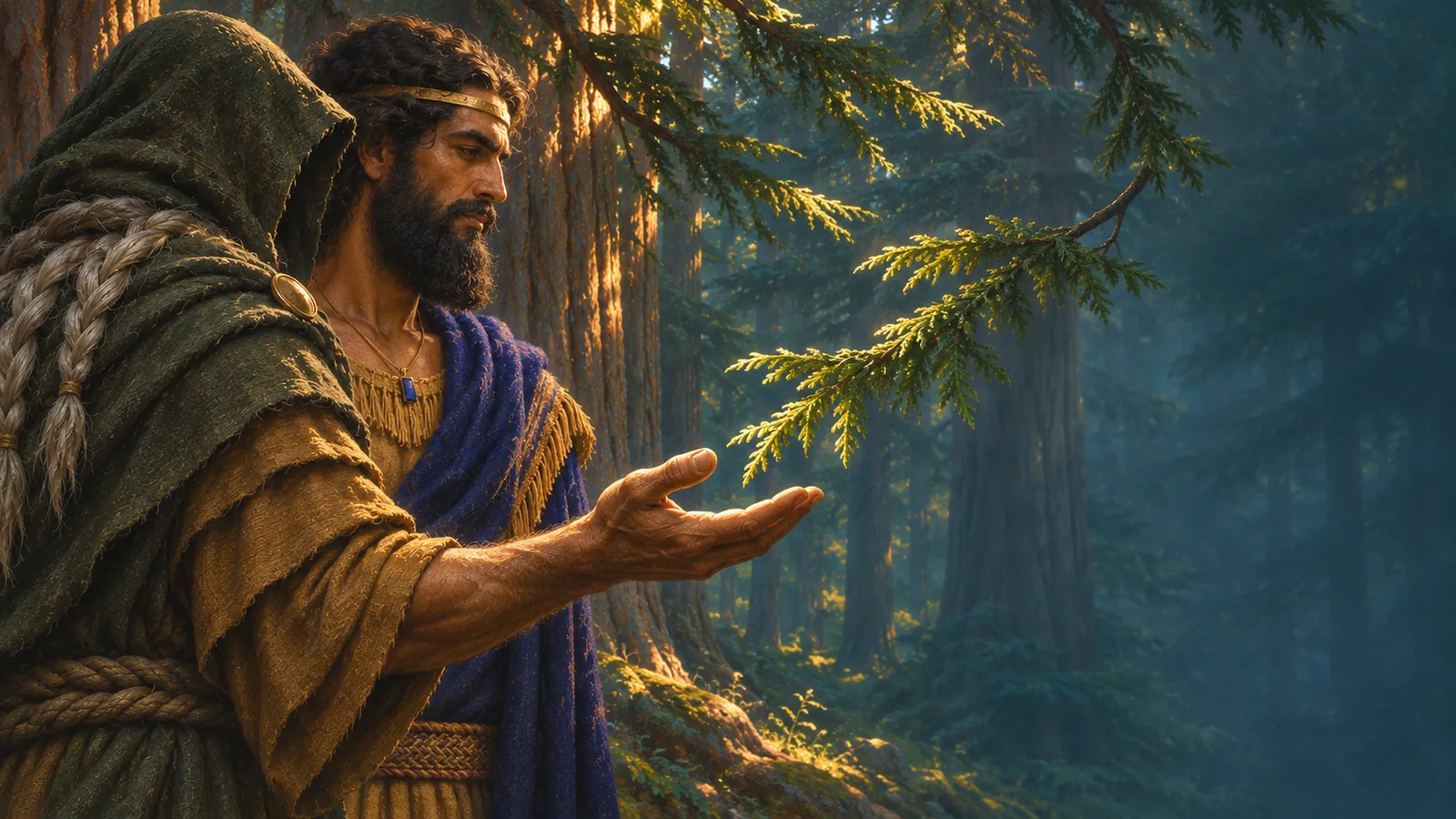
Humbaba offered to serve Gilgamesh if his life were spared. The trees he had guarded were now part of his plea to the men who had come to take them.
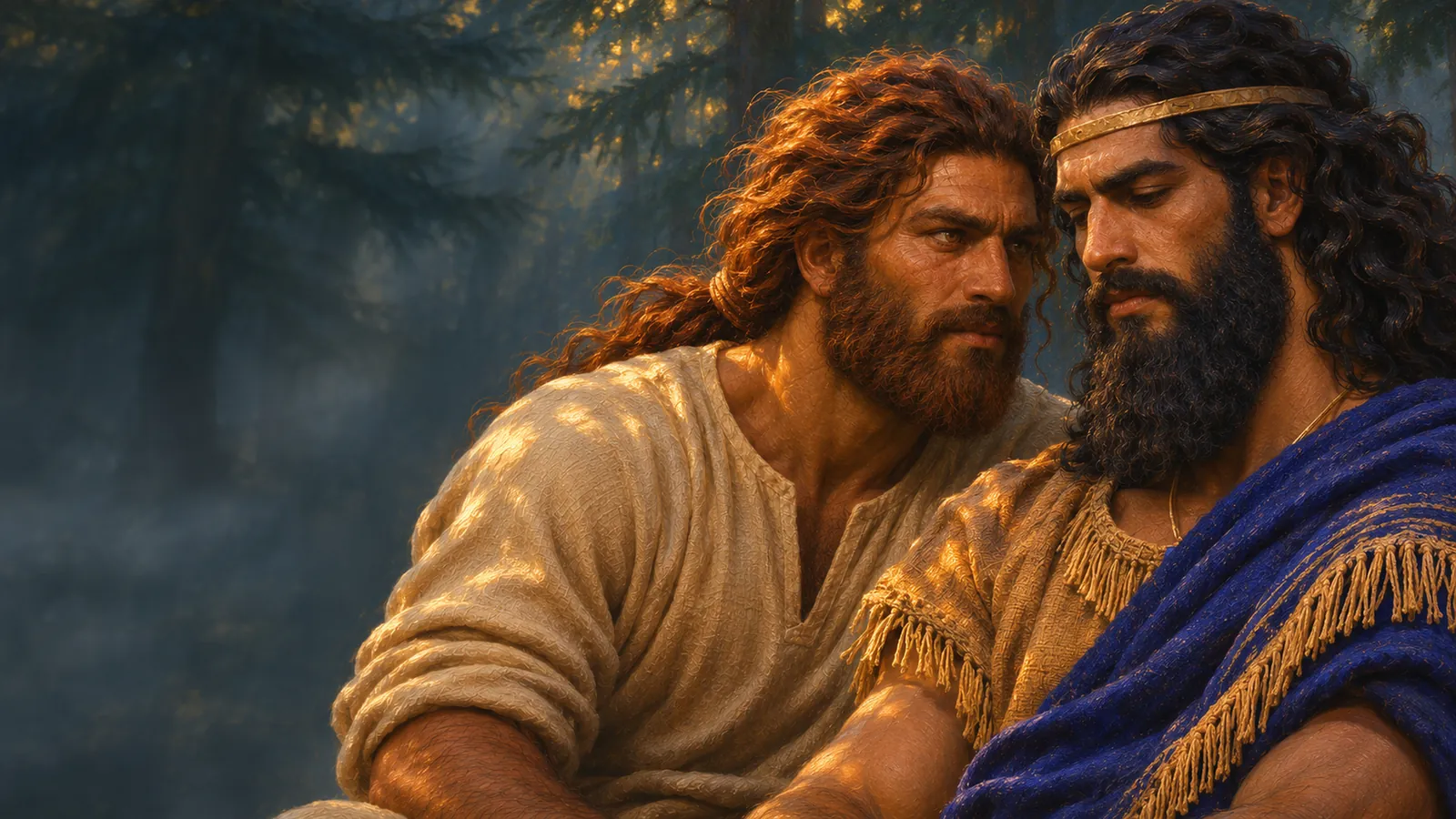
Enkidu spoke against letting the guardian go. The choice brought him and Gilgamesh to a quieter moment than the fight, with consequences neither could yet see.
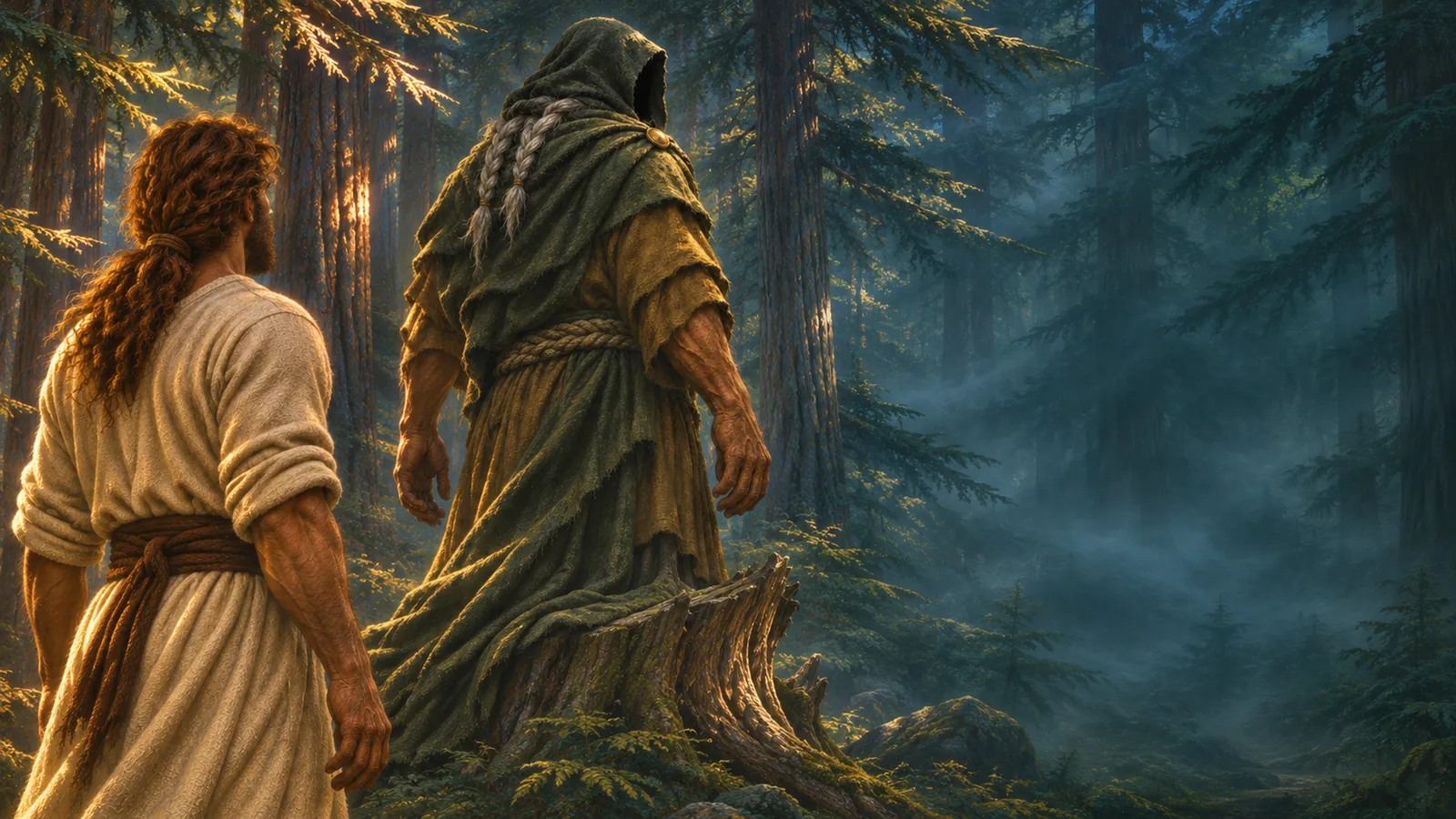
Humbaba had seen what the friends intended. Before his death he laid a curse on them, and Enkidu would carry its shadow beyond the forest.
SILENCE
Enkidu urged Gilgamesh on, and the two killed Humbaba in the forest he had guarded. The story then turns to what the friends did to the cedars.
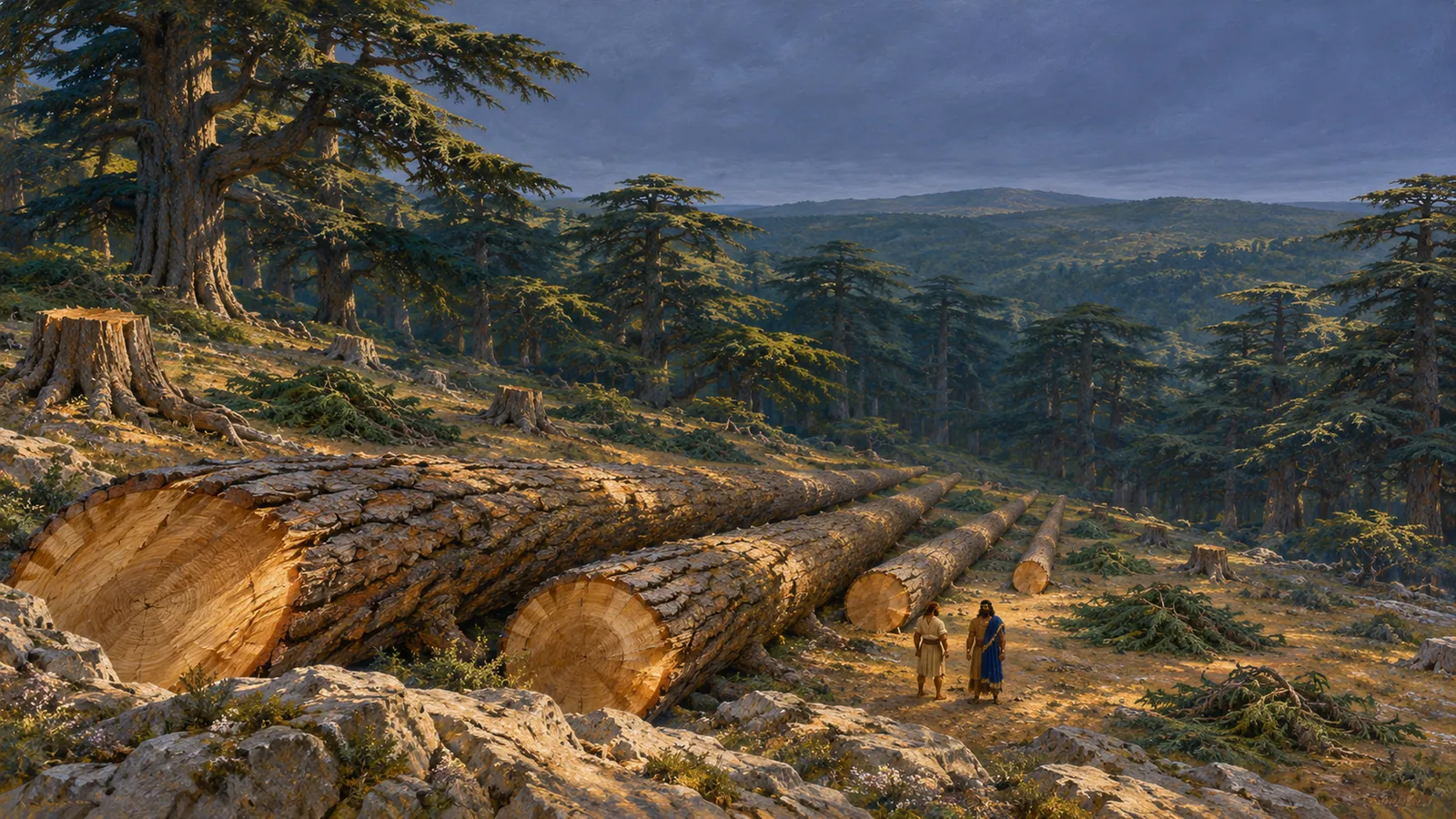
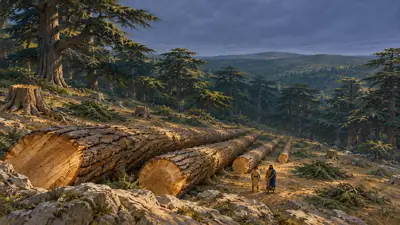
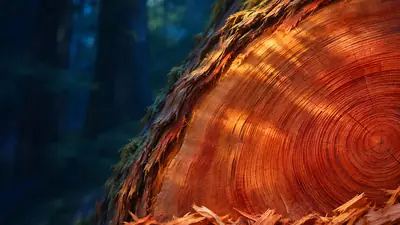
Once the guardian was gone, the forest changed quickly. The men took timber from the trees whose height and shade they had marvelled at when they arrived.
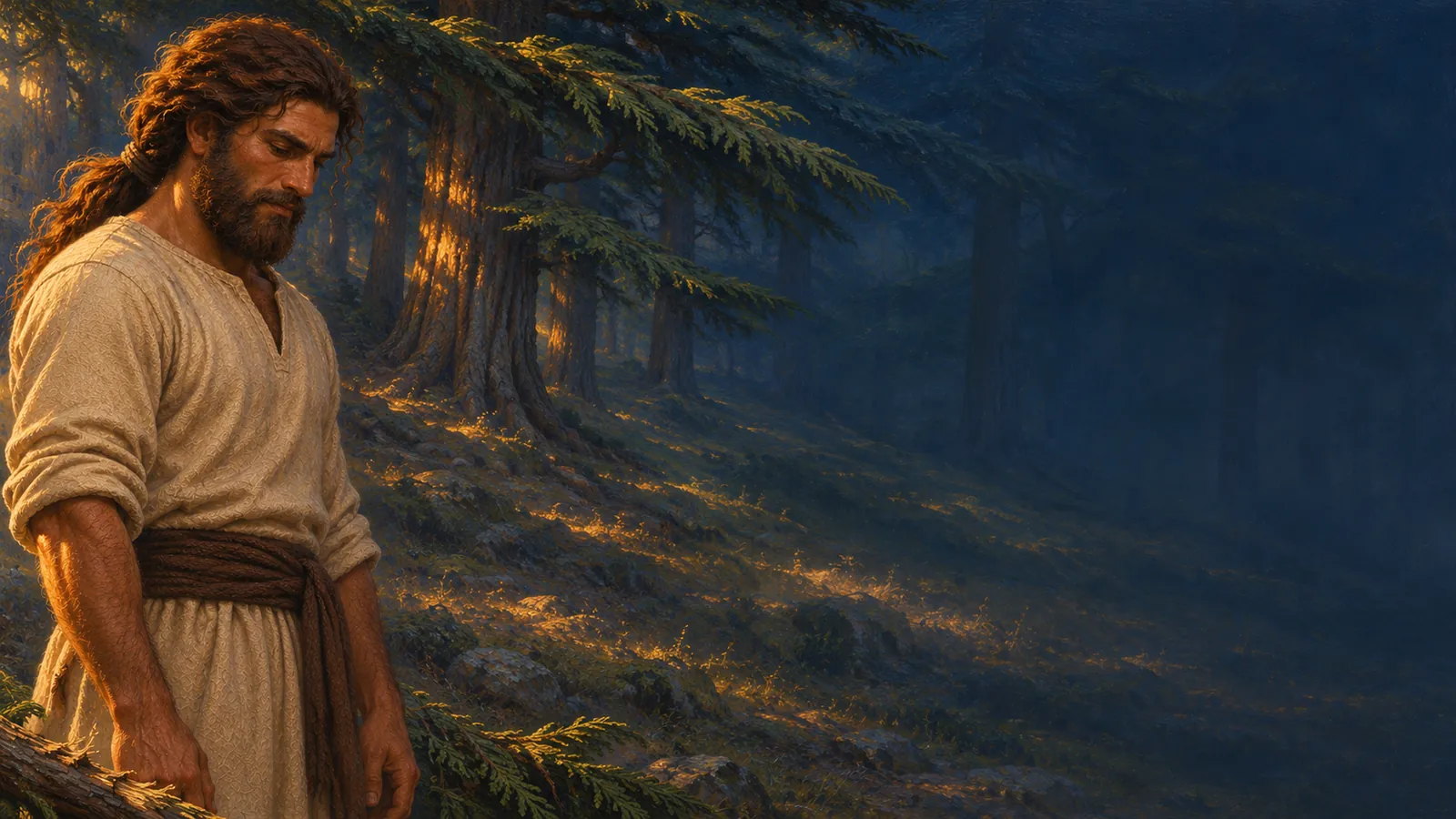
Enkidu looked at what the two of them had done. How would they answer Enlil for killing the guardian and trampling through the forest he was charged to keep?
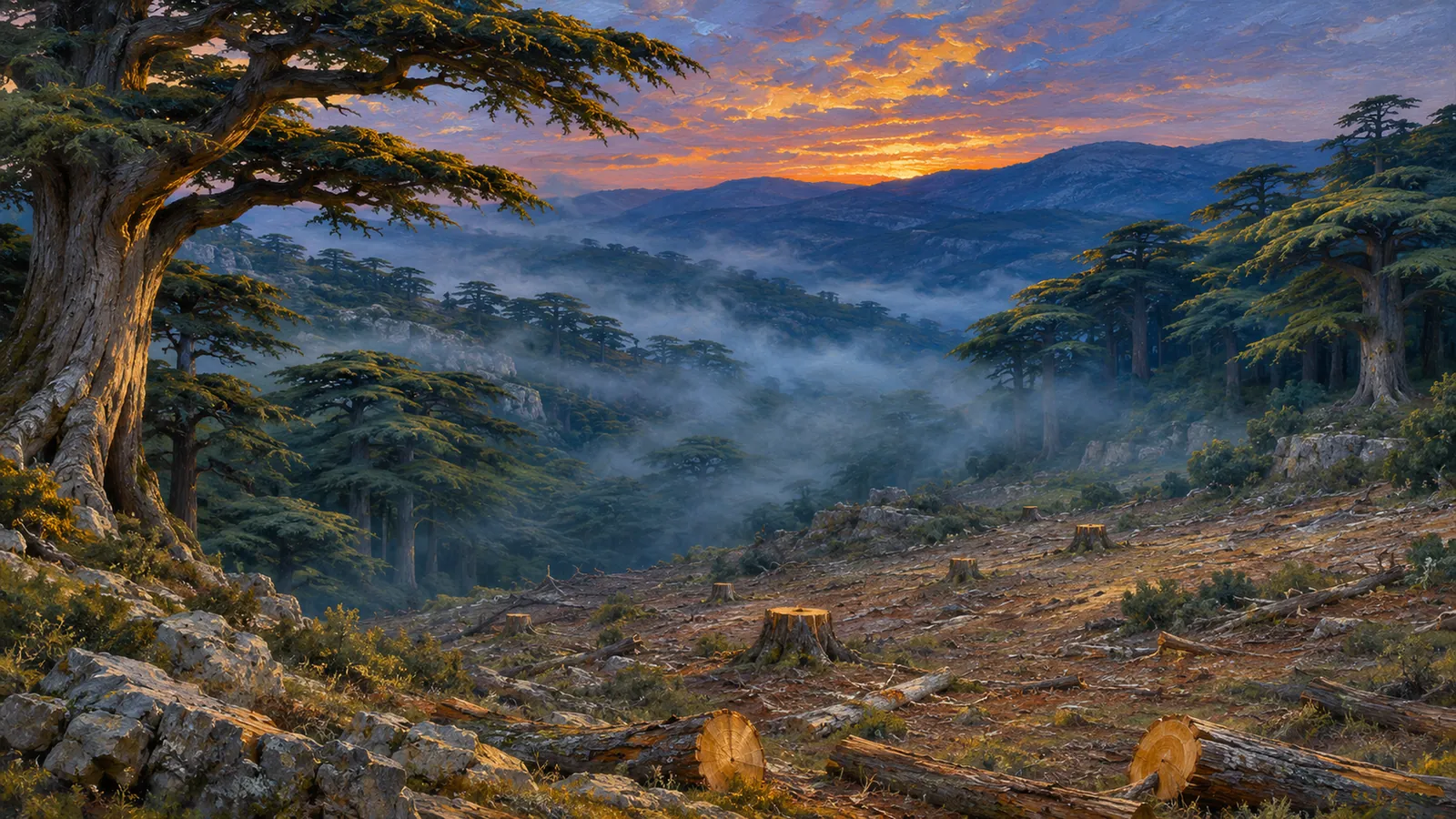
Where the trees had stood, open ground lay before them. The epic gives Enkidu the words to name the change as he thinks about returning to Enlil.
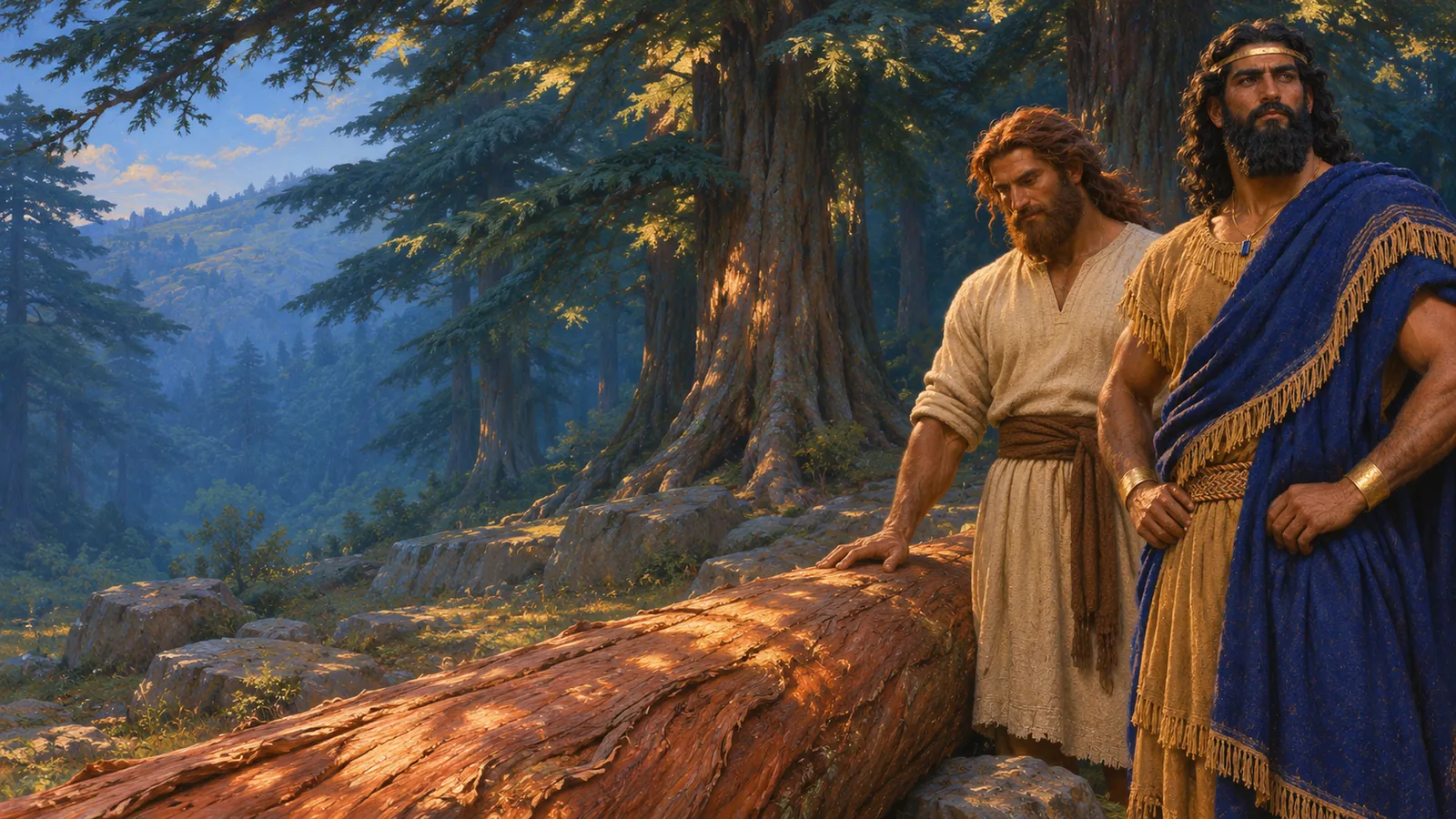
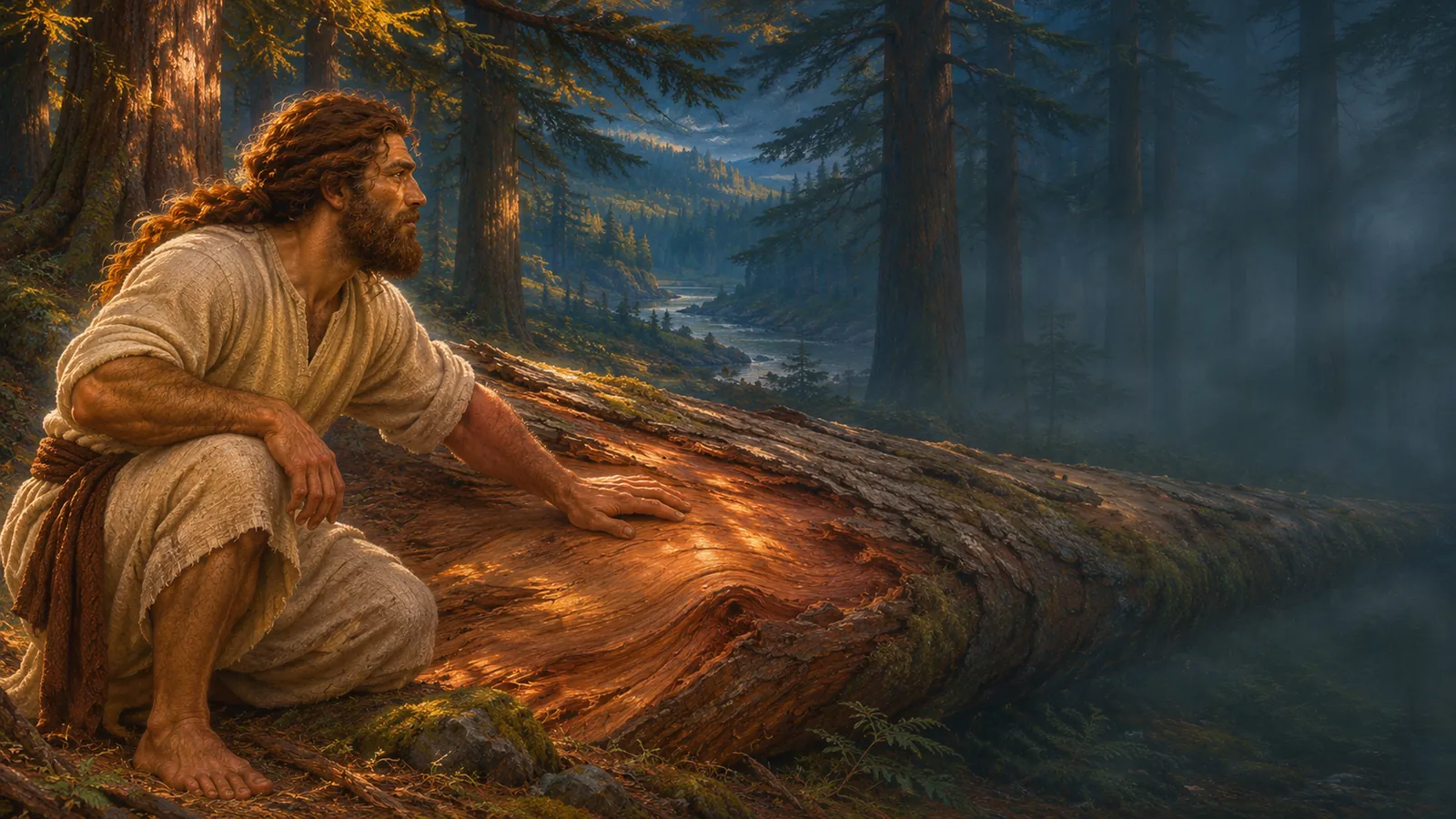
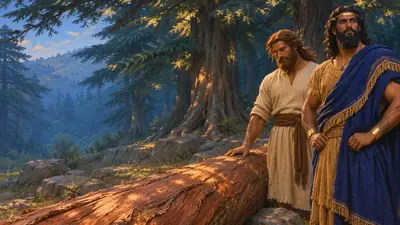
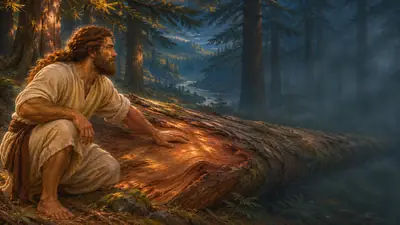
Gilgamesh worked on the tree, and Enkidu sought the best of the wood. The cedar they had brought down had once seemed to reach the heavens.
ENLIL'S DOOR
Enkidu had a purpose for the towering cedar. He wanted its wood to become a great door for Enlil, the god whose forest they had laid open.
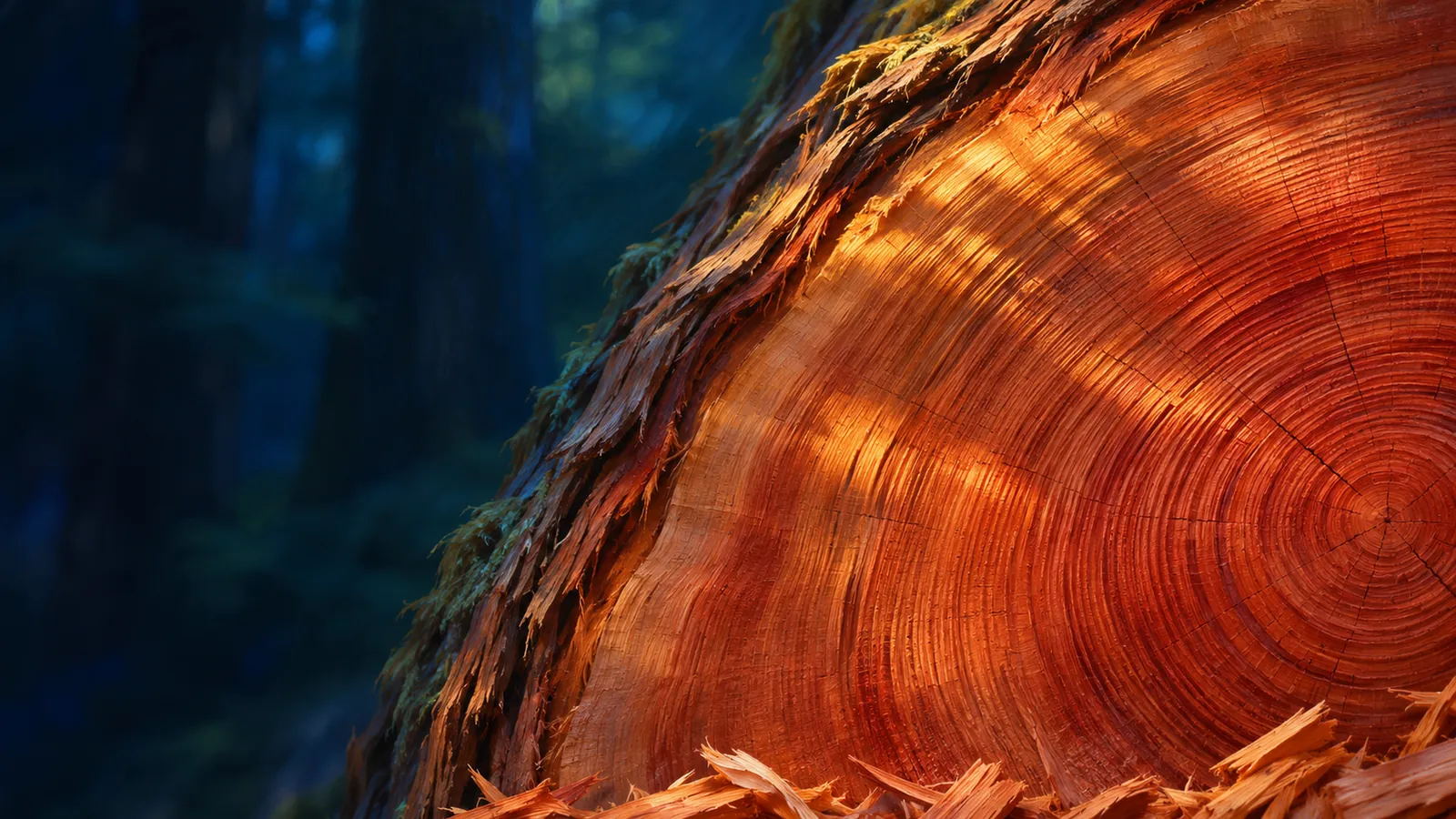
Enkidu pictured a door whose parts would come from the same timber. He spoke of its height and weight with a care that matched the size of the tree.
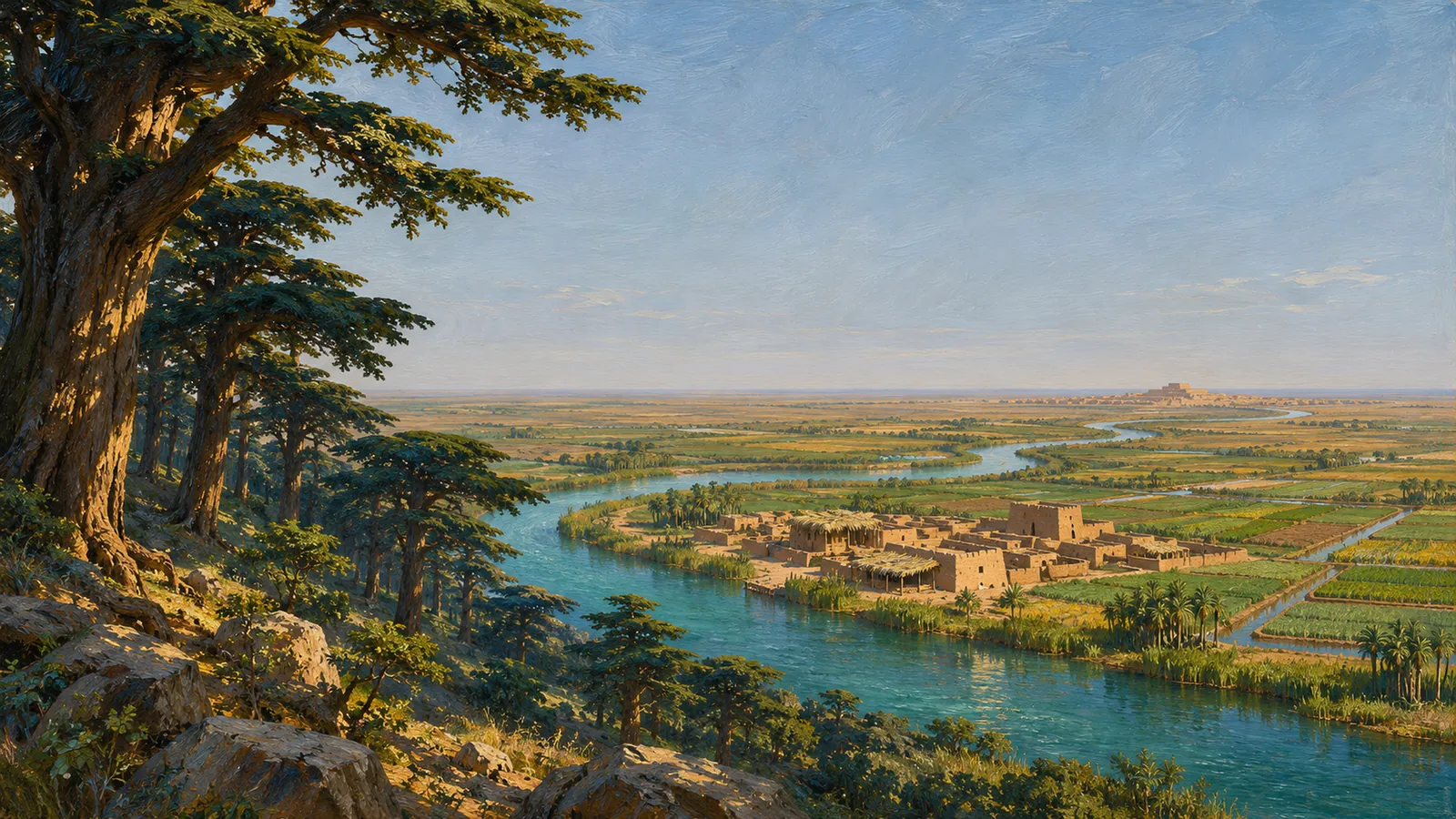
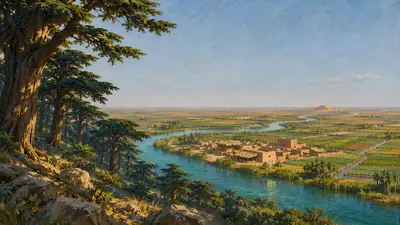
Enkidu looked ahead to the river journey. He meant the Euphrates to carry the cedar to Nippur, where it would be received at Enlil’s sanctuary.
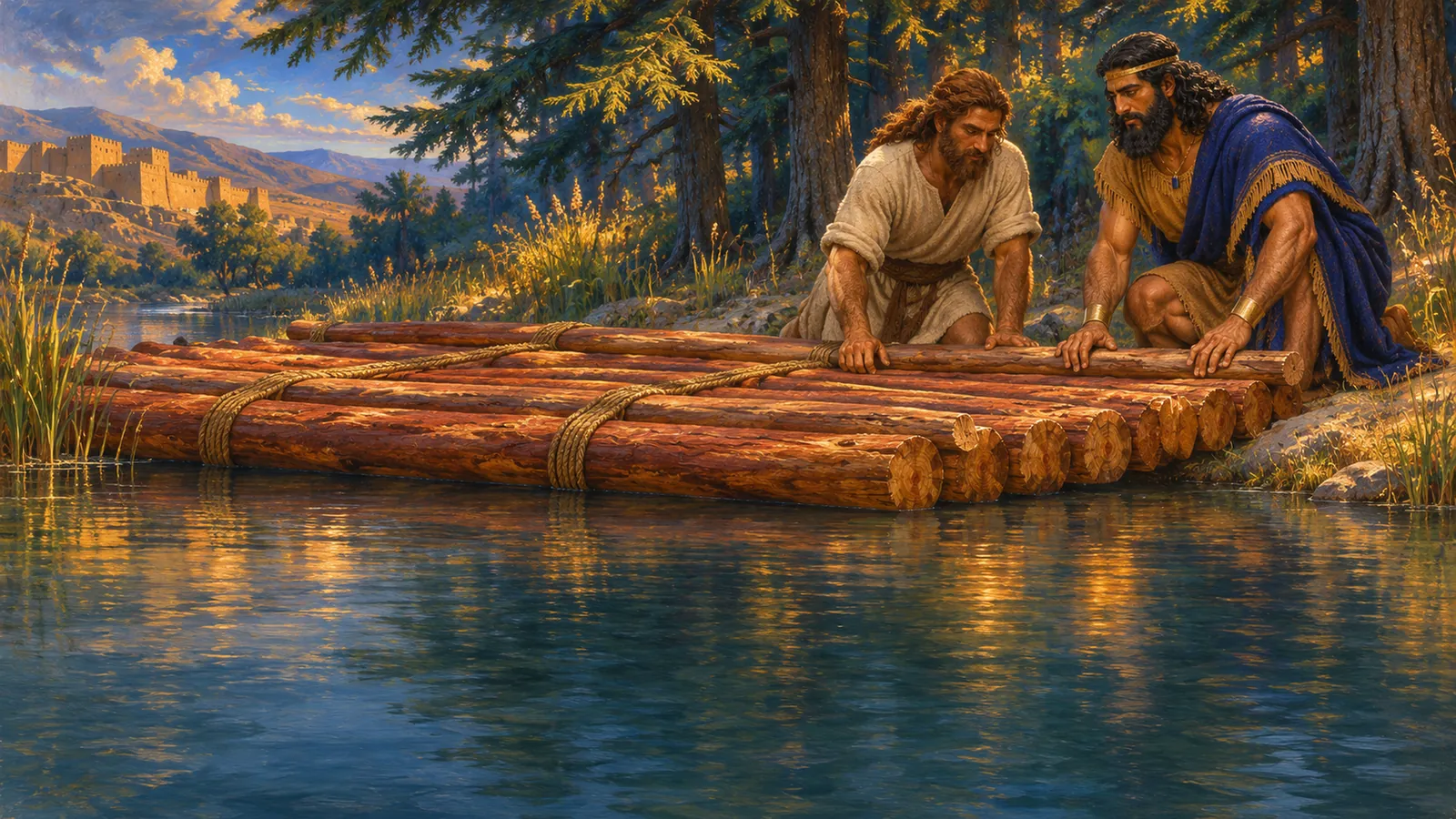
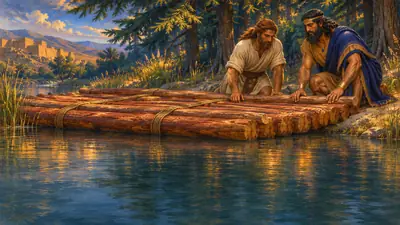
At the end of the forest episode, the surviving lines bring the friends to the water. They lashed wood together into a raft for the journey out.
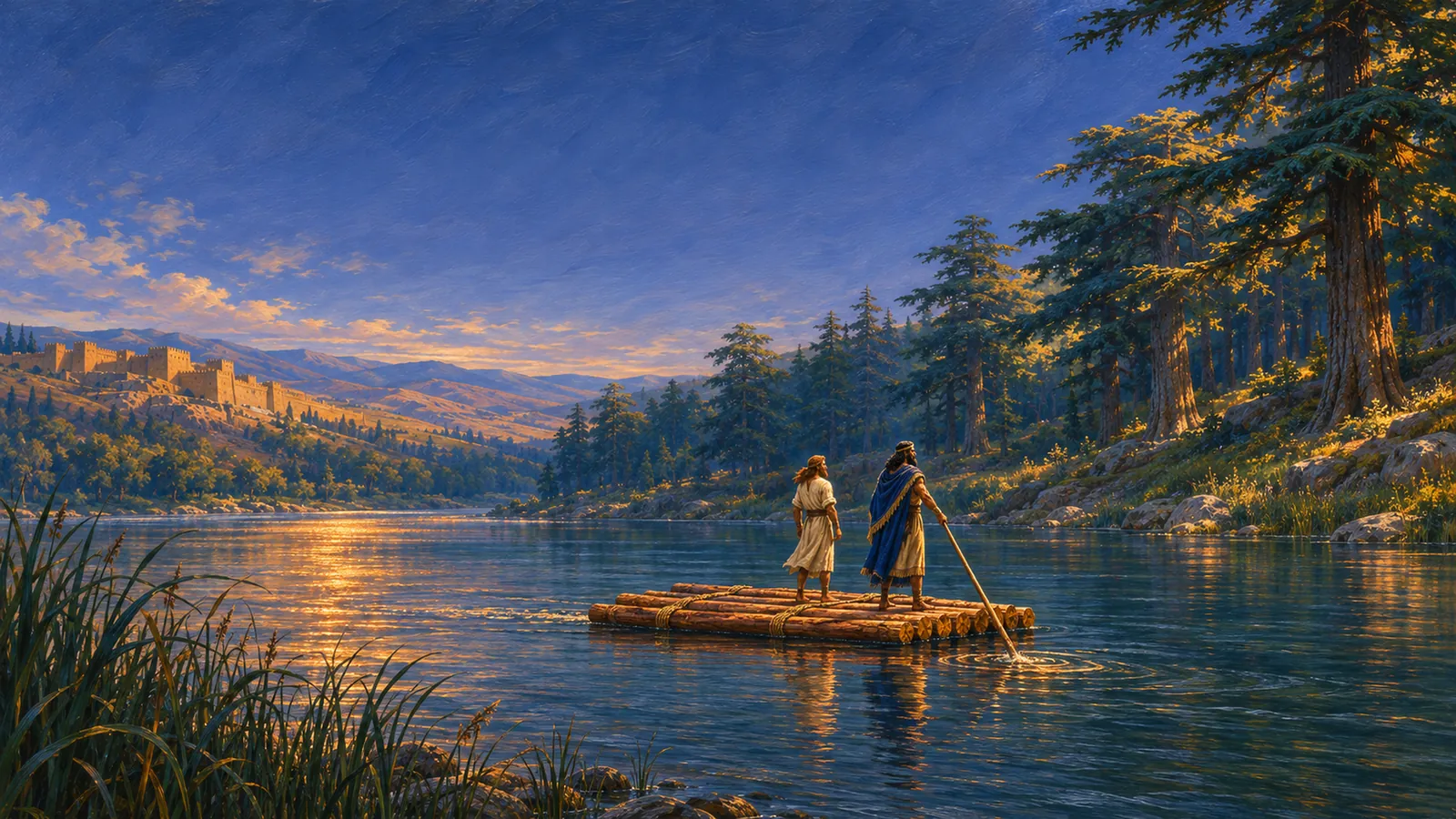
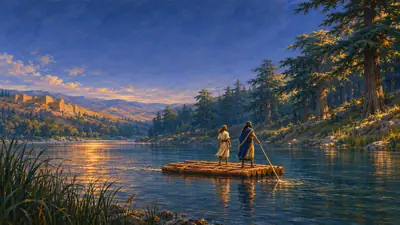
The friends embarked with the cedar they had cut. The damaged lines appear to say that Gilgamesh carried Humbaba’s head while Enkidu steered the raft.

Gilgamesh and Enkidu rode the raft downstream. They had set out to make a name in the forest, and they had found a deed that would follow them back to Uruk.
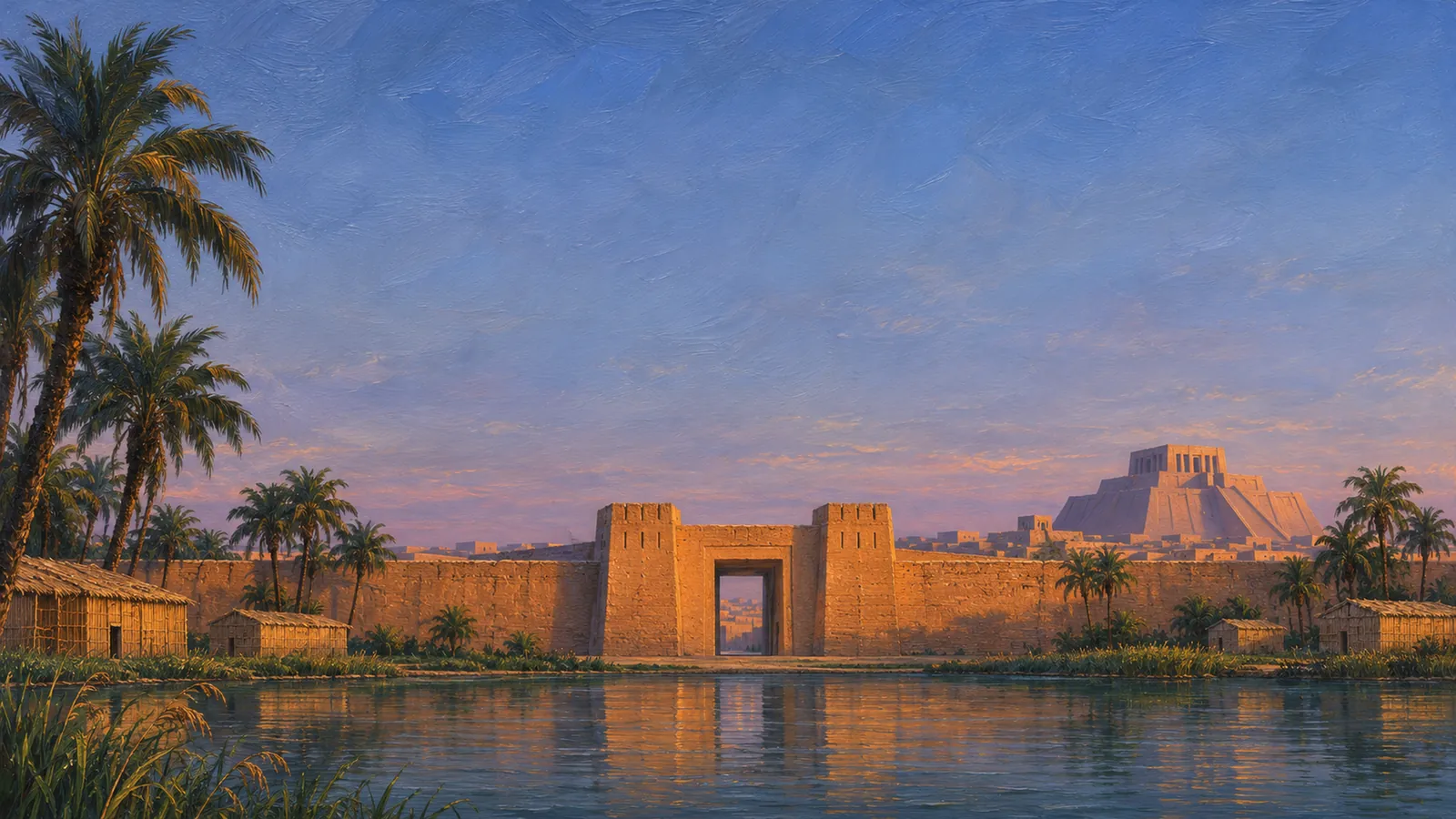
URUK
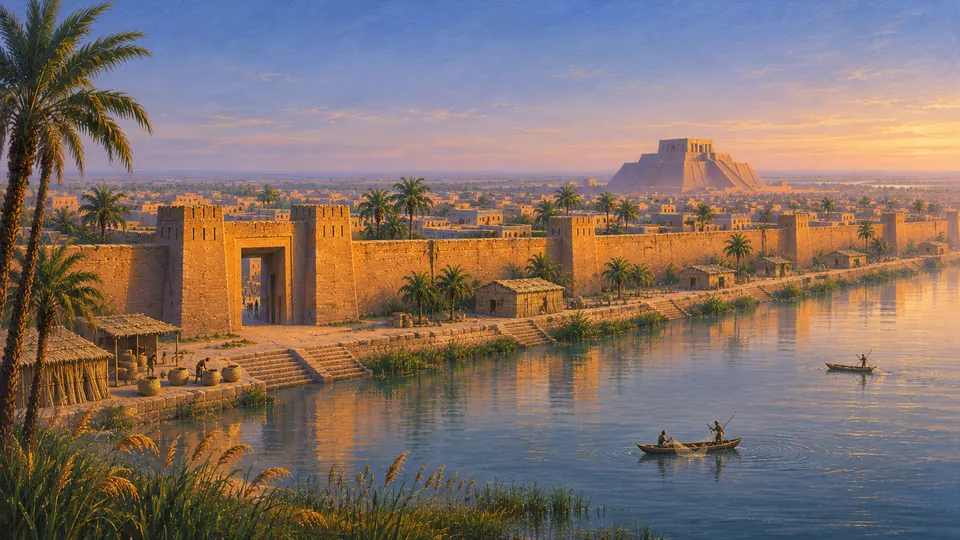
Their river journey brought them back toward Uruk. In the tale that follows, Gilgamesh will wash away the dust of the road, and someone in the city will take notice.
End of chapter 3
All pages


Sources
On page 29, Enkidu urges action and the companions kill Humbaba (Standard Babylonian Gilgamesh, Tablet V, George’s synopsis). The retelling condenses the struggle to their decision and the killing. The related Old Babylonian Ishchali account is a separate witness.
Editions consulted
- Al-Rawi and George, Back to the Cedar Forest, JCS 66 (2014)
- Andrew R. George, The Epic of Gilgamesh, Synopsis, Tablet V
- ORACC, Standard Babylonian Tablet V witness P348662
Notes on this retelling
On page 38, the reading of Humbaba’s head among the things the companions take on the raft is partly restored at the end of Tablet V (SB Gilgamesh V 321–324, Al-Rawi and George 2014). The retelling retains that uncertainty.
Ancient lines behind each page
- Page 1: SB V 1–3, Al-Rawi and George 2014
- Page 2: SB V 3–5, Al-Rawi and George 2014
- Page 3: SB V 6–9, Al-Rawi and George 2014
- Page 4: SB V 10–13, Al-Rawi and George 2014
- Page 5: SB V 14–16, Al-Rawi and George 2014
- Page 6: SB V 17–21, Al-Rawi and George 2014
- Page 7: SB V 20–23, Al-Rawi and George 2014
- Page 8: SB V 24–26, Al-Rawi and George 2014
The restored comparison is paraphrased. - Page 9: SB V 27–30, Al-Rawi and George 2014
The revised edition identifies Gilgamesh as the one weakened here. - Page 10: SB V 31–33, Al-Rawi and George 2014
Text partly restored. - Page 11: SB V 34–38, Al-Rawi and George 2014
The following words are damaged. - Page 12: SB V 39–44, Al-Rawi and George 2014
- Page 13: SB V 45–46 and gap, Al-Rawi and George 2014
- Page 14: SB V gap after 46, resumes at 61, Al-Rawi and George 2014
- Page 15: SB V 61–72, Al-Rawi and George 2014
- Page 16: SB V 73–81, Al-Rawi and George 2014
- Page 17: SB V 75–80, Al-Rawi and George 2014
- Page 18: SB V 87–89, Al-Rawi and George 2014
The published text marks portions of the appeal as uncertain. - Page 19: SB V 90–91, Al-Rawi and George 2014
- Page 20: SB V, confrontation, George, Synopsis, Tablet V
Transition compresses fragmentary exchanges. - Page 21: SB V, Humbaba’s challenge, ORACC P348662 obverse; George, Synopsis, Tablet V
- Page 22: SB V, combat; George, Synopsis, Tablet V
- Page 23: SB V, divine winds; George, Synopsis, Tablet V
- Page 24: SB V, Humbaba blinded; George, Synopsis, Tablet V
- Page 25: SB V, Humbaba’s plea; George, Synopsis, Tablet V
- Page 26: SB V, parley; George, Synopsis, Tablet V
Paraphrase. - Page 27: SB V, Enkidu’s counsel in the parley; George, Synopsis, Tablet V
- Page 28: SB V, Humbaba’s curse; George, Synopsis, Tablet V
- Page 29: SB Gilgamesh V, death of Humbaba, George, Synopsis, Tablet V; compare OB Ishchali
- Page 30: SB V 300–312, Al-Rawi and George 2014
- Page 31: SB V 302–306, Al-Rawi and George 2014
The published translation marks some portions of the speech as restored. - Page 32: SB V 302–306, Al-Rawi and George 2014
- Page 33: SB V 310–315, Al-Rawi and George 2014
- Page 34: SB V 313–319, Al-Rawi and George 2014
- Page 35: SB V 314–317, Al-Rawi and George 2014
- Page 36: SB V 318–319, Al-Rawi and George 2014
- Page 37: SB V 320–322, Al-Rawi and George 2014
Some embarkation details are damaged. - Page 38: SB Gilgamesh V 321–324, Al-Rawi and George 2014 (partly restored)
- Page 39: SB V 321–324, Al-Rawi and George 2014
- Page 40: SB V 321–324; SB VI opening; George, Synopsis, Tablet VI
Illustrations made with AI tools by IL Archive; the text is based on the ancient sources (see the sources at the end of each chapter).