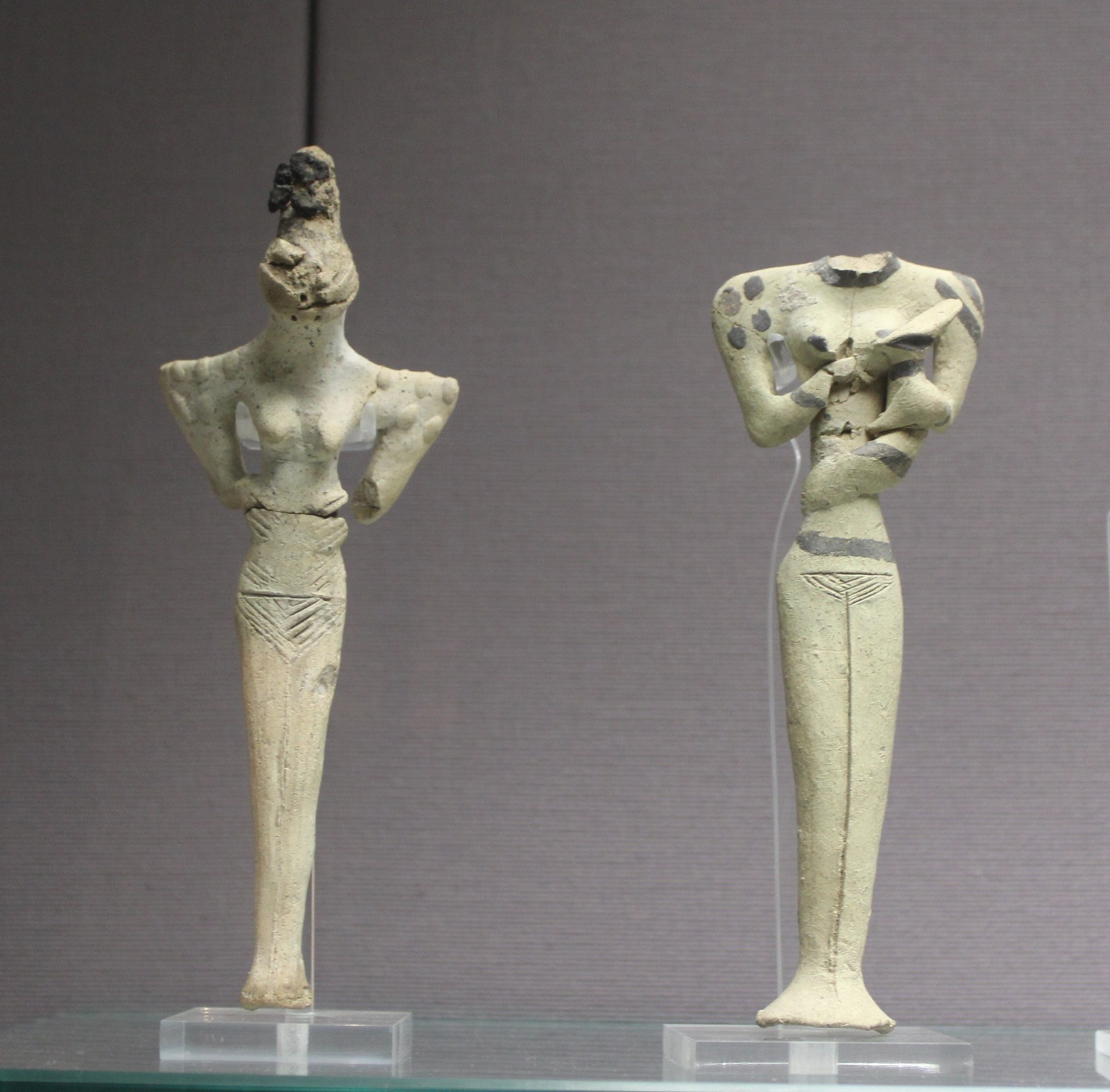
Study
Eridu: Can We Watch the Temple Being Born?
An extended study of a topic, with evidence and references.
From eighteen architectural levels to the evidence at XI: what does Eridu’s sequence reveal about temple formation, and where does architectural continuity stop short of identifying Enki?
Share article
Dates
Dates have distinct roles. The timeline uses creation, composition or historical coverage, rather than publication or discovery dates.
- Historical coverage
- Approximately From 6000 BCE to 2000 BCE
Text
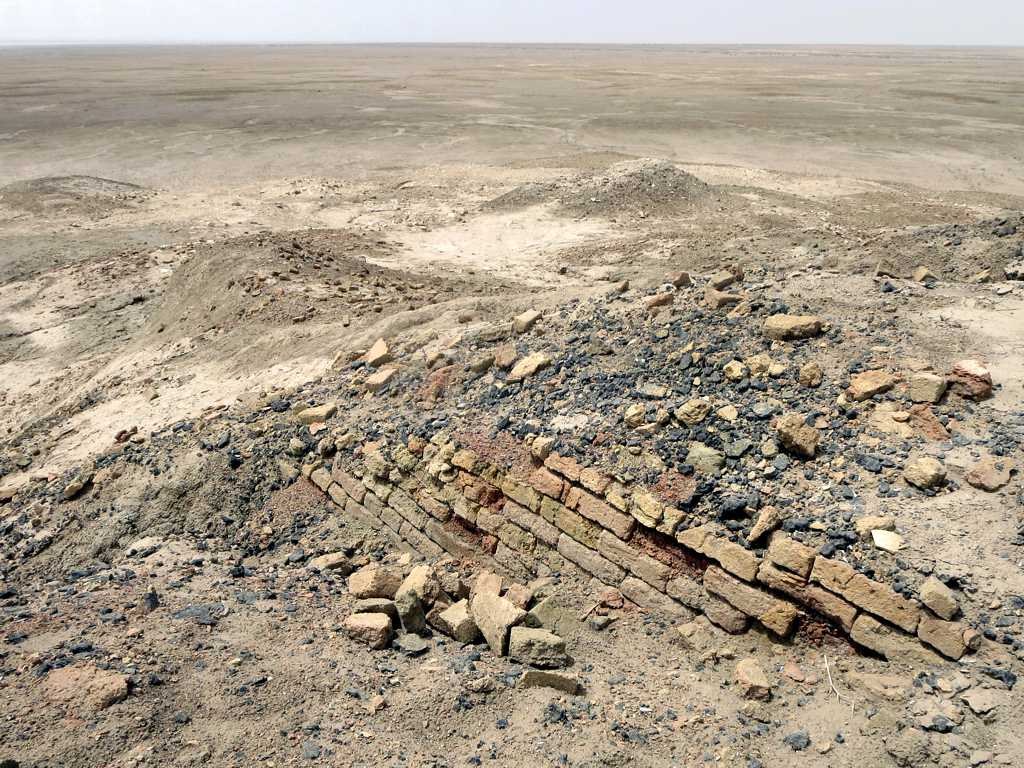
In southern IraqIraqIraq is a modern country encompassing much of ancient MesopotamiaGlossary · Click to read the explanation, beneath the ruins of a city that would become one of MesopotamiaMesopotamiaA historical region associated with the Tigris and Euphrates, home to many societies and civilisations.Glossary · Click to read the explanation’s most sacred places, excavators dug through layers of mudbrick and rebuilding into a very early architectural sequence: one structure above another, with halls and platforms changing over time.
The place is EriduEriduAbu Shahrain in southern Iraq, with a long architectural sequence beginning before writing. Associated with Enki in historical times, which does not establish the sacred being’s identity in its earliest layers.Glossary · Click to read the explanation, modern Abu Shahrayn. In historical times Mesopotamians would know it as the city of EnkiEnkiMesopotamian deity associated with deep fresh water, wisdom and Eridu, known as Ea in Akkadian tradition. The earliest preserved written mention does not date his cult’s origin or identify Ubaid Eridu’s deity.Glossary · Click to read the explanation and his sacred complex, E-abzuAbzuDeep fresh waters in historical Mesopotamian conceptions, associated with Enki/Ea. The name occurs in E-abzu, “House of the Abzu”. It cannot automatically identify an Ubaid platform or a water basin.Glossary · Click to read the explanation. But the buildings preceding writing raise a question that later names cannot answer: can we watch a temple taking shape here?
For a long time the answer seemed straightforward: eighteen temples built over one another, beginning with a modest room and developing into the familiar Mesopotamian temple. Yet this formulation conceals differences between levels and turns an interpretation of some buildings into a certainty about them all.
Eridu preserves an important sequence, but its earliest structures are not securely identified as temples. It may offer no single moment of birth. Instead, it allows us to investigate increasingly distinct ritualRitualAn organised or distinguished practice meaningful to a community; it may leave traces, but its form alone does not reveal an associated doctrine.Glossary · Click to read the explanation architecture without knowing the sacred being’s name at the beginning.
Eridu before its temple’s familiar name
Eridu lies southwest of Nasiriyah in southern Iraq; its main mound is called Abu Shahrayn. The site’s history begins in the sixth millennium BCE, within the UbaidUbaid cultureAn archaeological designation for material traditions originating in southern Mesopotamia with regional diffusion. Broad southern frame c. 6500–3800 BCE; not a known linguistic people, with limits varying by region and phase.Glossary · Click to read the explanation world, followed by later periods. Today’s archaeological landscape combines remains of different ages, rather than one unchanging scene.[1]
Historical sources associate Enki with deep fresh water and wisdom, and his cult with Eridu. E-abzu means “House of the Abzu”: the deep waters belonging to conceptions of his world.[4]
A name preserved from the age of writing does not automatically identify a building that preceded it by a long interval. Continued use of a location must be distinguished from the identity of its deity, ritual and institution at each stage. A place may retain its value while its meanings change.
Eighteen levels, not eighteen certain temples
During the 1940s excavations, archaeologists opened what became known as the Temple Sounding near the mound’s southwestern part. It exposed eighteen architectural levels, numbered from XVIII at the bottom. Associated pottery helped establish the Ubaid sequence: the sounding’s importance was not solely religious.[1]
The number describes levels in an archaeological sequence. It does not mean eighteen complete buildings of known function were preserved one above another. Some evidence is fragmentary; some stages are represented more by fill or terraces than by a clear temple plan.[2]
A more accurate description is an architectural sequence in which several structures have famously been interpreted as temples. Calling every level a temple gets ahead of the evidence needed to justify that identification in each case.
What do the first buildings show?
Level XVII contained a small rectangular building with a brick pedestal or platform and an installation involving fire outside its walls. Its position beneath later buildings and the internal pedestal encouraged a sacred interpretation.[2]
These clues are not an independent identification card for a temple. Platforms can serve different purposes, and a later temple above an earlier structure does not settle that structure’s function.
In his review of Mesopotamian architecture within a dissertation on Tell Surezha, Samuel Lee Harris stresses that identifying XVII, XVI and XV as temples is not secure on their own features. Some subsequent levels are hypothetical or incomplete, and XIV is essentially a fill layer.[2]
The earliest structure may have had a special purpose, belonged to a household, or combined uses. Caution does not rule out ritual. It prevents us from assigning the remains a more specific institution than they support.
Level XI: stronger evidence for a temple
The temple interpretation becomes stronger at XI. There is a platform about a metre high, recessed and projecting wall elements, several rooms, and in one room an installation interpreted as an offering table with evidence of burning around it.[2]
The excavators regarded this as the first building in the sequence they could identify more confidently as a temple. Harris reports their assessment from Safar, Mustafa and Lloyd’s excavation publication, while also noting the incomplete plan and difficulty of reconstructing it.[2]
XI therefore marks a change in how clearly function can be recognized. It does not announce the first sacred place in human history. Even here, architecture cannot supply a prayer, a deity’s name or a full description of events inside the rooms.
What does elevating a building add?
Raising a structure above a settlement’s surface changes its relationship to its surroundings. Approaching it involves ascent; its mass becomes more prominent, and access may be organized differently.
This is an interpretation of space, not proof of one religious reason for the platform. Elevation may also serve practical and structural purposes. The temple reading gains strength from the combination of height, internal organization, special installations and rebuilding context, rather than a metre of earth alone.
Historical Mesopotamia would have large terraces and temple towers. But XI’s platform is not a fully developed zigguratZigguratElevated temple tower of terraces in historical Mesopotamian architecture. Not every temple platform is a ziggurat; similar elevation does not establish one developmental route for all early structures.Glossary · Click to read the explanation, nor does it prove a single direct route followed by every temple. Eridu permits comparison between stages, not a universal law of architectural evolution.
The central hall and side rooms
Later levels show a more distinct central space. IX has a hall with altar remains. VIII was rebuilt with a long hall, an altar and an offering table; VII and VI followed with related layouts.[2]
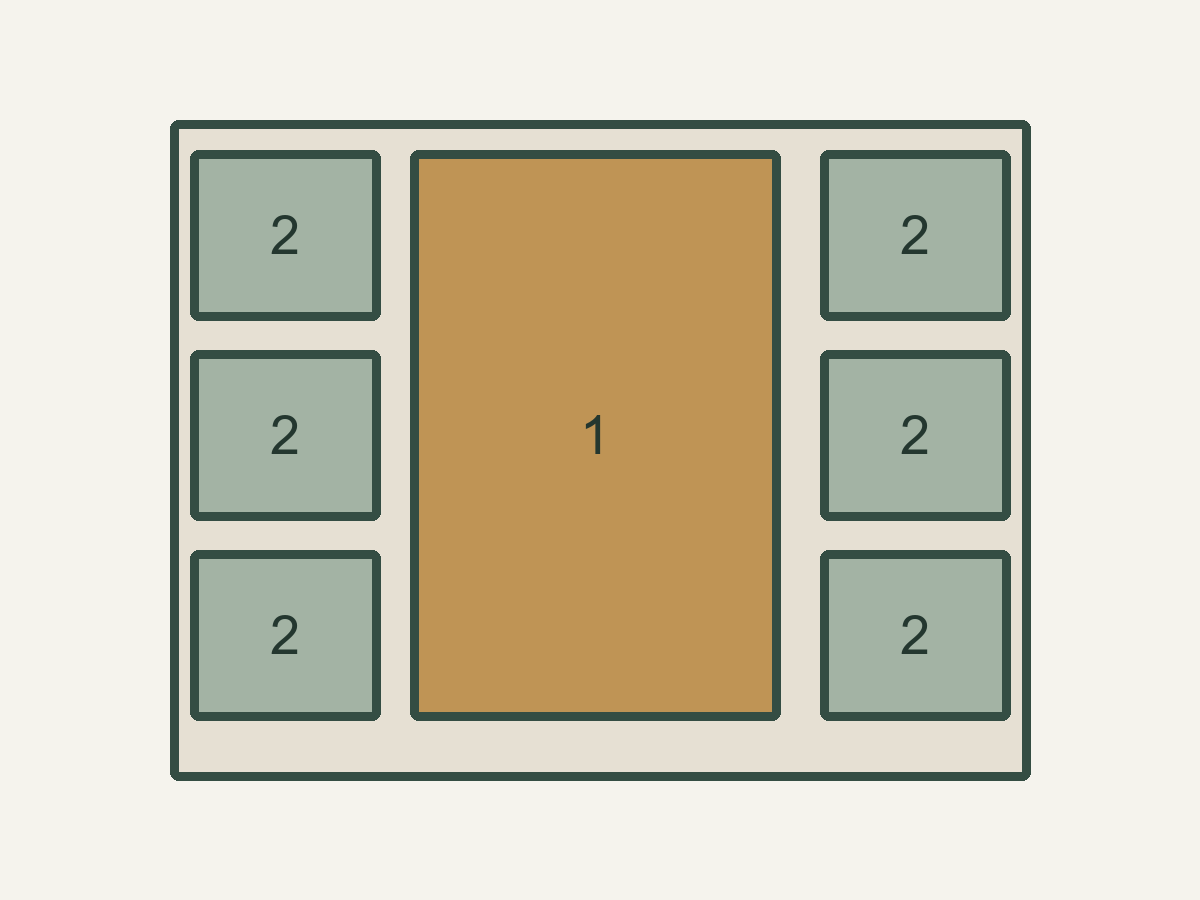
A tripartite planTripartite planArchitectural arrangement with an elongated central space and lateral sections or rooms. Describes spatial organization, not necessarily three rooms. Found in houses and ritual buildings; does not alone determine function.Glossary · Click to read the explanation has an elongated central space flanked by side rooms or lateral sections. It need not have identical sides, and it does not simply mean three rooms. The name describes the overall spatial arrangement.
This arrangement can emphasize a principal hall and divide movement between the centre and subsidiary spaces. It does not by itself identify stores, admission rules or the ritual character of every room. Functions require finds, traces of use and building context.
Ubaid houses share the architectural language
The surprise is that tripartite planning was not invented specifically for temples. Ubaid domestic buildings also used central halls and side rooms. Harris’s discussion emphasizes how difficult it is to distinguish ritual from domestic structures by this form alone.[2]
This makes the emergence of some temple architecture from the language of the house a useful hypothesis: a space might grow, be elevated, acquire different access and special installations, and serve a wider community.
Sharing a plan does not demonstrate that we have found a particular ordinary house and followed its transformation into a temple. Nor does it establish identical functions for every tripartite building across northern and southern Mesopotamia. Resemblance starts the inquiry; it does not finish the interpretation.
The god’s house in historical language
In written Sumerian, the word e, conventionally transliterated e₂, includes both “house” and “temple” among its meanings. ORACC’s specialist dictionary records these usages.[5]
The terminology opens a window onto a historical world in which a temple could be conceived as a sacred being’s house. E-abzu is itself a clear example.[4]
But the linguistic evidence belongs to the age of writing. It does not establish the language of Ubaid Eridu, the words its inhabitants used, or their adherence to later beliefs. Language and architecture can be compared carefully while keeping the chronological gap visible.
Altars and offering tables: a place for action
Ritual interpretation gains strength when a plan includes specific locations for repeated action. XI’s offering table and surrounding burning are an example; the halls’ altars and installations in later stages add further evidence.[2]
Yet “altar” and “offering table” already interpret an installation’s function. They do not automatically tell us what was presented, by whom or to whom.
We can investigate increasingly organized space around distinctive installations, with traces of materials, fire and food in their context. This is stronger evidence than an ambiguous platform in a small room, but still less than a reconstruction of an entire belief system.
The clay snake and fish bones
A striking find is reported from Building VII: the body of a painted clay snake, about 34 centimetres long, inside an installation described as an altar. Its head was found separately near a corner of the hall. Judy Bjorkman reviews the find in her study of altar deposits, drawing on the excavation report.[3]
She also describes fish bones on the floors of the building’s two occupation stages and discusses the possibility that the snake’s body was incorporated during the altar’s construction. The circumstances of the separated head and the object’s use remain open.[3]
This context deserves attention, but it does not establish snake worship or offerings of fish to Enki at that date. Fish are also expected as food in a watery environment. A ritual interpretation needs their position, recurrence and relationship to installations. The symbolic object carries no name for the recipient of the rite.
From XI to VIII and VI: change without an automatic progression
Buildings were not repeated unchanged at every stage. X is understood as a rebuilding close to XI, but no offering table survived there. The hall and its installations changed in IX and VIII; related elements continued in VII and VI.[2]
These differences matter because popular narratives tend to show a small room growing evenly into a monumental temple. The archaeological record instead presents rebuilding, alterations and uneven preservation, rather than a complete sequence of images recording one process.
Increasing specialization can be followed in some stages, while gaps in the sequence and in our knowledge should not automatically be filled with a story of uninterrupted progress.
How does a place become an institution?
A ritual building may serve a community wider than the household occupying a house. Renewal and the organization of offerings may require sustained cooperation, labour and supervision. Architecture’s history can thus intersect with social organization.
But possible functions—collecting or distributing food, organizing work or feasts—are not an established inventory for every stage at Eridu. A plan alone does not reveal institutional accounts, property or a specialized priestly class.
The movement from house to institution is a useful comparative question: when does a place become a wider group’s responsibility, and who manages it? Eridu’s answer needs evidence from the relevant period, rather than the economy of historical temples projected onto the Ubaid.
Continuity of place and its limits
Rebuilding within a similar area makes the location a long-lived reference point. Structures change while later generations return to the place. Memory and special value may accumulate there.
However, “the same location” does not mean identical walls and platforms throughout the centuries. Some stages are only partly known, and the position of certain earlier buildings is debated.[2]
Spatial continuity is an important clue. The uninterrupted continuation of one sacred status, belief and divine name requires independent evidence. A community may inherit a significant place and reinterpret it, or its functions may change before texts make them more explicit.
When does Enki become a readable name?
ORACC dates Enki’s earliest secure attestations to Early Dynastic IIIa texts from Fara. We therefore encounter a written name in the third millennium BCE, after the Ubaid stages discussed here.[4]
The first surviving attestation is not the first day a deity existed. His worship may precede the available writing. But the absence of the name in the earliest layers prevents us from identifying XI or XVII as an Enki temple as an established fact.
This gap is central. We know Enki in historical sources, and we know earlier architecture at Eridu. We lack the bridge establishing the deity’s identity at every stage.
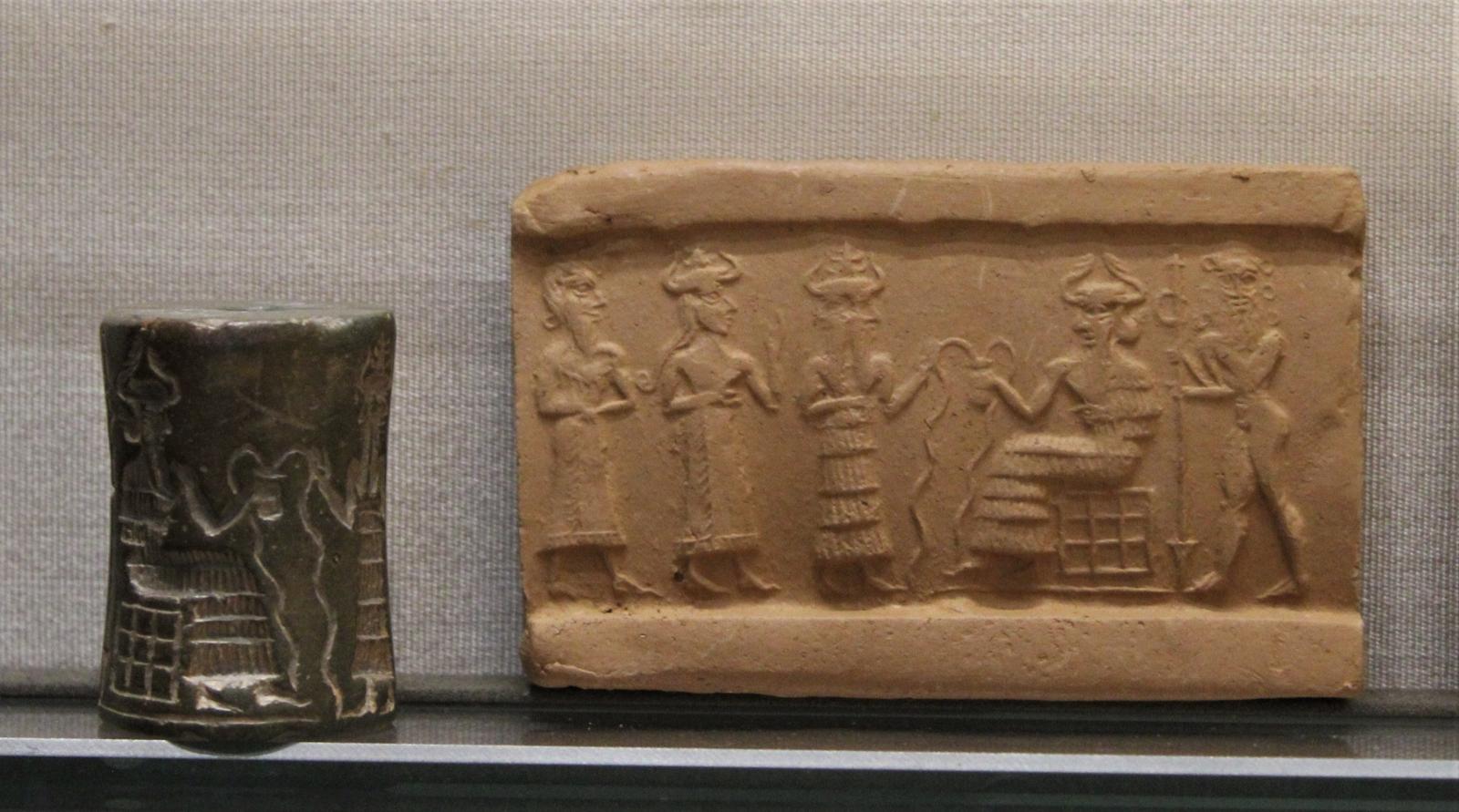
The following AkkadianAkkadianAn ancient East Semitic language written in cuneiform in Mesopotamia.Glossary · Click to read the explanation seal is identified by the Louvre catalogue as showing Enki/Ea and dated to 2340–2200 BCE. It illustrates a later historical world, not the identity of Ubaid Eridu’s deity.[7]
Did a water-related being precede Enki?
The watery setting and Enki’s later importance make the question reasonable: did an earlier local water tradition become part of his world?
Several possibilities remain. Enki’s own worship may precede his written name; another being may have preceded him; the deity’s identity may have changed; or some early structures may not have centred on a personal deity at all.
Fish bones do not decide between these alternatives, and the later name Abzu does not settle what Ubaid inhabitants said. Environmental resemblance invites investigation but cannot establish a religious genealogy extending over millennia.
A city of beginnings in Sumerian memory
A familiar version of the Sumerian King List places Eridu first: after kingship descends from heaven, Eridu is its first location in the text’s sequence, before it passes to other cities.[6]
This is evidence for later literary, political and religious memory, not a contemporary record of Ubaid settlement. It does not prove that the first historical state arose there or turn legendary reign lengths into archaeological dates.
Nevertheless, the comparison is compelling: a place with early layers and a long religious importance becomes a city of beginnings in later tradition. We can study that meeting of place and memory without treating either as automatic proof of the other’s details.
What can we say at different levels of confidence?
- Established: the sounding exposed eighteen architectural levels and helped construct the Ubaid sequence. This does not mean eighteen certain temples.[1]
- More strongly supported: XI and subsequent temple levels provide a clearer combination of evidence for specialized ritual use. They do not identify the deity or reconstruct the belief system.[2]
- Possible: domestic and temple architecture share a building language, and repeated use may have accumulated special value for the place. No single proven route from house to temple is available for every stage.
- Unproven: that all early buildings were temples, that they belonged to Enki, that beliefs remained unchanged, or that Eridu alone witnessed the invention of the temple.
These distinctions let us trace architectural change while keeping ancient religious identity an open question instead of supplying a later name.
Can we watch the temple being born?
We cannot point to one brick and say that the temple was invented there. Nor can we observe everything that changed a building’s function: institutions include people, actions, rights and meanings that walls do not preserve in full.
Eridu nevertheless offers a rare investigation: stages in which evidence for ritual specialization strengthens, the organization of halls, platforms and installations changes, and one area is used again over long intervals.
The house may have supplied sacred architecture with a familiar language, while scale, access and the community served changed. This is a productive historical hypothesis, not a birth story whose every detail can be demonstrated.
In periods with texts, Enki becomes the owner of a temple with a known name. Earlier beginnings remain between what we can see in mudbrick and what we cannot read in it. Eridu’s value is to make that boundary visible: we approach the formation of the temple without claiming to identify the first god who inhabited it.
References and notes
- Philippe Quenet et al. (2026 online; IRAQ 87, dated 2025). Archaeological Mission at Eridu: the 2022 Campaign… Part 1: Off-Site Studies and Site 1, the E-Abzu Monumental Complex Reconsidered, pp. 263–312. doi:10.1017/irq.2025.10035. Part 1 introduction and Site 1, SW slope: location, sounding with 18 levels and later terraces. Selected passages, not the whole report. Online 29 April 2026 in a volume dated 2025. Does not establish unchanged belief. Return to the text ↑
- Samuel Lee Harris (2021). Public Works and Private Work on the Threshold of Complexity: The Production and Use of Space at Late Chalcolithic 1 Tell Surezha, Iraq. PhD dissertation, University of Chicago. doi:10.6082/uchicago.2971. Page 51 and pp. 72–74, especially 2.4.2 Sacred Space – Eridu & Uruk. Text and figure 2.20 visually checked; not the complete dissertation. XI assessment and excavation details accessed through Harris citing Safar, Mustafa and Lloyd 1981, not our independent reading of that report. XIV is not a preserved temple. Return to the text ↑
- Judy Bjorkman (2008). Mesopotamian Altar Deposits. In Proceedings of the 51st Rencontre Assyriologique Internationale, SAOC 62, pp. 361–370. Page 361, Eridu passage and note 4, textually and visually checked. Snake body/head and fish bones reviewed through the 1981 report. Find distinguished from interpretations of deposition and head separation; no snake cult or Enki identification inferred. Not the entire volume. Return to the text ↑
- Ruth Horry (2019). Enki/Ea (god). Ancient Mesopotamian Gods and Goddesses, ORACC. Author’s entry: Eridu, E-abzu and first attestations in ED IIIa Fara texts, from indexed page text; direct access failed during this review. First surviving evidence is not the deity’s origin. Name not projected into Ubaid layers. Return to the text ↑
- Digital Corpus of Cuneiform Lexical Texts (DCCLT), ORACC. e [HOUSE] (N), browsable Sumerian dictionary. Indexed e [HOUSE] entry and house/temple senses. Evidence from written Sumerian, not proof of Ubaid language or belief. Return to the text ↑
- The Electronic Text Corpus of Sumerian Literature (ETCSL), University of Oxford. The Sumerian King List, c.2.1.1, translation. Translation opening, lines 1–39 and manuscript-variation note. Later literary list; legendary reigns and Eridu’s textual precedence not used to date settlement or identify the first state. Return to the text ↑
- Musée du Louvre. Sceau-cylindre : scène d’intercession, MNB 1905 / CCO A.161. Object catalogue: Enki/Ea and presentation scene, Akkadian, 2340–2200 BCE. Description, date and identifier checked. Used photograph of object and modern impression is independently licensed by its Commons photographer; not Ubaid imagery. Return to the text ↑
Suggest a correction · Suggest a source for this record
Cite this record
IL Archive, «Eridu: Can We Watch the Temple Being Born?», Edition 1, https://ilarchive.com/en/studies/eridu-birth-of-temple
Continue reading