Study
Marriage, Inheritance, and a Brother’s Widow: One Law or Different Solutions?
An extended study of a topic, with evidence and references.
- Timeline
- 2100 BCE
- Region
- Mesopotamia, Anatolia and the Levant
From Hittite and Assyrian laws and Ur-Namma to Deuteronomy, Tamar and Ruth: the differing conditions of levirate marriage and inheritance, and the limits of borrowing claims.
Share article
Text
# Marriage, Inheritance, and a Brother’s Widow: One Law or Different Solutions to a Family Problem?
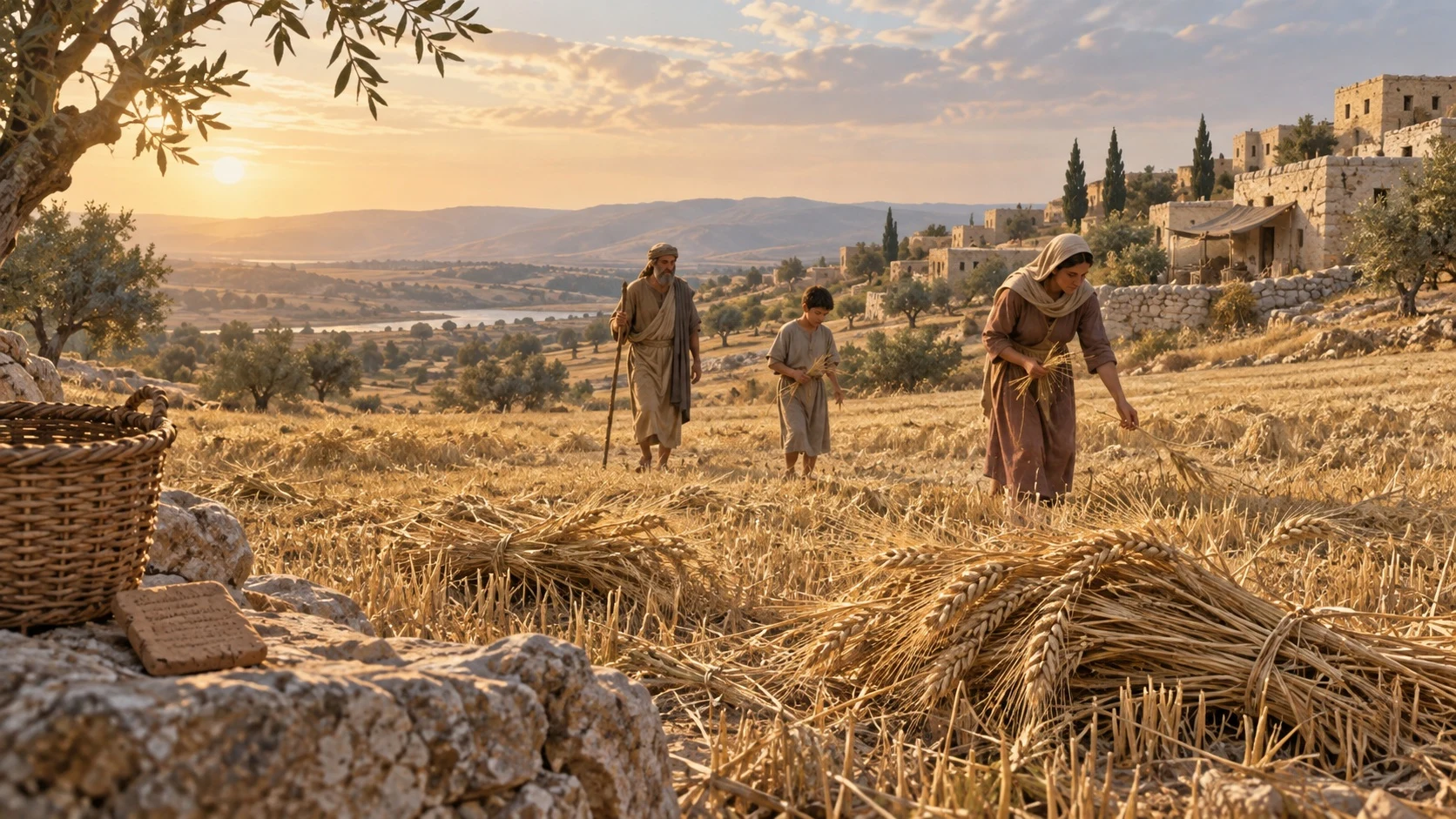
When a man died without a son in an ancient agricultural society, the question might be more than who would marry his widow. Who would bear his name? Who would inherit the land? Who would support the widow? Would property leave the family if she married an outsider? These questions were related, but they did not necessarily yield a single rule. The similarities between Hittite and Assyrian laws, Deuteronomy, and the stories of Tamar and Ruth invite an easy history: “The TorahTorah / PentateuchGenesis, Exodus, Leviticus, Numbers and Deuteronomy: Mosaic corpus with a compositional history. Torah can also mean teaching or law beyond these five books.Glossary · Click to read the explanation borrowed levirateLevirate MarriageA widow’s marriage to her deceased husband’s brother, whose conditions and purposes vary across ancient traditions.Glossary · Click to read the explanation marriage from an older civilization.” The surviving texts make that statement too simple. [1][2][3][8][9]
What is levirate marriage?
Scholars use levirate marriage for a widow’s marriage to her deceased husband’s brother. The English term comes from Latin *levir*, “husband’s brother”; it is not etymologically related to the Levites. The general definition does not tell us when the marriage is expected, whether the husband must have died without offspring, whose child the new baby is considered, or whether the widow or brother can refuse. Each text has to be read under its own conditions. [1][9][11]
Deuteronomy: the deceased’s name and public refusal
In Deuteronomy 25:5–10 two brothers live together and one dies without a ben. The HebrewHebrewA Northwest Semitic language in the Canaanite group, with ancient and modern forms.Glossary · Click to read the explanation word literally means “son,” although the older JPS translation renders it “child” here. The text expects the brother to marry the widow. Her firstborn is to stand in the dead brother’s name, so that his name will not disappear from Israel. The stated goal is more than finding another husband: it is the continuation of a house that has lost its heir. These verses alone do not spell out how a land share is to be registered for the child. Preservation of the name is explicit; the full mechanism of inheritance cannot simply be inferred from it. [1]
The case described at length is refusal. The widow goes before the elders at the town gate and states that her brother-in-law will not raise a name for his brother. They summon him, hear his insistence, and she removes his sandal and spits in his face. He receives a public designation linked to the removed sandal. The widow has a voice and a procedure for complaint, even as the text ties her future to marriage within her husband’s family. This describes the written rule, not how many historical women were able to use it. [1]
The Hittites: a widow passes among relatives
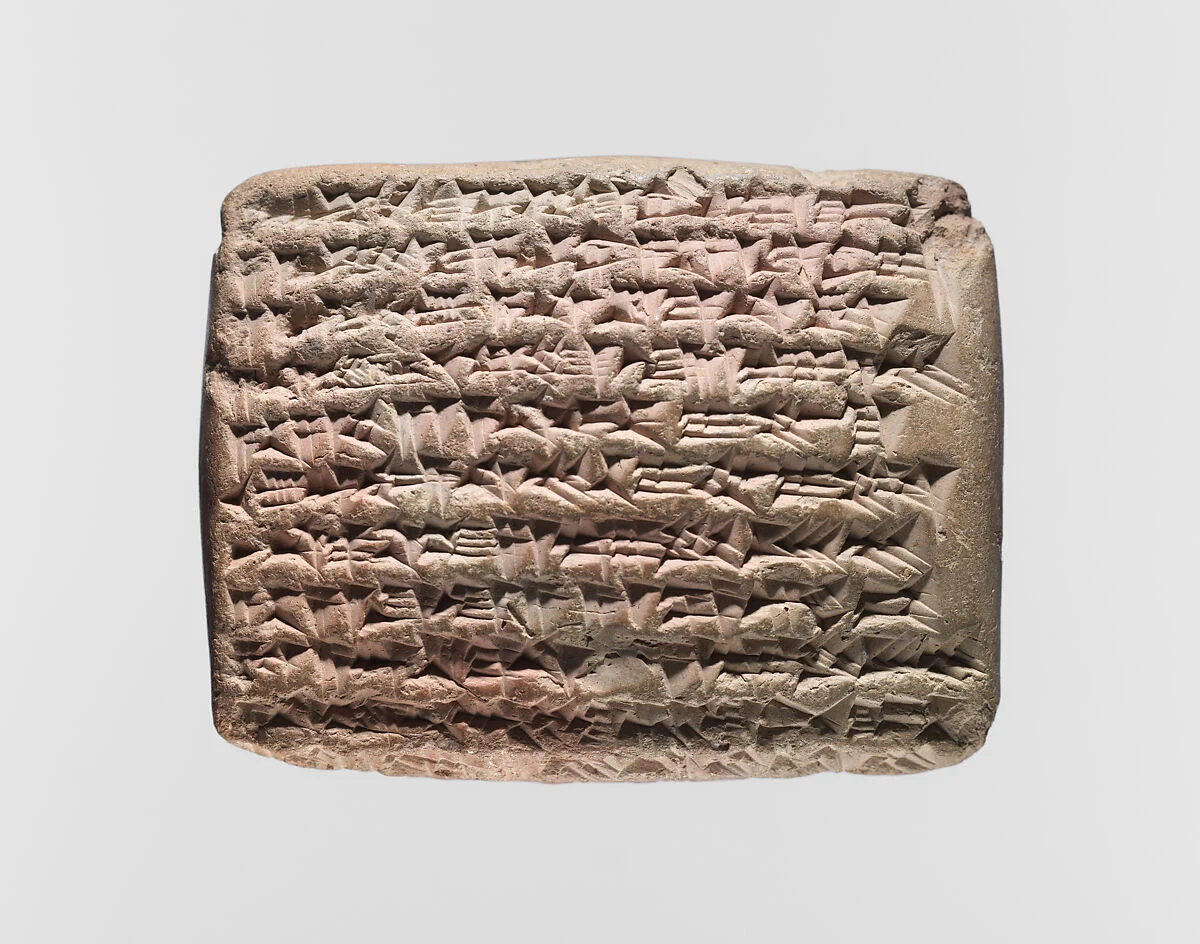
Section 193 of the Hittite Laws seems close at first: when a man dies, his brother takes his widow; if that brother dies, she passes to the father, then to the father’s brother in the sequence given by the text. Yet the section does not say the first husband was childless. It mentions no firstborn standing in his name and offers neither an elders’ hearing nor a refusal rite. The emphasis is on permitting the widow’s union with her husband’s relatives, potentially across generations. Section 195, moreover, treats intercourse with a brother’s wife while that brother is alive as forbidden. These are legal differences, not mere variations in wording for an identical case. [9]
Nor can an “if such a thing happens” clause on a tablet tell us how often the arrangement was practiced in Hittite society. A collection of cases shows how situations were framed in law; records of actual marriages, where available, are another kind of evidence. [9][10]
Middle Assyria: the father, betrothal, and the household
On the Assyrian tablet known as Middle Assyrian Laws A, sections 30, 33, and 43 address a woman’s situation after a death or an intended marriage that fails to proceed. Their details differ. Section 30 concerns marriage gifts and a betrothal arrangement; after a son dies, the woman can be assigned to another son. Section 33 discusses a widow, her children, and her father’s or father-in-law’s household, but some lines are broken. In section 43, after acts marking an intended union for a son, a father may select another son if the first dies or flees; the provision includes age and repayment conditions. [8][11][12]
These are rules about the head of a household, the woman’s place, and gifts and claims between two families. They meet Deuteronomy in keeping a union within kin, but they do not jointly contain the death of a co-resident brother without a child, a firstborn preserving his name, and a widow’s public complaint. An uncompleted betrothal arrangement should not be called the exact same case as Deuteronomy’s. [1][8][11]
An older witness complicates the generalization
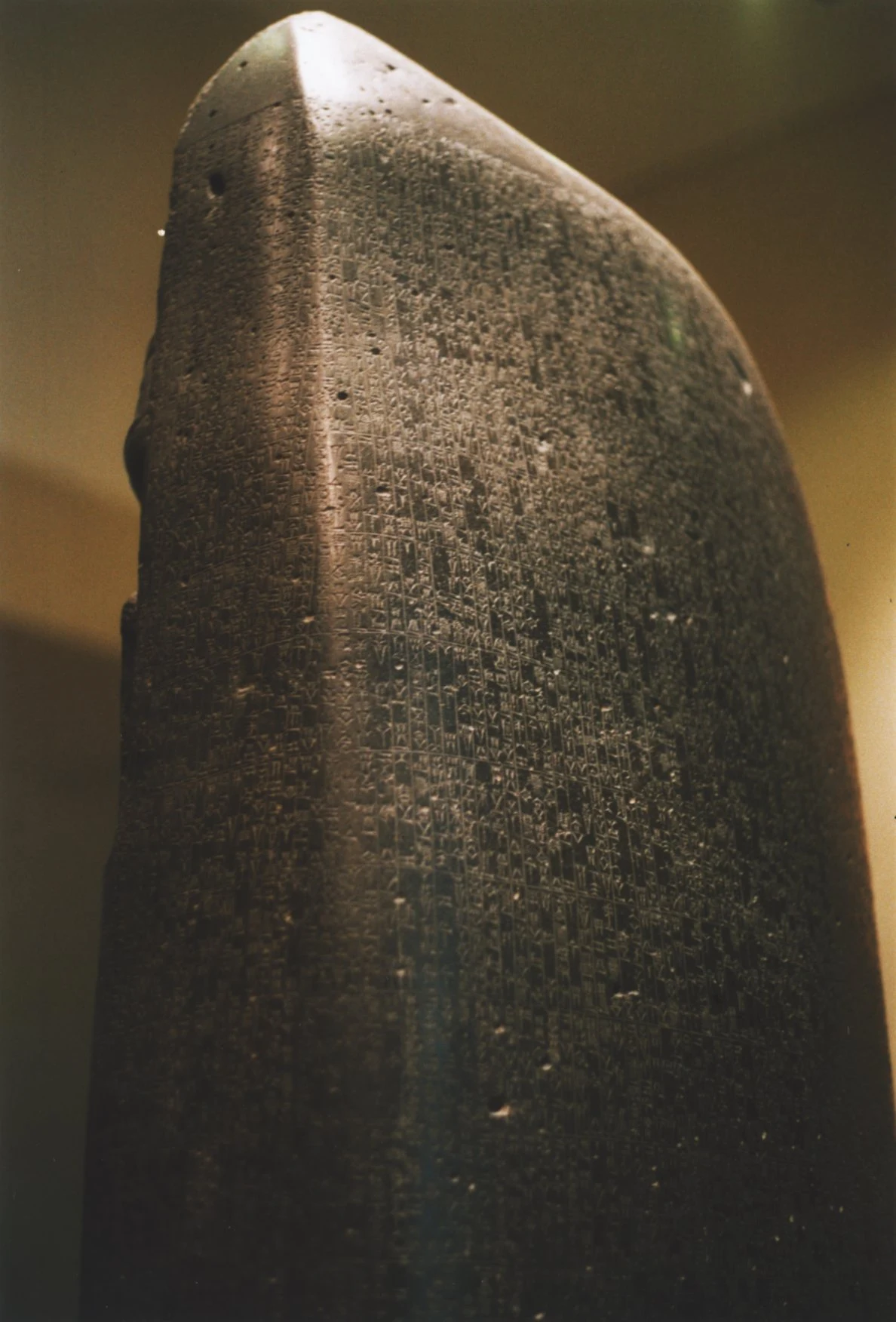
A digital composite edition of laws attributed to Ur-NammaNammaA goddess who asks Enki to relieve the gods’ labor in Enki and Ninmah.Glossary · Click to read the explanation contains a clause penalizing a man who marries “the wife of his older brother.” That obstructs the idea that every Mesopotamian tradition required levirate marriage. But the short clause in the published translation does not say whether the older brother has died; Marten Stol supplies “after he has died” parenthetically in his reading. The clause therefore cannot by itself prove that Sumerian society always prohibited marriage to a deceased brother’s widow. Equally, it should not be dropped from the comparison because it does not fit a preferred general picture. What the rule leaves unstated matters as much as what survives. [7][10]
Tamar: a story about a duty withheld
In Genesis 38, Judah directs his son Onan to raise offspring for his deceased brother Er. This attempt fails; Judah then tells Tamar to wait for Shelah. When Shelah grows up but is not given to her, Tamar acts to expose Judah’s broken promise. After she produces his seal and staff, he acknowledges that she is more in the right and connects that judgment to his failure to give her to Shelah. Tamar’s story shows the tension between the family’s continuity and a woman’s need for a future within it. It has no Deuteronomic hearing before elders or removal of a sandal. [2]
The story also shows why not every union within kin should be equated. Judah did not knowingly enter an announced legal arrangement to marry his daughter-in-law: he did not recognize her at their encounter and later admitted his wrong to her. A scholar may compare the episode with the succession of relatives in Hittite law, but it goes beyond Genesis to say that the book explicitly authorizes a father-in-law’s marriage to his daughter-in-law. A similar custom cannot date the supposed events of the patriarchs; the time represented in a story and the date when its text was composed are different questions. [2][9][10]
Ruth: kinship and land redemption, not a dead brother
Ruth 4 brings widowhood, descent, and land together at the town gate. Boaz discusses Naomi’s field and the right to redeem it with a nearer kinsman. He links obtaining the land with marrying Ruth to maintain the deceased’s name on his inheritance. The nearer kinsman yields the claim for fear of damaging his own inheritance, and Boaz proceeds. But Boaz is not Mahlon’s brother. He is a kinsman-redeemerKinsman-Redeemer in RuthA relative exercising a family property-redemption right in Ruth 4; he need not be the deceased husband’s brother.Glossary · Click to read the explanation. The story therefore offers a narrative solution to the connection between land, name, and family; it is not a literal enactment of every condition in Deuteronomy 25. [3]
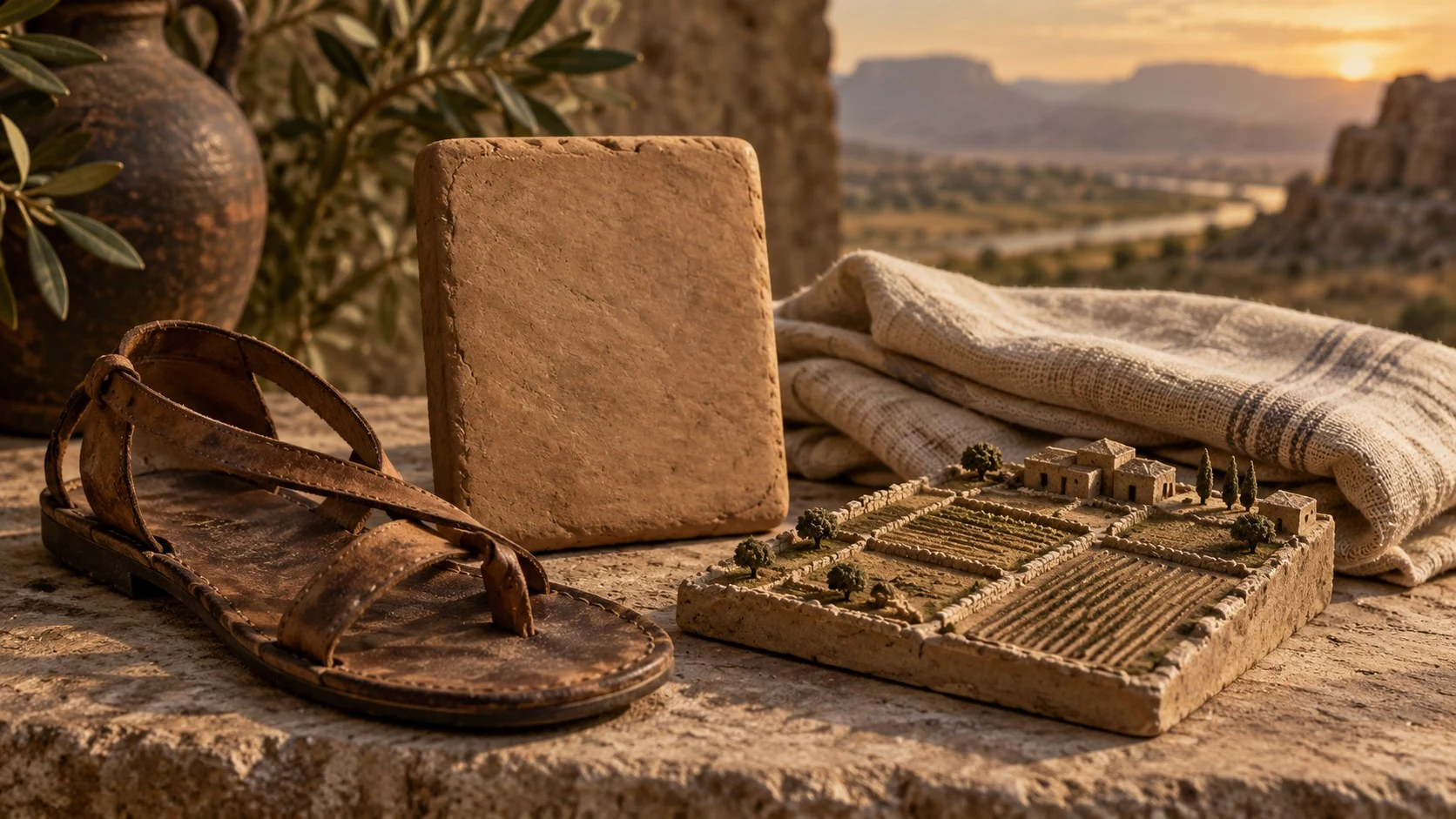
The sandal marks the difference. In Deuteronomy the widow removes the refusing brother’s sandal and spits in his face before the elders. In Ruth the kinsman removes his own sandal and hands it over to attest the exchange of a redemption right; no one spits or names him “the house of the unsandaled one.” A shared object does not make two ritualRitualAn organised or distinguished practice meaningful to a community; it may leave traces, but its form alone does not reveal an associated doctrine.Glossary · Click to read the explanation functions identical. [1][3]
Daughters, land, and the firstborn: related but separate cases
In Numbers 27 the daughters of Zelophehad ask for their father’s holding because he died without a son, fearing that his name will disappear from his clan. Their petition succeeds; where there is no son, the daughter receives the inheritance. Numbers 36 then presents the clan leaders’ concern that an heiress marrying into another tribe would move land out of theirs. The daughters may choose husbands within their father’s tribal family, and the narrative says they married their cousins. This concerns daughters’ inheritance and limits on the transfer of land, not a widow marrying her dead husband’s brother. [4][5]
In Deuteronomy 21:15–17 a father may not elevate a younger son of the favored wife over the firstborn son of the less-favored wife; the firstborn receives a double portion. These texts help explain why naming an heir and retaining family land were pressing matters. They do not present the same conditions or replace one another. Benjamin Kilchör has proposed literary connections among these laws, but their order of composition is disputed; their present order in the Torah does not establish when each was written. [6][12]
Emar wills: where does the “outsider” appear?
Sara Milstein reports that wills from the Syrian city of Emar use a formula restricting a widow’s claim to her husband’s property if she follows an outside man. Some link her possessions to whichever of her husband’s brothers supports her. This resembles Deuteronomy’s language barring the dead man’s wife from an “outsider” more closely than the bare fact of marrying a brother does. Our access here is to Milstein’s account of the documents, not an independent examination of every Emar tablet. [1][10][11]
Milstein proposes a further step: a familiar contractual clause may have become a scribal training case before entering Deuteronomy’s legal collection as a general rule. The proposal merits examination because it tries to explain the language, length, and refusal structure of the case, rather than merely drawing a line between peoples who knew kin marriage. Yet no Israelite document from the time of composition has been found copying a specific Emar will, nor is there a documented route showing the Deuteronomic writer saw those tablets. The proposal goes beyond a vague verbal likeness, but falls short of proof of direct borrowing. [11]
What can we conclude?
These texts address a broad shared problem: a man dies, leaving a woman and perhaps land and a name to maintain. Their solutions vary: a sequence of relatives for the widow in Hittite law; betrothal and household arrangements in Assyria; an ambiguous short prohibition in a Ur-Namma composite; preservation of the brother’s name with public consequences for refusal in Deuteronomy; and two narratives testing kinship duties and their limits in Genesis 38 and Ruth 4. [1][2][3][7][8][9]
This common background makes historical comparison necessary, but it does not turn every text into a copy of another. Legal tablets do not count how many marriages took place; stories are not dated contracts for the events they narrate; and verbal resemblance needs a plausible route of contact and comparable texts before becoming evidence of direct transmission. What is clearest so far is that ancient Near Eastern societies debated family, property, and continuity in different legal and narrative idioms, and that Deuteronomy gave those problems a particular form centered on the deceased’s name and public refusal. [1][8][9][10][11][12]
References and notes
- Deuteronomy 25:5–10 in Hebrew and older JPS; entire passage Deuteronomy 25:5–10, Hebrew and JPS 1917 Return to the text ↑
- Genesis 38 in Hebrew and JPS; complete chapter Genesis 38:1–30, Hebrew and JPS 1917 Return to the text ↑
- Ruth 4:1–17 in Hebrew and JPS; entire scene Ruth 4:1–17, Hebrew and JPS 1917 Return to the text ↑
- Numbers 27:1–11 in Hebrew and JPS; complete daughters’ petition Numbers 27:1–11, Hebrew and JPS 1917 Return to the text ↑
- Numbers 36:1–12 in Hebrew and JPS; complete passage Numbers 36:1–12, Hebrew and JPS 1917 Return to the text ↑
- Deuteronomy 21:15–17 in Hebrew and JPS; relevant verses only Deuteronomy 21:15–17, Hebrew and JPS 1917 Return to the text ↑
- CDLI composite Laws of Ur-Namma; lines e025–e028 and b008–b015 only CDLI composite Laws of Ur-Namma, e025–e028 and b008–b015 Return to the text ↑
- Middle Assyrian Laws A; CDLI transliteration of §§30, 33; §43 through later scholarly translation Middle Assyrian Laws Tablet A, KAV 1 / CDLI P281779, §§30, 33, 43 Return to the text ↑
- Martha Roth’s translation of Hittite §§192–195, pp. 236–237; original tablets not collated Martha T. Roth, Law Collections from Mesopotamia and Asia Minor, Hittite Laws §§192–195, printed p. 236–237 (PDF p. 23–24) Return to the text ↑
- Marten Stol, Women in the Ancient Near East (2016); selected chapter 14 passages, pp. 296–299 Marten Stol, Women in the Ancient Near East (2016), chapter 14, printed pp. 296–299 (PDF pp. 307–310) Return to the text ↑
- Sara Milstein on the levirate law and contract language; full accessible article and notes, not original Emar wills Sara Milstein, The Levirate Law: A Marriage Contract Clause That Became Legislation (2021; page updated 2026) Return to the text ↑
- Benjamin Kilchör (2015); selected repository PDF pp. 432–439, not the whole paper Benjamin Kilchör, 'Levirate marriage in Deuteronomy 25:5–10 and its precursors in Leviticus and Numbers', CBQ 77 (2015), 429–440 Return to the text ↑
Suggest a correction · Suggest a source for this record
Cite this record
IL Archive, «Marriage, Inheritance, and a Brother’s Widow: One Law or Different Solutions?», Edition 1, https://ilarchive.com/en/studies/marriage-inheritance-and-levirate
Continue reading