Entity · Concept
Linguistic relatedness
A reference page linking a name, group, or concept to the materials that discuss it.
Historical descent shared by languages or words, tested through regular sound and morphological correspondences—not appearance, borrowing, or shared belief alone.
Estimated reading time: 5 min Published Last reviewed:
Share article

Text
Introduction
How can we tell that two languages descend from a common ancestor, or that similar-looking words were not borrowed from one another? Linguistic relatedness is a historical relationship tested through recurring phonological and morphological evidence, not shared letters or meanings alone. The distinction matters when comparing Semitic words for “god”: the history of a word is a different question from the identity of the deity it designates or the development of religious beliefs.
Relatedness is more than resemblance
Languages are genealogically related when parts of their linguistic systems descend from a shared earlier language. Sound shifts, semantic change, and morphological developments can leave inherited words looking quite different today. Conversely, two words can look alike by chance or because one language borrowed from another, without making the languages close branches of a common ancestor. Historical linguists therefore distinguish inherited cognates from loanwords; both can occur within the same pair of languages. [1]
How is a relationship tested?
The comparative method starts by assembling words with comparable meanings across languages and then looking for recurrent sound correspondences across independent sets of words, supported by shared patterns of pronouns, inflection, and verbal and nominal structure. One example is not enough, nor must corresponding sounds be identical: regular historical change may yield different sounds in different branches. Scholars also assess whether a given form was inherited or spread through contact. [2]
When identifying closer subgroups within a language family, shared innovations generally provide stronger evidence than old features inherited by every branch. Merely preserving a feature from a common ancestor does not show that two languages passed through a more recent exclusive ancestor. Innovations can also arise independently or spread through contact, so chronological and comparative checks still matter. [3]
What does a reconstructed ancestor mean?
The attempt to infer an earlier linguistic system through comparison is known as linguistic reconstructionLinguistic reconstructionA method inferring earlier, sometimes unattested sounds and forms from recurring correspondences in related languages; the result is a hypothesis, not a discovered text.Glossary · Click to read the explanation. Researchers conventionally place an asterisk before proposed ancestral forms. Such forms are not discovered manuscripts or verbatim statements by unknown speakers; they are analytical proposals accounting for the available correspondences. Details are more uncertain where inscriptions are sparse or writing systems obscure pronunciation, especially vowels. [4]
Two pathways: inheritance and transfer
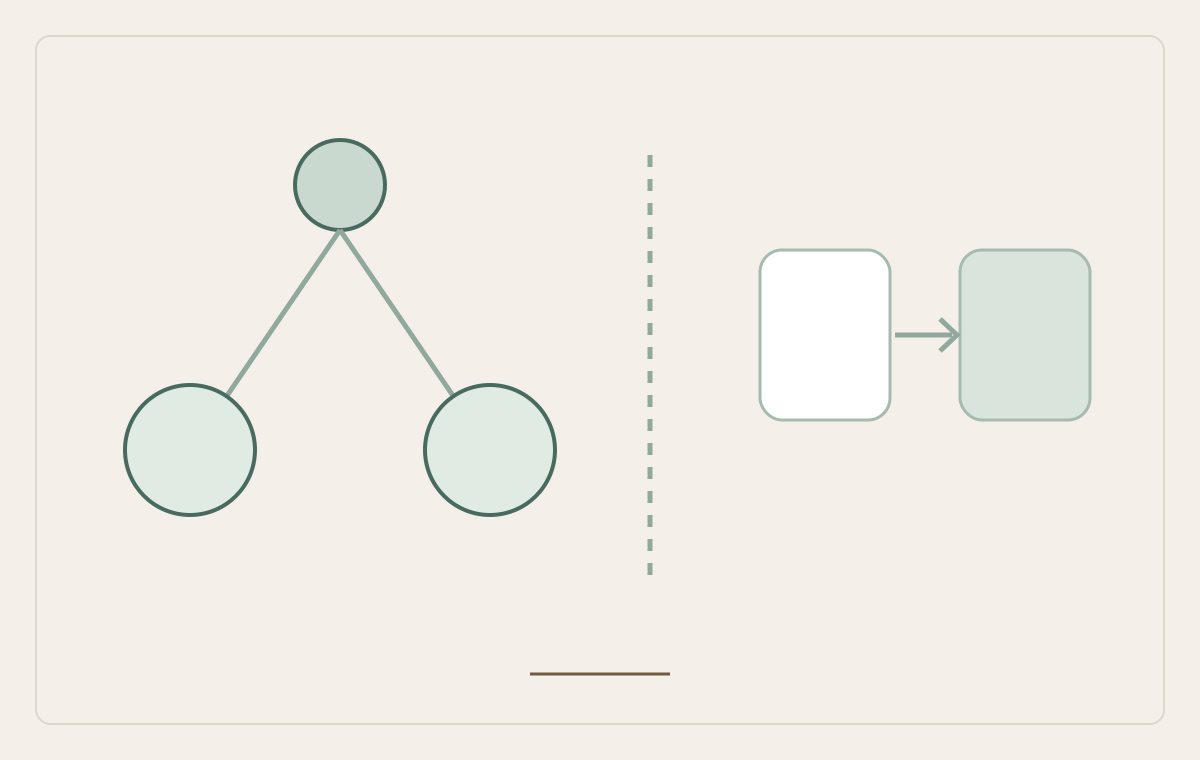
Under inheritance, related forms branch off from an earlier shared form. Under borrowing, a word or construction passes from one speech community to another through contact. The following original educational diagram illustrates those distinct relations; it does not exclude parallel development or convergence, and it does not present a documented family tree or route for any religious term. [5]
Real language histories combine branching and contact. Related languages can borrow from each other, while languages belonging to different families may share vocabulary or grammatical features following sustained interaction. A proposed explanation therefore depends on the contact setting, the type and distribution of words, and the dated attestations, rather than similarity alone. [6]
The Semitic case: a family, not a borrowing chain
The Semitic languagesSemitic languagesA branch of the Afroasiatic language family, including Akkadian, Ugaritic, Hebrew, Aramaic, Arabic, Ethio-Semitic and South Arabian languages; a linguistic, not racial or religious, classification.Glossary · Click to read the explanation include branches represented by ancient AkkadianAkkadianAn ancient East Semitic language written in cuneiform from the third millennium BCE; its varieties include Babylonian and Assyrian, and it served in international diplomacy.Glossary · Click to read the explanation in MesopotamiaMesopotamiaHistorical region associated with the Tigris and Euphrates: Uruk, Ur, Eridu, cuneiform, Sumer, Akkad, Babylon and Assyria, their languages and cults, and the limits of archaeological evidence.Glossary · Click to read the explanation, UgariticUgaritic languageAncient Semitic language preserved in Ugarit’s tablets on the Syrian coast, from the fourteenth–twelfth centuries BCE, written in a cuneiform alphabet.Glossary · Click to read the explanation on the Syrian coast, HebrewHebrewA Northwest Semitic language of the Canaanite group, encompassing Iron Age epigraphy, Biblical, Rabbinic, medieval and Modern Hebrew; its scripts and pronunciations changed over time.Glossary · Click to read the explanation, AramaicAramaicNorthwest Semitic language varieties documented since the early first millennium BCE, including Old and Imperial Aramaic, Syriac, Jewish dialects, and living Neo-Aramaic forms.Glossary · Click to read the explanation, and Arabic. Proto-SemiticProto-SemiticThe inferred ancestral language of Semitic, reconstructed from comparative sound, morphological and lexical evidence; no direct Proto-Semitic inscription survives.Glossary · Click to read the explanation denotes a common linguistic ancestor inferred through comparison, not a surviving manuscript or a people with an easily fixed date and location. The finer subgrouping of this family depends on the characteristics and early attestations examined. [7]
One lexical witness is Akkadian iluAkkadian iluAn Akkadian common noun meaning “god”; older case forms include ilum, ilam and ilim. It occurs in personal names but does not by itself identify Ugaritic El.Glossary · Click to read the explanation, recorded in lexical resources with the meaning “god,” alongside related forms elsewhere in the family. The ORACC dictionaries also preserve a scribal equivalence between the Sumerian sign or word diŋir and Akkadian ilu: this is a written and lexical equivalence, not evidence that Sumerian and Akkadian are genealogically related languages. [8]
Ugaritic ʾil is known from Late Bronze AgeLate Bronze AgeAn archaeological period around 1600–1200 BCE in much of the Near East, with international diplomacy, exchange and religious diversity; its endpoints vary by region.Glossary · Click to read the explanation texts. Its place among the Semitic languages must be established from linguistic characteristics, not simply from thematic affinities between literary texts. Similarities between Ugaritic and Hebrew poetry can indicate connected cultural traditions, while genealogical classification depends on phonological and morphological evidence. [9]
El, Eloah and ilah: what is inherited and what is proposed?
Semitic El/ilSemitic ilAn ancient Semitic word meaning “god,” with cognates across several languages. It may function as a common noun or a proper name according to context; it is not always Ugaritic El.Glossary · Click to read the explanation can be compared across ancient forms such as Akkadian ilu, Ugaritic ʾil, and Hebrew ʾēl, alongside Arabic ʾilāhArabic ilahʾIlāh: Arabic common noun for a god or deity, with the broken plural āliha; distinct from the specific designation Allāh and understood from context.Glossary · Click to read the explanation and Hebrew ʾĕlōah and ʾĕlōhīm. The resemblance does not establish a progression from one recorded language to the next: differences in word formation, number, and usage require phonological and morphological explanations within each branch. [10]
In 2025 the historical linguist Benjamin D. SuchardBenjamin D. SuchardHistorical linguist studying Hebrew, Aramaic and the history of Semitic languages.Glossary · Click to read the explanation proposed that the reconstructed Semitic stem “ʾilāh-” began as an internal plural of “ʾil-” and was subsequently reanalysed as singular, with divergent developments in Hebrew, Aramaic, and Arabic. The proposal uses plural patterns, suffixed forms, and textual attestations; it is a reasoned scholarly reconstruction, not direct testimony from speakers of the ancestral language or the final resolution of every debate. [11]
Common noun, proper name, and religious history
El may function as a common nounCommon nounA noun referring to a member of a class, such as “city” or “god”, unlike a proper name designating a particular entity. Semitic il/El may fulfill either function in context.Glossary · Click to read the explanation meaning “god,” or designate a particular figure such as El at UgaritElEl is a senior deity in Late Bronze Age Ugaritic texts, portrayed as father of the divine family and a council authority, alongside his consort Athirat. This entry does not cover every linguistic use of El.Glossary · Click to read the explanation, depending on grammar and context. Likewise, a divine element in a personal name or religious expression does not alone prove the origin of an entire religion or the fusion of two deities over centuries. Distinguishing a form’s grammatical meaning, its referent in a text, and its theological interpretation keeps linguistic comparisons from becoming historical conclusions unsupported by independent evidence. [12]
Writing and the limits of comparison
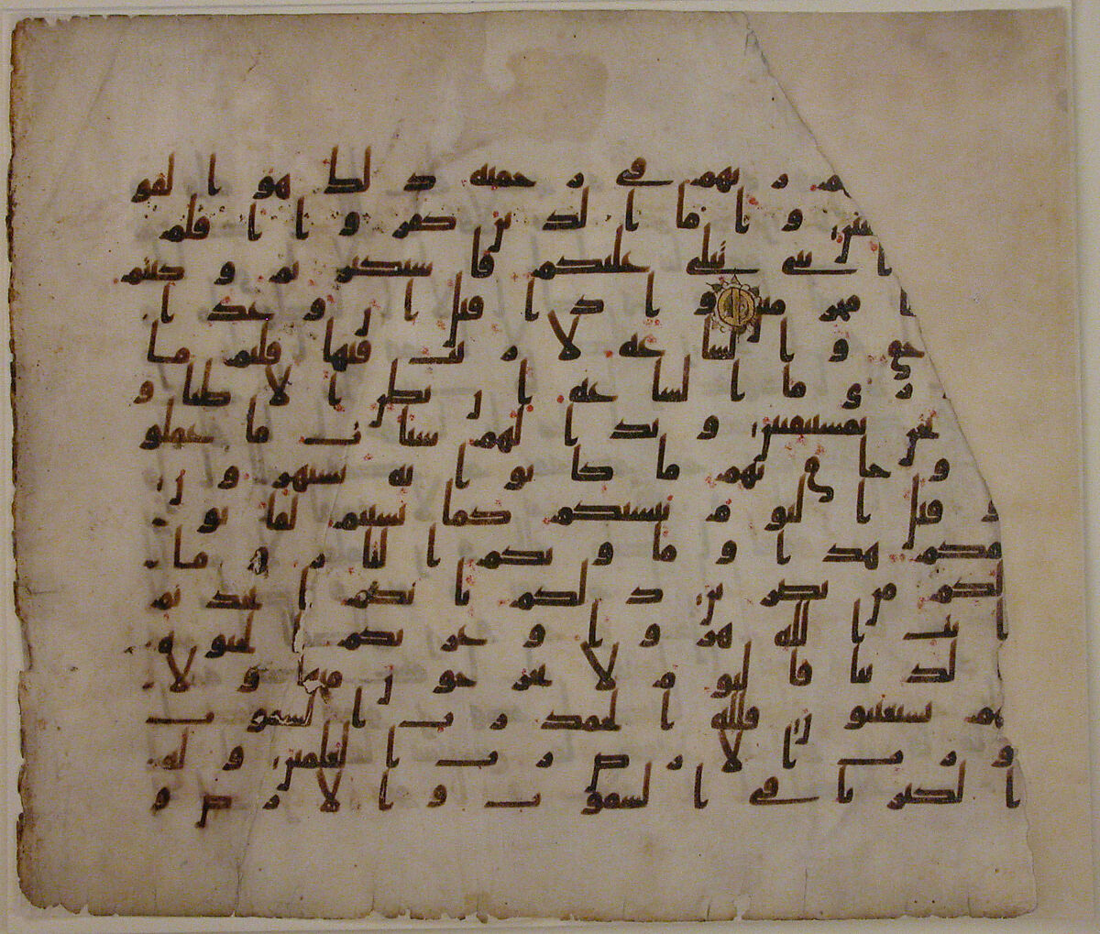
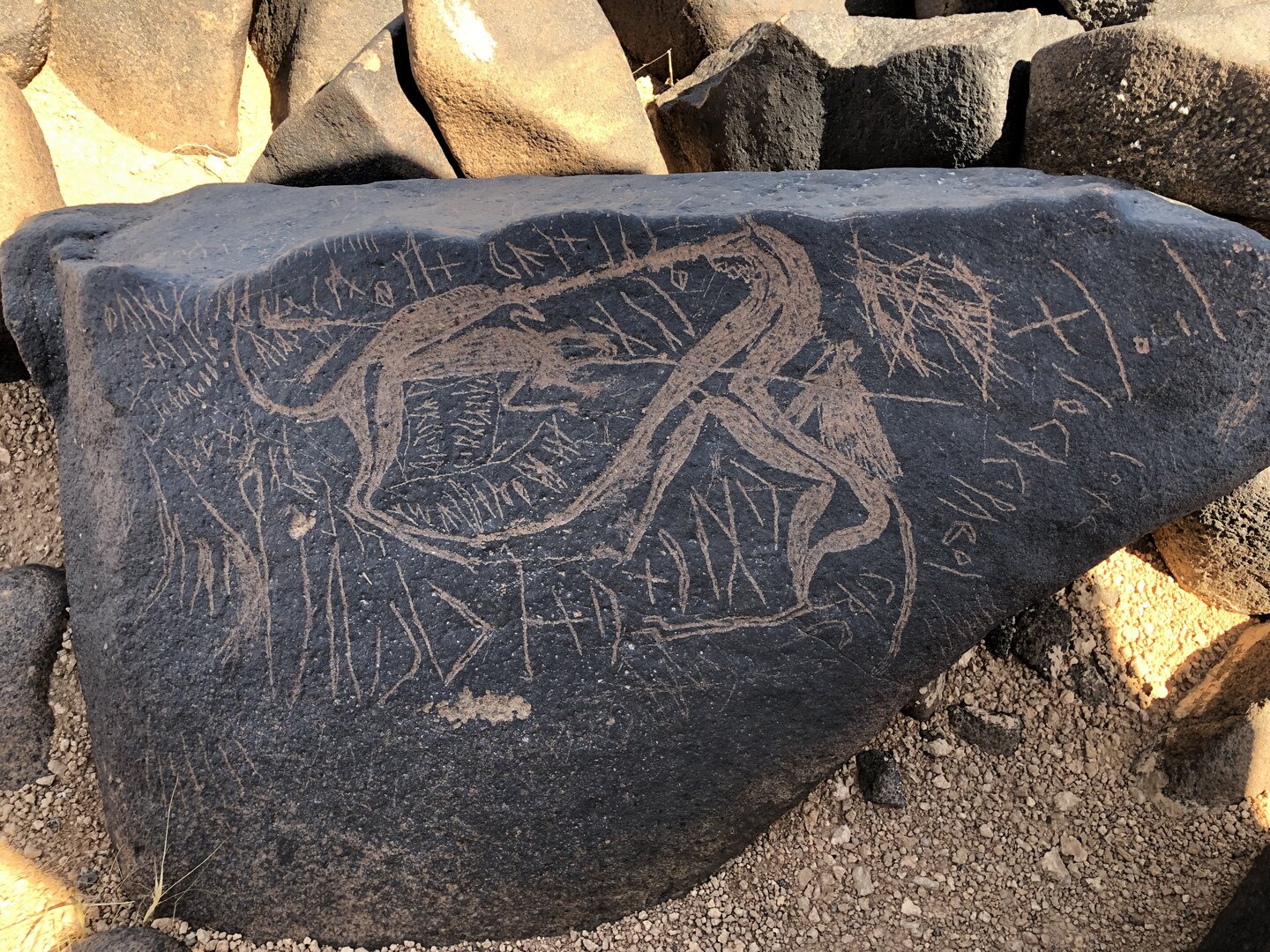
Ancient languages survive in inscriptions, tablets, and manuscripts that record only part of spoken usage. A community may adopt another community's script while retaining a different language. Similar letter shapes therefore do not establish linguistic kinship, just as distinct scripts do not disprove it. Comparisons should identify the date and character of each witness and the reading or vocalisation supplied by the editor. [13]
Methodological conclusion
Linguistic relatedness concerns testable common descent, not similar spellings or shared religion. Comparison begins with multiple independent witnesses, examines correspondences and innovations, and weighs inheritance against borrowing, convergence, and coincidence. In divine vocabulary, such findings clarify the history and limits of linguistic forms; identifying a particular deity or the transmission of a religious conception requires additional textual and historical evidence.
References and notes (13)
- Roger Lass, Historical Linguistics and Language Change, ch. 5, “The Nature of Reconstruction” (1997), pp. 215–276. Cambridge chapter summary consulted; the full chapter, pp. 215–276, was not accessible. Return to the text ↑
- Robert L. Rankin, “The Comparative Method,” in The Handbook of Historical Linguistics, ed. Brian D. Joseph and Richard D. Janda (online 2017). Publisher’s chapter abstract only; not the complete chapter. Definition of the method and recurring sound correspondences. Return to the text ↑
- James Clackson, “Methodology in Linguistic Subgrouping,” in The Indo-European Language Family: A Phylogenetic Perspective, ed. Thomas Olander (Cambridge, 2022), pp. 18–32. Open chapter text consulted, especially the introduction and §2.3 on shared innovations and convergence. Return to the text ↑
- Roger Lass, Historical Linguistics and Language Change, ch. 2, “Written Records: Evidence and Argument” (1997), pp. 44–103. Publisher’s opening extract consulted, not the complete chapter; the mediation of sound by writing. Return to the text ↑
- Alexandra Y. Aikhenvald and R. M. W. Dixon (eds.), Areal Diffusion and Genetic Inheritance: Problems in Comparative Linguistics (Oxford, 2001). Publisher’s book abstract only; alternative sources of cross-language resemblance. Return to the text ↑
- Roger Lass, Historical Linguistics and Language Change, ch. 4, “Convergence and Contact” (1997), pp. 172–214. Available chapter summary only, on distinguishing convergence, contact, and common descent. Return to the text ↑
- Kees Versteegh, The Arabic Language, ch. 2, “Arabic as a Semitic Language” (Cambridge). Cambridge chapter summary consulted on the Semitic family and early attestations; not full chapter. Return to the text ↑
- ORACC (University of Pennsylvania), Akkadian ccpo lexicon, s.v. ilu (“god”); Sumerian ePSD2 lexicon, s.v. diŋir and Akkadian equivalences. Individual lexicon entries and attested spellings consulted; not the entire lexicons. Return to the text ↑
- Dennis Pardee, “Ugaritic,” in The Ancient Languages of Syria-Palestine and Arabia, ed. Roger D. Woodard (Cambridge, 2008), pp. 5–35. Publisher’s substantial summary consulted, including classification versus literary affinity; full chapter unavailable. Return to the text ↑
- Benjamin D. Suchard, “Semitic *ʾilāh- and Hebrew אלהים: From Plural ‘Gods’ to Singular ‘God’,” Journal for the Study of the Old Testament 49, no. 4 (2025): 460–474. Full open article, including morphology, attestations, and conclusion; the etymological scenario is the author’s argument. Return to the text ↑
- Suchard, “Semitic *ʾilāh- and Hebrew אלהים” (2025), sections “Divine Morphology,” “Levelling in Two Directions,” and “Conclusion.” These sections and the reconstructed paradigms consulted; reconstruction is not direct attestation. Return to the text ↑
- Suchard, “Semitic *ʾilāh- and Hebrew אלהים” (2025), conclusion, on grammar and claims about early religious history. The conclusion and discussion of singular/plural interpretations consulted; historical caution is an editorial inference. Return to the text ↑
- “Deciphering a Writing System: Luck, Intuition, or Method?”, in Writing from Invention to Decipherment (Oxford University Press, 2024). Open section “Relationship to Other Writing Systems” consulted, on cross-language adaptation of scripts; not the entire chapter. Return to the text ↑
Suggest a correction · Suggest a source for this record
Cite this record
IL Archive, «Linguistic relatedness», https://ilarchive.com/en/entities/linguistic-kinship
Continue reading