Entity · Concept
Demonology
A reference page linking a name, group, or concept to the materials that discuss it.
Study or organization of harmful powers, names, origins and roles within specific traditions; no single doctrine or claim about existence beyond the text is assumed.
Estimated reading time: 8 min Published Last reviewed:
Share article
Text
Introduction
Demonology can mean the organized understanding of harmful spirits and powers—their names, origins, actions and means of protection against them—or the historical study of such ideas. This entry distinguishes knowledge formulated within a belief system from research into its texts and practices. It focuses on Jewish and Christian examples and an object from MesopotamiaMesopotamiaHistorical region associated with the Tigris and Euphrates: Uruk, Ur, Eridu, cuneiform, Sumer, Akkad, Babylon and Assyria, their languages and cults, and the limits of archaeological evidence.Glossary · Click to read the explanation, not a doctrine shared by every religion.
Religious knowledge and historical inquiry
A historian studying demonology asks how harmful powers were classified, who attributed illness or sin to them, and how those explanations changed. Calling this a field of knowledge does not establish the existence of those powers or the efficacy of ritualsRitualAn organised or distinguished practice meaningful to a community; it may leave traces, but its form alone does not reveal an associated doctrine.Glossary · Click to read the explanation. Similar names or functions alone do not demonstrate the transmission of a belief between communities.
Annette Yoshiko ReedAnnette Yoshiko ReedAnnette Yoshiko Reed studies ancient Judaism, early Christianity and their relationships in late antiquity, and is a professor at Harvard Divinity School.Glossary · Click to read the explanation, a scholar of ancient Judaism and early Christianity, links the beginnings of Jewish angelologyAngelologyStudy and organization of angels and heavenly beings: names, ranks and roles within particular traditions, without assuming one fixed system.Glossary · Click to read the explanation and demonology to Aramaic literary activity in the early Hellenistic period, especially the third and early second centuries BCE. Her Introduction defines this change as the collection and organization of knowledge: names, classes, origins and fates become connected within accounts of the cosmos. The argument concerns writing, reading and scribal authority, not humanity’s first belief in harmful beings. Chapter 2 itself remains known here only through its publisher’s summary. [1]
This approach gains strength from treating the texts’ arrangement as evidence, rather than extracting isolated demons to fill gaps between biblical books. A complementary interpretation by Ida Fröhlich, a scholar of ancient Jewish literature, stresses Mesopotamian scholarly models: astronomical lists, heavenly tablets and Enoch as a scribe who mediates knowledge. Her reading of the Watchers as a polemic against astral magic is more specific than Reed’s account of textual organization. The scribal vocabulary and sustained classification support a learned setting; they do not by themselves establish a particular transmission route or date every layer of the narrative. Fröhlich herself allows a Persian-period core behind the later Aramaic witnesses. Thus a third-century setting for organized literary production need not mean that all its motifs were invented then. [12]
Giant spirits and explanations of evil
First EnochFirst EnochA composite Second Temple Jewish apocalyptic collection on the Watchers, parables, celestial cycles, historical visions, and judgment, preserved complete in Geʽez.Glossary · Click to read the explanation is a collection of Jewish writings, not a book composed all at once. It includes the Book of the WatchersBook of the WatchersOpening unit of 1 Enoch (chapters 1–36), concerning the Watchers’ descent, offspring and judgment, Enoch’s mission and cosmic journeys; a composite work with multiple textual witnesses.Glossary · Click to read the explanation, dated approximately 250–200 BCE by Miryam BrandMiryam BrandScholar of the Bible and Second Temple literature, examining the Watchers and Asael/Azazel traditions.Glossary · Click to read the explanation, a scholar of the Bible and Second Temple literature. In its narrative, the WatchersWatchersDesignation of a heavenly being in ancient Jewish literature: a holy messenger in Daniel, but a rebellious group in First Enoch. It is not automatically equivalent to demons or giants’ spirits.Glossary · Click to read the explanation, heavenly beings, descend, marry human women and father giants. First Enoch 15:8–12 explains harmful spirits as spirits issuing from the bodies of those giants; within this narrative their origin therefore differs from that of their heavenly fathers. [2][3]
Interwoven accounts also describe the teaching of corrupting knowledge to humans. Brand emphasizes that spirits were not the only explanation of sin even within Second Temple JudaismSecond Temple JudaismDiverse Jewish traditions between the rebuilding of Jerusalem’s temple around 515 BCE and its destruction in 70 CE: institutions, diaspora, groups and texts, with distinctions between events, composition, manuscripts and the limits of evidence.Glossary · Click to read the explanation: ideas about a human inclination toward evil remained important. These witnesses should therefore not be reduced to one Devil’s biography, nor should every evil spirit be described as a fallen angel. [2]
The crucial clause is visible in the Greek version of 1 Enoch 15:9, printed by H. B. Swete. [13]
This is Swete’s edited text of Codex Panopolitanus (siglum P), a Greek transmission witness, not the lost Aramaic wording reconstructed from an English translation. No missing letters are supplied in this short quotation. Verses 8–10 distinguish mixed parentage and earthly habitation from the heavenly spirits’ proper abode; verses 11–12 describe destructive action against humans. Classification here links origin, dwelling and conduct, rather than merely listing names. [13]
“Angelology” studies the heavenly messengers and their ordering; “satanology” more narrowly concerns Satan and adversarial figures. These are useful modern analytical labels, not three fixed departments shared by every ancient author. The offspring spirits in Enoch show why the study of demons cannot be reduced to the study of Satan.
An adversary is not always a demon
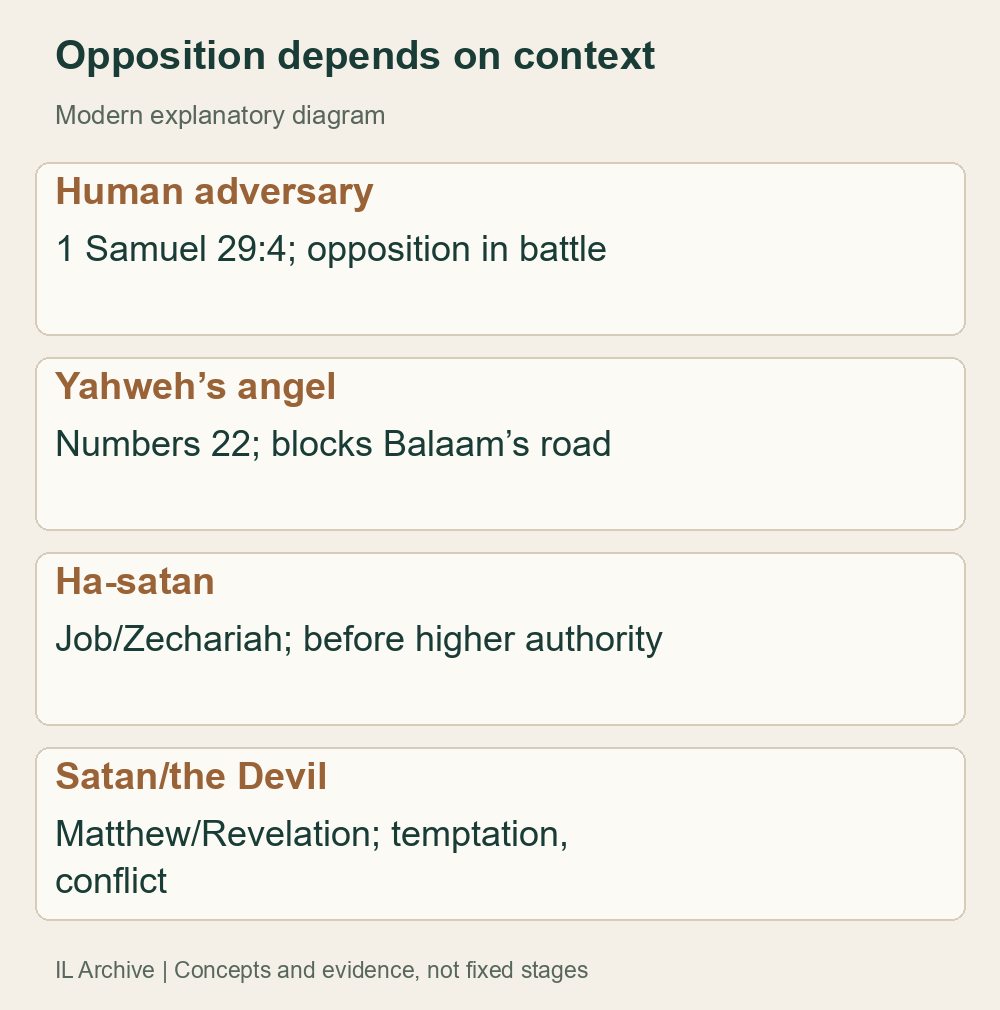
The diagram helps separate roles before combining them. In 1 Samuel 29:4, DavidDavid, the biblical kingRoyal figure in Samuel and Kings, cited here in an instance of “adversary” applied to a human.Glossary · Click to read the explanation, the royal figure of the biblical narrative, is feared as a potential human adversary in battle. In the Book of NumbersBook of NumbersTorah book addressing daughters’ inheritance and tribal retention of land.Glossary · Click to read the explanation 22:22, YahwehYahwehThe proper name of Israel’s deity, written יהוה (YHWH), the Tetragrammaton. Its exact ancient pronunciation is not directly preserved; texts and inscriptions witness its history.Glossary · Click to read the explanation’s angel blocks the path of BalaamBalaam son of BeorA figure in Numbers whose path is blocked by the angel of Yahweh acting as his “adversary”.Glossary · Click to read the explanation, the diviner in the story. Here opposition is a function performed by a divine messenger, not the name of an evil power. [4][5]
Ha-satanHa-satan in Job: Title, Role, and InterpretationHebrew “the adversary” in Job 1–2, who challenges Job’s motives with Yahweh’s permission. “Accuser” is a common functional interpretation, but “enforcer” has been argued; later Satan traditions cannot simply be read back into the passage.Glossary · Click to read the explanation, “the adversary,” in the Book of JobBook of JobHebrew wisdom text exploring suffering, justice and the limits of human knowledge through dialogue and poetry.Glossary · Click to read the explanation 1:6–12 questions the motives behind Job’s piety and acts within limited divine permission. In the Book of ZechariahBook of ZechariahProphetic book of the Hebrew Bible whose third chapter depicts the high priest and an adversary.Glossary · Click to read the explanation 3:1–2 he opposes the high priest and is rebuked. The Gospel of MatthewGospel of MatthewOne of the New Testament’s four Gospels, from the late first century CE, relating inherited law and Jesus’ sayings.Glossary · Click to read the explanation 4:1–11 presents the Devil tempting Jesus, while the Book of RevelationBook of RevelationChristian apocalypse commonly dated in its present form to the late first century CE, reusing earlier scriptural imagery.Glossary · Click to read the explanation 12:7–12 names the dragon “the Devil, and Satan” in a scene of conflict and expulsion from heaven. These are functions in different texts, not inevitable stages that can be ordered from function alone; the council scene alone does not date the composition of Job. [6][7][8][9]
The HebrewHebrewA Northwest Semitic language of the Canaanite group, encompassing Iron Age epigraphy, Biblical, Rabbinic, medieval and Modern Hebrew; its scripts and pronunciations changed over time.Glossary · Click to read the explanation wording makes the functional contrast testable. Numbers 22:22 describes the angel’s action; Job 1:6 uses the definite article. [5][6]
These are the Masoretic forms displayed by Mechon-Mamre, not transcriptions of a contemporary ancient manuscript. Grammar and immediate narrative establish an opposing role in Numbers and a definite council figure in Job; neither expression by itself supplies the later Christian figure’s entire identity. [5][6]
A worked case: harmful action and protection
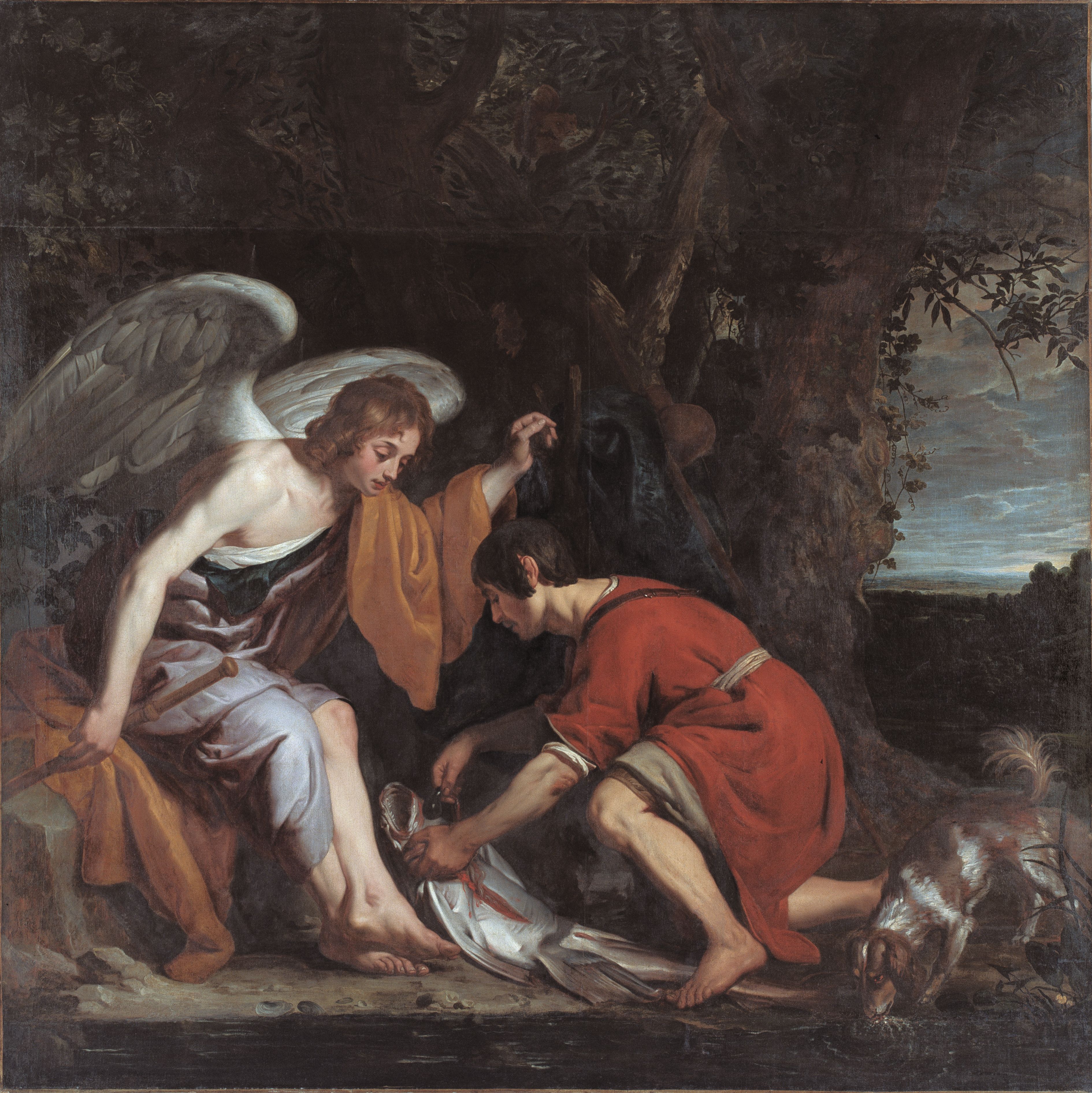
TobitBook of TobitJewish story of a family in Assyria, combining adversity, prayer, journey and almsgiving, and naming Ahiqar.Glossary · Click to read the explanation, a Jewish narrative about a family in exile, gives a concrete counterpart to Enoch’s account of origins without adopting that genealogy. SarahSarah daughter of Raguel in TobitTobias’s wife in the narrative, not Sarah the wife of Abraham.Glossary · Click to read the explanation’s husbands die through the action of Asmodeus; RaphaelRaphael / RephaelRaphael means “God has healed,” a name borne by a human in Chronicles and an angel in Tobit and 1 Enoch. In Tobit he accompanies the travelling son, helps heal the father and presents prayer before God; in Enoch he executes judgment and explains the places of the dead. Similarity of names does not settle his relationship to Israfil.Glossary · Click to read the explanation, an angel travelling in disguise with TobiasTobias, son of TobitThe traveling son in Tobit and Sarah’s husband; he treats his father under Raphael’s guidance.Glossary · Click to read the explanation, teaches a response involving the heart and liver of a fish. In the shorter Greek recension, Tobit 6:8 names the affliction; 8:3 describes the angel’s intervention. [14]
Tobit 8:2–4 narrates fumigation, the demon’s flight, angelic binding and the couple’s prayer. The response combines material action, authorized knowledge and appeal to God, not simply a stronger hostile name. [14][15]
This is a literary representation of protective practice, not an excavated ritual instruction or evidence that every reader performed it. The story specifies an affliction and response, but not Asmodeus’s parentage. Importing Enoch’s giant-spirit origin would therefore erase a real gap rather than explain it. The short and long Greek recensions also differ in wording; the quotation above identifies the short form and does not silently combine them. The modern text collection by Weeks, Gathercole and Stuckenbruck shows why preserving these witnesses separately matters. [16]
Treatises and rituals in context
These ancient narratives differ from later European treatises defending particular religious views. In the preface to Daemonologie, published in 1597, James VI, king of Scotland, announces his intention to establish the reality of witchcraft and the need to punish its practitioners. This documents the author’s position and polemical and punitive aims, rather than offering neutral academic description or proving the accusations true. [10]
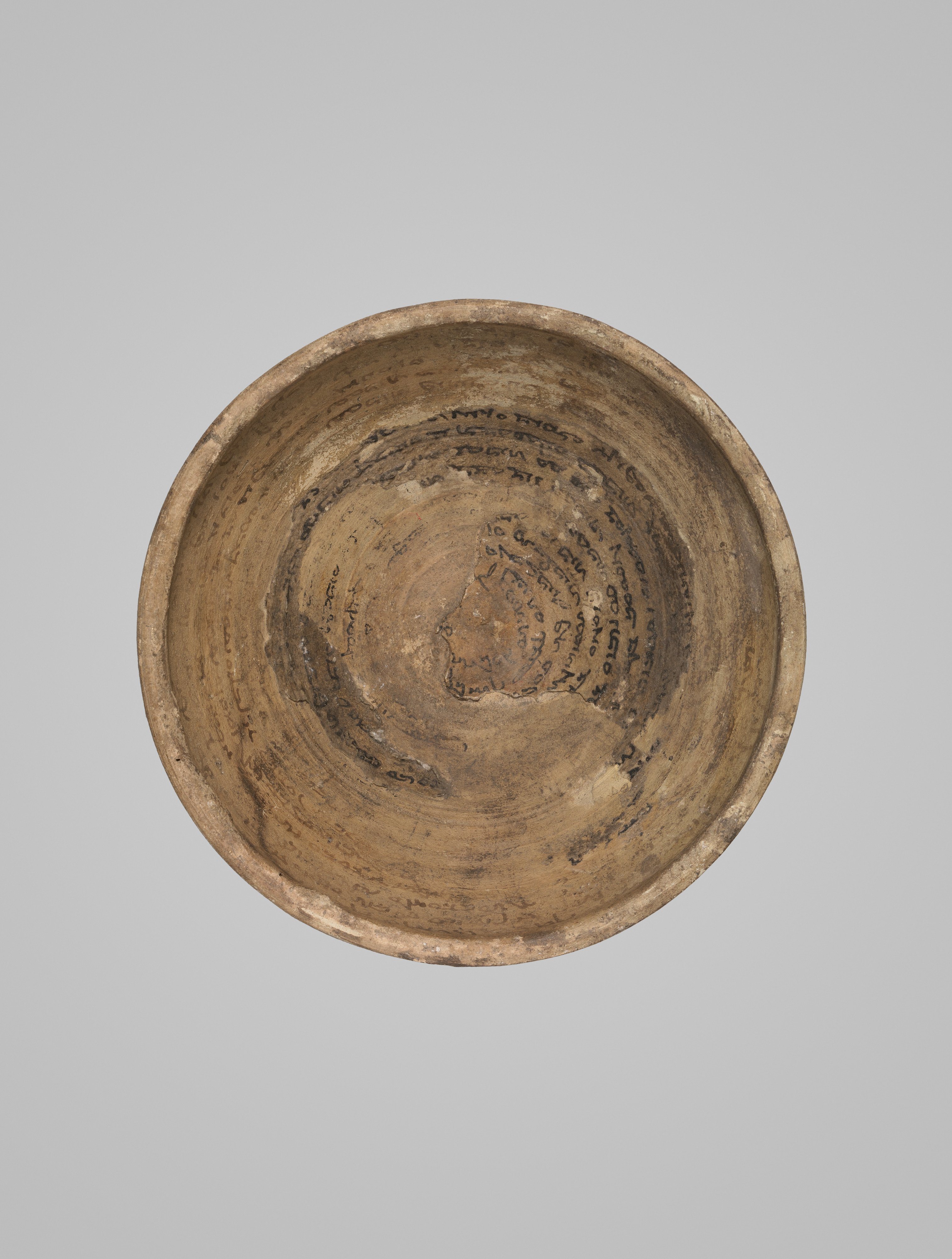
Objects and ritual writing are also studied, not only literary works. The cover shows a Sasanian incantation bowl with a Mandaic inscription from Ctesiphon in IraqIraqIraq is a modern country encompassing much of ancient MesopotamiaGlossary · Click to read the explanation, dated by the Metropolitan Museum of Art to approximately the fifth–sixth centuries CE. It is material evidence from a different setting and period than the Book of Enoch, not an image of its spirits or proof that the incantation worked. Research therefore starts by identifying each witness and its purpose, then compares what the evidence permits without merging traditions into a single system. [11]
Chronological guide and limits of comparison
- Biblical role examples: Numbers places Balaam before Israel’s entry into the land; Samuel places David before his kingship; Job supplies no secure historical year for its council. These narrative settings are not dates of composition. Their textual formation is not dated from the role of the adversary in this entry; the quoted Hebrew belongs to the received Masoretic tradition. Zechariah’s priestly scene belongs to its restoration setting, not to Enoch’s pre-Flood world. [4][5][6][7]
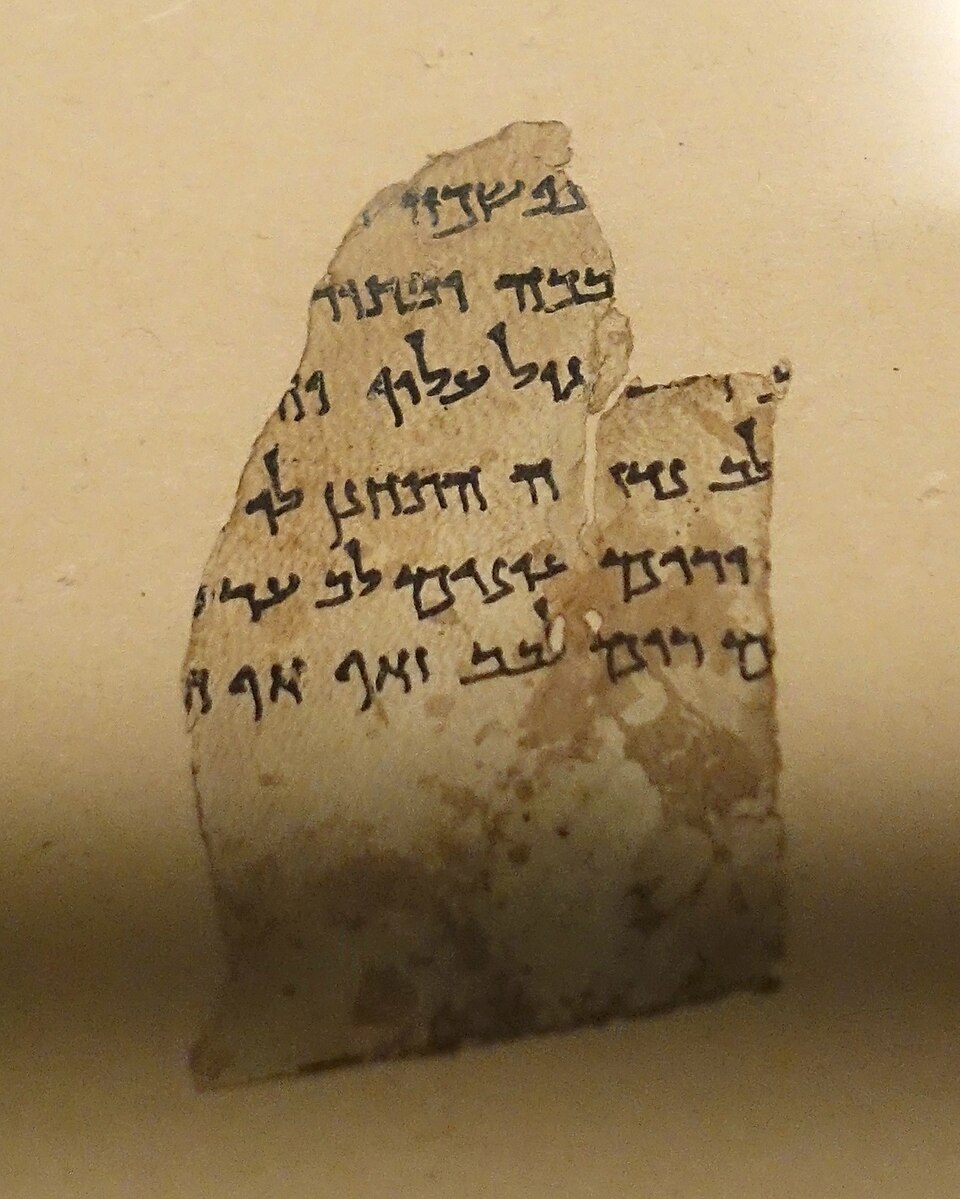
- Enochic literature: the Watchers’ story is set before the Flood; the approximately 250–200 BCE composition range cited above is a modern estimate. Fröhlich discusses early Aramaic copies from around the end of the third century BCE and possible older traditions. For a specific early witness, the Library of Congress dates the Aramaic 4Q201 copy to approximately 200–150 BCE. Codex Panopolitanus, the Greek witness behind the excerpt, is commonly dated to the fifth–sixth centuries CE, with earlier editorial datings differing; Swete’s edition is from 1905. Neither copy date is the date of the narrative’s events. [2][12][13][18][19]
- Tobit: narrated Assyrian exile in the eighth century BCE; composition commonly placed in the third–second centuries BCE (often approximately 225–175), with place and authorship unresolved. Surviving Qumran copies range approximately from 100 BCE to the early first century CE; Vaticanus and Sinaiticus, major Greek witnesses, are fourth-century CE codices. Composition, translation and copying are different events. [15][16]
- Christian and later witnesses: Matthew narrates Jesus’ temptation; Revelation presents a cosmic vision, not an eyewitness date for a heavenly war. Revelation’s present form is commonly placed near the end of the first century CE, not at the time narrated by Numbers or Enoch. The Mandaic bowl is a fifth–sixth-century CE artifact; James’s treatise was printed in 1597. These witnesses belong to distinct genres and social settings. [8][9][17][11][10]
The strongest comparisons here are lexical (the uses of satan), explanatory (the origin and actions of spirits) and practical (how protection is authorized). They do not yet establish a single genealogy linking Enoch, Tobit, the bowl and James. Written classification is itself a historical development worth explaining, without turning the scarcity of earlier surviving texts into proof that earlier people had no such beliefs.
References and notes (19)
- Annette Yoshiko Reed (2020). Demons, Angels, and Writing in Ancient Judaism. Ch. 2, “Rethinking Scribalism and Change in Second Temple Judaism,” pp. 87–131. DOI: 10.1017/9781139030847.004. Direct reading of Introduction pp. 1–10, especially 4–5 and 8–10, in publisher excerpt. Chapter 2 remains summary-only, not read in full. https://assets.cambridge.org/97805211/19436/excerpt/9780521119436_excerpt.pdf Return to the text ↑
- Miryam Brand, “The Benei Elohim, the Watchers, and the Origins of Evil,” TheTorah.com, 3 November 2016. Article and notes, especially the Book of the Watchers, giant spirits and note 10 on the evil inclination. The article credits Michael Knibb for Enoch translations; its 7:8–12 labels correspond to 15:8–12 in the comparison text. Return to the text ↑
- 1 Enoch 15:8–12. R. H. Charles’s 1912 English translation, Wikisource. Chapter 15 in full, especially verses 8–12; historical translation, not an independent collation of manuscripts or ancient languages. Return to the text ↑
- 1 Samuel, Hebrew text and English translation at Mechon-Mamre. 29:1–9, especially 4; contextual reading, without dating composition from the role. Return to the text ↑
- Numbers, Hebrew text and English translation at Mechon-Mamre. 22:18–31, especially 22; contextual reading, without dating composition from the role. Return to the text ↑
- Job, Hebrew text and English translation at Mechon-Mamre. 1:6–12; contextual reading, without dating composition from the role. Return to the text ↑
- Zechariah, Hebrew text and English translation at Mechon-Mamre. 3:1–5; contextual reading, without dating composition from the role. Return to the text ↑
- Gospel of Matthew, King James Version, Bible Gateway. 4:1–11; passage read in a historical translation, not a critical collation of Greek. Return to the text ↑
- Book of Revelation, King James Version, Bible Gateway. 12:7–12; passage read in a historical translation, not a critical collation of Greek. Return to the text ↑
- James VI of Scotland, Daemonologie (1597), preface; transcription of G. B. Harrison’s Bodley Head edition, Internet Sacred Text Archive. Complete preface, roman-numbered pp. xi–xv: stated aims and three-book structure. Not the whole book. Return to the text ↑
- Metropolitan Museum of Art, “Incantation bowl with Mandaic inscription,” accession 32.150.89. Object details, description and archaeological find context; approximately fifth–sixth centuries CE. The consulted record does not provide a translation of the inscription. Return to the text ↑
- Ida Fröhlich, “Scribal Revelations in Ancient Judaism”, Religions 15 (2024), 131. DOI: 10.3390/rel15010131. Sections 3–6 and relevant notes read in full: witness chronology, proposed older core, astral-magic interpretation and scribal figure; attributed interpretation, not asserted consensus. Return to the text ↑
- H. B. Swete, The Old Testament in Greek, vol. III (Cambridge, 1905), “Apocalypsis Enochi”, p. 801, 15:8–12. Digital Greek chapter 15 read; quotation from 15:9, with short editorial translations. Not manuscript collation or Aramaic reconstruction; no restored letters in quoted words. Volume Introduction pp. xvii–xviii and sigla also read: P=Panopolitanus; Syncellus text separate. Edited text, not diplomatic transcription of every manuscript spelling. Return to the text ↑
- Tobit 6:8; 8:2–4, shorter Greek recension; Rahlfs Septuaginta (1935), digital transcription. Greek chapters 6 and 8 consulted, phrases cross-checked against Greekdoc parallel recension text. Short quotations 6:8 and 8:3; editorial translations, not adoption of the site’s automated English. Chapter 8: https://www.thekoinebible.com/text/rahlfs/tobit/08.html Return to the text ↑
- Chris L. de Wet, “The Book of Tobit in early Christianity: Greek and Latin interpretations from the 2nd to the 5th century CE”, HTS 76(4) (2020), a6138. Introduction and canonicity section, especially plot, approximate 225–175 BCE composition and Greek recensions. Unread later discussion is not used. Return to the text ↑
- Stuart Weeks, Simon Gathercole & Loren Stuckenbruck (eds.), The Book of Tobit: Texts from the Principal Ancient and Medieval Traditions (de Gruyter, 2004). Book preview: Introduction pp. 10–13 on Greek witnesses and p. 29 on Qumran copies read directly. Full critical apparatus to Tobit 6 and 8 not read or claimed. Return to the text ↑
- USCCB, The Book of Revelation, introduction. Introduction read, especially symbolic vision and probable date of present form near the end of Domitian’s reign (81–96 CE). Used only for approximate dating, not every historical judgment. Return to the text ↑
- Library of Congress, “The Enoch Scroll”, Scrolls from the Dead Sea exhibition (1993). Complete 4Q201 label read; copy ca. 200–150 BCE, not date of whole collection’s composition. Return to the text ↑
- Helen R. Jacobus, “The influence of ancient Jewish scribal practices on Codex Panopolitanus (the Akhmim Fragment)”, Journal for the Study of the Pseudepigrapha 35(4) (2026). Introduction and opening Background/After-death experiences, especially note 4: fifth–sixth-century codex dating and older alternatives. Not whole article read. Return to the text ↑
Suggest a correction · Suggest a source for this record
Cite this record
IL Archive, «Demonology», https://ilarchive.com/en/entities/demonology
Continue reading