Study
Çatalhöyük: Where Was the Sacred Without a Known Central Temple?
An extended study of a topic, with evidence and references.
Houses, burials, horns, colour and memory: how can we interpret ritual life at Çatalhöyük, and what does the 2025 kinship study add, without turning archaeological remains into an unrecorded creed?
Share article
Dates
Dates have distinct roles. The timeline uses creation, composition or historical coverage, rather than publication or discovery dates.
- Historical coverage
- Approximately From 7100 BCE to 5950 BCE
Text
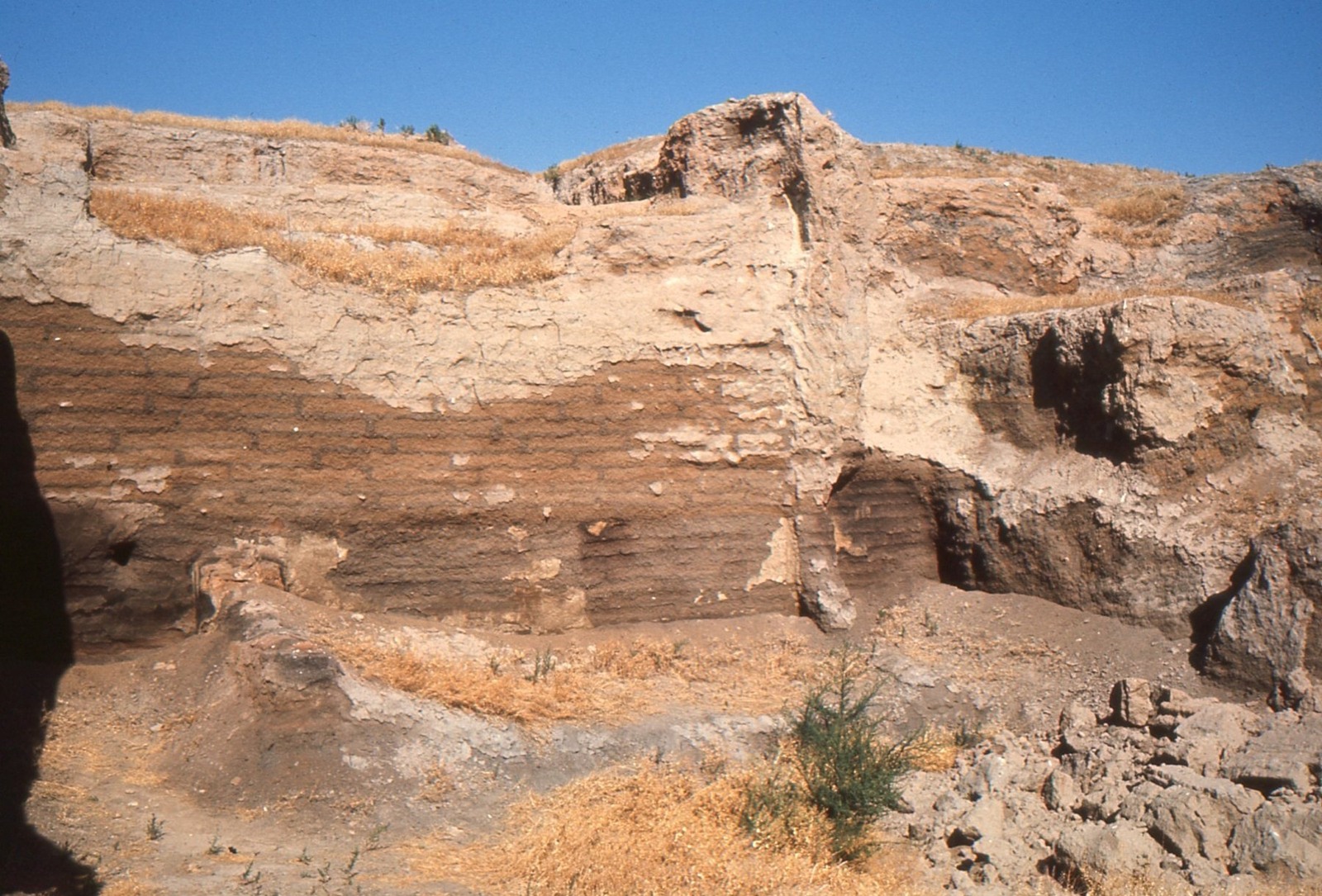
Someone entering ÇatalhöyükÇatalhöyükA Neolithic site in central Anatolia where domestic houses combined dwelling with burial, symbolism and social memory.Glossary · Click to read the explanation roughly nine thousand years ago would not have found the city we tend to imagine: regular streets, a great square, a palace above the houses, and a temple marking the centre of religious life.
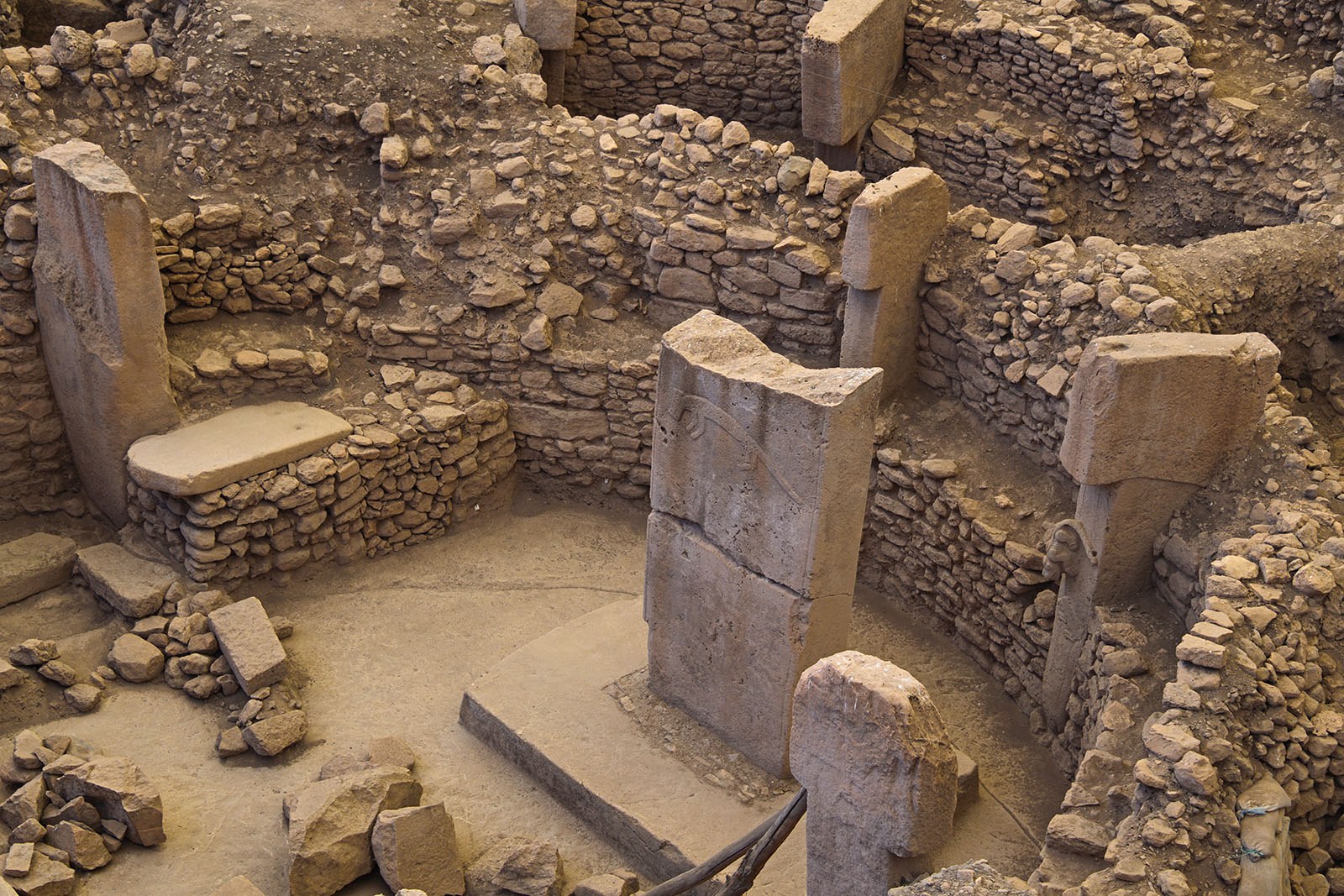
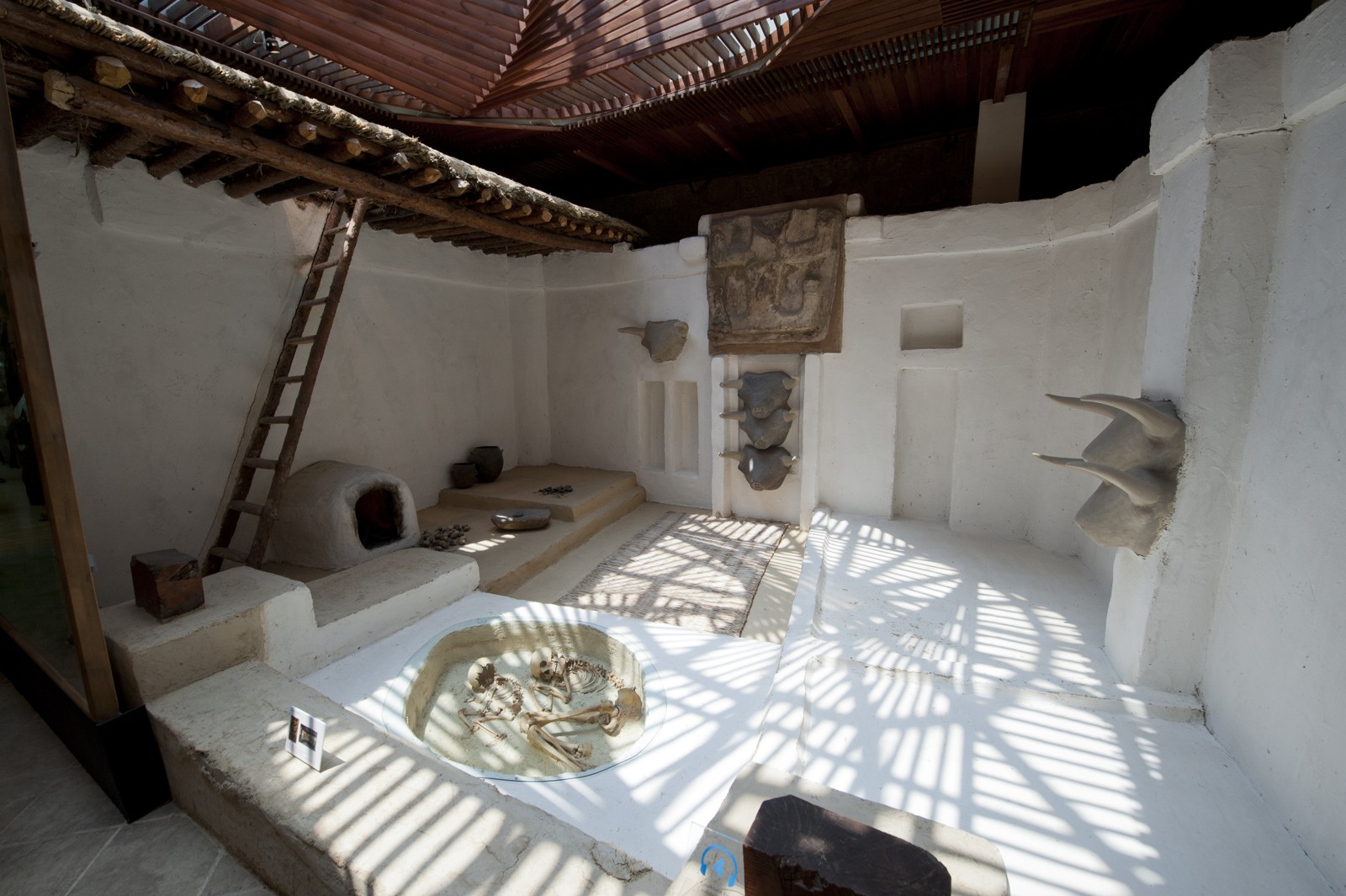
Instead, they would have encountered adjoining mudbrick houses, movement across rooftops and openings through which people descended into their homes. Some houses contained animal horns incorporated into their architecture, wall paintings, and platforms used by the living beneath which some of the dead were buried.[1][2]
No text explains what these things meant, and no central temple has been securely identified in the excavated areas. Yet the evidence lets us ask a different question: are we looking for the sacred in a separate building when some of its practices were intertwined with domestic life?
A settlement of adjoining houses
Çatalhöyük lies on the Konya Plain in central AnatoliaAnatoliaAnatolia is the region occupying the Asian part of present-day TurkeyGlossary · Click to read the explanation, in present-day TürkiyeTurkeyTurkey is a modern country including Anatolia and territory in southeastern EuropeGlossary · Click to read the explanation. It consists of two principal mounds, eastern and western; the UNESCO property covers approximately 37 hectares. UNESCO describes eighteen Neolithic occupation levels on the East Mound between about 7400 and 6200 BCE, and a Chalcolithic phase on the West Mound between about 6200 and 5200 BCE.[1]
There is an important chronological distinction. The pigment study published in 2022 and the kinship study published in 2025 use approximately 7100–5950 BCE for Neolithic occupation on the East Mound. These ranges are not interchangeable versions of one exact date. We retain each source's chronology and context instead of combining them into a false precision.[6][10]
Çatalhöyük can be described as a large residential settlement or an early town. Calling it a “city” should not automatically imply a state, palace or institutions like those of later historical cities.
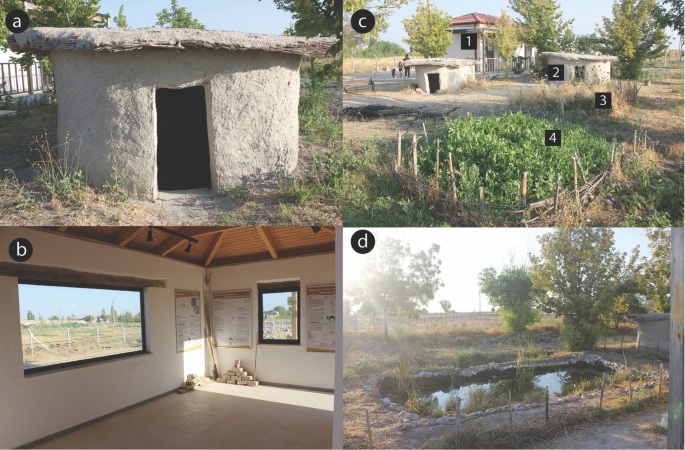
Houses were closely built back to back and side by side, without the familiar network of intervening streets. The excavation project describes rooftop movement and descent by wooden ladders through ceiling openings. Houses combined cooking, sleeping, work, storage, burial and some symbolic display.[2]
Where was the temple?
During the excavations of the 1960s, James Mellaart interpreted certain buildings rich in paintings, horns and reliefs as shrines. He proposed a concentration of them in what he considered a priestly quarter.
This was an interpretation of building function, rather than a neutral name. The striking features made it understandable, but it was not the final explanation.
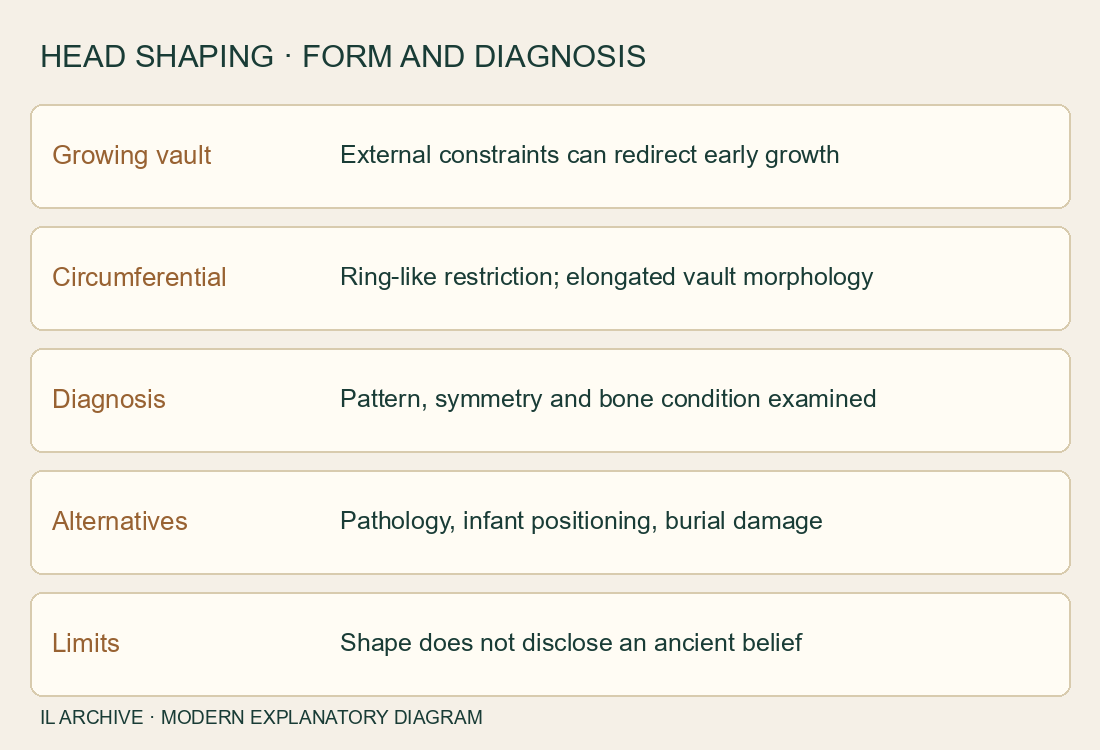
Excavations led by Ian Hodder from 1993 showed that decorated buildings also contained hearths, ovens, platforms, storage areas and evidence of domestic life. Ian Kuijt's study and Ian Hodder and Peter Pels's chapter on history housesHistory housesA modern concept for certain Çatalhöyük houses accumulating rebuilding, burials and elaboration over time. It concerns a place’s history and group, without making the house a temple or every building identical.Glossary · Click to read the explanation challenge a rigid division between “house” and “shrine”: abundant imagery and burials do not erase residential use.[3][4]
The studied buildings therefore do not provide a clear model of a central temple separated from houses. This does not make every building identical, exclude an undiscovered place, or establish the absence of religious practice.
Bull horns in the house
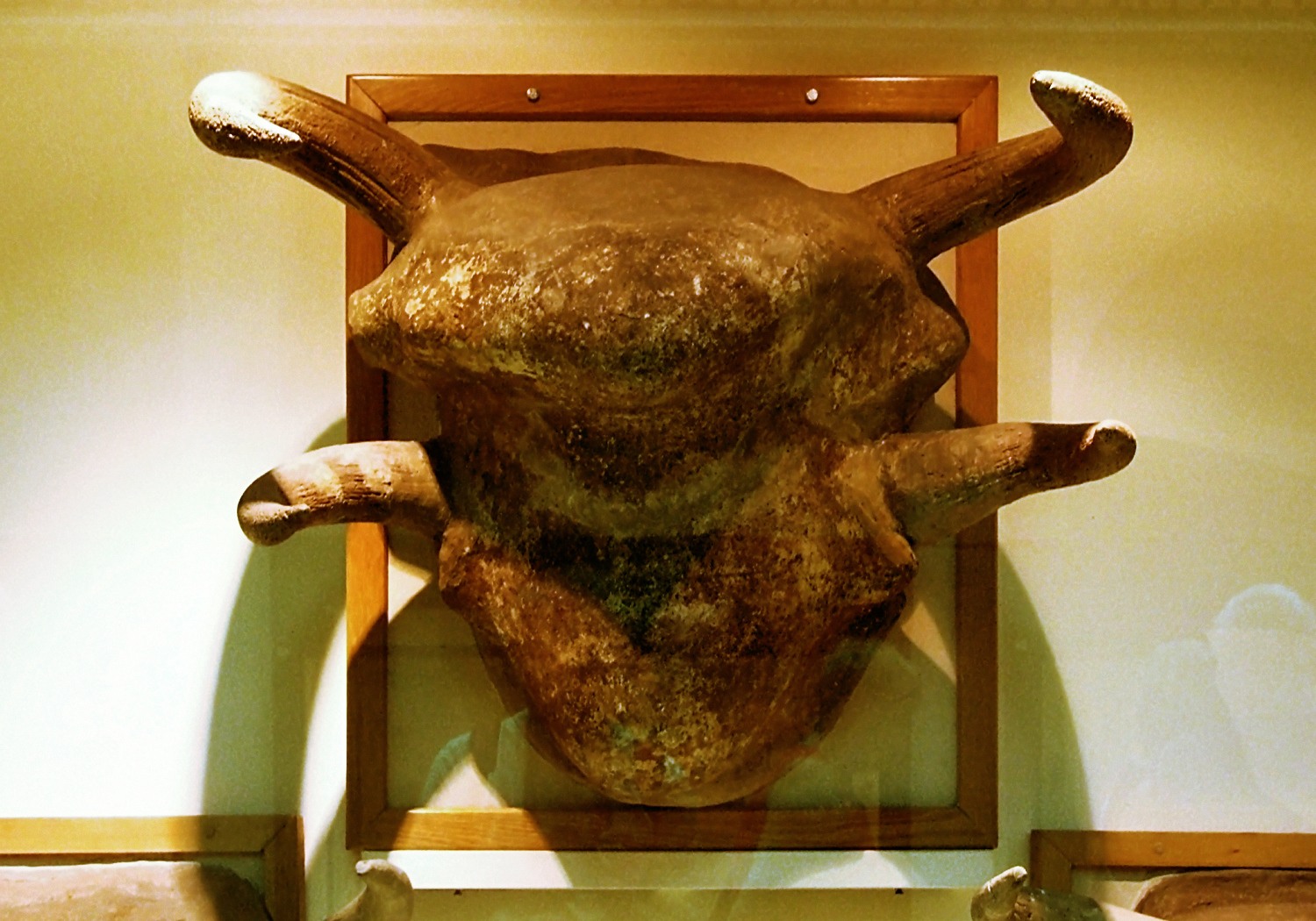
Some houses were visually different from others. Animal horns and skulls, particularly those of wild cattle, were incorporated into plaster, walls, benches or platforms. Researchers use bucraniaBucraniaBull heads or skulls with horns displayed or incorporated in architecture. At Çatalhöyük they occur among the installations of some houses; they do not by themselves establish a ritual’s meaning or a bull god.Glossary · Click to read the explanation for bull heads or skulls and horns incorporated into architecture. It is a descriptive term, not the name of a deity.[3]
These features were unevenly distributed. Some buildings were more elaborately decorated, some contained more burials, and some were rebuilt repeatedly in the same location. We should not imagine the same collection of horns, paintings and graves in every home.
The differences themselves require explanation. Were they connected with a house's history, the standing of its group, events and feasts, or particular ritualRitualAn organised or distinguished practice meaningful to a community; it may leave traces, but its form alone does not reveal an associated doctrine.Glossary · Click to read the explanation roles? Archaeology reveals variation; its social and religious interpretation remains a research question.
Was the bull a god?
The bull had a prominent place in some images and architectural installations. But a symbolically important animal does not become a god simply because its horns appear on a wall.
It might have been associated with strength, danger, hunting or a group's standing, and its meaning might have varied with context. These are interpretive possibilities, not meanings recorded in the inhabitants' own words.
Hodder and Lynn Meskell discuss the contrast between an economy using domesticated cereals, pulses and animals, including sheep and goats, and the prominence of wild animals, including cattle, in the symbolic world. We should not project one economic phase onto the settlement's entire history or treat this contrast as proof of a “bull god”.[5]
We know that the animal received distinctive attention and treatment. Its horns alone do not settle what it meant.
Walls also carried memory
Houses accumulated layers of plaster and colour: red paint, geometric forms, animal images, hand motifs and scenes whose meaning remains difficult to establish. Not every layer was visible at once; new coatings sometimes covered older images.
The pigment study published in 2022 counted 323 painted layers within 178 archaeological units in its sample, including walls, platforms and other interior features. Monochrome red paint was the most common form in the studied assemblage. The researchers also found a correlation between the number of buried individuals and painted layers in buildings.[6]
These are sample counts, rather than an inventory of every wall in the settlement. Statistical correlation does not demonstrate that each death caused a new painting episode or that every application of paint was a ritual.
It does support considering connections among renewal of place, treatment of the dead and social memorySocial memoryHow a group forms relationships to the past through narratives, practices, objects and places.Glossary · Click to read the explanation. Houses changed over time, accumulating material layers of use, colour and burial.
What about the “Mother Goddess”?
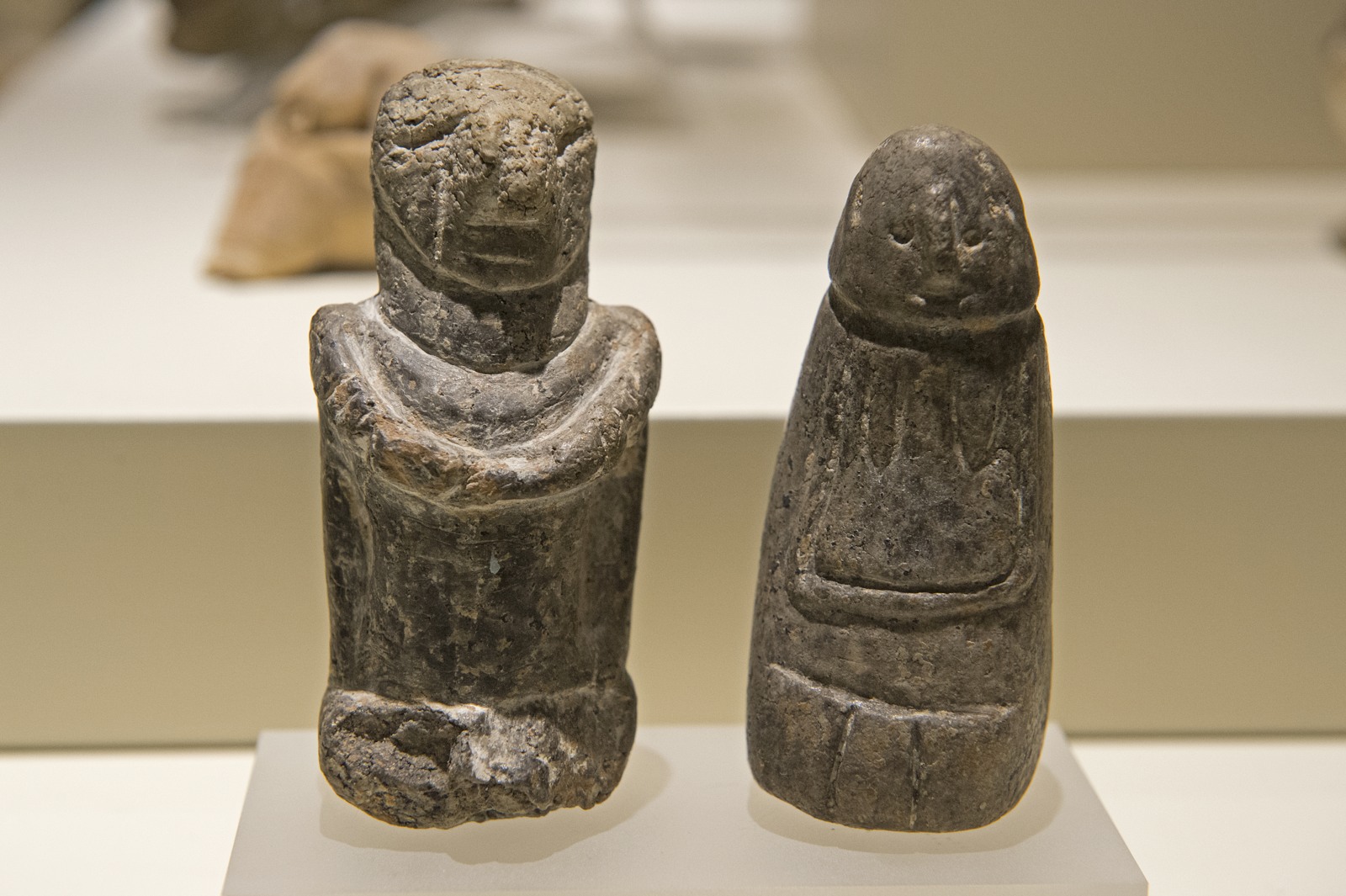
For many years Çatalhöyük was associated with a society worshipping a great Mother Goddess. Certain striking female figurinesFigurineSmall three-dimensional representations of people, animals or other beings. Size and appearance alone do not establish a toy, portrait, ritual object or deity; manufacture, discovery context and use require study.Glossary · Click to read the explanation and Mellaart's interpretations helped that picture spread.
Reassessment of the whole figurine assemblage showed that selecting female examples does not represent the entire collection. There are human, animal and abbreviated forms, and many objects came from secondary deposits: material moved or discarded again, rather than preserved in its original place of use. Meskell and colleagues emphasized contexts of circulation and deposition, rather than bodily shape alone.[7]
This does not make every female figurine devoid of religious meaning. Stanford University's announcement of a stone figurine found in 2016 left a goddess interpretation open alongside the possibility of an elderly woman of status. The second possibility did not become a confirmed identity either.[8]
The studied record does not establish a uniform Mother Goddess doctrine or let us name the person represented by every figurine.
The dead beneath the floor
One feature especially distinguishes these houses from modern homes: some of the dead were placed beneath them. Burials occurred under floors and platforms, with numbers and locations varying across buildings and periods. We should not assume that all inhabitants were buried this way or that every house contained graves.[2][3]
People sometimes returned to a body after burial, removing parts, redepositing them or treating a skull differently. Their actions left material traces; the ideas giving them meaning were not preserved in texts.
In the pigment study's sample, colourants occurred in 62 of 567 primary or secondary funerary depositions, approximately 11 per cent. Some were directly on human remains and others on associated material. Red ochre was the most common pigment.[6]
Treatment was not identical for all the dead, and this sample proportion cannot become a certain proportion for the entire population. It nevertheless shows colour sometimes entering the relationship between body, grave and house.
A skull held by another person
In the 2004 season, a plastered and painted skull was found in a context associated with Building 42. According to the excavation team's description, a buried woman held it against her chest. Plaster remodelled facial features and red pigment was added.[9]
The team also discussed the connection between the burial and the choice of building location. But the distinction matters: we have a reworked skull, a burial and an architectural sequence, rather than a text naming its owner an “ancestor protecting the house”.
The context alone does not tell us whether the two people were biological relatives. We cannot assign the skull the identity of a founding mother or divine protector. Repainting and circulation of a body part do show that some of the dead continued to matter after death.
The house that outlived its inhabitants
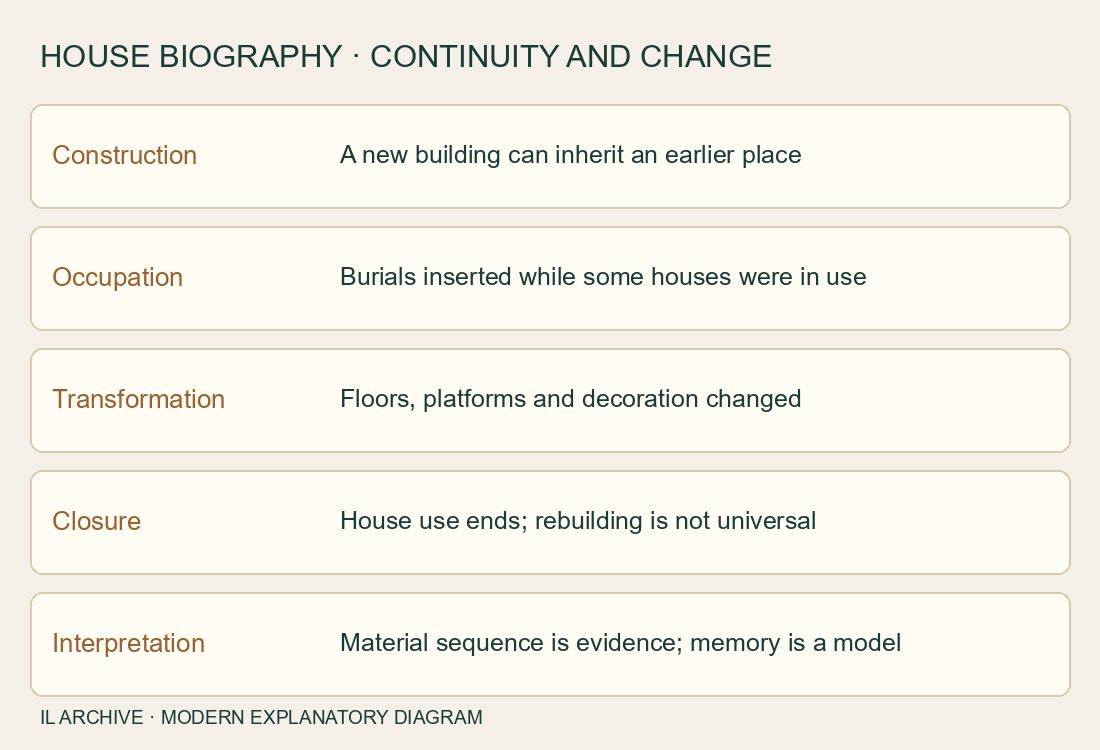
This is the setting for the interpretation of history housesHistory housesA modern concept for certain Çatalhöyük houses accumulating rebuilding, burials and elaboration over time. It concerns a place’s history and group, without making the house a temple or every building identical.Glossary · Click to read the explanation: buildings accumulating rebuilding, burial, decoration and memories, whose role cannot be reduced to the family occupying them during one generation.[4]
The term is a modern analytical name, not an ancient expression recovered from a text. It does not mean every elaborately decorated house was a temple or that all houses followed one sequence.
Accumulated use may help explain a place's importance. Architectural continuity alone does not establish sacredness, however; work, resources, property and social relationships may also be involved.
A religious interpretation begins when we connect continuity with burial, imagery and distinctive treatment of objects, then test that account against alternatives. Stone does not turn into a god: people's relationship with a place may grow more intense and complex.
Who was buried beneath the house?
It is easy to assume a single family. Yet Yüncü and colleagues' study, published in 2025, combined 131 ancient genomes with burial and architectural data and found a pattern changing over time.[10]
In the early phases, people buried in the same building were often close genetic relatives. In the Middle and Late phases, such ties became less common, including among some individuals whose isotope data suggest similar dietary environments.
The genetic sample contains many infants and children because DNA preservation varies. Burial together also does not by itself establish living together. The results may reflect broader social membership, fostering and care beyond biological kinship, or changes in where people were chosen for burial. The study discusses these alternatives rather than reducing them to one family story.
The supported conclusion is that relationships among the house, biological kinship and burial location did not remain fixed. House identity could extend beyond close relatives, but understanding its form requires genetics and archaeology together.
Maternal connections do not establish female rule
The study found that genetic connections within buildings, where they could be traced, tended more often to follow maternal than paternal lines. Associated objects also occurred more frequently in female subadult burials than in male subadult burials in the sample.[10]
This differs from saying women governed the settlement, every family followed a uniform matrilineal rule, or the inhabitants worshipped a Mother Goddess.
The study found no indication of sex-biased movement between settlements. That is a different question from how burials inside a building were related. Kinship, residence, inheritance and authority should not be merged into one conclusion.
Genetics helps identify biological connections. It cannot independently read a divine name, a community's constitution or its beliefs.
Was the house the temple?
A house was a place for cooking, sleeping, storage and work. These uses did not prevent it from also hosting some rituals.[2][3][4]
One room could combine a platform used by the living, older burials below, horns in the wall and layers of colour renewed over years. We need neither rename the whole room a “temple” nor remove ritual meaning because it was a home.
At IL Archive we propose reading these relationships as one approach to the site's symbolic world: daily practice, memory and death may overlap in the same space. This is an interpretive synthesis supported by material clues, not a recovered, complete Neolithic doctrine.
Where were priests and authority?
No separate priestly institution has been securely identified in the studied buildings, nor a clear central royal palace. UNESCO interprets general similarities in dwelling size and layout in terms of relatively egalitarian principles.[1]
Relative equality does not mean an absence of all status or authority. Houses differ in decoration, burials and continuity; social distinctions could take forms unlike those of later royal palaces.[3][4]
Nor does failure to find a priestly costume or special building rule out people with specialized ritual roles. What is missing is evidence sufficient to identify a separate institution, rather than the possibility of imagining one.
Where was the high god?
The site is rich in images, figurines, horns, colours and burials. Yet the studied record has no depicted being securely identifiable as a high godHigh godA deity with a senior position among other gods; this does not itself mean monotheism.Glossary · Click to read the explanation organizing all these elements around itself.[3][5][7]
This states a limit of identification, rather than a statistical demonstration that every symbol was equally prominent. Some images and animals are conspicuous and repeated, but prominence does not settle a being's name or religious rank.
If inhabitants knew a higher being they did not depict, or maintained its meaning through stories, sound and ritual, its statue might never reach us. Absence of a securely identified image of a high god therefore does not prove absence of belief in one.
The possibility alone cannot establish that they did believe in one either. Abundant imagery makes a visually dominant deity hypothesis more useful to test, provided we define its predictions and the excavations' preservation limits. Absence by itself proves neither a religion without gods nor an unpictured monotheismMonotheismBelief in a single God as the only deity, rather than merely the highest among several gods.Glossary · Click to read the explanation.
Four degrees of what we know
- Confirmed: Studied houses contain evidence of domestic life, burials beneath floors and platforms, animal installations, paintings and colour layers. Their distribution varies across houses and periods.
- Probable: Some ritual and social practices overlapped with domestic life; particular houses had roles and memories beyond immediate everyday use.
- Possible: Some practices concerned ancestors or the standing of house groups. Understanding the sacred as a network of relationships may help explain them, while other accounts remain possible.
- Unproven: A uniform Mother Goddess doctrine, a bull god, government by women, or the presence or absence of a high god inferred from images alone.
These degrees do not name what we cannot identify. They prevent interpretation becoming direct evidence without a new basis.
The sacred as a relationship
Çatalhöyük gives us no written divine name, but offers a window onto a community living in a symbolically rich environment: some dead were buried beneath houses, some bodies were handled again, walls renewed, animal parts incorporated into architecture and places rebuilt.
The house is not a god. The dead, bull and painted wall are not necessarily gods either. Yet relationships joining these things may have been central to the sacred world.
This is our proposed reading, with its limits. Perhaps the sacred was distributed through the life of a place and a group's memory, rather than concentrated in a separate temple or one figure we can name. We do not know whether inhabitants would have described their world this way; we are interpreting what remains of it.
The question remains open, but its starting point is clearer. To investigate the sacred at Çatalhöyük, begin with the house joining the living, some dead, colour, animals and history, rather than assuming a temple we must find.
Related reading: Before We Knew the Names of Gods, Göbekli Tepe: Temple or Social Centre?, and T-Shaped Pillars: Humans, Ancestors or Gods?. These links compare limits of evidence, rather than establish a shared doctrine between sites.
References and notes
- UNESCO World Heritage Centre. Neolithic Site of Çatalhöyük, property 1405. Property area 37 ha; eighteen East Mound levels, 7400–6200 BCE as stated by this page; West Mound 6200–5200 BCE. Layout and relative similarity of houses. Return to the text ↑
- Çatalhöyük Research Project. Architecture. Roof circulation, entrances, ladders, ovens, platforms, storage, burials, plaster and rebuilding; excavation-project account, not a uniform model for every house. Return to the text ↑
- Ian Kuijt (2018). Material Geographies of House Societies: Reconsidering Neolithic Çatalhöyük, Turkey. Cambridge Archaeological Journal 28(4), 565–590. DOI: 10.1017/S0959774318000240. Abstract and accessible sections on houses, variation in installations and burials, and Mellaart’s interpretation; not a claim to have read the entire paper. House society is a modern analytical model. Return to the text ↑
- Ian Hodder & Peter Pels (2010). History houses: A new interpretation of architectural elaboration at Çatalhöyük. In Religion in the Emergence of Civilization, 163–186. DOI: 10.1017/CBO9780511761416.007. Publisher summary and excerpt only: domestic use and variation in accumulated history, burials and elaboration. The full chapter was not read; “history houses” is the researchers’ concept. Return to the text ↑
- Ian Hodder & Lynn Meskell (2010). The symbolism of Çatalhöyük in its regional context. In Religion in the Emergence of Civilization, 32–72. DOI: 10.1017/CBO9780511761416.002. Publisher summary and excerpt on wild animals, symbolism and economy; the full chapter was not read. Its older interpretation of Göbekli Tepe as uninhabited is not generalized here. Return to the text ↑
- Eline M. J. Schotsmans et al. (2022). New insights on commemoration of the dead through mortuary and architectural use of pigments at Neolithic Çatalhöyük, Turkey. Scientific Reports 12, 4055. DOI: 10.1038/s41598-022-07284-3. Relevant methods, results and discussion checked: 323 layers in 178 units; pigments in 62 of 567 burial depositions. Correlation between paint and burials does not establish causation. Return to the text ↑
- Lynn Meskell, Carolyn Nakamura, Rachel King & Shahina Farid (2008). Figured Lifeworlds and Depositional Practices at Çatalhöyük. Cambridge Archaeological Journal 18(2), 139–161. DOI: 10.1017/S095977430800022X. Abstract and publication metadata only: selective focus on female figures, diverse forms and secondary deposits. Full text not read; the abstract does not exclude every religious use. Return to the text ↑
- Stanford University (2016). Archaeologists find 8,000-year-old goddess figurine in central Turkey. 29 September. Announcement of the 2016 discovery; despite the “goddess” headline, the text discusses a high-status elderly woman as an alternative. The 2014 photograph of two figurines is not identified as this find. Return to the text ↑
- Çatalhöyük Research Project (2004; 2005). Newsletter 11, 2004 season overview; South Area: Building 42 & 53, 2005 Archive Report. Excavation account of the woman and painted plastered skull, and discussion of burial–building links. Also checked 2005 report: https://www.catalhoyuk.com/archive_reports/2005/ar05_15.html . No identified ancestor or proven kinship. Return to the text ↑
- Eren Yüncü et al. (2025). Female lineages and changing kinship patterns in Neolithic Çatalhöyük. Science 388(6754), eadr2915. DOI: 10.1126/science.adr2915. Author accepted manuscript. Author manuscript: abstract and relevant kinship, burial, diet, maternal-lineage, gift and discussion sections; not all supplements. 131 genomes; child preservation bias; co-burial establishes neither co-residence nor female rule. Return to the text ↑
Suggest a correction · Suggest a source for this record
Cite this record
IL Archive, «Çatalhöyük: Where Was the Sacred Without a Known Central Temple?», Edition 1, https://ilarchive.com/en/studies/catalhoyuk-sacred-houses
Continue reading