Study
Yahweh’s Temple at Elephantine: Worship beyond Jerusalem
An extended study of a topic, with evidence and references.
- Timeline
- From 525 BCE to 407 BCE
- Region
- Egypt / Elephantine
What does the petition of 407 BCE reveal about Yaho’s temple, its priests and their links with Judah and Samaria?
Share article
Text
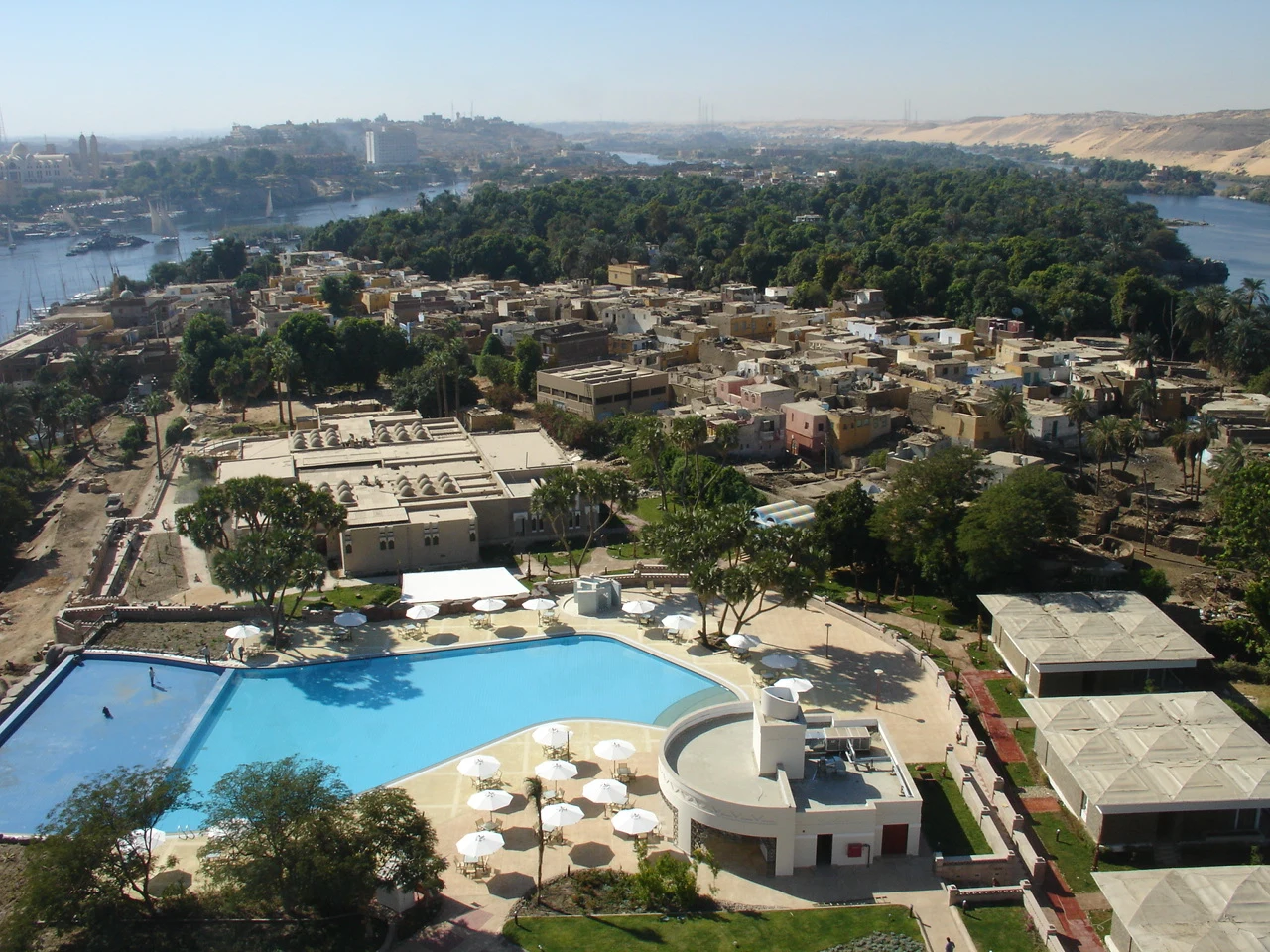
On ElephantineElephantine / YebIsland near Aswan at the Nile’s first cataract; Persian-period Aramaic papyri document a Jewish community and Yaho’s temple.Glossary · Click to read the explanation Island near Aswan, YahwehYahwehThe divine proper name written YHWH in the Hebrew Bible.Glossary · Click to read the explanation was more than a name in a letter. A Jewish community maintained priests, offerings and a temple. When that sanctuary was destroyed, its priests sought help from contemporary officials. Their papyri give us something different from a retrospective biblical narrative: people managing a religious and political crisis in the fifth century BCE.
A sanctuary outside Jerusalem
ElephantineElephantine / YebIsland near Aswan at the Nile’s first cataract; Persian-period Aramaic papyri document a Jewish community and Yaho’s temple.Glossary · Click to read the explanation lies near the Nile’s first cataract. Our central witness is the 407 BCE petition sent by Jedaniah and fellow priests to Bagohi, governor of Judah. It names Yaho, a form of YahwehYahwehThe divine proper name written YHWH in the Hebrew Bible.Glossary · Click to read the explanation, and locates the sanctuary in the fortress of Yeb, the island’s ancient name.[1][2]
This temple prevents us from reducing all Persian-period Jewish communities to JerusalemJerusalemJerusalem is a city of religious importance in Judaism, Christianity and IslamGlossary · Click to read the explanation’s institutional model. It does not make Elephantine representative of every Jew. The evidence initially belongs to a particular community living under particular military and administrative conditions.[3]
The destruction of 410 BCE
The petition places the destruction in Darius II’s fourteenth year, 410 BCE. It blames priests of Khnum working with the official Vidranga and describes demolition, burning and the seizure of temple equipment. These are allegations made by injured petitioners to regain their institution. They illuminate the community’s case; the opponents’ account is absent.[1]
The letter does not explain every motive. Khnum’s associationShirkAssociating others with God in Quranic discourse; not equivalent to denying God’s existence.Glossary · Click to read the explanation with a ram does not establish that sheep sacrifice alone caused the attack. RitualRitualAn organised or distinguished practice meaningful to a community; it may leave traces, but its form alone does not reveal an associated doctrine.Glossary · Click to read the explanation disputes, local interests and political power may have overlapped, but ranking them requires further evidence.
Claiming an older right
The writers say their temple already existed when Cambyses entered Egypt in 525 BCE. Within a petition, this establishes a useful distinction: restoration of an old institution rather than a new privilege. It remains their testimony about its earlier history, not a dated foundation inscription.[1]
We can say that they claimed a pre-Persian sanctuary. We cannot extract a precise construction year or identify its founders with a specific biblical migration from that statement alone.
A network wider than one city
The letter reports an unanswered appeal to Jerusalem’s priests and a separate approach to the sons of Sanballat, governor of Samaria. Egypt, Judah, Samaria and Persian government thus intersect in the temple’s survival.[1]
Jerusalem’s silence is not automatically a theological condemnation. Religious disagreement is one possibility; communication failure or political calculation are others. The preserved evidence is the petitioners’ assertion that they received no letter, not a transcript of the Jerusalem priesthood’s deliberations.
Restoring a practice, not only a building
The request links reconstruction to offerings, incense and burnt sacrifice and promises prayers for the governor. Restoring the sanctuary would restore ritual activity, priestly standing and relationships with divine and human authority.[1]
Comparison with Deuteronomy’s demand for a single authorized place reveals a historical tension. Yet a prescriptive text and a document of actual practice answer different questions. Divergent practice alone proves neither that every TorahTorah / PentateuchGenesis, Exodus, Leviticus, Numbers and Deuteronomy: Mosaic corpus with a compositional history. Torah can also mean teaching or law beyond these five books.Glossary · Click to read the explanation text was unknown nor that everyone knowingly rejected an already uniform law.
What the archive establishes
The petition attests Yaho’s priests and a sanctuary outside Jerusalem whose rebuilding they sought. It combines worship, institutional memory and administration. It cannot, by itself, date the Torah, reconstruct every inhabitant’s beliefs or define all Persian-period Judaism.
Elephantine matters because religious history appears here through a letter awaiting an answer. Sharing a divine name did not necessarily produce identical places, institutions or arrangements for worship. That limited but concrete finding is more useful than turning one community into the universal exception that supposedly explains everything.
Connected readings
When was the Torah written? · Israelite monotheism · Second Temple Judaism
References and notes
- Temple-rebuilding petition, dated 407 BCE; the community’s own account and request, not a neutral report on its opponents. TAD A4.7 / Cowley 30 / P.13495; lines 1–30 Return to the text ↑
- Berlin museum catalog: the physical document and rebuilding request. Berlin papyrus P.13495 Return to the text ↑
- Scholarly overview of Elephantine and its archive; historical reconstruction is distinguished from the petition itself. Encyclopaedia Iranica, Elephantine Return to the text ↑
Suggest a correction · Suggest a source for this record
Cite this record
IL Archive, «Yahweh’s Temple at Elephantine: Worship beyond Jerusalem», Edition 1, https://ilarchive.com/en/studies/elephantine-yahweh-temple
Continue reading