Study
From the River to “Bitter Water”: How Did the Ancients Seek Divine Judgment?
An extended study of a topic, with evidence and references.
- Timeline
- 2100 BCE
- Region
- Mesopotamia and the Levant
From Ur-Namma, Hammurapi and Mari to Numbers 5: comparing the river ordeal with the suspected-wife ritual and testing claims about borrowing and the bodily curse.
Share article
Text
# From the River to “Bitter Water”: How Did the Ancients Seek Divine Judgment?
When witnesses could not settle an accusation, who could decide it? Some ancient Mesopotamian texts referred a dispute to the “River.” In the religious language of the judgment, it was more than water: it was expected to disclose the truth. In the book of Numbers, a woman whose husband doubts her fidelity stands before a priest and drinks water prepared with dust from the sanctuary and the written curse. The appeal to divine judgment when human evidence fails connects the two scenes. Yet one involves entering water and the other drinking it. Their accusations, authorities, and possible penalties differ too. [1][3][4]
This comparison does not ask whether one religion was the “origin” of the other. It begins with the witnesses we actually have: model provisions in law collections, royal letters reporting events, and a ritualRitualAn organised or distinguished practice meaningful to a community; it may leave traces, but its form alone does not reveal an associated doctrine.Glossary · Click to read the explanation text in the TorahTorah / PentateuchGenesis, Exodus, Leviticus, Numbers and Deuteronomy: Mosaic corpus with a compositional history. Torah can also mean teaching or law beyond these five books.Glossary · Click to read the explanation. Each kind of source can tell us different things about what happened in practice. [1][2][3][4][6]
The River Before Hammurapi
The Laws of Ur-NammaNammaA goddess who asks Enki to relieve the gods’ labor in Enki and Ninmah.Glossary · Click to read the explanation include a case in which someone is accused of what a modern edition tentatively reads as witchcraft. If the River clears the person, the accuser owes three shekels. Another case concerns a woman sent to the River and cleared, with compensation payable by the accuser. The edition is terse, and it marks one identification with a question mark. We therefore cannot recover from it how far anyone swam or exactly how the outcome was measured. It does show that recourse to the River predates HammurapiHammurabiKing of Babylon in Mesopotamia, reigning around 1792–1750 BCE. A celebrated legal text preserved on a stele and cuneiform copies bears his name.Glossary · Click to read the explanation's collection. [2]
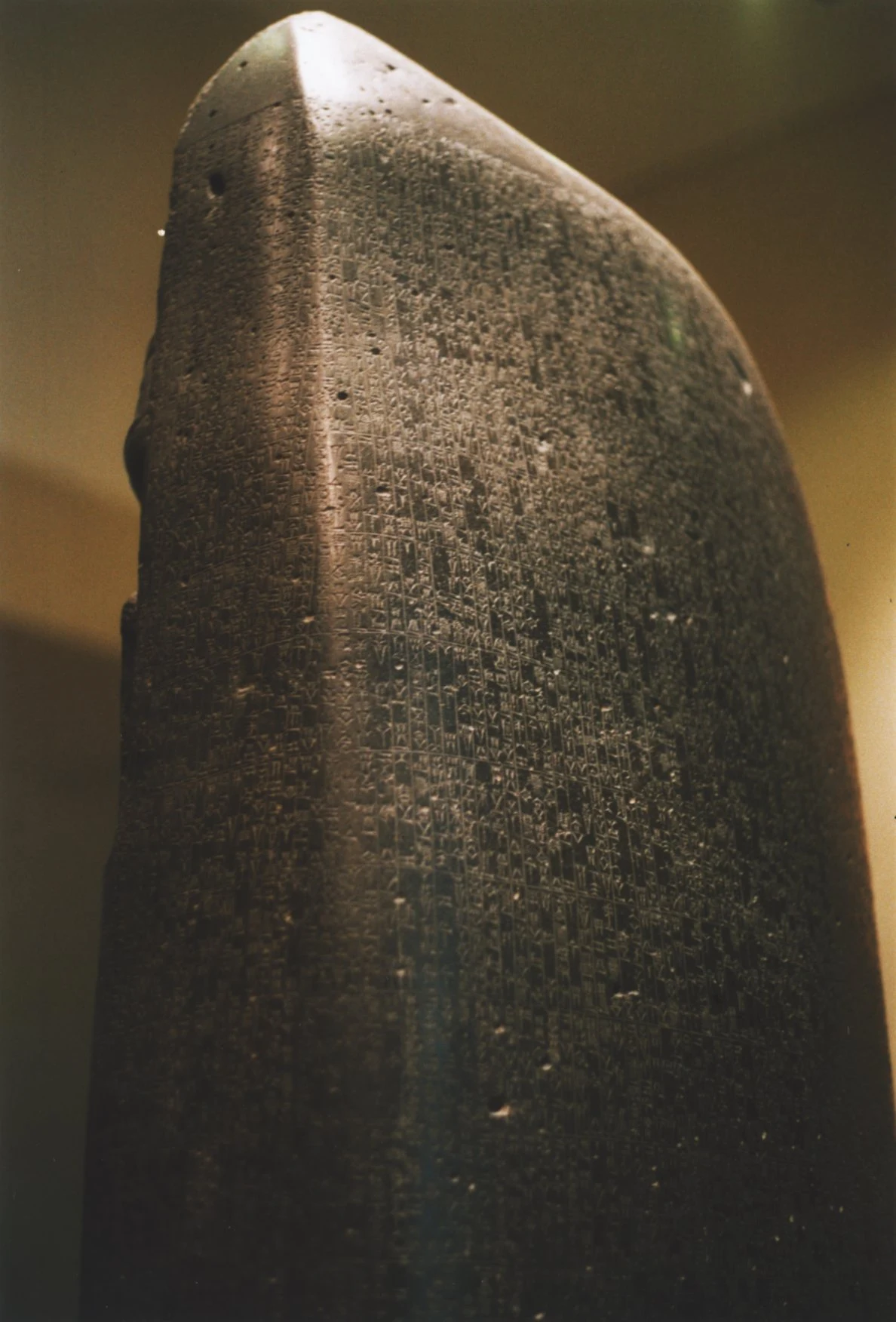
In §2 of the Laws of Hammurapi, a man accuses another of sorcery but cannot prove the charge. The accused goes to the divine RiverRiver Ordeal: Divine Adjudication by WaterAn ancient procedure referring a difficult dispute to a river with divine status; legal and archival witnesses differ.Glossary · Click to read the explanation. If the River overcomes him, the accuser takes his household; if it clears him, the accuser is killed and the cleared man takes the accuser's household. This is not “magic” in a modern recreational sense. Life and property are at stake, and the complainant is himself at risk if his allegation fails. [1]
But §2 is a written model rule, not a court record telling us how often it was enforced or precisely how officials supervised it. Its wording does not oblige us to imagine one uniform, simple “sink or swim” test. Research on the other documents has made the ordeal's physical procedure a matter of debate. [4][6]
Two Wives, Two Different Provisions
Hammurapi §§131–132 matter because popular comparisons often merge them into one rule. Under §131, when a husband accuses his wife without her having been caught with another man, she swears an oath by the god and returns home. Section 132 speaks of a finger of accusation pointed at her concerning another man, again without her being caught with him; she then goes to the River on her husband's behalf. [1]
There is thus an oath in one case and a river ordeal in another. The second provision does not identify the person who originated the accusation as clearly as some modern paraphrases suggest, so “an accusation in a different posture” is enough. Nor does the collection prescribe one universal test for every jealous husband. When comparing these provisions with Numbers, we must not attribute to Hammurapi sanctuary dust or words dissolved in a vessel. Those belong to the HebrewHebrewA Northwest Semitic language in the Canaanite group, with ancient and modern forms.Glossary · Click to read the explanation ritual. [1][3][5][7]
Mari: From Legal Formula to Reported Event
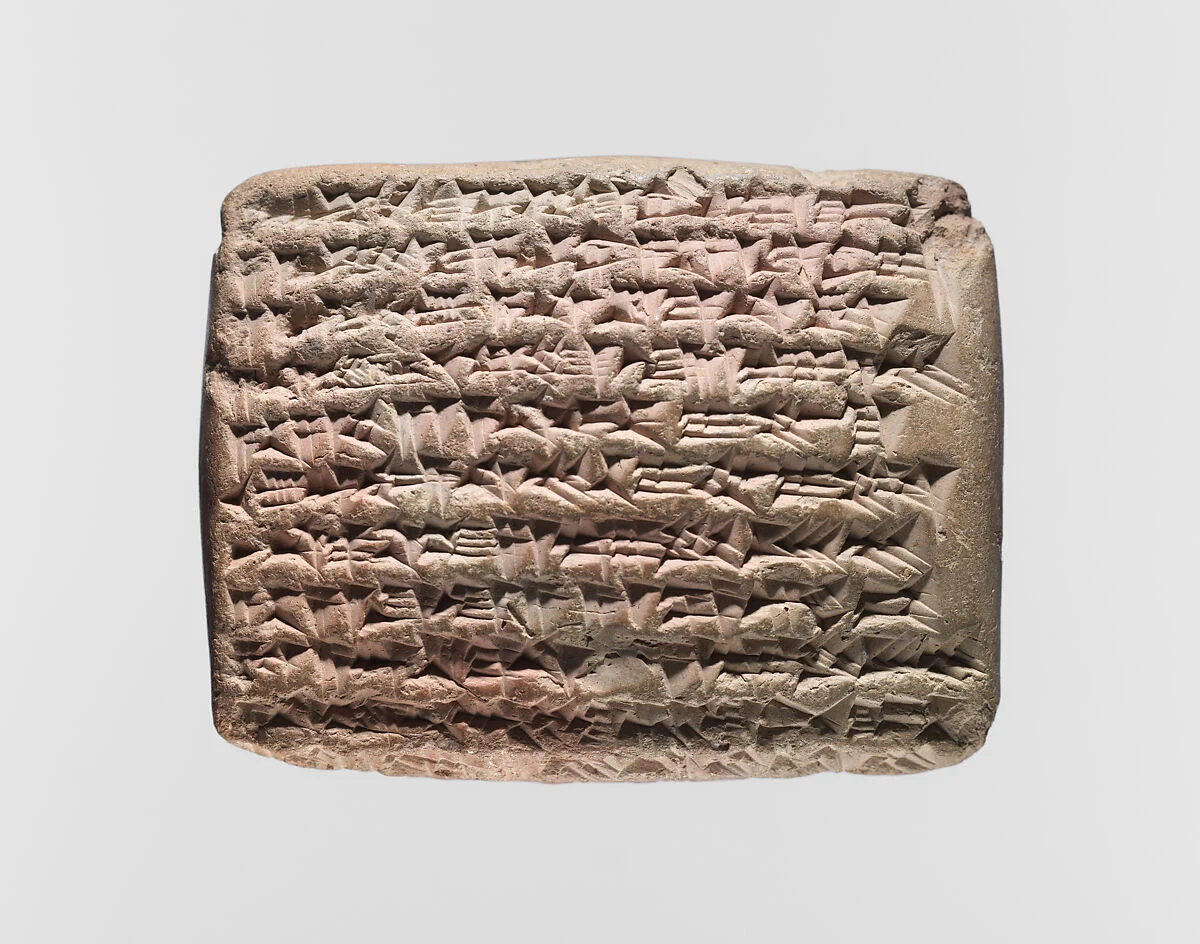
Letters from MariMariAn ancient city and kingdom on the Euphrates, at Tell Hariri in eastern Syria.Glossary · Click to read the explanation in the reign of Zimri-Lim, in the eighteenth century BCE, give us another kind of evidence. They are not conditional laws beginning “if this happens,” but reports sent to the court about people taken to the River. The disputes concern testimony, property, theft, political accusations, and sorcery; sometimes a substitute underwent the test. A letter is not necessarily a complete or impartial account either. Administrative writers had their own purposes. Still, it reveals people and events that a model provision cannot. [4][6]
In the letter designated ARM 26 253, Meptum reported a case arriving from the direction of Aleppo, involving a woman, her daughter, a boy, and a sorcery accusation. As translated and discussed by Jack SassonJack M. SassonHebrew Bible and ancient Near Eastern cultures scholar, Vanderbilt professor emeritus, also specializing in Mari’s archives.Glossary · Click to read the explanation, the mother swore that her daughter had not bewitched the boy, that she had not supplied implements of sorcery, and that she had not fed him bewitched food. She then underwent the test and died. The report draws attention to the combination of oath and River: they were not always mutually exclusive alternatives. For this article, however, we relied on scholars' publications and translations; we did not independently examine the AkkadianAkkadianAn ancient East Semitic language written in cuneiform in Mesopotamia.Glossary · Click to read the explanation tablet or its original edition. We therefore attribute the details to those scholars, rather than presenting a new reading of the tablet. [4][6]
Another Mari example describes two substitutes carrying millstones across water in a land dispute. One drowned and the other crossed. This shows why the ordeal should not be reduced to the claimant's own ability to swim: another person could bear the danger on his behalf. Mari's procedures do not establish a general rule for every region or century. Scholars dispute the exact place and physical method of the test. Joanna Töyräänvuori also observes that explicit death is rare in the letters, so we should not assume that it was the ordinary result. [4][6]
Numbers: No Leap into a River
Numbers 5:11–31 begins with a husband's suspicion or jealousy in a case without a witness or discovery in the act. He brings the woman to a priest with a barley offering. The priest places holy water in a clay vessel and adds dust from the sanctuary floor. He administers a conditional oath to which she replies “Amen, Amen.” He writes the curses, erases them into the water, and gives the water to her to drink within the ritual sequence. If she is innocent, the text says she is free from harm and can conceive. If she is guilty, the curse enters her, and the Hebrew text speaks in difficult language of a swollen belly and a falling or impaired thigh. The passage ends by declaring the husband free of guilt while the woman bears her guilt. [3]
The material distinction is plain: in Hammurapi and Mari a person goes into the River; in Numbers the woman takes the water of the curse into her body in a priestly setting. Jack Sasson therefore compares two forms of divine adjudication, not one rite with all its steps preserved. There is an institutional difference too: Mari's letters invoke the court and its officials, whereas Numbers centers the priest, sanctuary, and written oath. [1][3][4]
The comparison also exposes different distributions of risk. Under Hammurapi §2, a sorcery accuser risks punishment if the River clears his opponent. In Numbers 5, the woman undergoes the ordeal even when the husband's jealousy may be unfounded, and the closing verse declares him free of guilt. This is a reading of the text's allocation of danger, not a count of women who underwent the rite historically. The passage provides neither an independent record of its performance nor a rate of enforcement. [1][3][7]
Does the Curse Describe a Miscarriage?
This much-discussed modern question cannot be settled by translating a single word. The text does not say that the woman is pregnant when the rite takes place. Its language of “belly” and “thigh,” and the contrast with future conception, have supported readings involving illness, damaged fertility, or the loss of a presumed pregnancy. There is no agreed medical diagnosis. Sasson acknowledges several possible bodily interpretations; Hanna Liss reads the ritual partly through the husband's jealousy and the possibility that the marriage continues; Aslan Cohen Mizrahi proposes that abdominal illness manifests divine judgment on hidden impurity. These are scholarly interpretations, not physiological events confirmed by an ancient material record. [3][4][5][7]
Other proposals turn the dust in the vessel into an active mineral substanceOusia — essenceGreek term for essence or nature, with meanings changing between authors.Glossary · Click to read the explanation or interpret the passage as a means of terminating pregnancy. Yet “dust from the sanctuary floor” remains the ordinary reading, and the passage names neither a poison nor an existing fetus. It is therefore inaccurate to call it a “proven abortion recipe.” It is equally inaccurate to dismiss the severity of the bodily threat in the curse. We need to distinguish what the text states from later historical or medical hypotheses. [3][4][5][7]
Resemblance Does Not Reveal the Route of Transmission
There is a real intersection: an accusation difficult to establish with witnesses, an oath or curse, and water enlisted to show a divine decision. The ancient Near EastAncient Near EastA historical and geographical term covering Mesopotamia, the Levant and neighbouring ancient societies.Glossary · Click to read the explanation knew more than one form of such adjudication. Comparing Hammurapi, Mari, and Numbers is therefore useful and grounded in the sources. But these witnesses do not yield a chain showing that an editor of Numbers read §132 in a particular copy and converted a river into a cup. Nor do we know a continuous practice that can be traced step by step from Mari to Israel's sanctuary. [1][3][4][6]
These societies shared the problem of proof when reliable testimony was lacking and could assign the closure of a dispute to divine judgment. That does not make all their procedures identical or their outcomes equally just: the form of a trial depends on the authority that organizes it, the place where it occurs, and the person made to bear its risk. [1][3][4][6]
The results can be graded. Certain: river ordeals appear in Mesopotamian law collections and Mari letters, and Numbers prescribes a water ritual with a written oath. Likely: they share a wider tradition of divine adjudication when proof is difficult. Unproven: a specific direct borrowing, one physical method for every river ordeal, or a decisive medical interpretation of the woman's fate in Numbers. These distinctions yield a richer history than a simple copying story. Water appears in both scenes, but the story told about it, who speaks for the deity, and who pays the price of judgment have changed. [1][2][3][4][5][6][7]
References and notes
- CDLI composite Laws of Hammurapi, selected §§1–2 and 131–132 only Laws of Hammurapi composite P464358, §§1–3, 131–132 Return to the text ↑
- CDLI composite Laws of Ur-Namma, selected lines 253–273 Laws of Ur-Namma composite P432130, lines 253–273; selected nearby lines 285–294 Return to the text ↑
- Numbers 5:11–31 in Hebrew and JPS 1917; not a manuscript-critical collation Numbers 5:11–31, Hebrew and JPS 1917 Return to the text ↑
- Jack M. Sasson, From Babylon to Jerusalem: Water Ordeals, 2022; selected portions Jack M. Sasson (2022), From Babylon to Jerusalem: Water Ordeals in the Ancient World, printed pp. 324–345, DOI 10.1163/9789004511538_017 Return to the text ↑
- Hanna Liss on the sotah rite and marital jealousy; full accessible article, not all its sources Hanna Liss, The Sotah Ritual: Permitting a Jealous Husband to Remain with His Wife (2019, updated 2026) Return to the text ↑
- Joanna Töyräänvuori, Trial by Water through the Ages; selected pp. 309–313 and 317–320 Joanna Töyräänvuori, Trial by Water through the Ages, Studia Antiqua et Archaeologica 27/2 (2021), 301–330, especially printed pp. 309–313 and 317–320 Return to the text ↑
- Aslan Cohen Mizrahi, recent reading of the suspected-wife ordeal; accessible article and selected notes Aslan Cohen Mizrahi, The Suspected Adulteress Ordeal: A Ritual that Provokes YHWH (2026), body and selected notes Return to the text ↑
Suggest a correction · Suggest a source for this record
Cite this record
IL Archive, «From the River to “Bitter Water”: How Did the Ancients Seek Divine Judgment?», Edition 1, https://ilarchive.com/en/studies/ordeal-and-trial-before-god
Continue reading