Study
Returning from the Underworld and Resurrection: What Resembles What?
An extended study of a topic, with evidence and references.
From Inanna and Alcestis to Daniel, Paul, and the Qur’an: distinguishing descent, rescue, apotheosis, and resurrection, with precise three-day sequences and transmission limits.
Share article
Text
The resemblance may seem obvious: InannaInanna / IshtarProminent Mesopotamian goddess with a major centre at Uruk, whose parentage and cult traditions vary rather than forming one fixed genealogy.Glossary · Click to read the explanation descends to the underworld and returns, Alcestis dies and Heracles retrieves her, Christianity speaks of Christ’s resurrectionResurrection of the deadThe dead returning to life, distinguished from soul immortality, with differing scope and form among texts.Glossary · Click to read the explanation, and Judaism and Islam describe the dead rising. Yet putting these witnesses under a single word may conceal the subject of research rather than explain it.
Was the returning figure dead in the first place? Did that figure return to a family and a previous life, become a god, or inaugurate a new future for humanity? Is the event recurrent, unique, or anticipated at the end of time? These differences make comparison more precise and prevent reducing distinct traditions to one supposed story.
A visit, death, and apotheosis are different events
KatabasisKatabasis: descent to the underworldComparative term for a journey to the realm of the dead; does not by itself establish that its traveler died and rose.Glossary · Click to read the explanation here means descent to the underworld. A living being can undertake this journey; reaching the realm of the dead therefore does not establish that the traveler died and rose. In his study of Alcestis, Michael Lloyd distinguishes such journeys from restoring a human who actually died. [3]
ApotheosisApotheosis: acquiring divine statusTransformation granting divine status; differs from returning to an earlier human life or raising the dead for judgment.Glossary · Click to read the explanation grants a figure divine status rather than simply returning that figure home. Eschatological resurrection concerns a group of dead people and the world’s future, whereas rescuing one person may remain an exception in a world where death continues.
These are comparative categories for this study, not a dictionary requiring every religion to use words identically. A narrative can combine several categories. What matters is identifying the action, its subject, and its outcome.
Inanna: when does rescue begin?
In the Sumerian text, NinshuburNinshuburInanna’s attendant in the Sumerian descent, following her instructions and seeking help during her absence.Glossary · Click to read the explanation begins seeking help after three days and nights; Inanna’s return requires a substitute. The ending divides the year between Dumuzi and his sister, not between Inanna’s death and resurrection. [1]
Read a number together with the action it determines. Waiting before intervention begins is not a timetable for its completion. Preserve the distinction between Inanna and Dumuzi, too: moving from one character to another and assigning them a single cycle constructs a new story from pieces of the text.
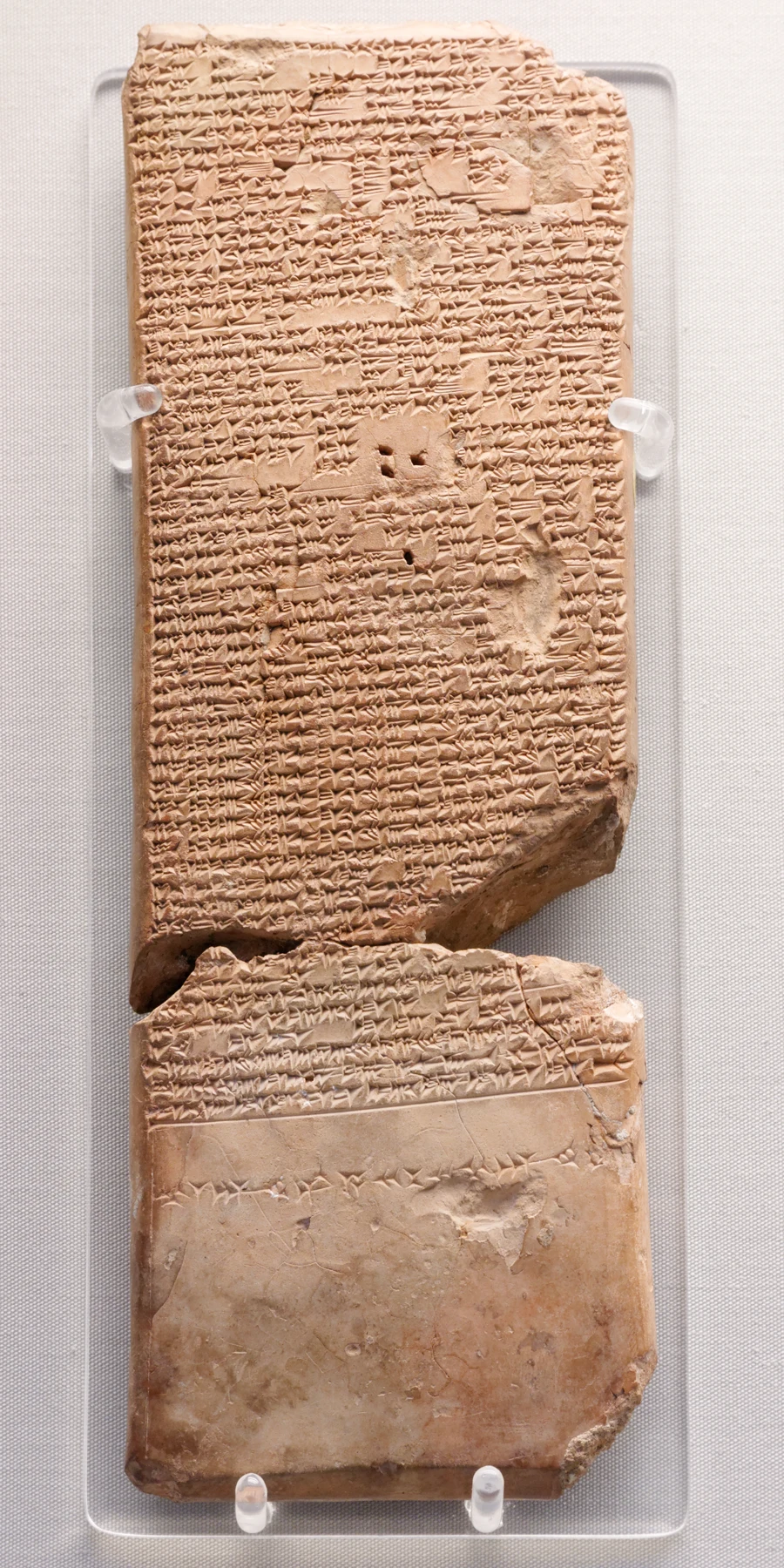
The Oxford translation read here is a composite preserving gaps and alternative readings. Its assembly does not mean one completely preserved tablet supplies every detail. The British Museum catalogue identifies one Sumerian descent fragment as Old Babylonian: that dates a witness, not the first oral narrative. [10]
Why “seasonal” is not enough
An annual interval in a text does not make all its events one annual observance. Identify whose interval it is, where it belongs in the narrative, and whether the source describes the divine world or instructs a ritualRitualAn organised or distinguished practice meaningful to a community; it may leave traces, but its form alone does not reveal an associated doctrine.Glossary · Click to read the explanation practice. Myth and ritual can be connected without being identical documents.
Calling every return “resurrection” can erase distinctions between conditional release, alternating absence, restored human life, and the ending of death itself. Refusing comparison altogether also loses the shared questions about the boundary between living and dead.
Retain the specific resemblance, then weigh the difference. Dumuzi, AdonisAdonis: death and return in differing narrativesFigure associated with Aphrodite, mourning and celebration; divided residence, death and return differ between sources.Glossary · Click to read the explanation, and their rituals require a separate study. One paragraph cannot sustain a model covering every absent god in every period.
Alcestis: a woman dies in her husband’s place
In Euripides’ Alcestis, performed in Athens in 438 BCE, the crisis begins with Admetus escaping death if someone else dies for him. His wife accepts what others refused. During her death scene she addresses her husband and children and asks him not to take another wife who would harm them. [2][3]
The narrative presents a human household threatened by loss rather than a goddess disappearing from a divine assembly. Alcestis accepts death so that her husband remains, and his remaining life becomes filled with grief. Survival is not a costless solution: the household bears the consequences of the exchange.
The dialogue declares her dead at the end of the death scene. Later Heracles returns with a woman whom Admetus recognizes as the wife he buried. These details distinguish her restoration from a journey undertaken by someone who never died. [2]
Self-sacrifice does not establish an identical religious meaning with every later account of redemption. Compare who substitutes for whom, why, who authorizes the exchange, and what the action saves. Similar wording cannot erase these elements.
Does Heracles descend to Hades in this play?
Upon learning of the disaster, Heracles announces a plan to ambush Death beside the tomb. He proposes an alternative: if Death is not there, he will approach Persephone and the ruler of the underworld and ask for Alcestis’s return. [2]
In the concluding dialogue, Admetus asks where he fought Death, and Heracles locates the struggle beside the tomb. Do not turn the alternative plan into an event the dialogue confirms. Language about bringing someone up from below does not cancel the specified location of the fight.
Lloyd examines the tension between Death as a figure who can be wrestled and necessity as a boundary difficult to overcome, also considering the language of journey. This literary interpretation belongs alongside the dialogue, not in its place. Nor does the play establish that all Greeks agreed every dead person could be rescued this way. [3]
Three days: before what, and after what?
At the end of Alcestis, the restored wife stands silent. Heracles explains that speech awaits purification from the underworld gods and the arrival of the third day. The day mentioned follows her return in the scene; the text does not say she stayed dead for three days before he restored her. [2]
For Inanna the wait marks the beginning of rescue, as noted. By contrast, 1 Corinthians 15:3–4 states that Christ died, was buried, and rose on the third day according to the scriptures. The number has a different function in the sequence. [5]
The numerical resemblance is observable, but its temporal direction differs. Defending a specific borrowing requires explaining the transmission of a particular sequence, rather than deleting the different actions until only “three days” remains.
Daniel: awakening concerns the fate of the dead
Daniel 12:1–3 describes distress and deliverance, then many who sleep in the earth’s dust awakening: some to lasting life and others to disgrace. The wise appear shining like stars. [4]
This concerns human destinies beyond rescuing one wife and returning her to her home. Different outcomes are part of the scene and should not disappear into a general statement that everyone returned to the same life.
Preserve the word “many”: do not automatically substitute “all humanity” and attribute it to the verse. The scope of resurrection and its later interpretations form a separate question. Only these three verses were read here, not the entire history of Jewish resurrection or every layer of Daniel.
Paul: resurrection, transformation, and the end of death
First Corinthians 15 argues for more than an individual’s return. Paul connects Christ’s resurrection to that of the dead, describing Christ as the firstfruits and then those who belong to him at his coming. Death is the final enemy to be abolished. [5]
In the chapter’s second half he asks what body rises, employs the image of sowing, contrasts corruption and incorruption, and describes the living being transformed and the dead rising at the last trumpet. The “spiritual body” of verse 44 does not by itself justify replacing “body” with “a spirit without a body.”
Yale’s study guide notes different possibilities concerning the position Paul’s audience held and emphasizes future events and transformation in his argument. This is a scholarly discussion of the passage, not a reading of a whole book on all Paul’s views. [6]
The difference from Alcestis concerns the outcome’s scope: the play restores a woman to her household, while the chapter depicts a transformation ending death’s rule. These describe the texts’ religious claims and meanings, rather than a historian’s verdict on whether a miracle is possible or happened.
The Qur’an: rising, judgment, and deeds
In al-Zumar 39:68–70, the second trumpet blast is associated with rising; the record, prophets, witnesses, judgment in truth, and each soul receiving its deeds’ recompense follow. Verse 68 retains an exception for those God wills in its description of the first blast. [7]
This scene does not construct the return of an absent god to a divine function, or a wrestler rescuing one captive beside a tomb. Humans, their deeds, and divine judgment occupy its center. Comparative reading retains that structure before seeking an earlier origin.
An eschatological future in Jewish and Christian texts and the Qur’an matters for comparison, but these verses alone establish no particular transmission route between them, much less directly from a Sumerian poem. This selected passage cannot replace reading other texts and their interpretive histories.
The cover: apotheosis is another transformation
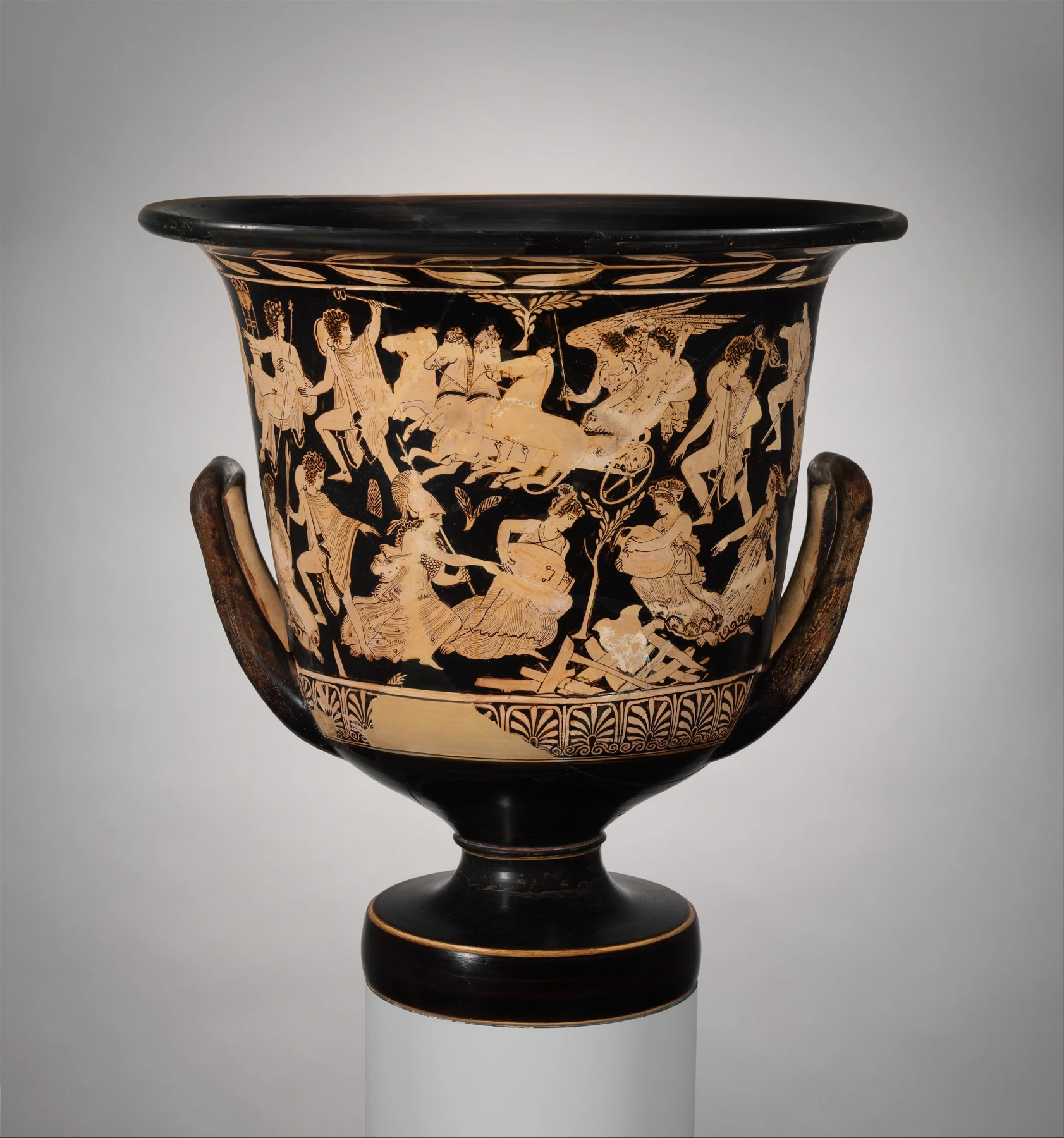
The Attic vessel on the cover, dated to the fourth century BCE, depicts Heracles’s apotheosis after his death and ascent to Olympus. The identification comes from the museum catalogue; it does not depict Alcestis’s rescue. [8]
The image is useful because comparison must distinguish apotheosisApotheosis: acquiring divine statusTransformation granting divine status; differs from returning to an earlier human life or raising the dead for judgment.Glossary · Click to read the explanation from returning to a previous human life or rising for judgment. Movement toward another realm does not establish an identical outcome or status.
The vessel’s production date is not Alcestis’s composition date or evidence connecting it with later texts. The object witnesses an ancient Greek representation; this limit remains important when using it as a cover for a study of several traditions.
Contact is possible, but where is the transmission chain?
The Mediterranean had networks of trade and contact involving Greeks, PhoeniciansPhoeniciansCommunities of Levantine coastal cities known for Mediterranean contact during the first millennium BCE.Glossary · Click to read the explanation, and others. A Metropolitan Museum essay describes trading centers spread across this space by the late eighth century BCE. This provides contact context, not documentation of a descent poem reaching Euripides. [9]
The difference is decisive. A traded object or transmitted writing system can establish contact between communities without identifying which narrative their members carried. Nor does an earlier textual witness establish that every element in a later text came from it.
We need suitable chronology, specific resemblance beyond the common human fear of death, a structure whose transmission can be explained, evidence for a mediator or route, and consideration of common tradition or independent developmentIndependent developmentSimilar elements arising without historical transmission between them.Glossary · Click to read the explanation. When a link is missing, a hypothesis can be offered while remaining a hypothesis.
What conclusions does comparison permit?
The witnesses show that crossing death’s boundary is not one idea. They include descent, conditional return, rescue of a human, apotheosis, awakening with differing outcomes, and eschatological transformation. Some actions are comparable; the broad category does not establish that one text copies another.
This study supplies no documented chain making Inanna the source of Alcestis or either narrative the direct source of Christ’s resurrection or Qur’anic rising. Failure to establish that chain does not isolate cultures; contact likewise does not exempt researchers from identifying the idea they claim was transmitted.
Comparative religious history starts with the precise action: who died, who intervened, what returned, who benefited, and did death remain? Keeping these questions makes resemblances testable while leaving each tradition’s particular features visible.
Further reading: Inanna’s and Ishtar’s descent; The quest for immortality; Judaism between exile and Christianity; Similarity does not establish borrowing.
References and notes
- Complete composite translation read, preserving numbered narrative and gaps. No tablet autopsy or complete Sumerian transliteration reading. Oxford ETCSL 1.4.1; especially 173–175, 282–294, 404–410 Return to the text ↑
- Specified passages of Coleridge’s historical translation read, not the whole play. TEI: Perseus/Tufts, CC BY-SA4.0; underlying translation public domain. Alternative plan distinguished from reported action. Euripides, Alcestis; E. P. Coleridge, 1906 printing; lines 1–75, 244–392, 837–860, 962–1007, 1118–1163; Perseus TEI Return to the text ↑
- Full article and29notes read; CC BY4.0. Its cited works not thereby read; interpretation not generalized to every Greek belief. Michael Lloyd, Death, Resurrection, and Realism in Euripides’ Alcestis, Greece & Rome72(1),2025,109–125; DOI10.1017/S0017383524000214 Return to the text ↑
- Only verses1–3 read in Hebrew and English; “many” and differing outcomes retained. No wholebook reading claimed. Daniel12:1–3; Hebrew and facing English Return to the text ↑
- Whole chapter read in public-domain KJV: third day, firstfruits, transformation and trumpet. Authorial claims separated from a historical verdict on miracles. 1Corinthians15:1–58; especially3–4,20–28,35–54; public-domain KJV Return to the text ↑
- Displayed guide text read, not its course or linked books; alternative reconstructions of the audience’s position retained. Yale Bible Study, The Meaning of Resurrection – Study Guide; 1Corinthians15 Return to the text ↑
- Three verses read in Arabic and translation, not the whole surah or commentaries. Exception, judgment and deeds retained; no direct transmission attributed. Qur’an, al-Zumar39:68–70; Arabic and displayed English Return to the text ↑
- Catalogue, API and rights checked; original viewed. Scene is Heracles’s apotheosis, not Alcestis’s rescue. Metropolitan Museum52.11.18; Attic red-figure calyx-krater,4thcenturyBCE; Herakles’s death/apotheosis Return to the text ↑
- Essay text read; trading-post paragraph used only for contact context, not transmission of a specific narrative. Department of Ancient Near Eastern Art, The Phoenicians (1500–300B.C.), Metropolitan Museum,October2004; trading-post paragraph Return to the text ↑
- Indexed museum identification read; direct page unavailable. No object examination, complete catalogue reading or first-composition date claimed. British Museum1889,1014.641; indexed catalogue: Sumerian Inanna’s Descent,OldBabylonian fragment Return to the text ↑
Suggest a correction · Suggest a source for this record
Cite this record
IL Archive, «Returning from the Underworld and Resurrection: What Resembles What?», Edition 1, https://ilarchive.com/en/studies/underworld-journeys-and-resurrection
Continue reading