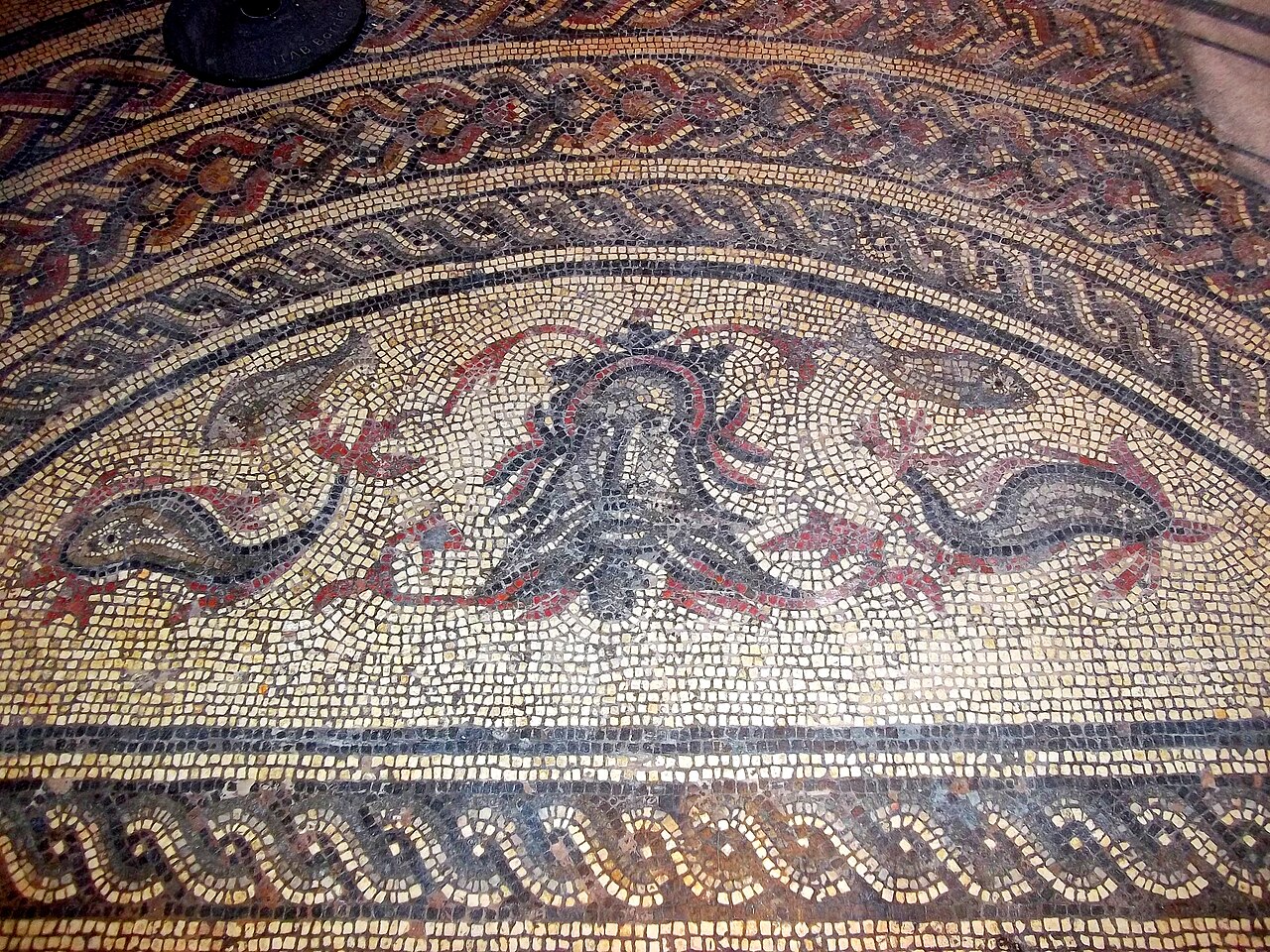
Head of a sea deity in a Roman mosaic from Fordington, usually identified as Oceanus; the heritage record also allows Neptune. Dorset Museum, England. Evidence from Roman art later than the Homeric epics
Entity
Water-related divine figure in Greek poetry, distinguished from the modern geographical use of “ocean.”
Name variants: Oceanus
Context and sources →
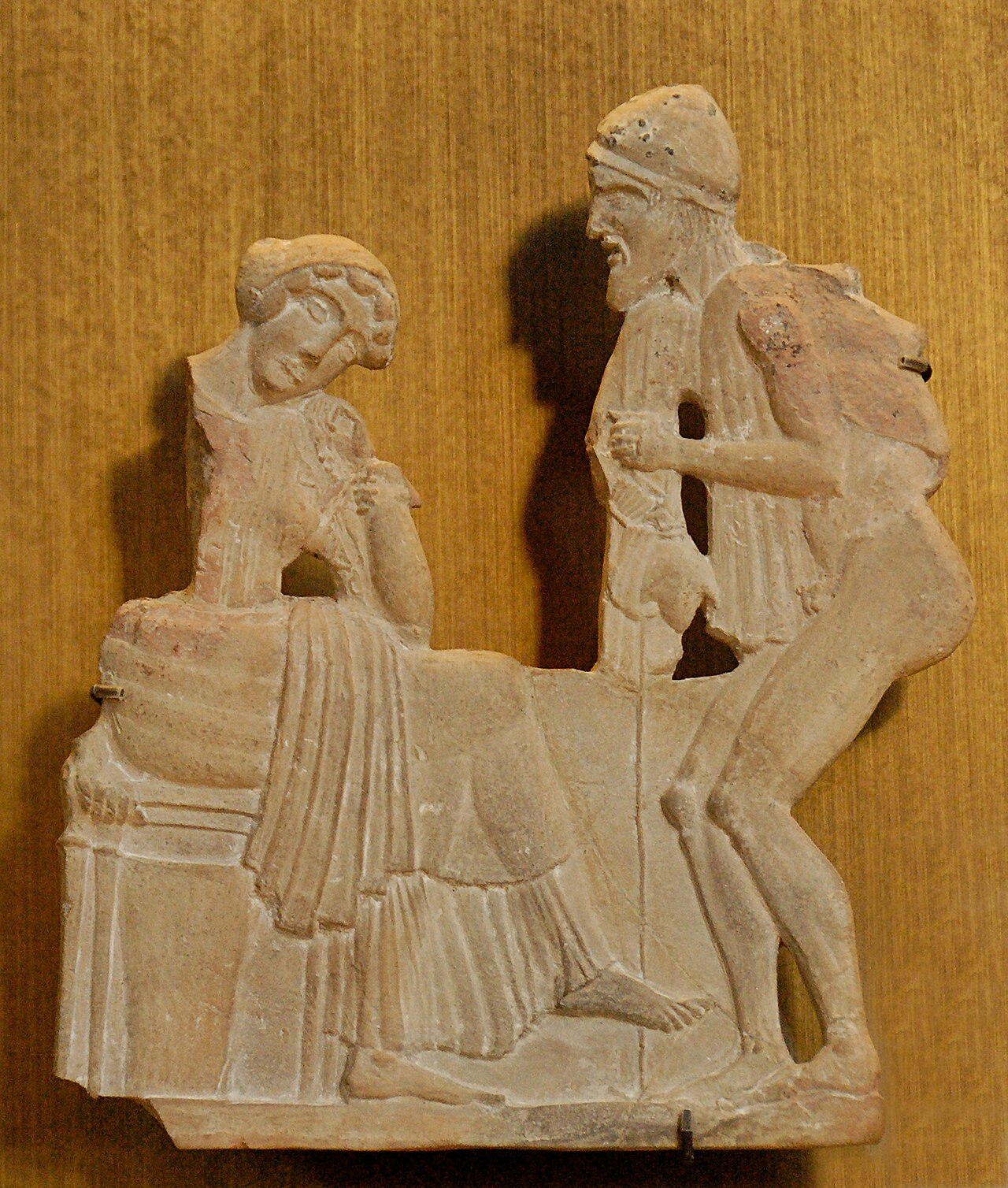
Odysseus disguised as a beggar before Penelope, on a terracotta plaque of about 450 BCE; Louvre CA 860. An ancient representation of epic characters, rather than portraits of historically established people
Person
Greek hero whose attempt to return home after the Trojan War is followed in the Odyssey.
Name variants: Odysseus
Context and sources →
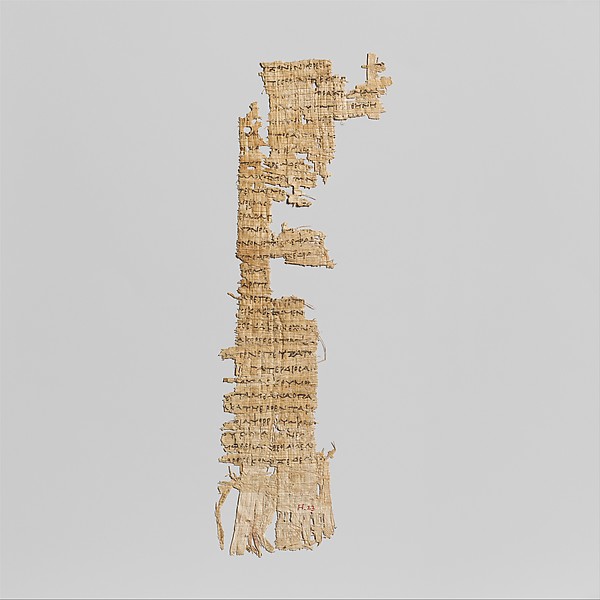
Papyrus fragment of the Odyssey, about 285–250 BCE; Met 09.182.50. It preserves lines from Book 20, rather than the assembly scenes in Books 1 and 5
Entity
Greek epic attributed to Homer, following Odysseus’s return after the Trojan War.
Name variants: Odyssey
Context and sources →

Ola Wikander at the Oslo Book Festival, 18 September 2010. Photograph by decltype; identity and date follow the photographer’s source metadata
Person
Scholar of ancient Near Eastern texts and the Hebrew Bible at Lund University, studying Ugaritic and shared poetic imagery.
Name variants: Ola Wikander
Context and sources →
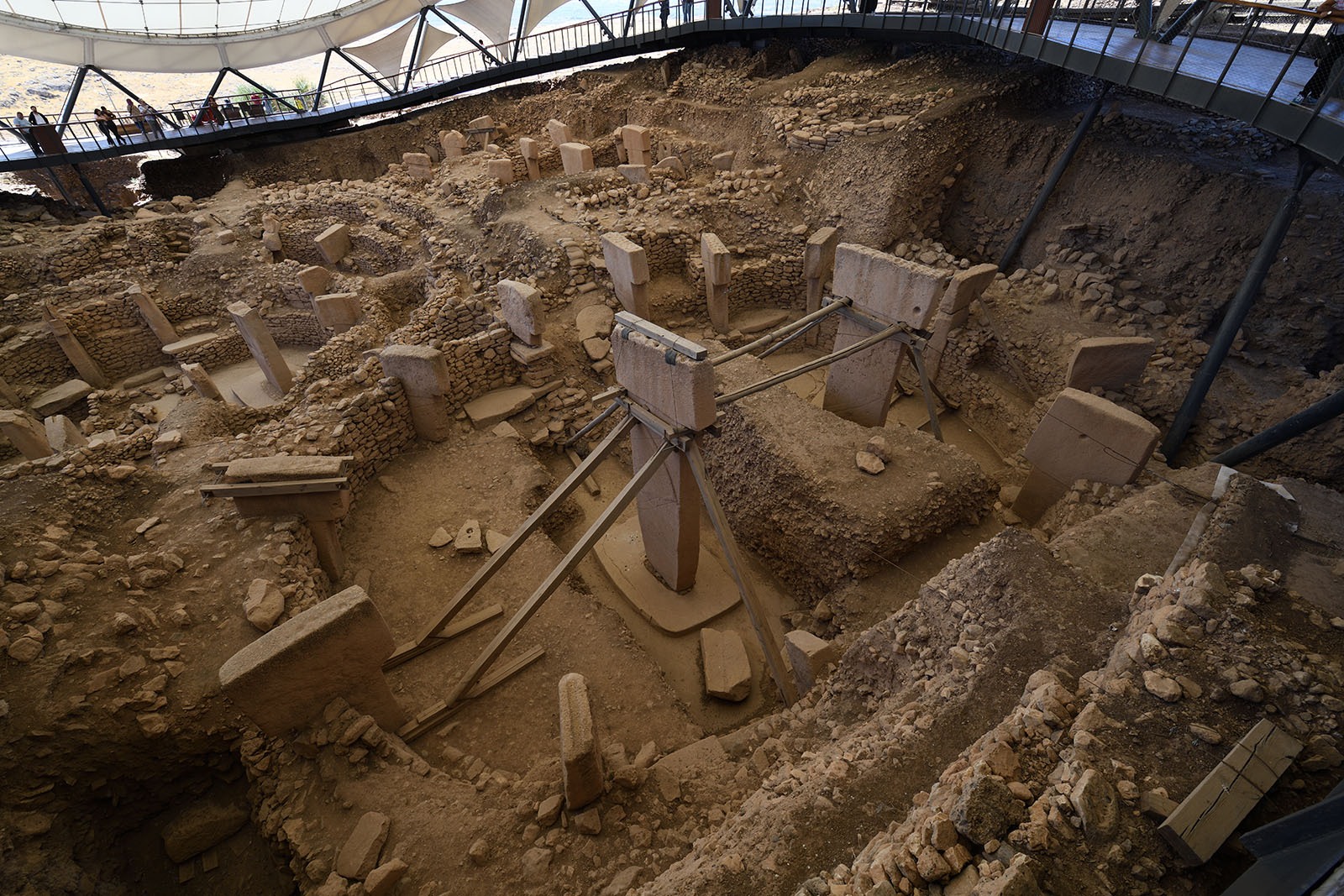
Building D at Göbekli Tepe, one of the buildings whose pillar arrangement Oliver Dietrich discussed. The roof, walkway and braces are modern protective structures. Contextual site photograph
Person
An archaeologist on the Göbekli Tepe project since 2005, writing on its pillars, feasting and Urfa Man.
Name variants: Oliver Dietrich
Context and sources →
Person
Olof Pedersén is an Uppsala Assyriologist combining cuneiform texts and archaeology in research on Babylon.
Name variants: Olof Pedersén
Context and sources →
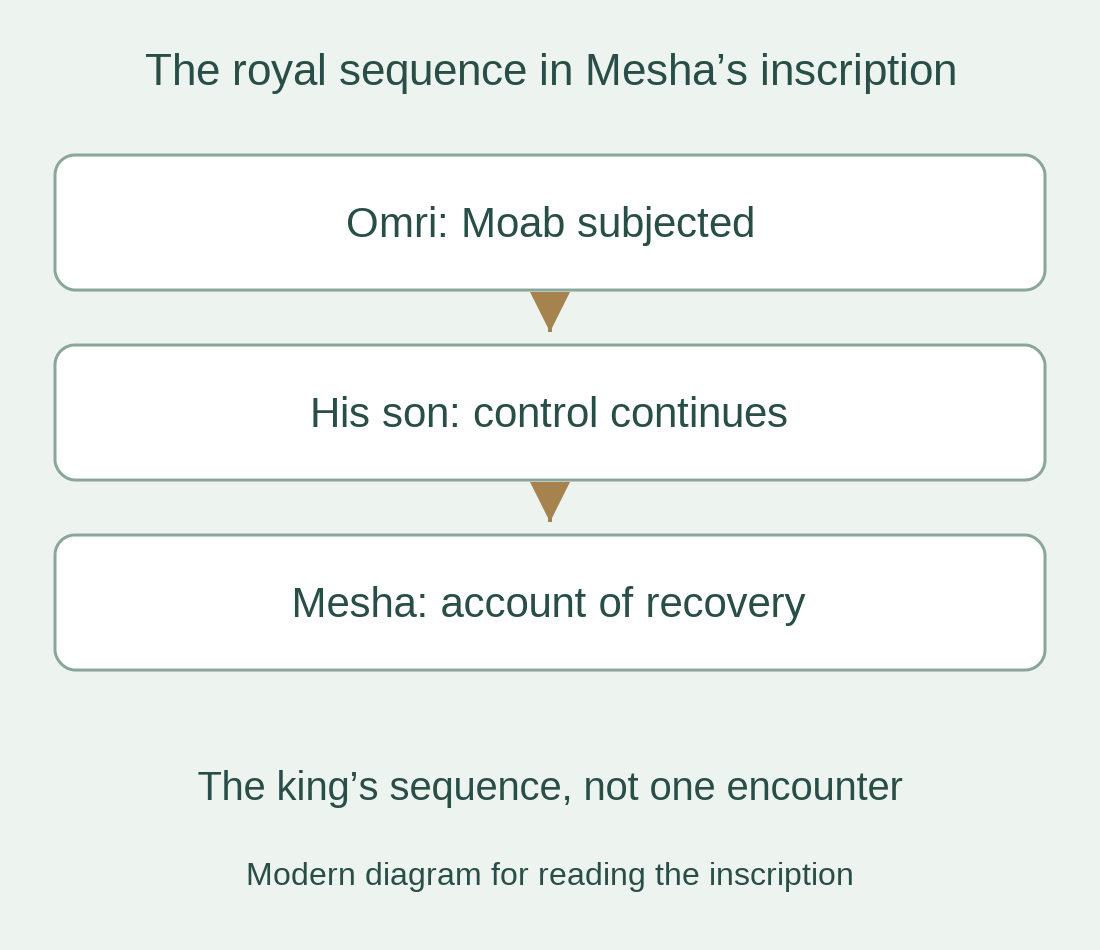
Modern diagram for reading the inscription. The king’s sequence, not one encounter
Person
Ninth-century BCE ruler of ancient Israel, named in the Mesha inscription's account of Moab's subjection.
Name variants: Omri
Context and sources →
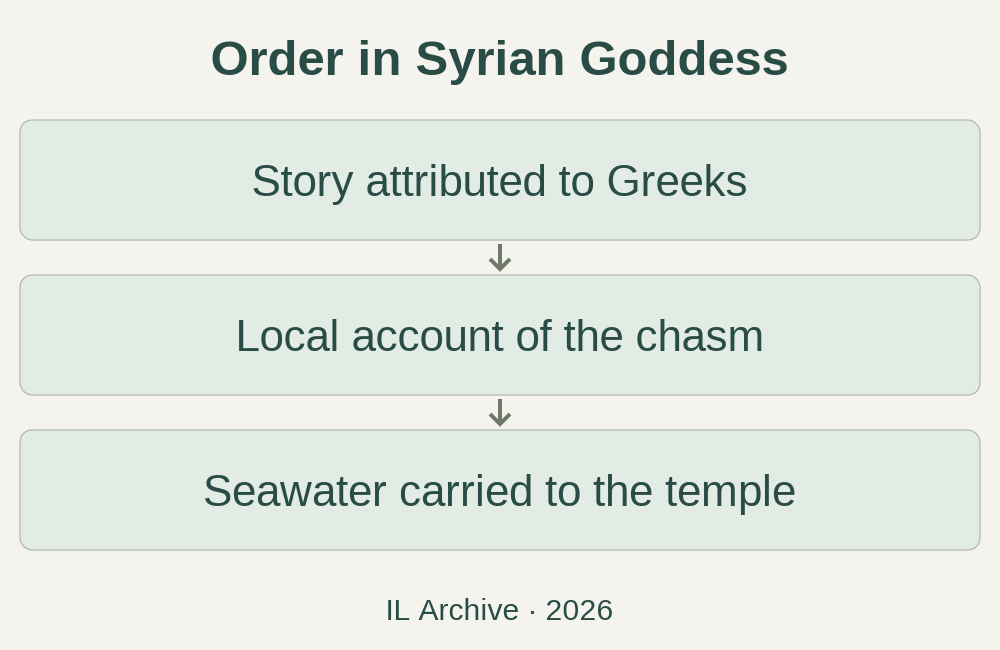
Modern explanatory diagram of one literary witness’s sequence or relationships, not a manuscript, portrait or demonstrated transmission route
Ancient text
Second-century CE Greek text attributed to Lucian, describing Syrian Hierapolis and its sanctuary traditions.
Name variants: On the Syrian Goddess
Context and sources →
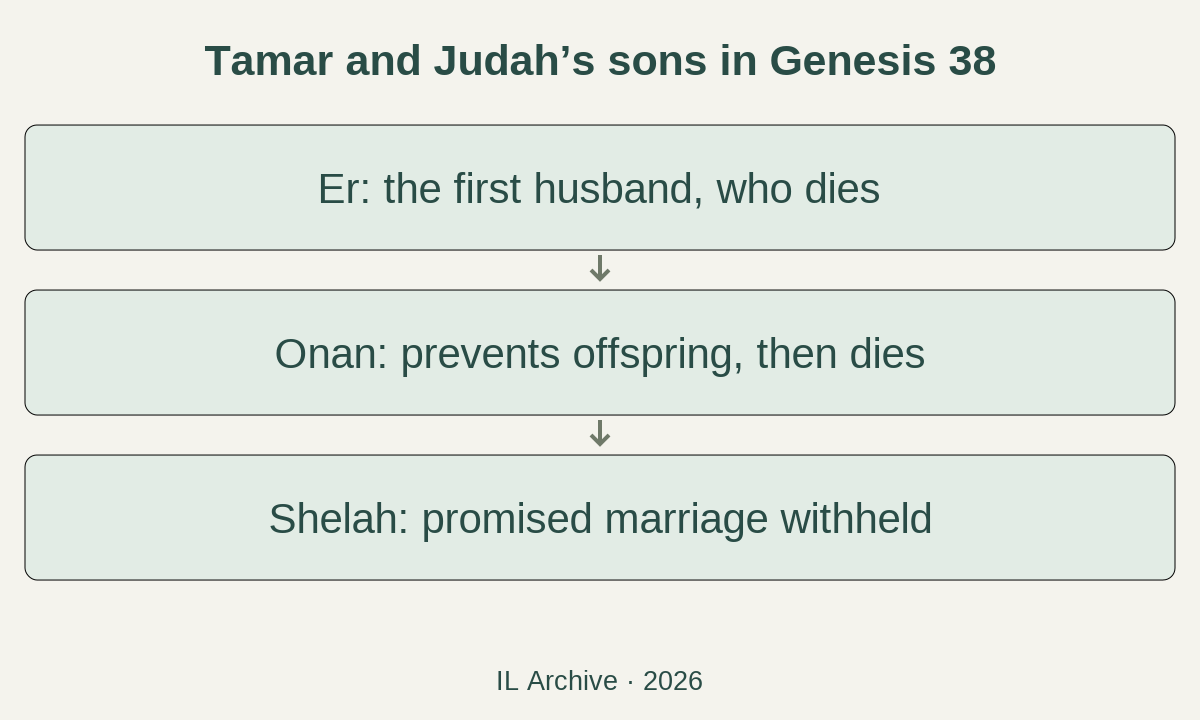
Modern explanatory diagram of relationships or cases in the specified witnesses; not portraits, a legal tablet or an ancient manuscript
Person
Er’s brother, directed to raise offspring for him through Tamar in Genesis 38.
Name variants: Onan, son of Judah
Context and sources →
Modern AI-generated conceptual illustration of names, identity and writing; the imagined tablets, signs and figures are artistic devices, not identified artefacts or verified reconstructions
Entity
Study of proper names, especially personal and place names, through their forms, languages, histories and social uses; a name alone does not establish its bearer’s identity or religion.
Name variants: onomastics, onomastic analysis
Context and sources →
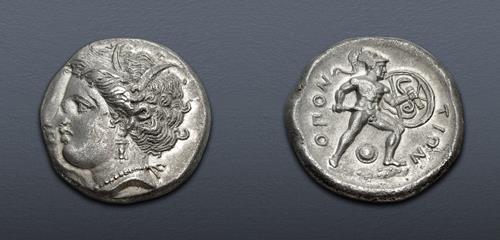
Stater of the Opus mint, about 370–360 BCE; CNG 132 lot 275. Persephone on the obverse, Ajax on the reverse. Civic coinage witness, not Deucalion’s flood
Site
Ancient Greek city linked with Deucalion’s genealogies and Pindar’s ninth ode, near present-day Atalanti.
Name variants: Opus, ancient Locrian city, Opous
Context and sources →
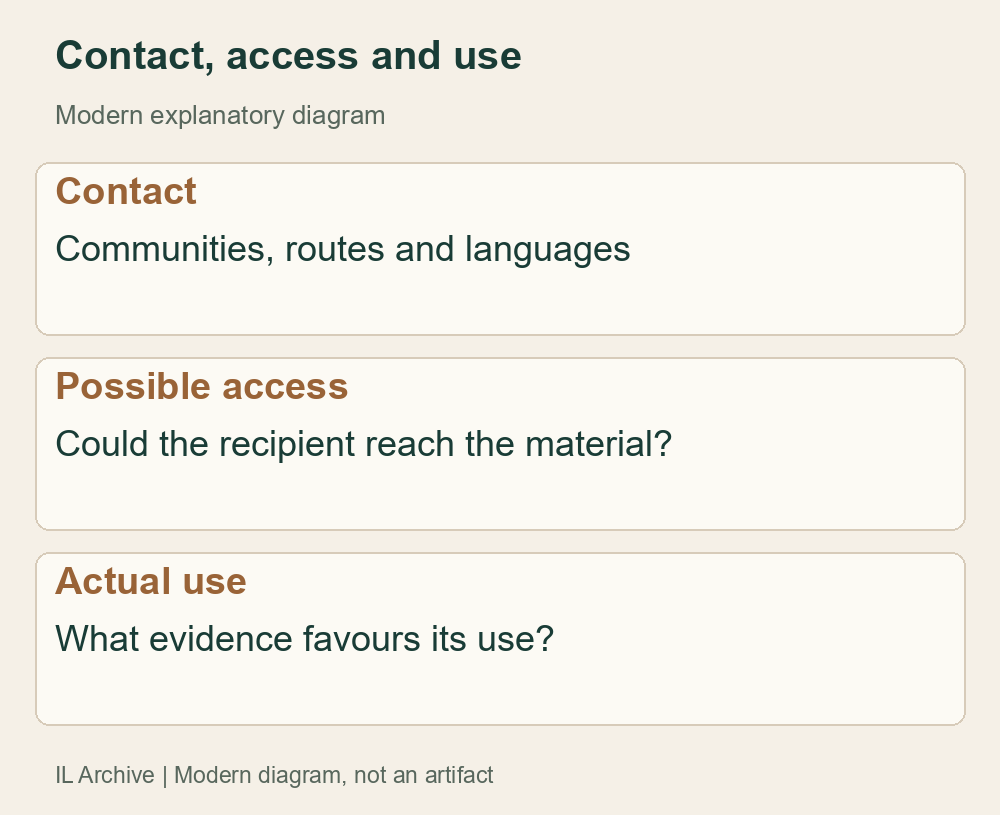
Distinct claims: population contact alone does not prove reading or narrative transfer
Entity
The passing-on of words, narratives or knowledge through hearing, performance and learning, sometimes alongside writing; degrees of stability vary with genre, setting and controls.
Name variants: Oral transmission
Context and sources →
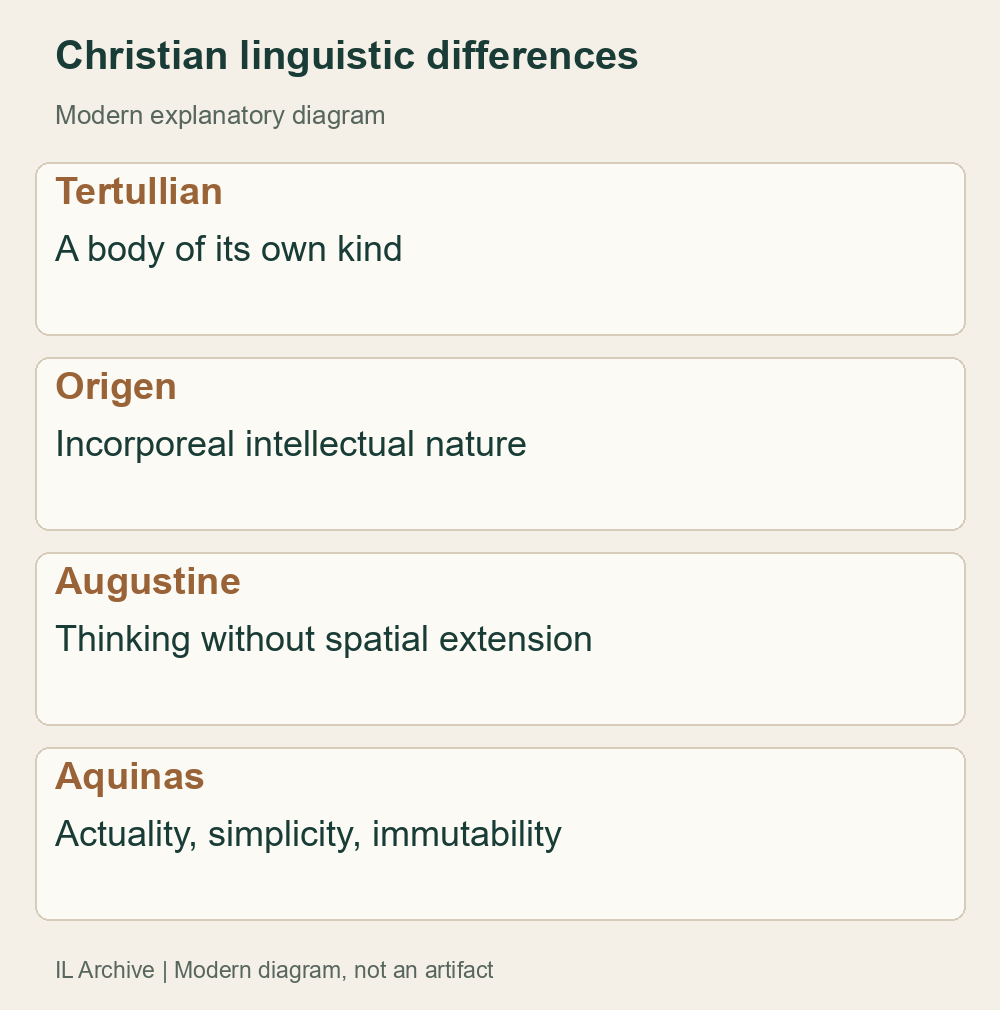
Positions in specific texts, not a consensus of early or later Christianity; no portraits depicted
Person
Christian exegete and theologian from Alexandria (c. 185–253), known for biblical textual comparison, commentaries and On First Principles. His works survive in Greek and through later translations and quotations.
Name variants: Origen, Origen of Alexandria
Context and sources →
Entity
A harmful spirit named in the Greek Testament of Solomon, whose capture begins the ring-and-Temple narrative.
Name variants: Ornias
Context and sources →
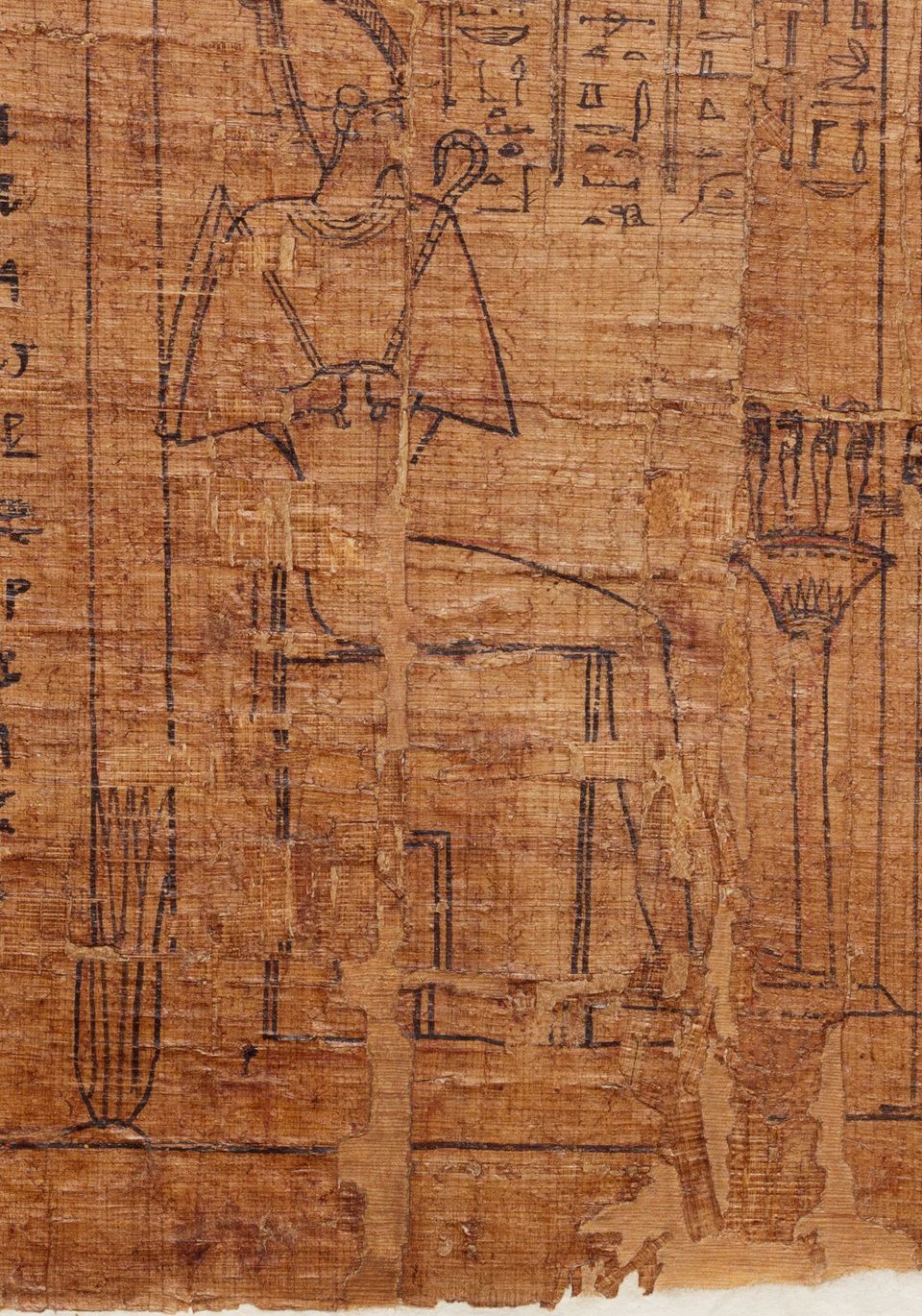
Cropped detail of a Ptolemaic funerary papyrus showing Osiris enthroned in his shrine; Egypt, ca. 230–150 BCE. Met 66.99.142. This is a crop of the artifact, not an image of a historical mythic event
Entity
Osiris was an ancient Egyptian deity associated with the dead, life after death, renewal, and kingship. His roles appear in changing funerary texts, rituals, and judgment scenes, notably the weighing of the heart.
Name variants: Osiris
Context and sources →
Person
Hebrew Bible scholar studying the Sabbath commandment’s interpretation, author of Sabbath in the Making, 2020.
Name variants: Ottilia Lukács
Context and sources →
Person
Scholar of the New Testament and ancient Judaism, 1917–2005.
Name variants: Otto Betz
Context and sources →
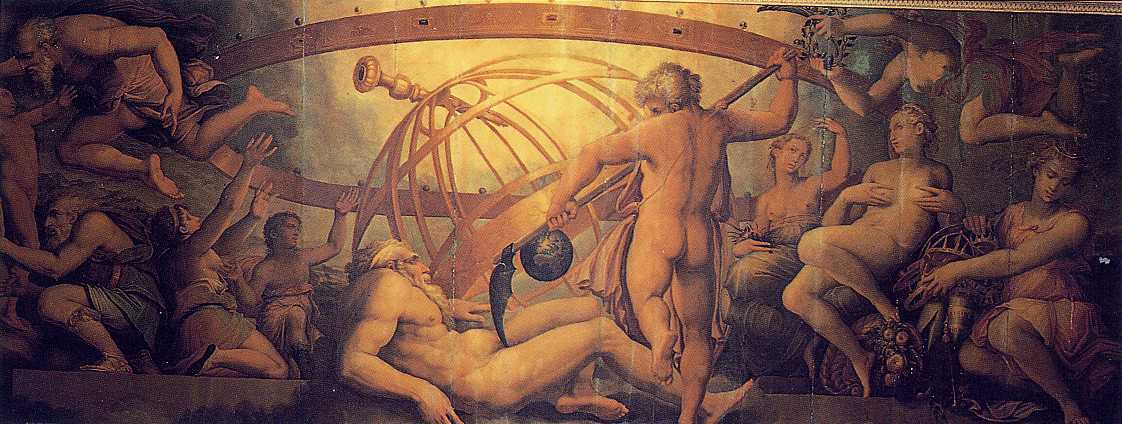
The assault on Ouranos in a sixteenth-century work by Vasari and Gherardi, Palazzo Vecchio, Florence. Later artistic reception, not an ancient Greek witness or a contemporary image of Hesiod’s time
Entity
Sky as a divine figure in Greek poetry; Kronos’s father in Hesiod.
Name variants: Ouranos, Uranus
Context and sources →
Modern AI-generated symbolic cover: an imaginary portal and luminous abstract forms evoking questions of being and substance, not a documented artifact, manuscript, temple or literal portrayal of divinity
Entity
Ousia (οὐσία): a Greek noun variously translated being, substance, or essence. In later Christian debates it could designate a common divine essence contrasted with distinct hypostases; this meaning is not universal in earlier texts.
Name variants: ousia, οὐσία, essence, substance
Context and sources →
Person
Ovid was a Roman poet writing in Latin, who lived from 43 BCE to about 17 CE. His best-known works include the Metamorphoses.
Name variants: Ovid
Context and sources →
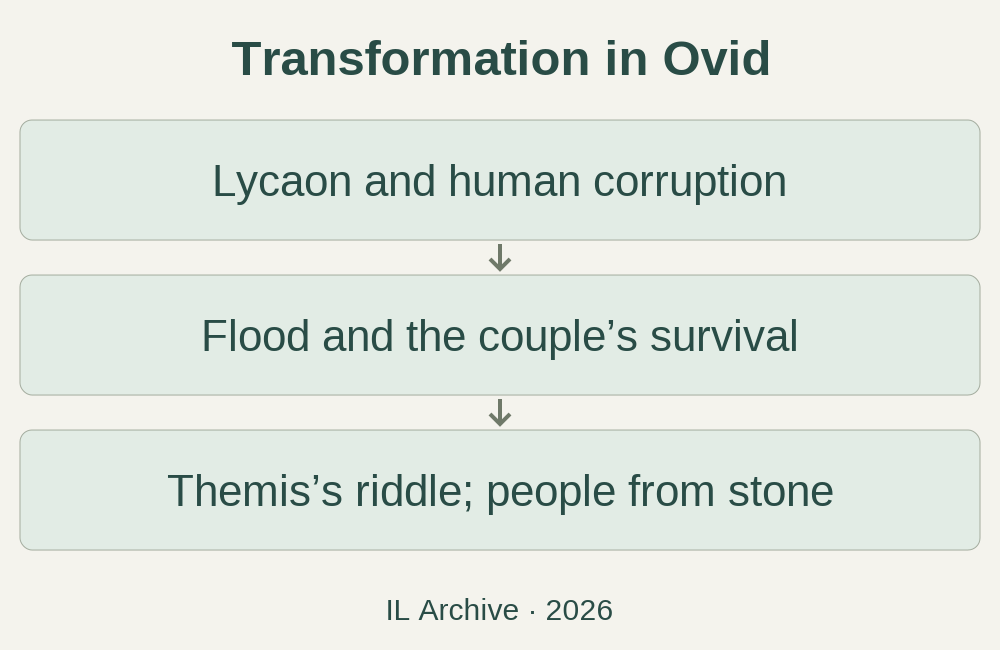
Modern explanatory diagram of one literary witness’s sequence or relationships, not a manuscript, portrait or demonstrated transmission route
Ancient text
Latin epic from the early first century CE collecting transformations, including Lycaon and Deucalion’s flood.
Name variants: Ovid’s Metamorphoses
Context and sources →

Modern AI-generated interpretive cover: an imagined transition from marks on stone to abstract strokes. Not a photograph of an ancient inscription or a scholarly facsimile
Entity
Paleo-Arabic denotes an early Arabic-script epigraphic tradition attested from the late fifth century CE, with distinctive letter forms and spelling conventions. It is narrower than Old Arabic as a language written in different scripts, and some traits persisted into early Islamic times.
Name variants: Paleo-Arabic, Palaeo-Arabic, Paleo Arabic script
Context and sources →
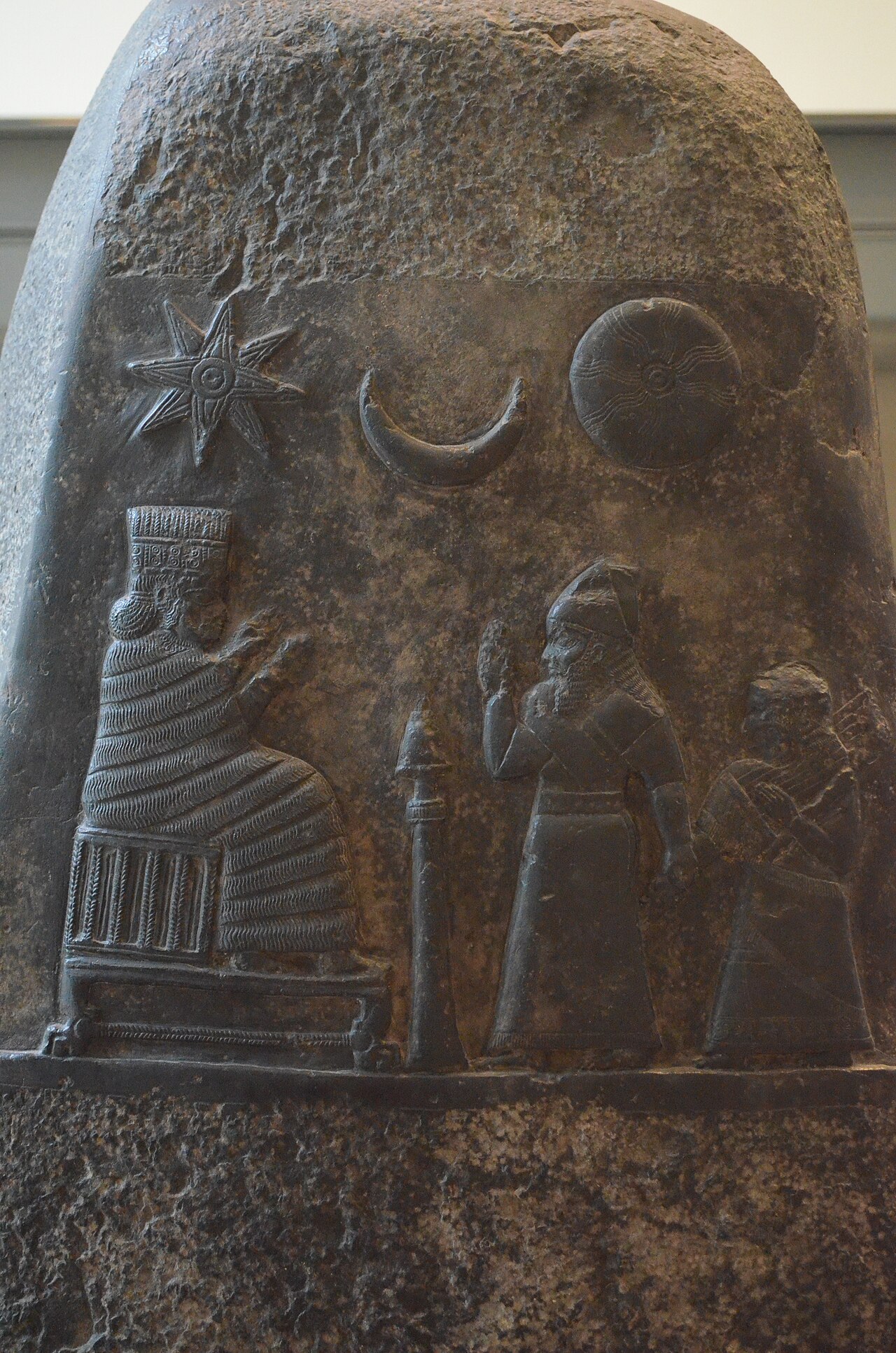
The kudurru of Meli-Shipak II, Louvre SB 23: the king presents his daughter Hunnubat-Nanaya to the seated goddess Nanaya, beneath the star of Ishtar, crescent of Sin, and sun disk of Shamash. This Babylonian monument shows divine emblems, not a complete gathering of the pantheon
Entity
The deities recognized within a given religious tradition, city or period, as reflected in texts and cult. Broader than a divine council, an assembly within a narrative.
Name variants: pantheon, pantheons
Context and sources →
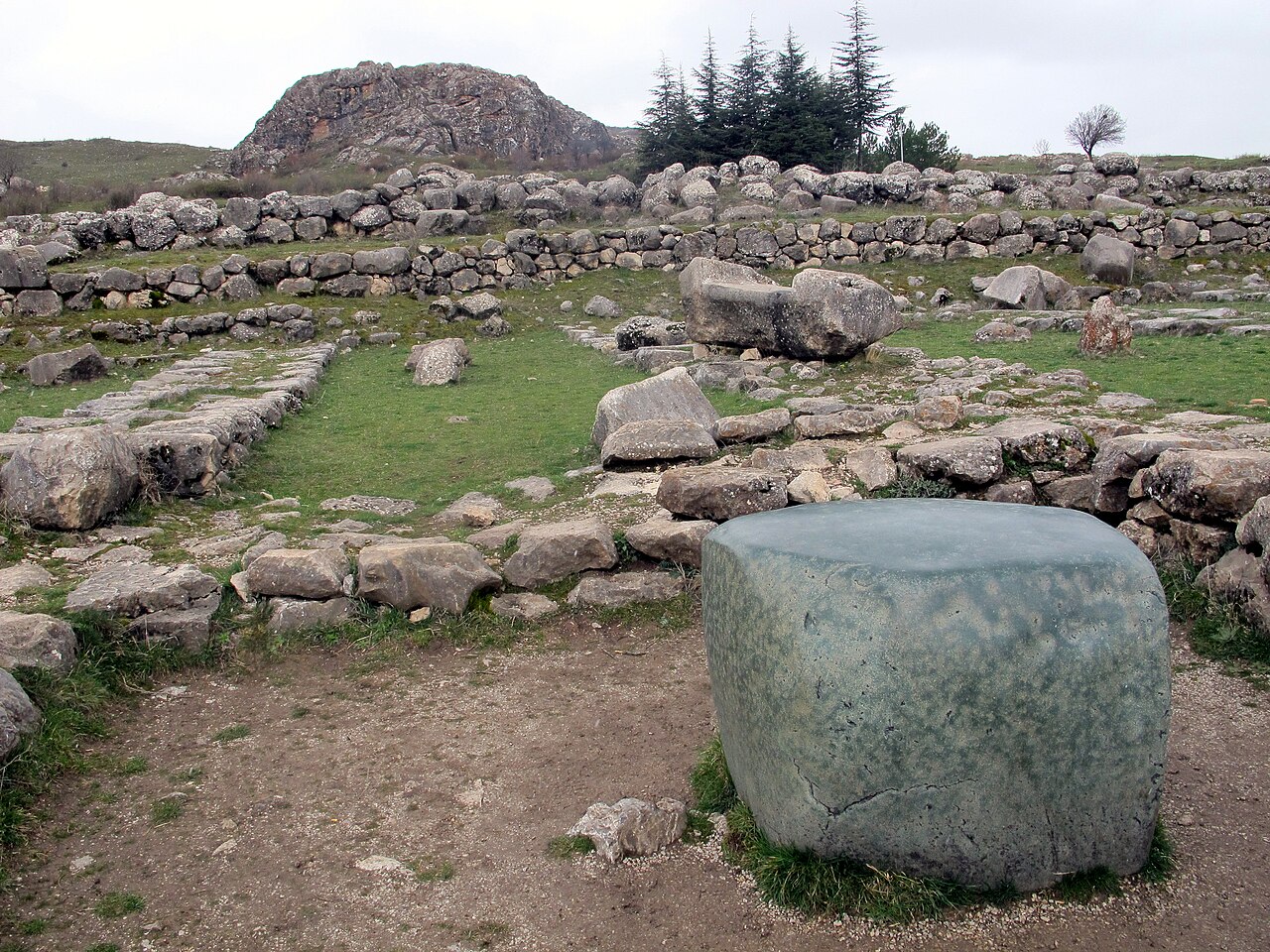
Part of the Great Temple ruins at Hattusha, the Hittite capital, near modern Boğazköy in Turkey. UNESCO dates the temple remains to the thirteenth century BCE. Photograph taken on 17 March 2013, providing context for the city that preserved collections of Hittite rituals
Person
Papanikri is the named ritual specialist associated with a Hittite ritual addressing the omen of a damaged birth stool
Name variants: Papanikri, Pāpanikri
Context and sources →
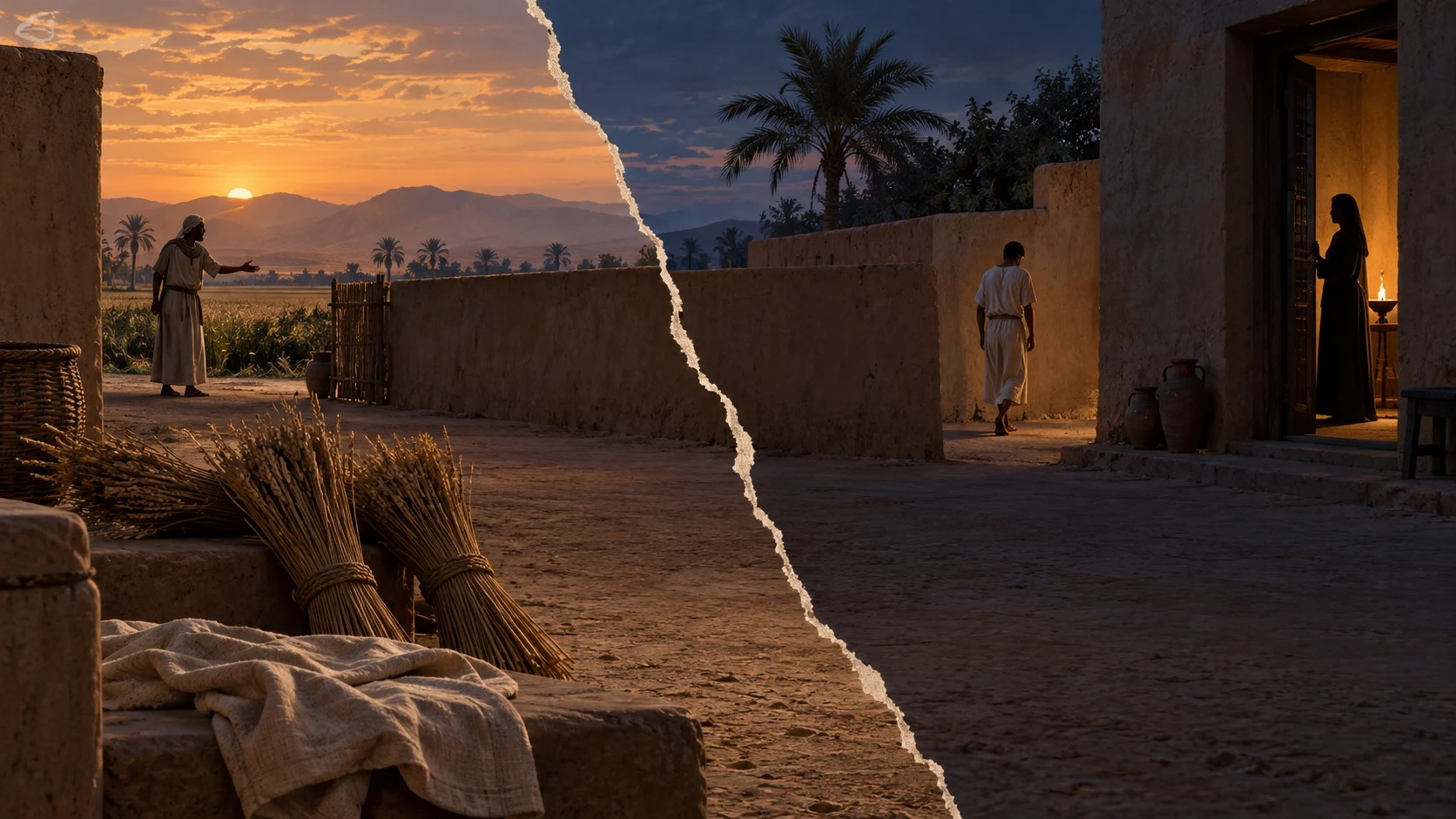
Modern interpretive illustration of a household divided after Bata’s accusation; not a photograph of EA10183 or a verified historical reconstruction
Artifact
Nineteenth-Dynasty hieratic papyrus (c. 1215 BCE), British Museum EA10183; the sole known manuscript of the Tale of the Two Brothers, copied by Inena.
Name variants: Papyrus D’Orbiney, Tale of the Two Brothers
Context and sources →
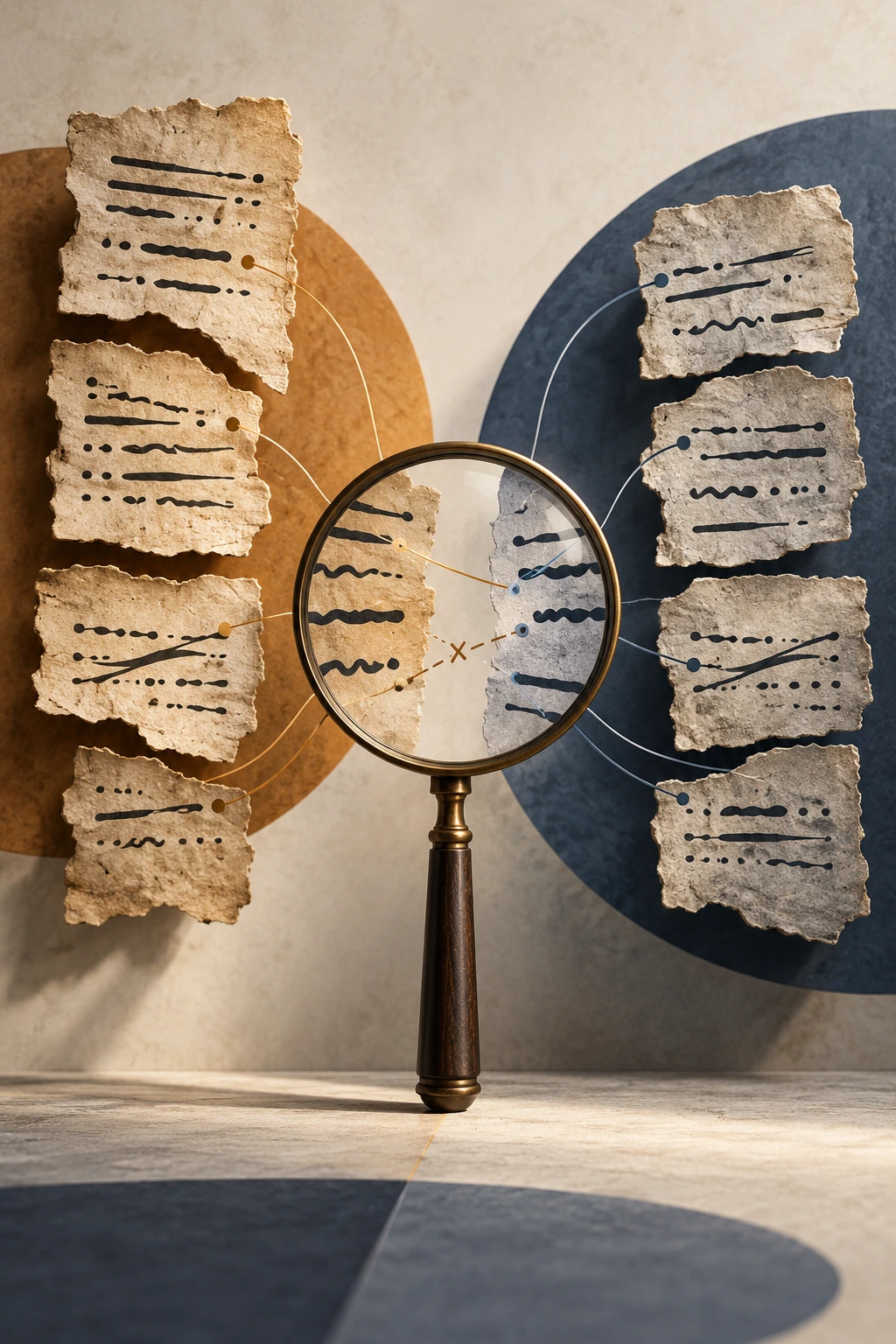
Newly generated conceptual illustration of textual resemblances and differences; its fragments and marks are fictional, not ancient manuscript evidence
Entity
Overstating textual or conceptual parallels and inferring historical dependence without adequate contextual, chronological, or transmission evidence; not a rejection of comparison.
Name variants: Parallelomania
Context and sources →
Person
Sumerian language and literature scholar, emeritus professor at the University of Bern.
Name variants: Pascal Attinger
Context and sources →
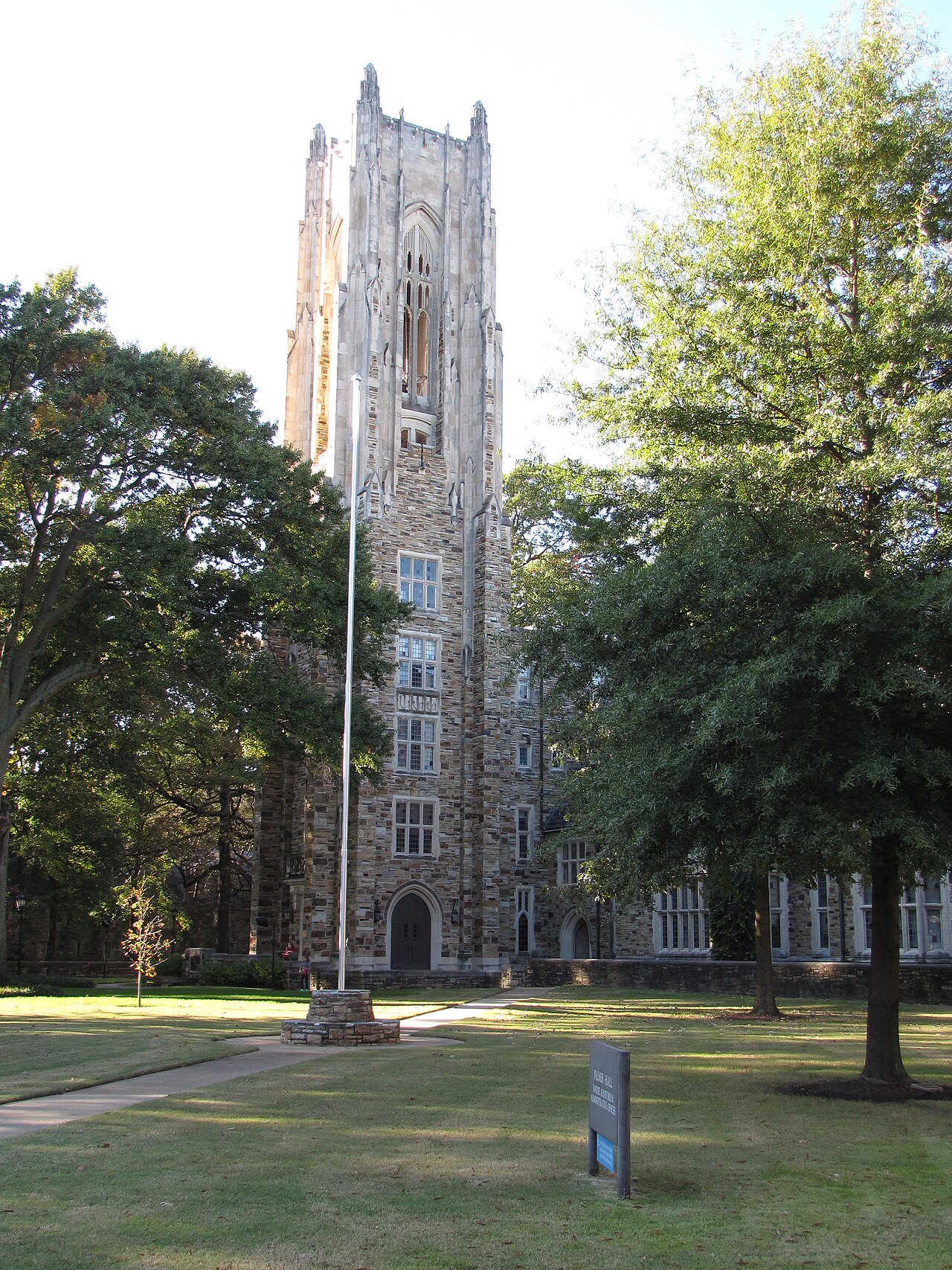
Halliburton Tower on the Rhodes College campus in Memphis, Tennessee, on 24 October 2009. The photograph provides context for the institution where Patrick Gray teaches religion, early Christianity and its Greco-Roman setting
Person
Religious studies scholar at Rhodes College, researching the New Testament, early Christianity and biblical interpretation.
Name variants: Patrick Gray
Context and sources →
Person
Hebrew Bible scholar studying sea imagery, monsters and the literary construction of space.
Name variants: Paul K.-K. Cho
Context and sources →
Person
Scholar and translator who published Syriac, Arabic and Armenian infancy texts in 1914.
Name variants: Paul Peeters
Context and sources →
Person
Paul was a first-century CE Christian letter writer whose letters preserve early Christian formulations.
Name variants: Paul the Apostle
Context and sources →
Person
German theologian and writer (1821–1892) whose Esther commentary included an appendix on the Second Targum.
Name variants: Paulus Cassel
Context and sources →
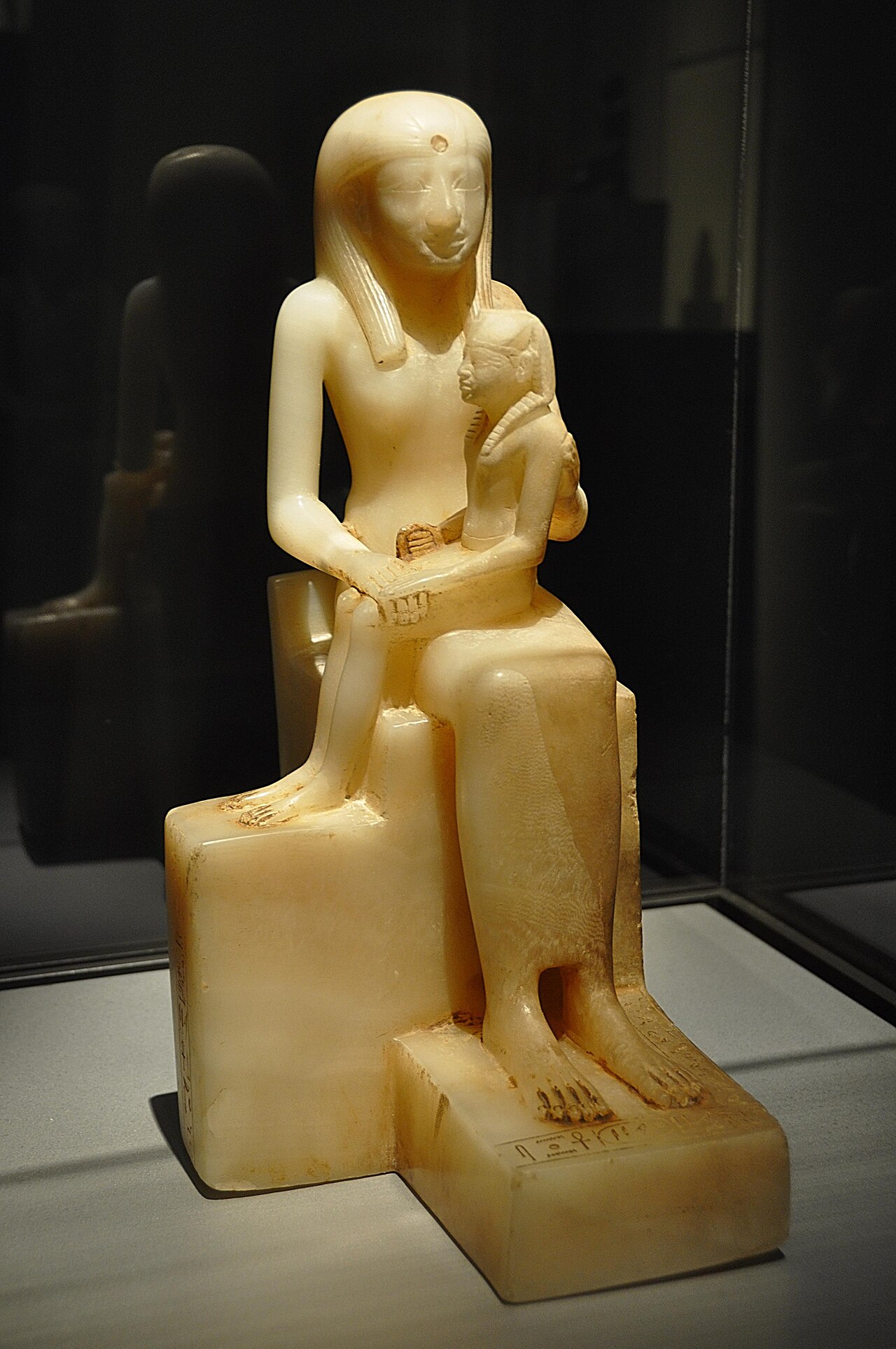
Queen Ankhnes-meryre II with her son King Pepi II on her lap, in an Egyptian-alabaster statuette of the Sixth Dynasty, late third millennium BCE. Brooklyn Museum, 39.119. Photograph by Stephen Sandoval, February 2009
Person
Pepi II was an Egyptian king of the Sixth Dynasty in the late third millennium BCE
Name variants: Pepi II, Pepy II
Context and sources →
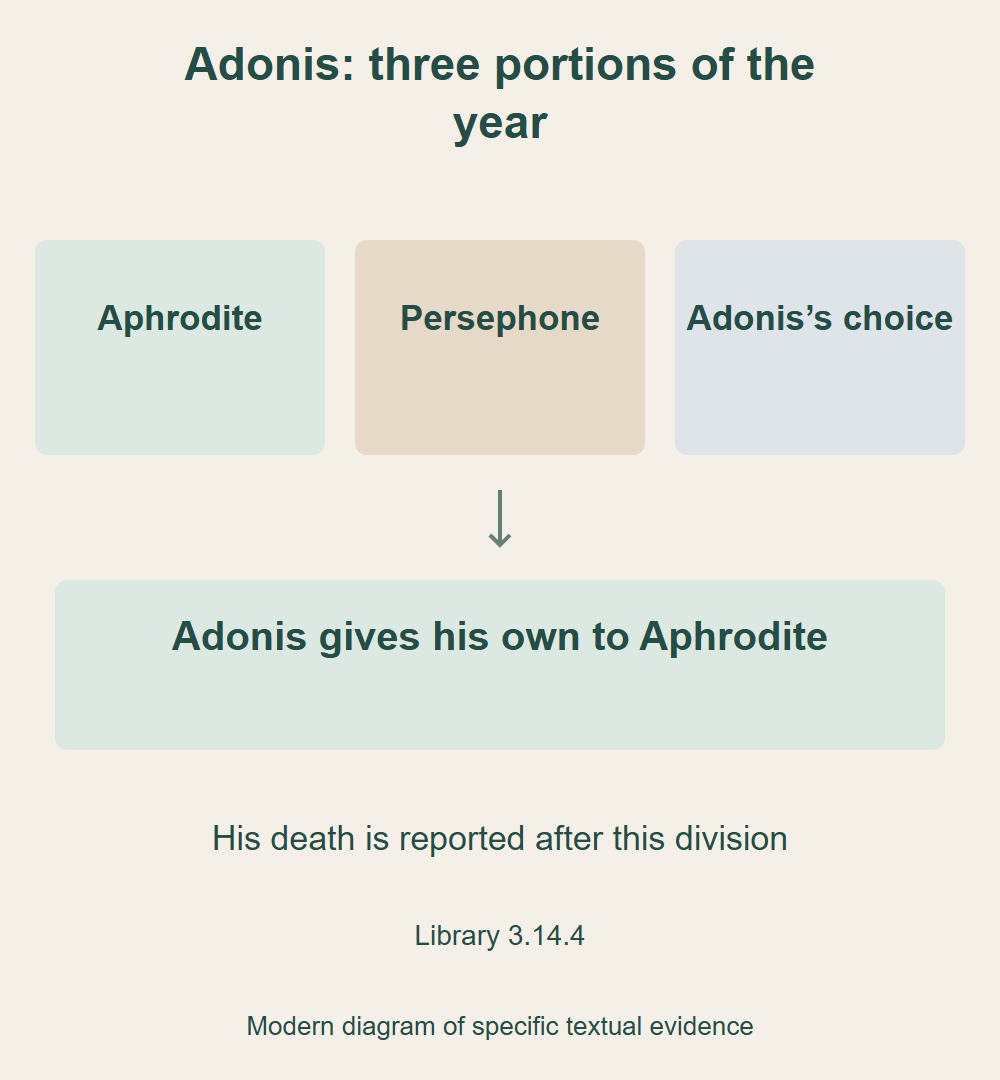
Modern chart of Library3.14.4: three original portions, after which Adonis assigns his own to Aphrodite. The division precedes his death in the narrative
Entity
Persephone is a Greek goddess associated with the underworld and a participant in one account of Adonis’s childhood.
Name variants: Persephone
Context and sources →
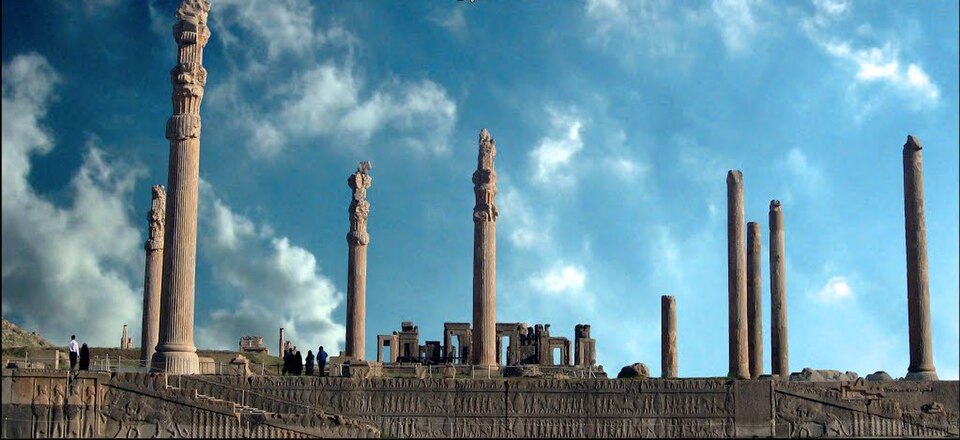
Apadana columns at Persepolis,photographed by Maryam.farhadi 1380,8 October 2018. Modern view of archaeological remains, not a reconstruction of the complete palaces
Site
Achaemenid royal center in southwestern Iran, begun by Darius I around 518 BCE.
Name variants: Persepolis, Takht-e Jamshid
Context and sources →

Newly AI-generated conceptual illustration of a person seeking a deity’s protection. Not an ancient object, inscription, or verified reconstruction of a deity
Entity
A deity associated in some ancient Near Eastern sources with an individual or family for care, protection, and intercession; not necessarily a separate or minor god.
Name variants: personal god, family god
Context and sources →
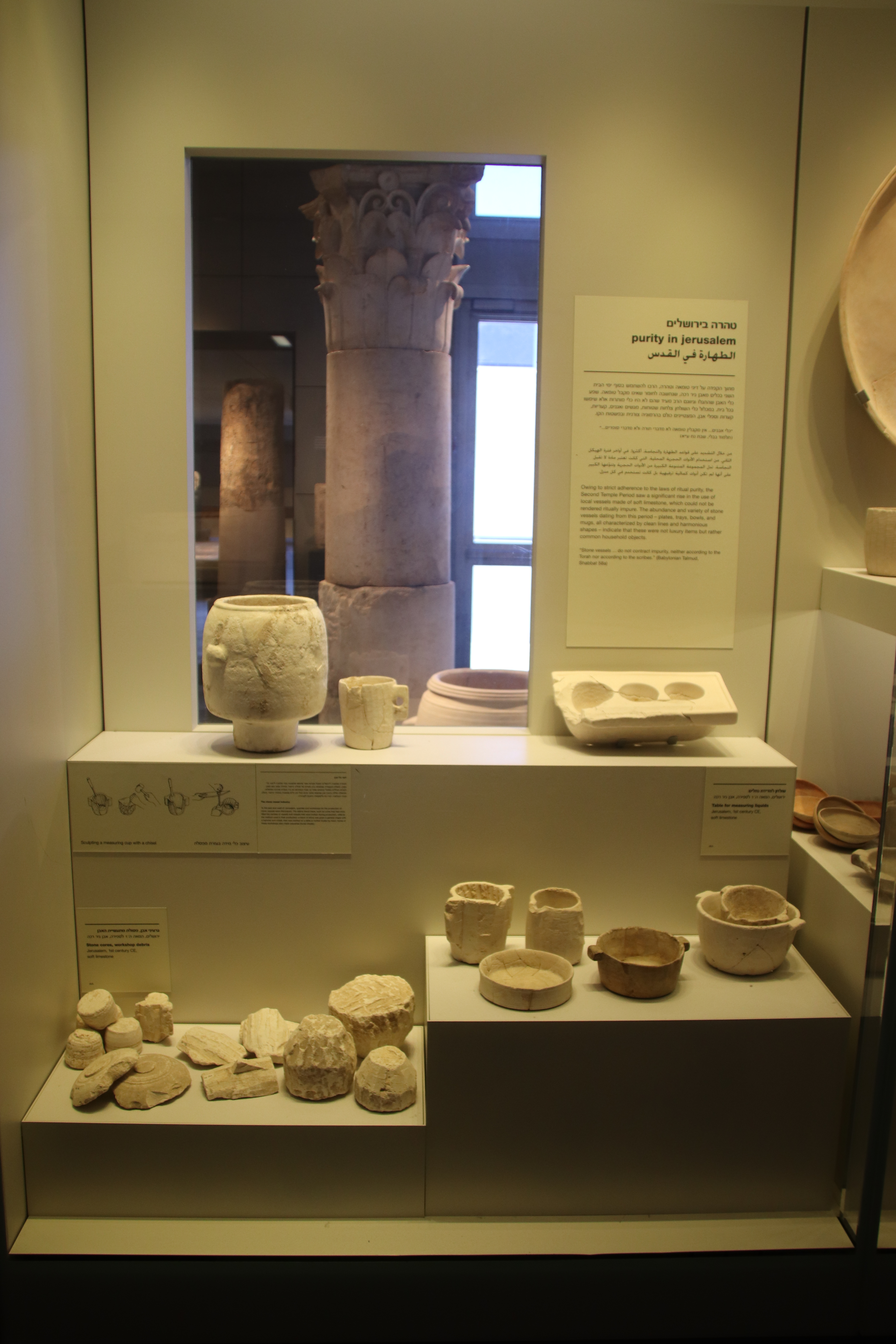
Limestone vessels in the “Purity in Jerusalem” display, Israel Museum. The file title dates the vessels to the first century CE; photograph taken in 2018. Context for Jewish purity practices, not documented Pharisee possessions
Entity
A Second Temple Jewish movement: its influence, ancestral traditions and hopes beyond death, examined through Josephus and the Mishnah’s purity debates.
Name variants: Pharisees, Pharisaic
Context and sources →
Person
Philippe Gignoux (1931–2023) was a French scholar of ancient Iranian languages and religions.
Name variants: Philippe Gignoux
Context and sources →
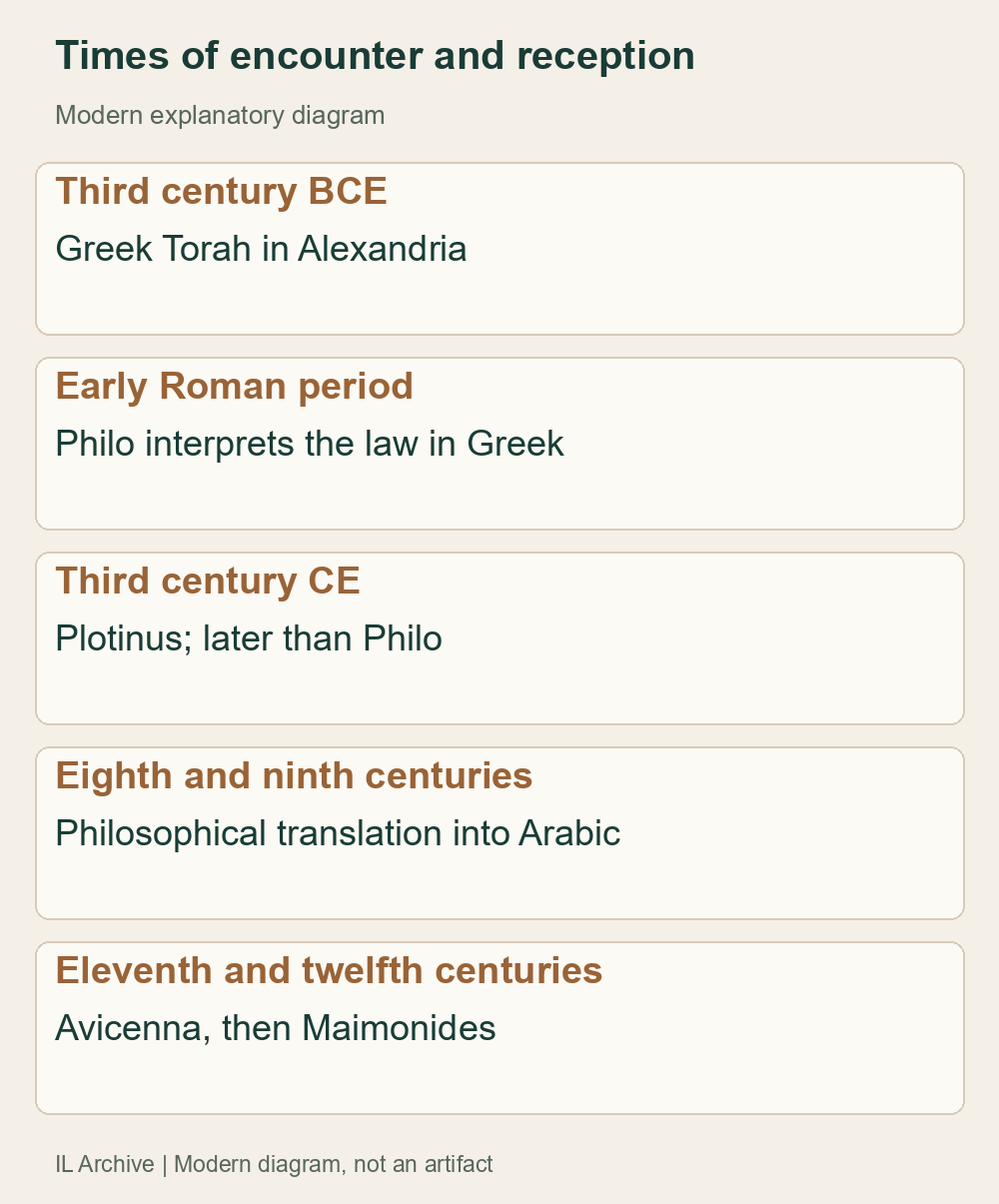
Modern explanatory chronology by IL Archive, situating Philo between the Greek Torah and later philosophies and traditions. Neither a portrait nor an ancient manuscript, and chronological succession does not establish direct borrowing between all the figures shown
Person
Greek-writing Jewish interpreter in Roman Alexandria (roughly first century CE), who read the Torah philosophically while defending its practices; his works survive through Greek copying and Armenian translation.
Name variants: Philo of Alexandria, Philo Judaeus
Context and sources →
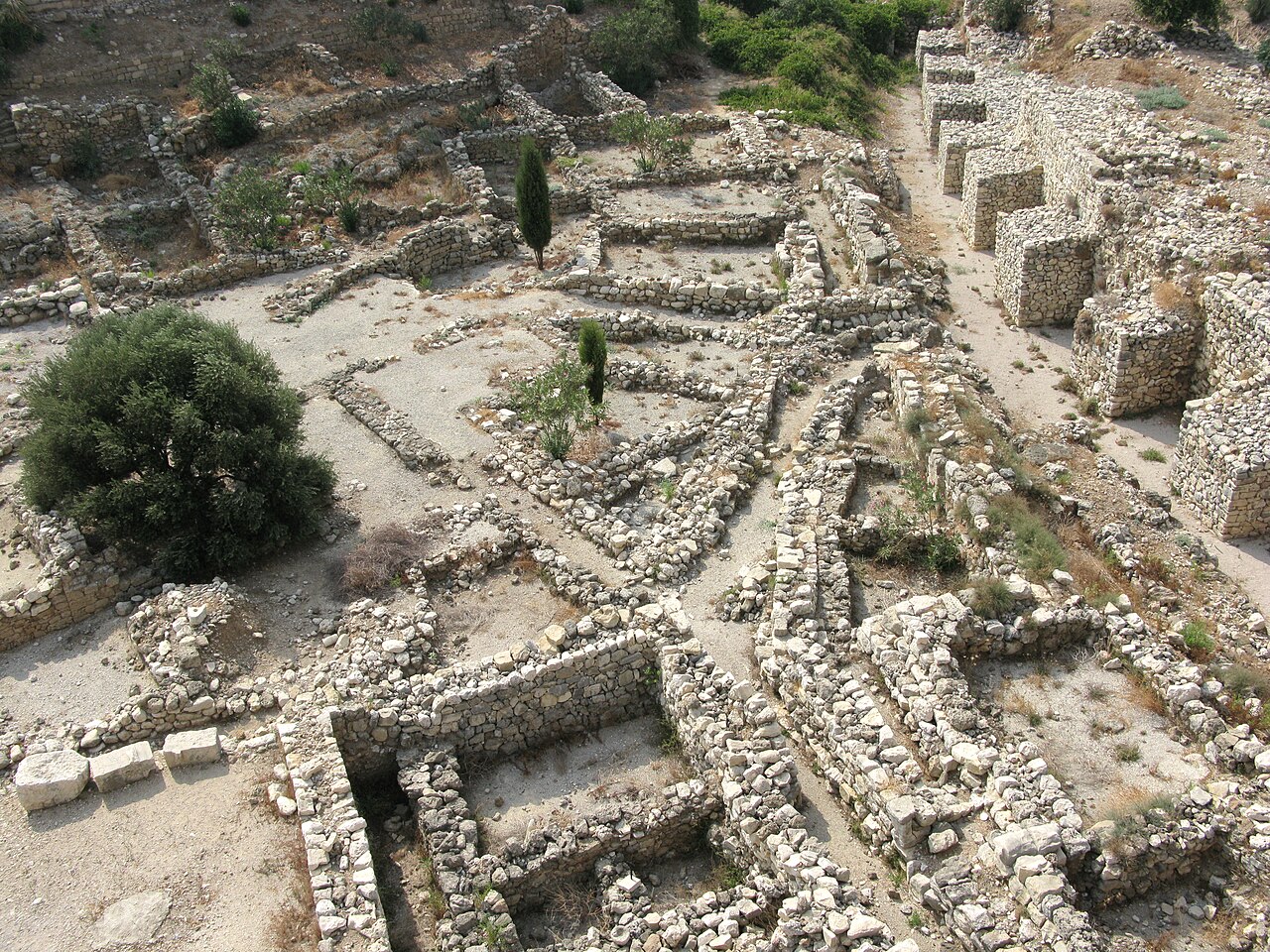
Modern view of the Byblos remains, Lebanon, 4 September 2008. Photograph by Vyacheslav Argenberg; context for Philo of Byblos’s name, not a portrait or identification of his library
Person
Writer of about the first–second centuries CE and author of Phoenician History, distinct from Philo of Alexandria.
Name variants: Philo of Byblos
Context and sources →