Study
Slavery and Debt Service between Hammurapi and the Torah: Are These Texts Describing the Same Institution?
An extended study of a topic, with evidence and references.
- Timeline
- From 2000 BCE to 500 BCE
- Region
- Mesopotamia and the Levant
From Hammurapi §117 to Exodus, Deuteronomy and Leviticus: categories, terms, women and fugitives, and the limits of evidence for practice or borrowing.
Share article
Text
# Slavery and Debt Service between HammurapiHammurabiKing of Babylon in Mesopotamia, reigning around 1792–1750 BCE. A celebrated legal text preserved on a stele and cuneiform copies bears his name.Glossary · Click to read the explanation and the TorahTorah / PentateuchGenesis, Exodus, Leviticus, Numbers and Deuteronomy: Mosaic corpus with a compositional history. Torah can also mean teaching or law beyond these five books.Glossary · Click to read the explanation: Are These Texts Describing the Same Institution?
The comparison initially looks simple: Hammurapi’s laws mention three years of service for a debt, while Exodus mentions six years before the release of a “HebrewHebrewA Northwest Semitic language in the Canaanite group, with ancient and modern forms.Glossary · Click to read the explanation slave.” Did the Torah take an older rule and change the number? That tempting question skips the harder ones: Who serves, under what status, who controls a spouse and children, and what happens to someone outside the community? [1][4][5][6]
Ancient Near Eastern texts describe the sale and ownership of people, compulsory labor for debts, war captivity, and the pursuit of fugitives. These situations did not constitute one unchanging institution in every city and period. The Torah likewise offers no single rule for everyone: Exodus, Deuteronomy, and Leviticus differ, and some provisions distinguish Israelite kin from outsiders, men from women, and captives from people who entered a household through poverty. This study compares what the texts say before asking what actually happened in homes and courts. [1][2][3][4][5][6][15]
What does “slave” mean here?
Hebrew *ʿevedʿEved: Service and Subordination in Ancient HebrewA Hebrew word whose status depends on each rule’s kinship, ownership and duration; not one modern legal category.Glossary · Click to read the explanation* appears in contexts that do not all match one modern legal category. It can describe an intensely subordinated relationship of service, while each provision specifies the duration, ownership, and possibility of departure. Mesopotamian collections also distinguish a debtor’s family member entering limited service from a previously owned person who can be sold or a fugitive whose return is demanded. “Debt service” is therefore more precise than the all-encompassing “slavery” in some passages. That choice of words must not conceal coercion or the loss of liberty. [1][4][5][6]
Nor should royal law collections be treated as court registers recording every judgment carried out. They are legal and literary texts that frame cases and articulate kingship and justice. Actual contracts, when their wording is examined, offer a different kind of evidence about particular transactions. Stephen Russell distinguishes Deuteronomy’s legal imagination from practice: a written rule by itself does not measure how often it was enforced. [10][13][14]
Hammurapi: three years for whom?
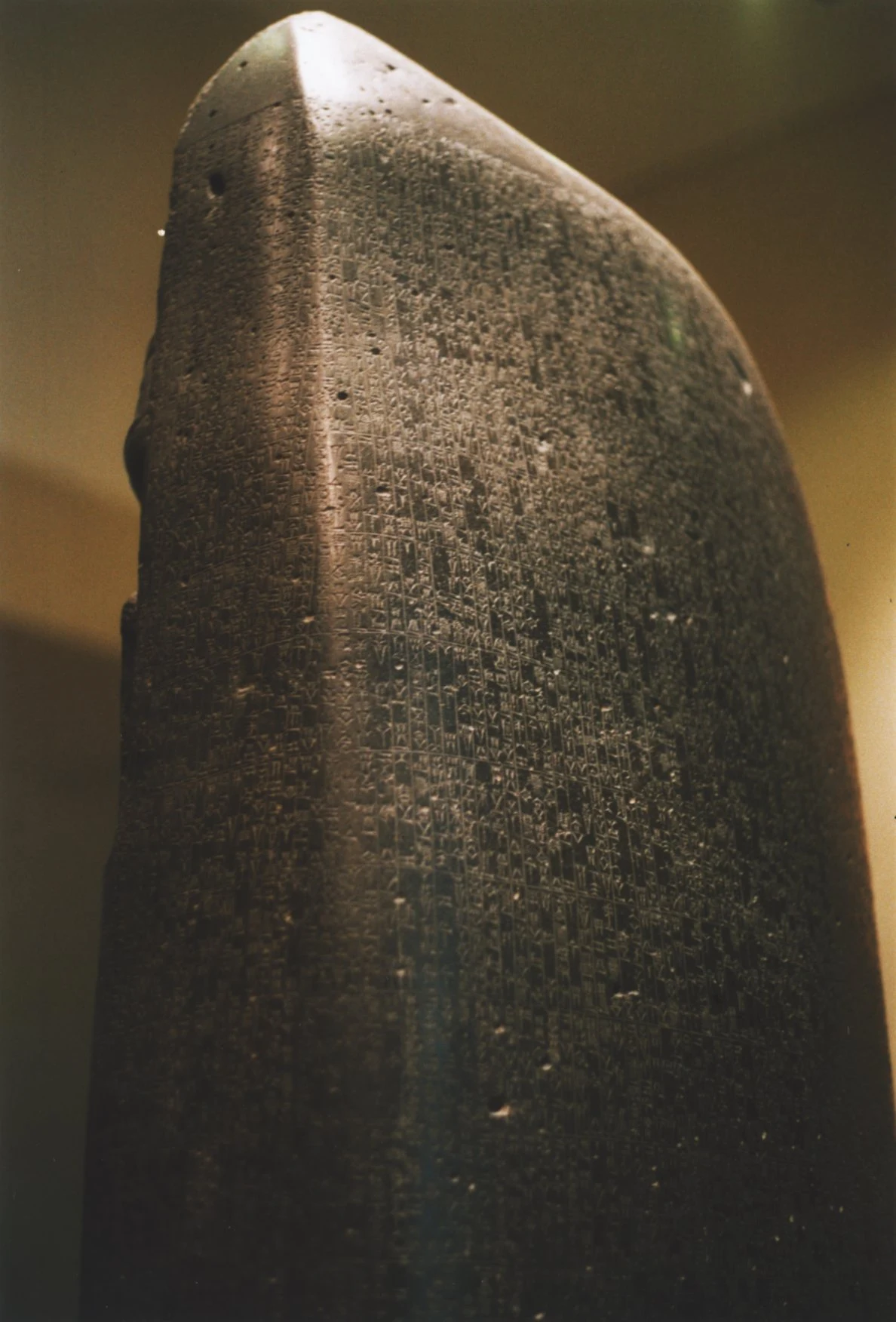
In §117 of Hammurapi’s collection, a man burdened by debt gives or sells his wife, son, or daughter to the creditor; they serve three years and are released in the fourth. Identifying the people covered matters. A well-known older English translation also says that the man may sell himself, but that element is absent from the cuneiformCuneiformWriting with wedge-shaped signs, developed from Mesopotamian recording traditions and used for several languages from the third millennium BCE.Glossary · Click to read the explanation edition and translation used here for this provision. A comparison should not depend on a word introduced by one translation. [1]
Section 118 prevents another generalization. It concerns a man or woman who was already enslaved and handed over to a creditor, and permits extended service or transfer of ownership. Hammurapi’s collection therefore does not say that every owned person becomes free in the fourth year. It separates the debtor’s family from people already owned before that debt. Other provisions address the price of a purchased enslaved person who falls ill, disputed ownership, and punishment for denying a master. This is the language of continuing ownership, not its abolition. [1]
Other Mesopotamian collections formulate other rules. In the royal language of its prologue, the collection of Lipit-IshtarInanna / IshtarProminent Mesopotamian goddess with a major centre at Uruk, whose parentage and cult traditions vary rather than forming one fixed genealogy.Glossary · Click to read the explanation promises relief from a yoke of servitude, yet its provisions penalize concealment of another person’s fugitive male or female slave. The Laws of Eshnunna also address flight, detention at the city gate, and keeping an enslaved runaway. We need not turn these texts into a single uniform code to see that owners’ claims and recovery of fugitives were explicit legal concerns. The written provisions alone do not reveal what every gatekeeper or judge did. [2][3]
Exodus 21: release in the seventh year and its limits
Exodus 21:2–6 describes a “Hebrew slave” who serves six years and leaves in the seventh without payment. The next sentence complicates that picture. If he arrived alone, he leaves alone; if he brought his wife, she leaves with him. But if the master gave him a wife, she and the children she bore remain the master’s, while the man leaves alone. A procedure may then keep him in that master’s service. Calling this decision simply “free volunteering” in the modern sense overlooks the family left behind and the unequal relation between the parties. [4]
Immediately afterward, Exodus 21:7–11 addresses a father’s sale of his daughter in an arrangement concerning her status in the purchaser’s household and her rights to food, clothing, and marital relations. It is not the same release rule applied to the man in the preceding verses. Exodus 22 adds another route into dependency: a thief unable to make restitution may be sold. These are distinct pathways, and the text does not say that every “Hebrew slave” in Exodus 21 was a thief or that all debt service had identical terms. [4][16]
Verses 20–21 and 26–27 place limits on some violence by a master: a fatal beating is addressed, and an enslaved person whose eye or tooth is destroyed by the master goes free. Yet the text also calls the enslaved person the master’s “money” in one beating case. Hammurapi’s collection likewise distinguishes penalties for injury to an eye or tooth according to status; §199 sets compensation for injuring someone else’s slave at half that person’s value. Both texts regulate violence and compensation, but their parties, cases, and remedies differ. A single number cannot rank two societies on a scale of “mercy.” [1][4]
Deuteronomy and Leviticus are not simple repetitions
Deuteronomy 15:12–18 explicitly speaks of releasing a Hebrew man or woman after six years of service. It also commands that the person not leave empty-handed, but receive provisions from flock, threshing floor, and winepress. The text grounds the demand in Israel’s memory of bondage in Egypt. It, too, allows someone who insists on remaining to continue in service, limiting any claim that Deuteronomy absolutely bans lifelong service. Including women in this release rule appears different from Exodus 21’s treatment of a sold daughter. [5]
Leviticus 25:39–46, meanwhile, says that an impoverished Israelite “brother” should not be treated as a slave, but as a hired worker or resident until the jubileeBiblical JubileeThe release and return to ancestral holding in Leviticus 25 after seven cycles of seven years.Glossary · Click to read the explanation. It then allows the purchase of male and female slaves from neighboring peoples and resident foreign families and their transmission to children as long-term property. Calling this passage an abolition of slavery would omit its second half. Its strong protection turns on kinship and does not extend in the same way to those outside it. [6]
How should we relate the three collections? Zev Farber sees Deuteronomy revising traditions in Exodus and Leviticus presenting a different vision of the poor Israelite’s status. Aaron Koller offers a reading in which the cases can concern different people: the daughter in Exodus 21 is in a family arrangement, the female worker in Deuteronomy another case, and the destitute head of a household in Leviticus yet another. A related proposal appears in the abstract of Gregory Chirichigno’s dissertation, which we have not read in full. Neither interpretation is a transcript of courts applying all three collections as one system. Differences in wording and conditions are textual evidence; a history of revision or practical harmonization is an interpretation. [8][9][17]
The runaway who must not be returned: a striking rule with disputed scope
Provisions in the collections of Hammurapi, Eshnunna, and Lipit-Ishtar punish concealment of fugitives who were owned by others or regulate their return. In a different political setting, the AramaicAramaicA group of Northwest Semitic language varieties with a long history across the Near East.Glossary · Click to read the explanation Sefire treaty demands the return of persons fleeing to Aleppo and forbids sheltering them. The treaty concerns dependents in relations between political authorities, who cannot automatically be equated with a runaway domestic slave. It nonetheless shows that handing people back could also be a political obligation between communities. [1][2][3][11]
By contrast, Deuteronomy 23:16–17 in Hebrew verse numbering says that an *ʿeved* who has escaped to the addressees must not be surrendered and may live where they choose without harassment. That wording is striking beside demands for return. But these two verses do not specify whether the person crossed into Israel from another community or could also be fleeing a master within Israel. Russell favors a cross-border case and interprets refusal to surrender as an assertion of independence from treaty obligations. Another ethical reading emphasizes refuge for an outsider; only its abstract was available to us. The law’s scope and rationale remain debated. It cannot therefore be made certain evidence that every runaway slave in Israel obtained freedom in practice. [7][10][18]
Deuteronomy itself adds another complication. In 21:10–14 a victorious group may bring a captive woman into a man’s household and marry her after a mourning period; it forbids selling her if he later rejects her. The bar on resale is a real restriction in the text, but it does not erase war capture or establish freely given consent. This woman is not in the debtor’s family of Hammurapi §117 or the impoverished “brother” of Leviticus 25. [15]
Can we see what happened on the ground?
Jeremiah 34 portrays the public release of Hebrew men and women in bondage, followed by their forced return to service, in a prophetic rebuke of a broken covenant. This literary testimony shows that the religious tradition itself recognized the possibility of violating a release rule. It is not an independent count of those freed or re-enslaved in JerusalemJerusalemJerusalem is a city of religious importance in Judaism, Christianity and IslamGlossary · Click to read the explanation. Equally, inscribing Hammurapi’s third or fourth year on a monument does not turn it into a report on every Babylonian household. [1][12]
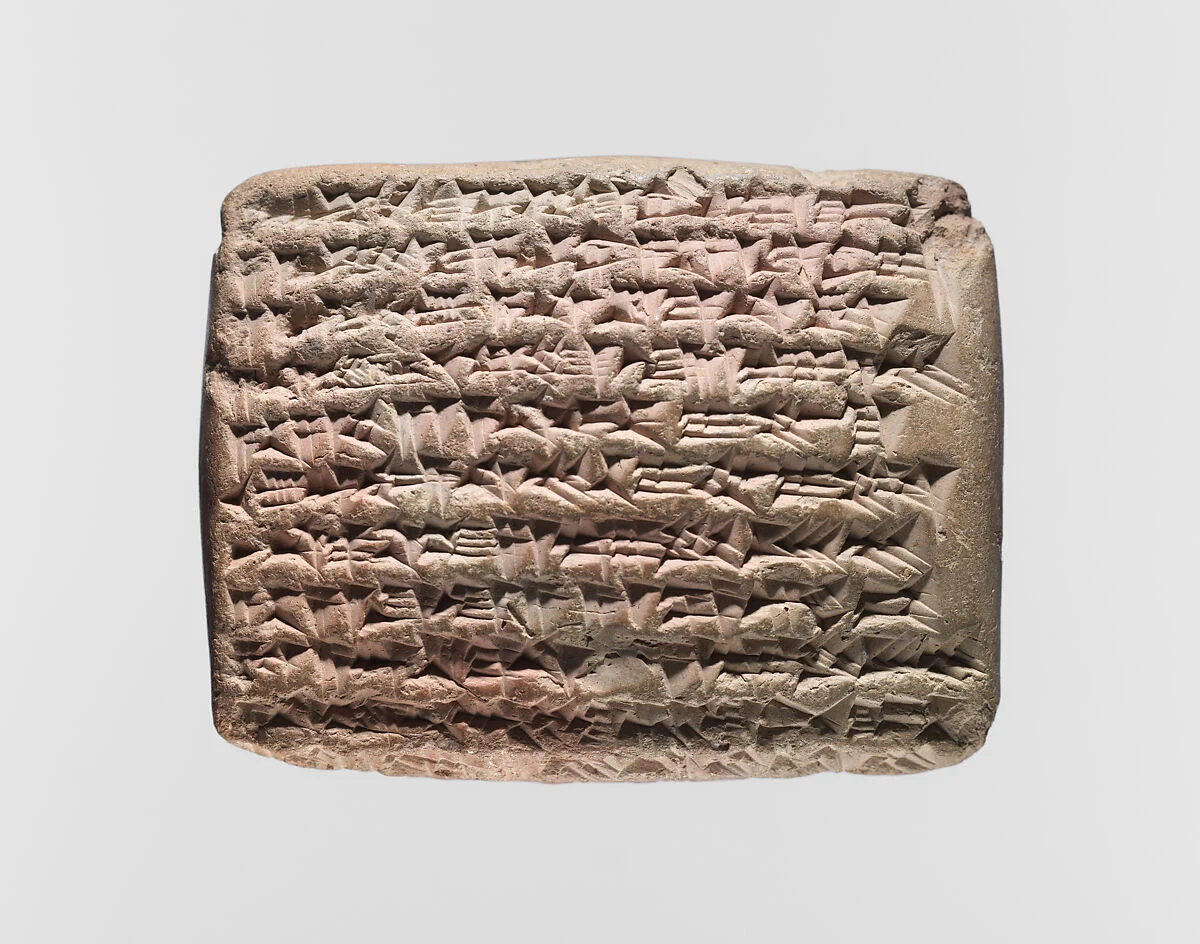
Surviving transaction tablets from MesopotamiaMesopotamiaA historical region associated with the Tigris and Euphrates, home to many societies and civilisations.Glossary · Click to read the explanation are another kind of evidence. The British Museum catalogues an Old Babylonian tablet from Ur concerning the sale of an enslaved woman and her daughter. The Metropolitan Museum displays a proxy contract for the purchase of an enslaved person from sixth-century BCE BabylonBabylonBabylon is an ancient city in central present-day Iraq, south of BaghdadGlossary · Click to read the explanation. The first is older; the second is centuries later than Hammurapi. We inspected the catalogue information, not the complete cuneiform text of either contract. We therefore attribute no unstated sale terms to them. They remind us that a recorded contract answers a different question from a model case in a law collection. [13][14]
Resemblance or borrowing?
Hammurapi precedes the Torah texts in the surviving record, and his collection shares concerns with them about debt service, injury to an owned person, sale, and flight. Resemblance by itself, however, identifies neither a route of transmission nor proof that the writer of Exodus 21 read §117 on a particular witness. The region’s societies knew debt, ownership of people, and captives, and maintained contacts and legal and literary traditions. Such circumstances may generate similar questions even when their answers differ; images or formulas may also travel through intermediary channels that we cannot identify. A more precise parallel in wording and structure, together with a plausible chain of transmission, would be needed to call a case direct borrowing. [1][4][8][9][10]
Nor does comparison absolve any of these texts of coercion. Releasing one person after a fixed term is not abolishing ownership of others. A limit on striking an enslaved person is not legal equality. A prohibition on surrendering a runaway does not prove universal enforcement. And the distinction between Israelite kin and outsiders is central to the law, not an incidental detail to hide. The evidence supports a richer historical picture: legal traditions treated human subordination in different ways within a world that did not make universal freedom a shared principle. [1][2][3][4][5][6][7]
The useful question, then, is not “Who invented freeing slaves?” It is: Which group does each text address? Who remained owned when another person was released? How did written protections relate to treatment that normative texts do not fully disclose? Such questions let us compare Hammurapi and the Torah seriously, without making the former the direct source of every sentence in the latter or turning the latter into the general abolition law it never states.
References and notes
- CDLI Hammurapi composite; selected §§15–20, 115–119, 196–201, 278–282, not the whole text Laws of Hammurapi composite P464358, laws 15–20, 115–119, 196–201 and 278–282 Return to the text ↑
- CDLI Eshnunna composite; selected ownership and fugitive cases Laws of Eshnunna composite P480696, laws 22–24, 31, 49–52, 54–55 Return to the text ↑
- CDLI Lipit-Ishtar composite; part of prologue and §§12–16 Laws of Lipit-Ishtar composite P464355, prologue lines 55–70 and laws 12–16 Return to the text ↑
- Exodus 21:2–27, Hebrew text and older JPS translation, with attention to cited cases Exodus 21:2–11, 16, 20–21, 26–27; Hebrew and JPS 1917 Return to the text ↑
- Deuteronomy 15:7–18, Hebrew text and older JPS translation Deuteronomy 15:7–18; Hebrew and JPS 1917 Return to the text ↑
- Leviticus 25:39–46 in chapter context, Hebrew and older JPS translation Leviticus 25:39–46; Hebrew and JPS 1917 Return to the text ↑
- Deuteronomy 23:16–17 in Hebrew numbering, Hebrew/JPS; scope is debated Deuteronomy 23:16–17 by Hebrew numbering; Hebrew and JPS 1917 Return to the text ↑
- Zev Farber on Exodus, Deuteronomy and Leviticus servant laws; full article Zev Farber, The Hebrew Slave, 2015, updated 2026 Return to the text ↑
- Aaron Koller’s complementary-cases reading; full article and selected notes Aaron Koller, The Hebrew Slave: Reading the Law Collections as Complementary, 2015, updated 2026 Return to the text ↑
- Stephen Russell, selected Oxford Handbook of Deuteronomy section, printed pp. 23–26 only Stephen C. Russell, Near Eastern Practice of Law in Deuteronomy, in The Oxford Handbook of Deuteronomy (2025), printed pp. 23–26 Return to the text ↑
- Omar Hikmat al-Khuli’s Arabic Sefire III translation, lines 1–9; not the whole inscription Omar Hikmat al-Khuli, Arabic translation of Sefire III, lines 4–7 Return to the text ↑
- Jeremiah 34:8–17, Hebrew text and older JPS translation Jeremiah 34:8–17, Hebrew/JPS 1917 Return to the text ↑
- British Museum catalogue entry on sale of an enslaved woman and daughter; inscription not read British Museum 131263, old Babylonian slave sale tablet from Ur Return to the text ↑
- Met object 79.7.11, catalogue and rights metadata; tablet inscription not read Metropolitan Museum object 79.7.11, Egibi archive contract c. 554 BCE Return to the text ↑
- Deuteronomy 21:10–14 on a captive woman, Hebrew and older JPS Deuteronomy 21:10–14 Hebrew/JPS 1917 Return to the text ↑
- Exodus 22:1–3 in Hebrew numbering, sale of a thief unable to make restitution Exodus 22:1–3 Hebrew numbering (English 21:37–22:2), Hebrew/JPS 1917 Return to the text ↑
- Gregory Chirichigno dissertation; abstract and record only, not the full thesis Gregory C. Chirichigno, PhD thesis repository entry (1989), abstract Return to the text ↑
- Myrto Theocharous on fugitive refuge in Deuteronomy; abstract only Myrto Theocharous, Refugee Asylum: Deuteronomy's 'Disobedient' Law, Studies in Christian Ethics 30 (2017) Return to the text ↑
Suggest a correction · Suggest a source for this record
Cite this record
IL Archive, «Slavery and Debt Service between Hammurapi and the Torah: Are These Texts Describing the Same Institution?», Edition 1, https://ilarchive.com/en/studies/ancient-slavery-and-biblical-laws
Continue reading