Study
After the Flood: Sacrifice, Covenant, and the Limits of Humanity
An extended study of a topic, with evidence and references.
- Region
- Mesopotamia and the Levant
What followed the survival of Ziusudra, Atrahasis, Utnapishtim and Noah? A close comparison of offerings, their aroma and the divine decisions about humanity’s future.
Share article

Text
# After the Flood: Sacrifice, Covenant, and the Limits of Humanity
When the floodwaters recede in four ancient narratives, human survival is not the end of the story. The survivor comes out and offers a sacrifice. In two Mesopotamian accounts the gods smell it and gather around. In Genesis, YHWHYahwehThe divine proper name written YHWH in the Hebrew Bible.Glossary · Click to read the explanation smells a “pleasing aromaThe Pleasing-Aroma FormulaA Hebrew idiom for an acceptable offering in Genesis 8:21 and Leviticus; it does not by itself show that God needs food.Glossary · Click to read the explanation” and resolves never again to strike down every living thing in this way. The resemblance is specific: an offering after a watery catastrophe, its smell, and a divine response. But the outcomes are not identical. The texts differ over why the disaster happened, what place humans have after it, and how another flood is to be prevented.[2][3][4]
This study focuses on the moment after survival and complements our broader article, “The Flood before Noah”. Readers need not choose between two shortcuts, “the same story was copied word for word” and “the texts have nothing to do with one another.” We can compare what survives, then ask what changed when a familiar narrative scene entered another religious world.
Four witnesses, none a simple complete original
ZiusudraZiusudraKing and priest in the fragmentary Sumerian Flood Story, preserved in an Old Babylonian copy. Survives, sacrifices and receives divine life in Dilmun; historicity is unproven.Glossary · Click to read the explanation's story survives on a fragmentary Sumerian tablet. It preserves his offering and his fate, but it does not let us reconstruct a continuous conversation among the gods after the sacrifice. A much fuller, though still damaged, Old Babylonian copy of AtrahasisAtrahasis: Epic and HeroAkkadian epic: humans created for divine labor, multiplication, noise and flood. Atrahasis, “exceedingly wise,” survives through Enki’s warning; human reproduction is regulated afterward.Glossary · Click to read the explanation ends with a colophon naming its scribe and a year in the reign of Ammi-ṣaduqa; other copies and fragments also exist. UtnapishtimUtnapishtimGilgamesh’s flood hero narrates survival to a king seeking immortality. Ea warns him; life is preserved; hero and wife receive exceptional life. Literary character, not an archaeologically established person.Glossary · Click to read the explanation's account occurs in Tablet XI of the Standard Babylonian Epic of GilgameshEpic of GilgameshMesopotamian literary tradition with multiple versions, concerning Uruk’s king, Enkidu and mortality. Standard Tablet XI preserves Utnapishtim’s flood; manuscript date does not date the tradition’s origin.Glossary · Click to read the explanation. The physical manuscripts that survive need not date the composition of every line they contain. Genesis, in turn, comes to us as a long HebrewHebrewA Northwest Semitic language in the Canaanite group, with ancient and modern forms.Glossary · Click to read the explanation narrative whose materials were collected and edited through a history that cannot be compressed into one date.[1][2][3][7][10]
These distinctions matter because the date of a tablet is not the date of the event told in its story. Nor does a gap in Atrahasis license us to import a passage from Gilgamesh and then claim it was preserved in the broken text. The proper comparison starts with the words actually available, while identifying modern reconstruction as such.
Ziusudra: a clear offering, a broken aftermath
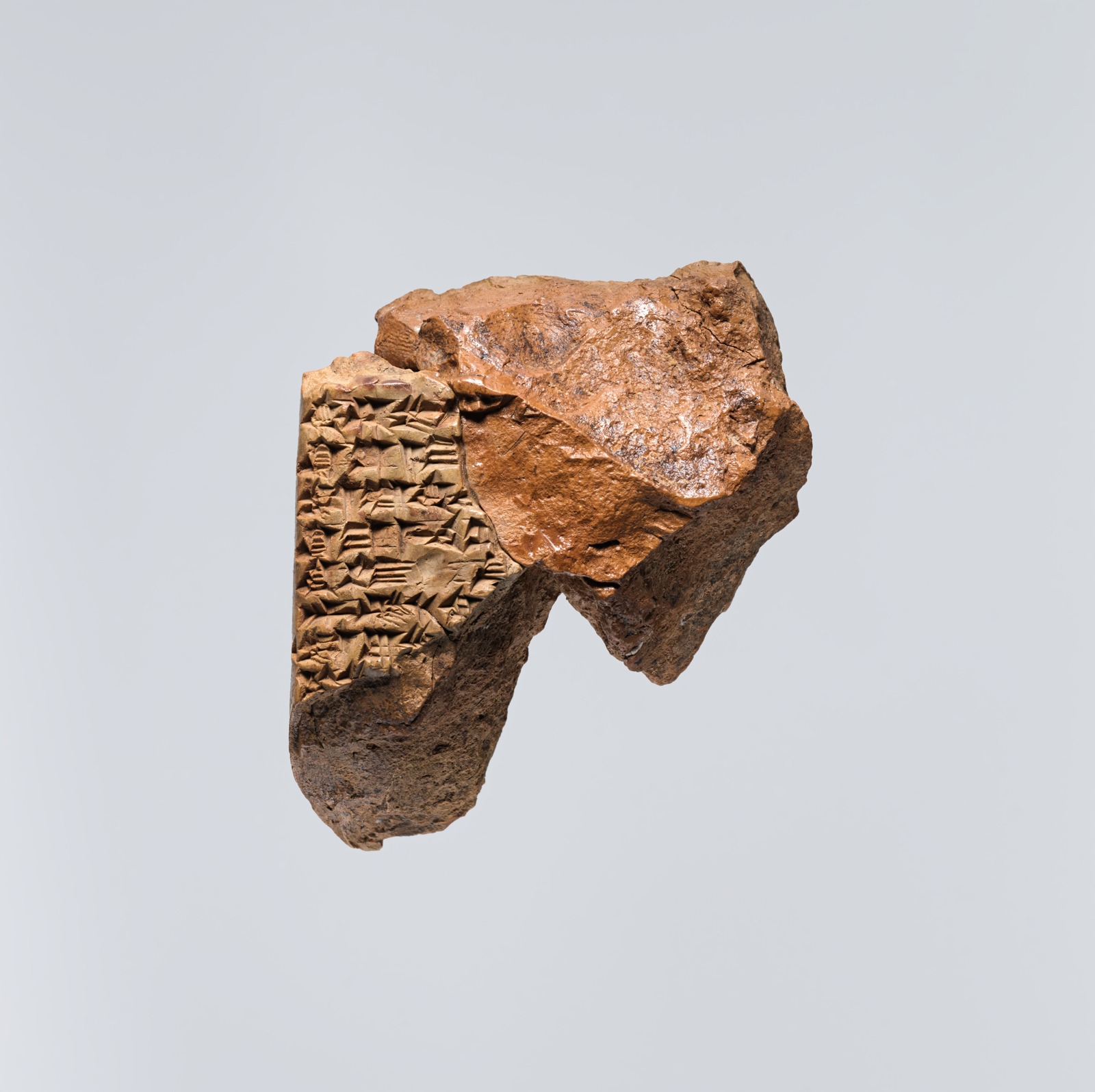
In the surviving Sumerian section, the storm lasts seven days and seven nights before the sun god Utu appears. Ziusudra opens an aperture in the vessel, bows before Utu, sacrifices cattle, and offers sheep. Six damaged lines and then a larger gap intervene. Later Ziusudra bows before An and EnlilEnlilProminent Mesopotamian god associated with Nippur and Ekur, highly ranked in Early Dynastic texts before the earliest known Anunna attestation.Glossary · Click to read the explanation, who treat him kindly, grant him life like a god's, and place him in DilmunDilmun: Ancient Gulf Land and Literary SettingAn ancient Gulf trading region linked archaeologically to Bahrain and also a Sumerian literary setting whose mythical scenes are not all historical descriptions.Glossary · Click to read the explanation. This is enough to establish that an offering formed part of the ending of a Sumerian version of the flood tradition. It does not establish how the gods reacted to its smell or that a scene like the flies in Atrahasis and Gilgamesh once stood in the missing portion.[1]
Ziusudra should therefore not be turned into a complete Sumerian copy of every later detail. His story matters here for two reasons: it supplies an early witness to sacrifice after the flood, and it reminds us that silence produced by a broken tablet proves neither the presence nor the absence of a lost scene.
Atrahasis: an offering that brings the gods back to food
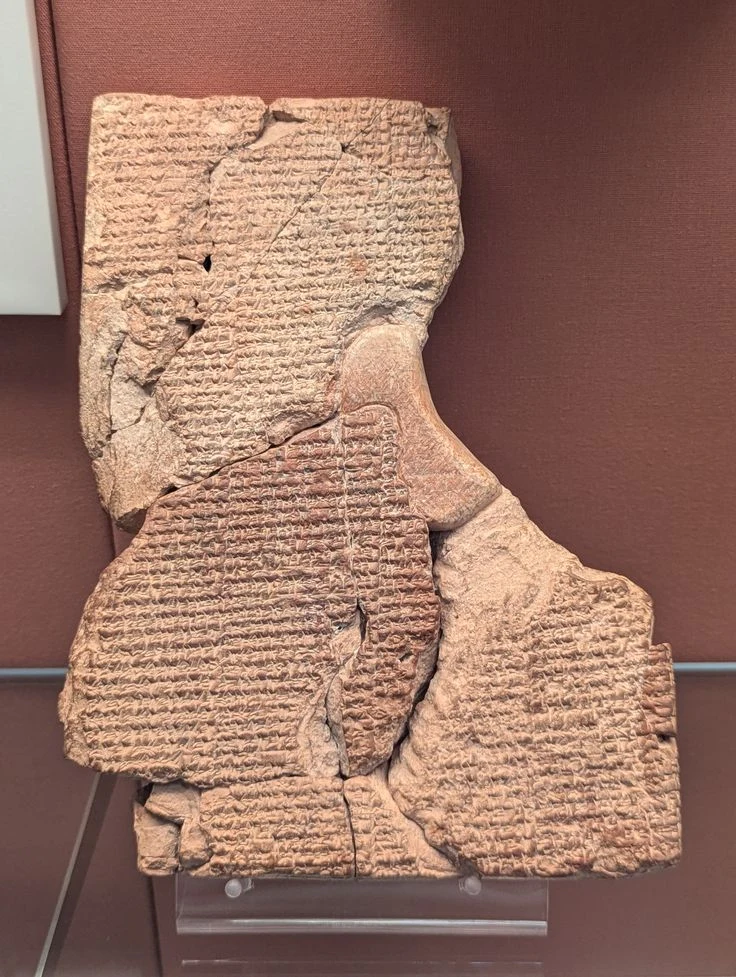
Atrahasis's storm ends, but a gap of about fifty-eight lines separates the description of the flood from the offering in the published translation. When the text resumes, the survivor has prepared food. The gods smell it, gather “like flies” over the offering, and eat. Nintu reproaches the gods who decided on the flood, questions Enlil's place at the offering, and makes a fly-shaped ornament a reminder of the catastrophe. Enlil becomes angry when he sees the boat: someone survived despite the decision to destroy humanity.[2]
The fly simile is more than an incidental flourish in this narrative. During the flood the gods suffer thirst and hunger after the human world from which offerings came has been interrupted. The survivor's sacrifice marks the return of a relationship between humans and gods, but it also exposes the failure of a decision that nearly removed humanity altogether. This does not mean that every deity in every Mesopotamian text was simply hungry. It is a particular scene in an epic with its own account of human labor and divine needs.[2]
The return of food is not the final solution. EnkiEnkiMesopotamian deity associated with deep fresh water, wisdom and Eridu, known as Ea in Akkadian tradition. The earliest preserved written mention does not date his cult’s origin or identify Ubaid Eridu’s deity.Glossary · Click to read the explanation challenges wholesale destruction, and Enlil asks him and Nintu to deliberate about humanity's future. In the surviving ending some women do not give birth or do not carry pregnancies successfully; an infant-snatching demon appears; certain religious women are kept from childbirth. The poem thus portrays measures that restrict human reproduction after numbers and noise had been part of the pre-flood crisis. Since lines are lost and others restored, these surviving measures should not be presented as a complete, unbroken code.[2][9]
Gilgamesh: aroma and a dispute in the divine assembly
Utnapishtim tells Gilgamesh what he did when dry ground emerged. He releases what was in the boat, pours a libation on the mountain, and places aromatic plants under the offering vessels. The gods smell the aroma and gather around the sacrificer. The great goddess raises a jeweled ornament to remember the days when life nearly ended. She says the gods may approach the offering except Enlil, who brought on the flood without reflection. Enlil is not appeased when he arrives; he is furious to see a survivor. Ea objects to a punishment imposed on everyone and mentions less sweeping alternatives. Enlil finally blesses Utnapishtim and his wife and grants them a godlike life far from other humans.[3]
“The gods smelled the aroma” therefore does not sum up the scene. The sacrifice opens a dispute: Was such devastation justified? Who saved a human being against the collective decision? How might wrongdoing be punished without eliminating humanity? The poem does not end with a general covenant for Utnapishtim's descendants. His and his wife's immortality is an exception. Gilgamesh, who hears the story, remains a mortal seeking a life he cannot simply seize.[3]
Noah: aroma and a decision made “in his heart”
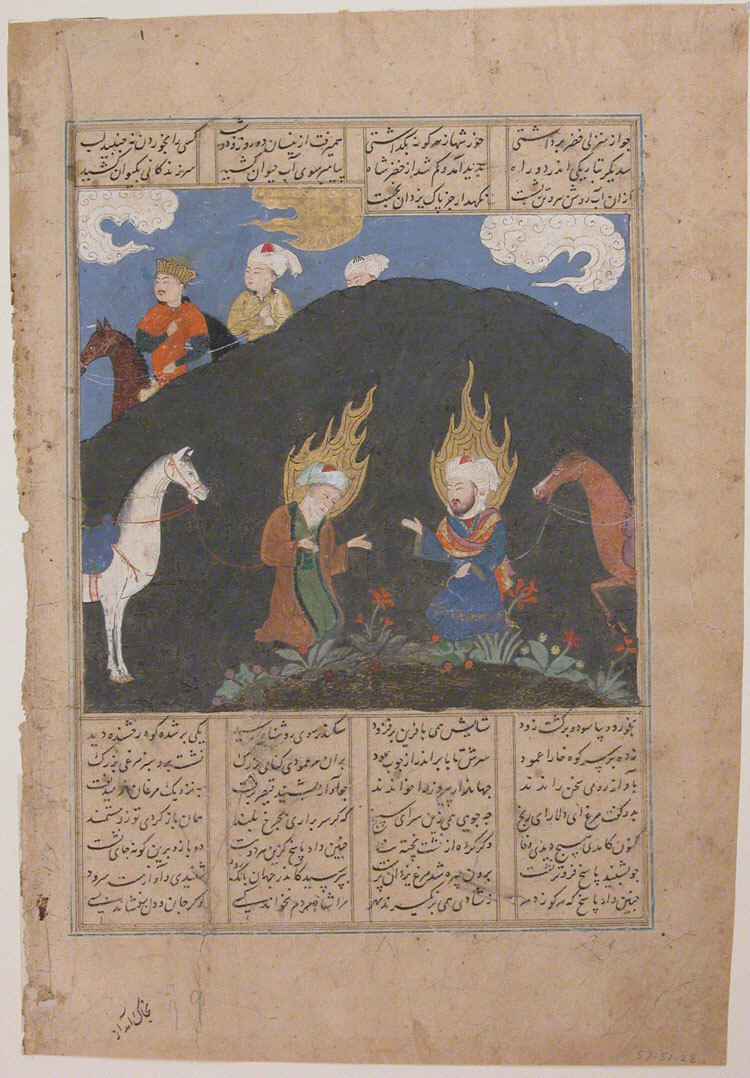
In Genesis 8:20–22 NoahNoahNoah is the flood-story figure in Genesis and a prophet in the Qur’anGlossary · Click to read the explanation builds an altar to YHWH and burns offerings from clean animals and birds. YHWH smells what the Hebrew describes as a soothing or pleasing aroma. He then says in his heart that he will not again curse the ground because of humanity or strike down every living thing as he has done. The notable point is that the decision does not say people have suddenly become good. Human inclination toward evil remains from youth. Seedtime and harvest, cold and heat, summer and winter, day and night will nevertheless continue as long as the earth does.[4][8]
It is reasonable to connect this scene with the aroma of the Mesopotamian offerings: the sequence is more distinctive than the mere fact that different religions knew sacrifice. Yet Genesis does not say that YHWH ate or went hungry when humanity drowned, nor does it picture a council of gods quarreling over the survivor. Here the smell signals acceptance of an offering and leads to an inward decision to sustain the world despite continuing human capacity for violence and error. The “pleasing aroma” formula also appears in Levitical sacrificial language, while Psalm 50 explicitly rejects the idea that God needs the meat of offerings for food. Those texts do not erase Genesis's sensory language. They do caution against equating it automatically with the gods' hunger in Atrahasis.[4][5][6][8]
From resolve to covenant: ordering the new world
Genesis 8:21 does not call YHWH's inward decision a “covenant.” The explicit covenant language comes in chapter 9. God blesses Noah and his sons and commands them to be fruitful and multiply. He permits animal flesh as food but forbids flesh with its lifeblood, and places a special obligation on human bloodshed. He then establishes a covenant extending beyond Noah's household to their descendants and every living creature that left the vessel. Its sign is the bow in the clouds. Its promise is that all flesh will not again be cut off by the waters of a flood.[4]
The distinction between the inward resolve of chapter 8 and the stated covenant of chapter 9 helps us read the received narrative carefully. Many scholars identify different styles and interests in the Hebrew flood account, commonly distinguishing Priestly and non-Priestly materials, although their exact boundaries and dates remain debated. It would be misleading to present Noah's sacrifice and the bow as though they were originally one sentence written by an author whom we can date precisely. In the final text they stand next to one another and together answer how life can continue after destruction.[7][10]
Restrained births or “be fruitful and multiply”?
The differences now matter as much as the parallel. In Atrahasis, human numbers and noise remain a problem answered by restrictions on reproduction and life. In Genesis 9 the new phase begins with a blessing of multiplication. What is explicitly regulated is blood, violence, and relations among humans and animals, rather than the number of births. Some scholars therefore argue that Genesis reuses a Mesopotamian narrative frame to give a different answer, perhaps correcting the image of human beings as a troublesome surplus for the gods. To call this a deliberate literary rebuttal is a plausible interpretation, not a statement preserved from Genesis's editors.[2][4][7][9]
Nor should we exaggerate the contrast. Both works confront a world after disaster and ask how destruction might be prevented from recurring. They differ in what each puts at the center and in which rules or promises make human life possible. Gilgamesh offers another ending: the surviving couple's immortality is exceptional, not a model for all people. Noah remains the mortal ancestor of human groups within a covenant that includes all living creatures.[1][3][4]
Did Genesis take its sacrificial scene from Atrahasis?
Mesopotamian versions are written in witnesses earlier than the Genesis text that has reached us, and the flood narratives share a cluster of details: warning, vessel, preservation of life, receding water, offering, and aroma. A literary relationship or the movement of a flood tradition through MesopotamiaMesopotamiaA historical region associated with the Tigris and Euphrates, home to many societies and civilisations.Glossary · Click to read the explanation and the LevantThe LevantThe Levant is a regional name for lands along the eastern MediterraneanGlossary · Click to read the explanation is therefore a strong hypothesis. John Day argues that Genesis is closer to an Atrahasis-type account than to direct copying from Gilgamesh XI. Among his reasons are the flood's place within a history of creation and humanity and the contrast between birth limits and the blessing of multiplication. Yet the Atrahasis text itself breaks at decisive points, and we possess no chain of manuscripts tracing the path from one specific tablet to one specific editor in Judah.[2][3][7]
The comparison works best when it separates three claims. The textual similarity of an offering and its smell is clear. Participation in a shared narrative tradition is strongly likely. Direct copying of Genesis from a known copy of Atrahasis or Gilgamesh is not documented by a transmission manuscript or an ancient statement. Oral and written versions could have mediated the story and changed it along the way. Differences in meaning are part of that history, not an embarrassment to be hidden.[7][9][10]
What remains when the water recedes?
Ziusudra offers a sacrifice and, after gaps in the tablet, gains godlike life as a single survivor. In Atrahasis the gods gather around food and a new order limits human births. In Gilgamesh the offering provokes conflict among the gods before the survivor and his wife receive exceptional immortality. In Genesis YHWH smells Noah's offering and resolves to preserve life's cycles; a covenant then embraces humans and animals together. These are neither four identical answers to one question nor four unrelated pictures without a literary history.[1][2][3][4]
The comparative scene makes continuity and change visible at once. The post-flood sacrifice remains. The decisive question becomes whether a devastated world needs to feed the gods, curb human numbers, devise less sweeping punishments, or promise a habitable earth despite people's enduring flaws. In these texts, the flood story does not end when the ground dries. It ends when each narrative decides how those who remain will live upon it.
References and notes
- Oxford ETCSL, Sumerian Flood Story, segments C–E; surviving text only ETCSL 1.7.4, The Flood story, segments C–E, especially D 1–11 and E 3–11 Return to the text ↑
- Stephanie Dalley, Atrahasis III, printed pp. 33–35; relevant pages only Stephanie Dalley, Myths from Mesopotamia, Atraḫasīs tablet III, English translation, PDF pp. 26–28 (printed pp. 33–35) Return to the text ↑
- Alexander Heidel, Gilgamesh XI:154–196, pp. 87–88; 1949 translation Alexander Heidel, The Gilgamesh Epic and Old Testament Parallels (1949), Gilgamesh XI:154–196; printed pp. 87–88, PDF pp. 97–98 Return to the text ↑
- Genesis 8:20–22 and 9:1–17, Hebrew and JPS 1917 Genesis 8:20–22 and 9:1–17, Hebrew and JPS 1917; chapter 9 cross-checked at https://mechon-mamre.org/p/pt/pt0109.htm Return to the text ↑
- Psalm 50:8–15, especially 12–13; Hebrew and JPS 1917 Psalm 50:12–13, Hebrew and English Return to the text ↑
- Leviticus 1:9, 13 and 17; Hebrew pleasing-aroma formula Leviticus 1:9, 13, 17, Hebrew/English Return to the text ↑
- John Day (2020; updated 2026), online argument on Atrahasis and Genesis John Day (2020, page updated 2026), sections on Gilgamesh, Atrahasis and reasons for source identification Return to the text ↑
- Ronald Hendel (2019), sections on sacrifice, inner resolve and Mesopotamian context Ronald Hendel (2019), sections on Genesis 8:20–22 and Mesopotamian context Return to the text ↑
- Shalom E. Holtz (2014), contextual comparison of post-flood reproduction Shalom E. Holtz (2014, page updated 2026), contextual comparison of Atrahasis and Genesis Return to the text ↑
- David M. Carr, abstract of “Precursors to the Flood Narrative” only; chapter not read David M. Carr, The Formation of Genesis 1–11, chapter 'Precursors to the Flood Narrative', abstract Return to the text ↑
Suggest a correction · Suggest a source for this record
Cite this record
IL Archive, «After the Flood: Sacrifice, Covenant, and the Limits of Humanity», Edition 1, https://ilarchive.com/en/studies/flood-sacrifice-and-divine-response
Continue reading