Study
Marduk’s Rise: Babylon and the Making of Divine Kingship
An extended study of a topic, with evidence and references.
- Timeline
- From 1800 BCE to 500 BCE
- Region
- Mesopotamia / Babylon
Enūma Eliš through battle, creation, recognition and fifty names: one god’s supremacy in a world that remains polytheistic.
Share article
Text
MardukMardukBabylon’s god, elevated with the city’s history. Enuma Elish celebrates his rise and cosmic ordering; sources associate him with Nibiru and Jupiter. Earliest origins and functions remain uncertain.Glossary · Click to read the explanation does not begin Enūma ElišEnuma ElishBabylonian Akkadian composition celebrating Marduk’s elevation and cosmic/divine ordering. Human creation is in VI, Nibiru in VII; a Tablet I reference cannot document those passages.Glossary · Click to read the explanation as a solitary king in an empty universe. He belongs to generations of gods and emerges during a crisis that requires someone to confront TiamatTiamatPrimordial watery divine figure in Enūma Eliš, later Marduk’s opponent; her defeated body provides material for cosmic arrangement.Glossary · Click to read the explanation. The battle determines more than an enemy’s fate: it redistributes divine authority. The poem can therefore be read as creation and sovereignty together. Why does Marduk acquire the highest command, and why does BabylonBabylonBabylon is an ancient city in central present-day Iraq, south of BaghdadGlossary · Click to read the explanation occupy the center?
From a city’s god to supreme authority
MardukMardukBabylon’s god, elevated with the city’s history. Enuma Elish celebrates his rise and cosmic ordering; sources associate him with Nibiru and Jupiter. Earliest origins and functions remain uncertain.Glossary · Click to read the explanation belongs to Babylon, but his standing was not identical throughout Mesopotamian history. His earliest function is uncertain, while later traditions clearly elevate him. Scholarship connects Babylon’s political prominence with its god’s growing authority, without identifying one decision that explains every stage.[2]
A fixed divine throne handed from An to EnlilEnlilProminent Mesopotamian god associated with Nippur and Ekur, highly ranked in Early Dynastic texts before the earliest known Anunna attestation.Glossary · Click to read the explanation and then Marduk on precisely dated days is an inadequate model. Cities and texts differ. An older deity can retain prestige while another tradition grants priority elsewhere.
Kingship as a condition of battle
In Enūma ElišEnuma ElishBabylonian Akkadian composition celebrating Marduk’s elevation and cosmic/divine ordering. Human creation is in VI, Nibiru in VII; a Tablet I reference cannot document those passages.Glossary · Click to read the explanation, Marduk undertakes to defeat TiamatTiamatPrimordial watery divine figure in Enūma Eliš, later Marduk’s opponent; her defeated body provides material for cosmic arrangement.Glossary · Click to read the explanation on condition that the gods grant him authority to determine destinies. An assembly proclaims his standing and tests the efficacy of his command. Courage alone is insufficient: rescue and recognized rule are connected.[1]
This differs from a hero simply killing a monster and returning home. The battle belongs to a narrative of legitimacy. The deliverer requires his word to remain binding after the danger passes. That is an interpretation of the sequence, not proof of a historical divine election performed in this manner.
Tiamat is more than a wicked monster
Tiamat first belongs to primordial waters and divine generations, then becomes an adversary commanding opposing forces. Calling her absolute evil erases this development and her relationship with the gods’ emergence. The conflict takes place within a shared familial and cosmic history.[1]
Marduk defeats her and uses her body in forming the world. The account consequently does not narrate creation from nothing in the sense a later theological reader might expect. Cosmic arrangement follows the division and restraint of existing material; victory makes order possible.
Creation does not abolish the assembly
The poem arranges divine stations, celestial space and time and relates humanity’s creation to service for the gods. Babylon and its sanctuary help complete this organization. Other gods remain involved in gathering, building and honoring the victor. Marduk’s supremacy is not a denial of their existence.[1]
This distinction matters for comparison with monotheismMonotheismBelief in a single God as the only deity, rather than merely the highest among several gods.Glossary · Click to read the explanation. A polytheistic composition can confer extraordinarily broad authority on one deity. Supreme rank and abundant titles do not themselves demonstrate the doctrinal abolition of the others.
The significance of fifty names
Marduk’s celebration culminates in fifty names. They are not incidental decoration after the action. Names, functions and memorable formulations make supremacy transmissible. Weapons resolve the conflict; language establishes its outcome.[1]
As many functions cluster around one figure, naming explains how a plural divine world can acquire a stronger center without ceasing to be plural. It does not follow that each name represents a separate deity absorbed through an identical process.
Three different kinds of date
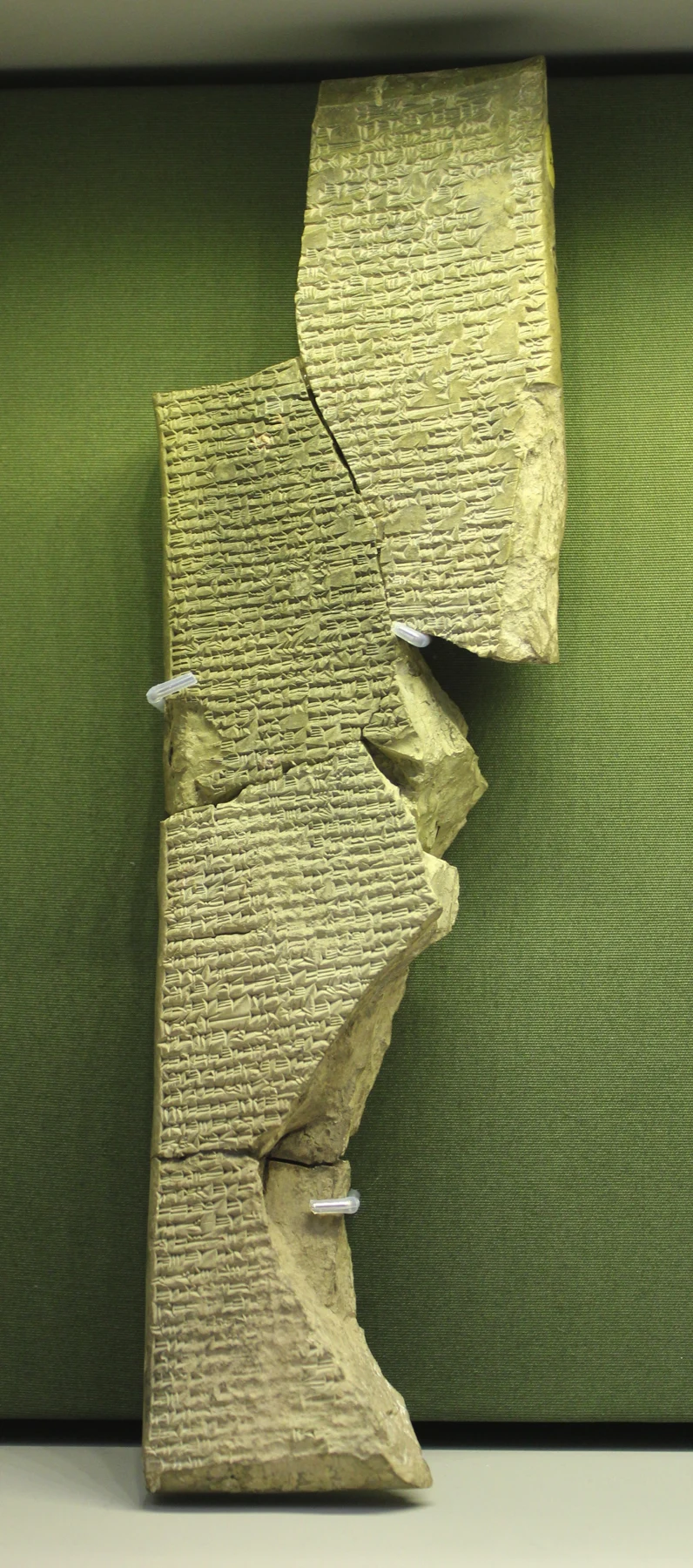
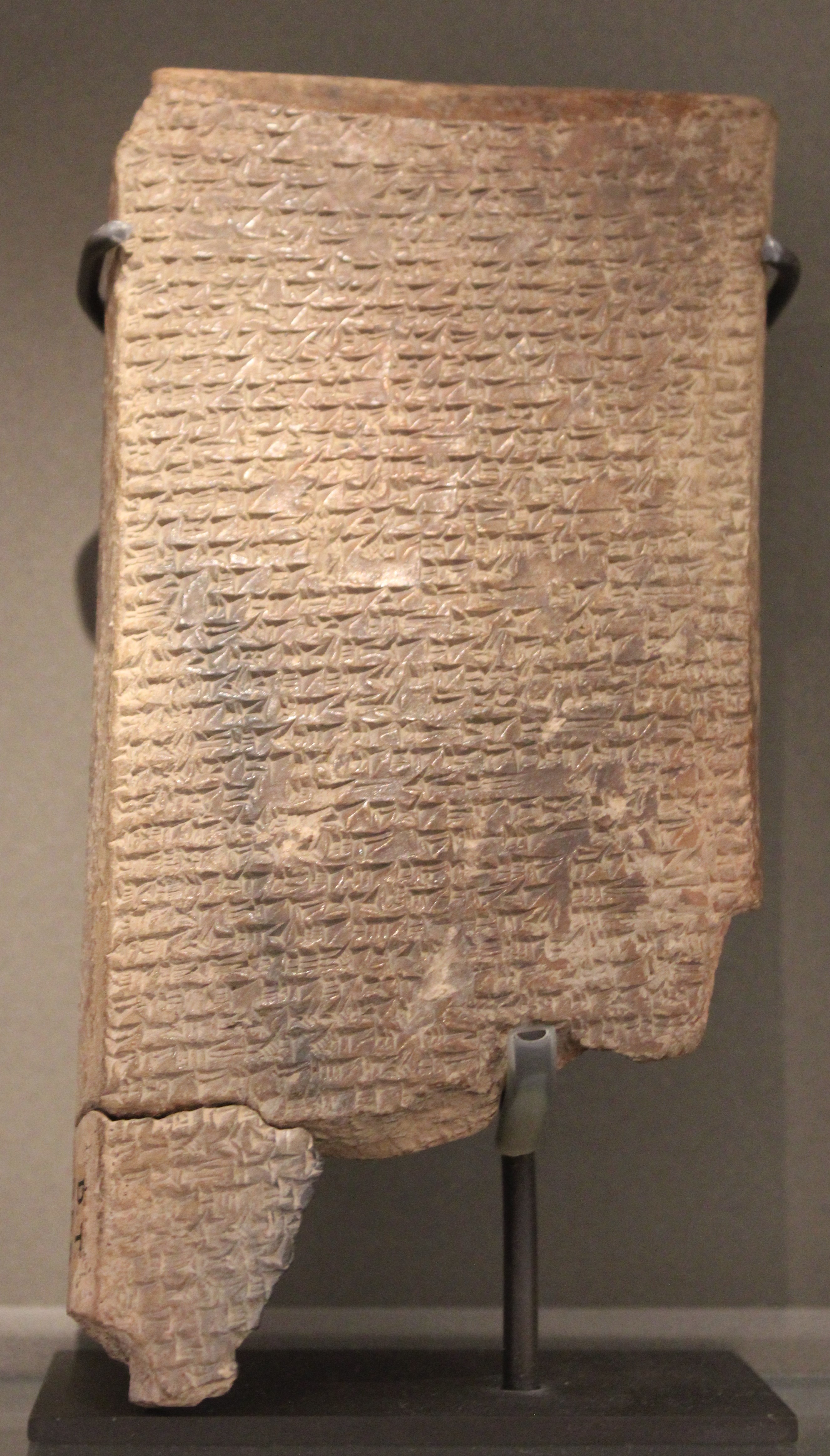
Mythical events, composition and the copying of a particular tablet are different chronological questions. A manuscript’s date does not automatically date the first composition. Enūma Eliš’s origins remain debated; a resemblance between a ruler’s rise and the god’s elevation cannot alone fix its creation to one reign.[2]
Likewise, a later attestation of ritualRitualAn organised or distinguished practice meaningful to a community; it may leave traces, but its form alone does not reveal an associated doctrine.Glossary · Click to read the explanation use does not establish that every ceremonial detail existed from the beginning. Story, written witness and performance must remain distinguishable.
The dragon in the cover
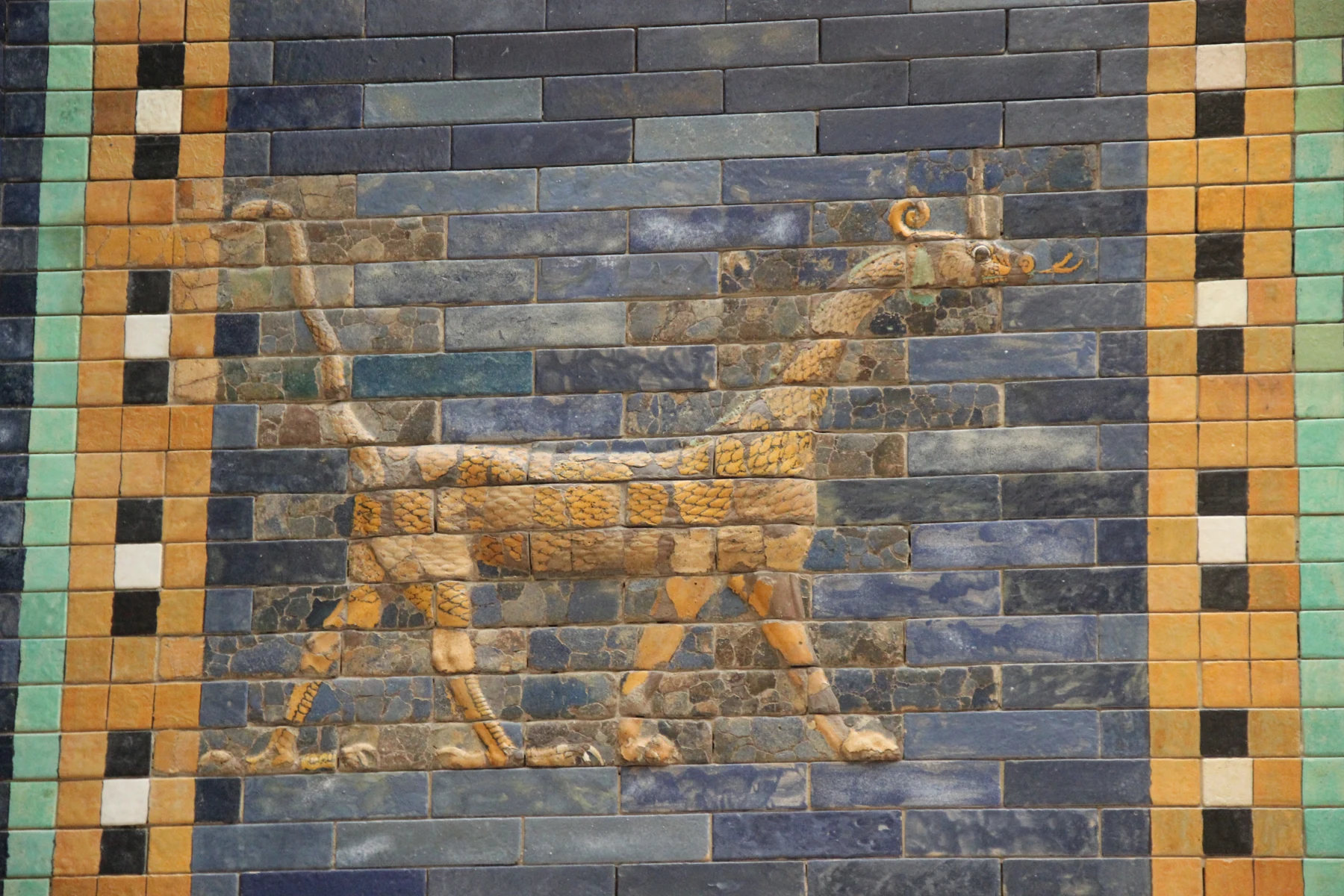
The glazed-brick dragon comes from Babylon’s IshtarInanna / IshtarProminent Mesopotamian goddess with a major centre at Uruk, whose parentage and cult traditions vary rather than forming one fixed genealogy.Glossary · Click to read the explanation Gate decoration and is associated with Marduk. It is a contextual symbol, not a securely identified portrait of defeated Tiamat or proof that Marduk himself had that body.[3]
The poem’s central achievement is to unite creation and legitimacy. The gods recognize the champion, the champion arranges the world, and Babylon becomes a place within that order. We can understand Marduk’s expansive rank without turning him into an early monotheistic deity.
Connected readings
References and notes
- Ancient text in King’s historical public-domain translation; used for narrative structure, not to settle modern philological readings or passages then missing. Enūma Eliš, tablets II–IV, VI–VII; L. W. King, 1902 Return to the text ↑
- Specialist entry on Marduk’s rise and connection with Babylon; chronology and functions vary by period. Nicole Brisch, Marduk (god), ORACC / AMGG Return to the text ↑
- Metropolitan Museum explanation: the gate’s dragon is associated with Marduk, while the lion is associated with Ishtar. Glazed-brick panels from Babylon Return to the text ↑
Suggest a correction · Suggest a source for this record
Cite this record
IL Archive, «Marduk’s Rise: Babylon and the Making of Divine Kingship», Edition 1, https://ilarchive.com/en/studies/marduk-and-babylon
Continue reading