Study
The Warka Vase and Head: When the Sacred Became Recognizable
An extended study of a topic, with evidence and references.
- Timeline
- From 3300 BCE to 2900 BCE
- Region
- Southern Mesopotamia — Uruk
Offerings, Inanna’s emblems and authority at Uruk, alongside a female face probably from a composite statue: what the objects establish and how far goddess, priestess and ruler can be identified.
Share article
Text
When the sacred became recognizable
In southern IraqIraqIraq is a modern country encompassing much of ancient MesopotamiaGlossary · Click to read the explanation, towards the end of the fourth millennium BCE, images made the relationship between city, authority and the sacred visible in ways for which we now have stronger interpretive clues. Religious art did not begin at UrukUrukAncient city at Warka in southern Iraq, a major urban centre around 3200 BCE that preserved early writing and accounting tablets.Glossary · Click to read the explanation, whose inhabitants were neither the first to fashion a human face nor the first to make meaningful symbols. What matters here is the associationShirkAssociating others with God in Quranic discourse; not equivalent to denying God’s existence.Glossary · Click to read the explanation of recurring imagery with urban institutions and signs linked to a particular goddess.
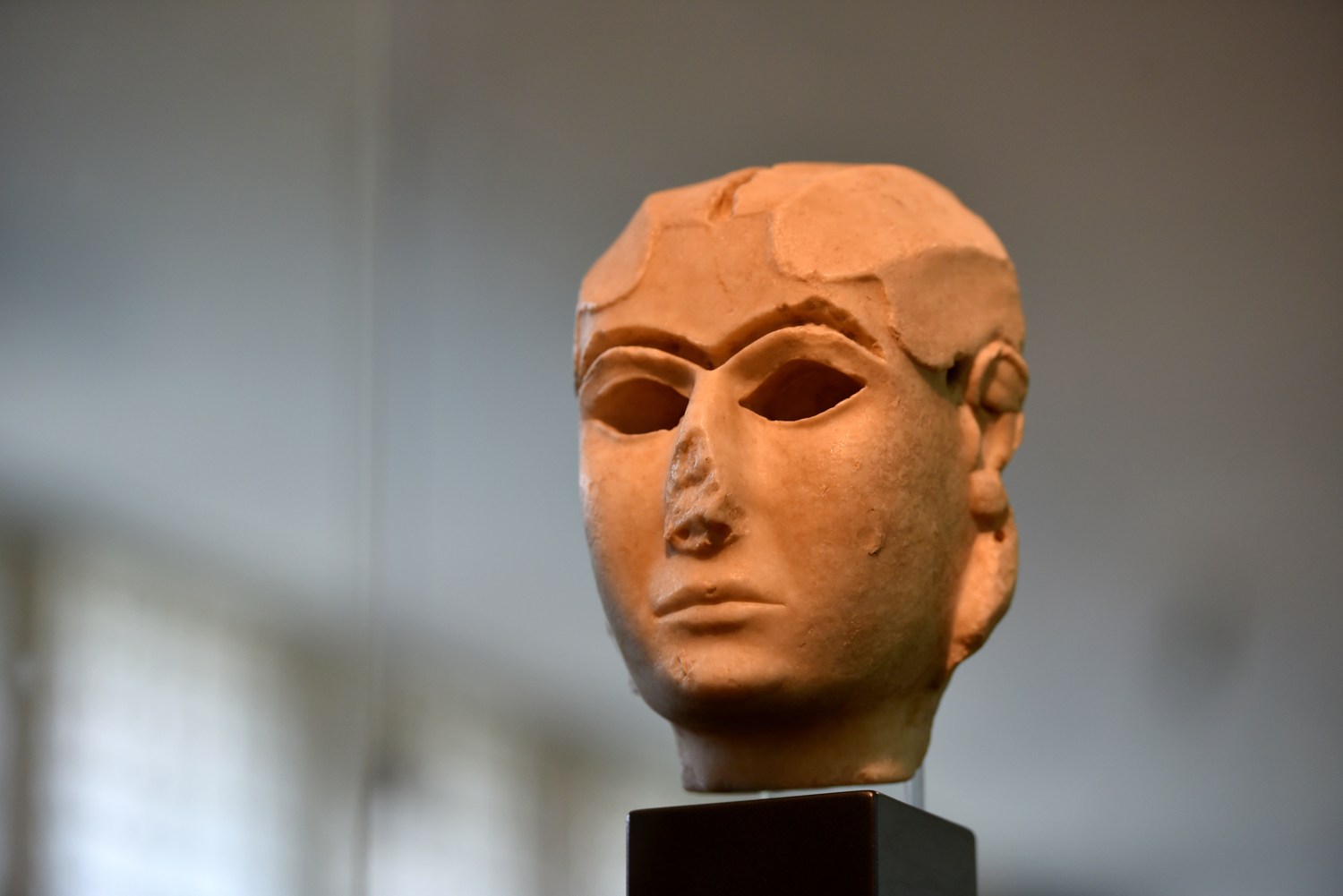
Two objects bring this development into view: the Warka Vase, with its rows of plants, animals and offering bearers, and the Warka Head, a carved female face approaching life size. Both belong to Uruk and the archaeological world of the Eanna precinctEanna at UrukAn archaeological precinct and institutional centre at Uruk associated with Inanna; its name does not fix every early building’s function.Glossary · Click to read the explanation. Yet neither has a surviving inscription identifying its female figure as InannaInanna / IshtarProminent Mesopotamian goddess with a major centre at Uruk, whose parentage and cult traditions vary rather than forming one fixed genealogy.Glossary · Click to read the explanation. The image becomes clearer while the final identification remains open.[1][2][3]
Uruk: the city enters the image
UrukUrukAncient city at Warka in southern Iraq, a major urban centre around 3200 BCE that preserved early writing and accounting tablets.Glossary · Click to read the explanation was a major urban centre where monumental buildings, production, accounts, seals and practices of presentation coexisted. This context helps us understand the vase as more than attractive decoration: it orders a relationship between resources, people and a centre of special standing.
Eanna is known for its strong later connection with Inanna. But neither a building’s size nor the precinct’s name warrants identifying every monumental fourth-millennium structure as her temple. Distinguishing a building and its context from an interpretation of its function remains essential. Recognizing an important religious institution also does not establish that one institution owned the city’s entire economy.
A stone vessel, not a clay tablet
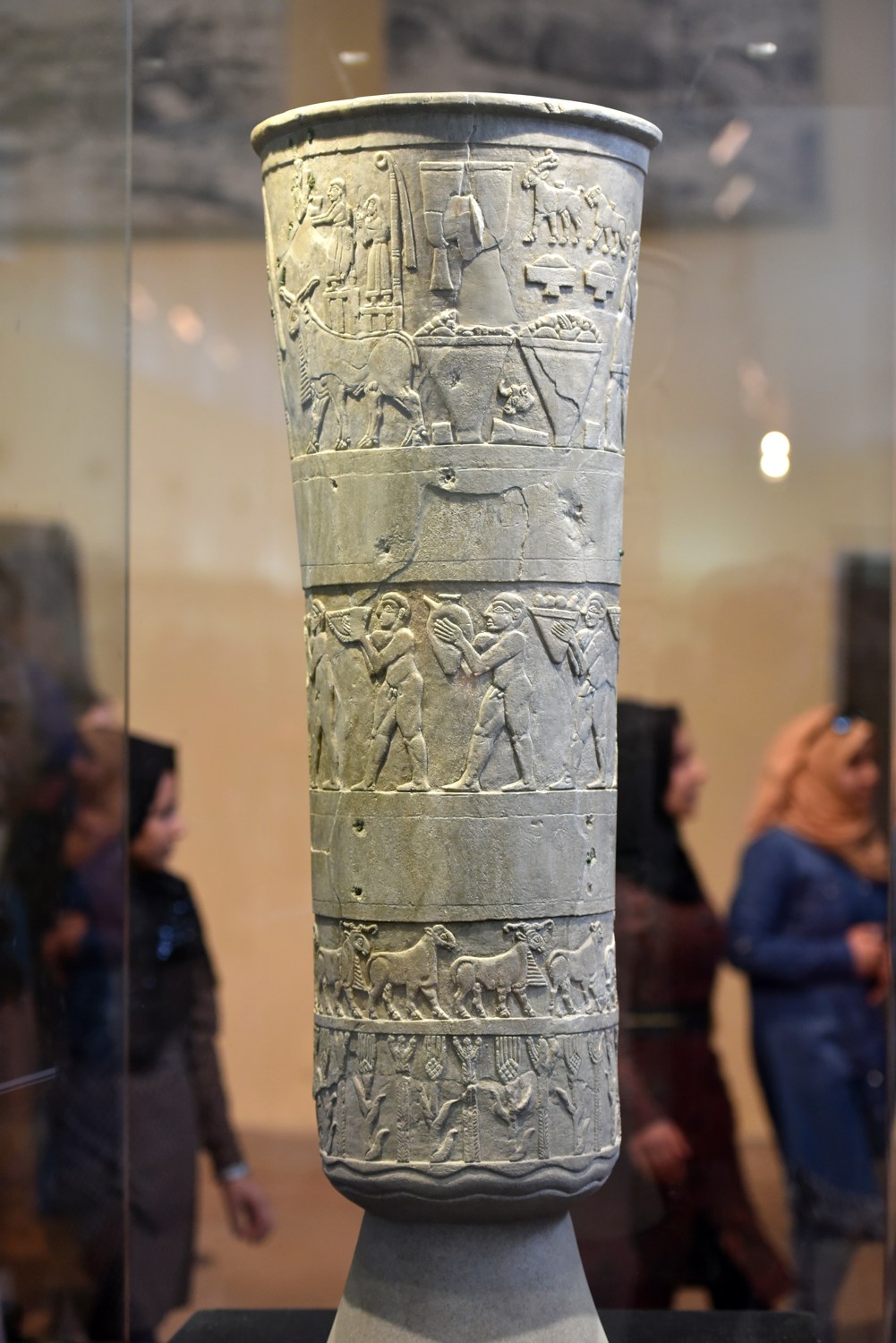
CDLI records the Warka Vase as museum number IM19606 and excavation number W14873, assigning it to Uruk III, approximately 3200–3000 BCE. Its material is stone described as alabaster, with recorded dimensions of 105 cm in height and 36 cm in width. Differing chronological ranges in publications cannot supply an exact year of manufacture.[1]
The height must be understood alongside the displayed object’s condition. The vase has been reassembled and has a reconstructed base; the present photograph does not show one uninterrupted block of surviving ancient stone. Museum documentation also identifies an ancient repair in the upper part and damage during the 2003 looting. Ancient breakage and modern restoration have distinct histories.[4]
Reading the registers
The images occupy pictorial registersPictorial registerA band organizing imagery within a scene; counts may vary with the grouping of rows.Glossary · Click to read the explanation: horizontal bands that organize a scene. The vase can be described as having three principal registers when plants and animals are grouped into one lower level, or four decorated bands when the plant and animal rows are counted separately. This is not disagreement about which images exist.[2][4]
At the bottom appear wavy lines and plants, followed by animals, men carrying vessels and baskets, and an upper scene of reception and presentation. Blank spaces separate some levels. Moving upwards helps the reading, but the vase also wraps around itself: a photograph from one angle does not reveal every detail.
Water and plants: the basis of abundance
The wavy lines are usually read as water, associated with rows of plants. In the environment of southern MesopotamiaMesopotamiaA historical region associated with the Tigris and Euphrates, home to many societies and civilisations.Glossary · Click to read the explanation, water and growth provide a visual foundation for the goods appearing further up. This is a reading consistent with the imagery, not a surviving text explaining every line.
The vase alone does not tell how water or earth was created. Its arrangement may connect nature with offerings without constituting a complete map of the cosmos. Describing it as an image of order or abundance interprets relationships between images; it does not translate a myth written on its surface.
Animals: resources and work
Rows of livestock follow the plants, with animals differentiated by horns and form. Their placement brings them into the world of resources on which society depends. Grain and herds are more than an attractive background: they help make food, offerings and the city’s continued existence possible.[2]
The imagery can prompt questions about husbandry, wool and organized labour, but provides no independent account of herd sizes or ownership. It cannot quantify temple production or establish that every animal in Uruk belonged to the same institution. The scene selects what matters to its ritualRitualAn organised or distinguished practice meaningful to a community; it may leave traces, but its form alone does not reveal an associated doctrine.Glossary · Click to read the explanation message rather than enumerating all of society.
Nude men are not necessarily slaves
In the next level, nude men carry loaded vessels and baskets. Their direction and burdens support interpreting an offering procession. Roughly contemporary seals provide comparisons, including one described by the Metropolitan Museum as a procession before a temple façade involving three nude figures.[2][5]
Nudity alone establishes neither occupation nor legal status. It may relate to ritual action or conventions for portraying performers, but we have no identification for each man. Making them all slaves, priests or members of one social class goes beyond what the carving shows.
Offerings reach a scene of reception
In the upper part, a vessel bearer stands before a female figure in a long garment. Behind her are two distinctive looped standards; nearby appear vessels, equipment and smaller images. Presentation and the conjunction of these elements make a ritual interpretation strong, while the participants’ names remain unwritten.[2][3]
The transition matters: resources represented as plants and animals become goods carried by people towards a sacred centre. In this reading, abundance connects with work, and work with presentation. The scene does not reveal the ceremony’s frequency, name or audience.
Inanna’s emblems identify the setting
The two emblems are known as ring-posts with streamers. They are commonly interpreted as reed bundles folded at the top, although the form’s origin and material remain debated. Van Dijk-Coombes compares them with the early written sign MUŠ3, associated with Inanna; their recurrence on seals and in architectural imagery strengthens the connection with the goddess’s domain.[3]
In this comparative reading they are not neutral ornaments. They help associate the setting with InannaInanna / IshtarProminent Mesopotamian goddess with a major centre at Uruk, whose parentage and cult traditions vary rather than forming one fixed genealogy.Glossary · Click to read the explanation. In some images an emblem indicates sacred space even without a complete building being depicted. This strong association does not mean that every post or reed bundle in art represents the goddess herself.
The woman: Inanna or her priestess?
Identifying the woman is a different question from identifying the setting. She may be Inanna or a priestess or human representative associated with her. Clothing and position distinguish her, but the area connected with her headdress is incomplete; the iconographic study notes that the break occurred in antiquity.[3]
We cannot restore two horns to the missing area and then treat them as decisive evidence of divinity. Nor should conventions for horned crowns in later Mesopotamian art be imposed on every earlier image. The vase strongly supports her connection with Inanna’s sacred centre; her being the goddess herself remains a possibility.
The missing man and the “priest-king”
The important male figure in the upper scene is damaged, leaving portions of dress and ornament and an attendant carrying a fringed end. Comparisons suggest a ruler or someone with political and ritual authority. A reconstructed complete body must not be presented as though it survives on the vase.[2][3]
Researchers call this visual type the “priest-king” or “man in a net kilt”; some connect it with the title EN. These expressions are not all established synonyms. A descriptive label separates visible appearance from a proposed office. Matching the visual type to a particular title remains a research question, not the reading of an inscribed name.
Authority as mediation
If the important figure is a ruler, the scene places his authority within an act of presentation. He approaches the sacred domain alongside people bringing goods. This can be understood as an image of authority mediating between a community and its deity, rather than displaying military strength alone.
This interpretation concerns the image’s function. It establishes neither that every ruler performed the same rite nor that priest and ruler were identical roles throughout Uruk’s history. Its value lies in making human authority part of the organization of resources and sacred relationships within a shared visual language.
Does the vase show a sacred marriage?
The scene has sometimes been connected with sacred-marriage traditions known from later texts involving Inanna, Dumuzi and kingship. A woman associated with Inanna, an important male and the earth’s goods make comparison understandable. Their presence does not establish that the vase depicts a marriage agreement or sexual union.
Its surface names no Dumuzi and preserves neither ritual speech nor a ceremonial sequence. A later resemblance is insufficient to carry an entire text back into the fourth millennium. Sacred marriage can remain a comparative hypothesis; presentation within Inanna’s domain stays closer to the direct evidence.
The Warka Head: a face on another scale
The second object is a female face known as the Warka Head or Warka Mask. Its stone is described as white marble, and its height is about 20–21 cm, approaching the scale of a human head. It belongs to the late fourth millennium or around 3000 BCE; the familiar date “about 3100” is approximate, not a specific year.[2][4]
The archaeological study associates it with Eanna III. Calling the separated object a “mask” does not establish that a person wore it. What survives is a stone component, while the full body and original display arrangement are not preserved sufficiently to resolve their details.
A composite statue with a lost appearance
The head was probably part of a composite statueComposite statueA sculpted image assembled from multiple components or materials; missing parts do not automatically reveal identity or material.Glossary · Click to read the explanation assembled from different materials. Eye sockets and eyebrow grooves indicate lost inlays. Cuts and holes also support the suggestion that a separate wig or headdress was attached.[2][4]
The body may have used another material, with additional ornament lending colour and brilliance now missing. Identifying every component specifically as gold, wood or lapis lazuli requires its own evidence. Today’s museum image shows an incomplete ancient appearance; even the warm colour in a photograph can result from lighting without changing the recorded stone description.
Realism is not a ladder from primitive to advanced
The cheeks, mouth and chin display delicate modelling unlike many images emphasizing geometry and lines. This draws attention to an artistic choice responsive to bodily form. It does not turn every earlier work into a failed attempt to portray a face in the same way.[2]
Human images were known millennia before Uruk, including the statues from ‘Ain GhazalAin GhazalNeolithic site near Amman, Jordan, known for large Pre-Pottery Neolithic plaster statues. Faces and decorated eyes are recognizable, but the figures’ names and religious function remain unresolved.Glossary · Click to read the explanation. They need not share this naturalistic style to demonstrate recognition of faces and their expressive possibilities. A community can use abstraction, imitation and symbolism together; skill does not invariably move towards increasing realism.
Is the head Inanna?
Identifying the head as Inanna is common and plausible because of its find context and possible connection with an important ritual image. Yet no surviving inscription names her, and no complete body carries an attribute settling the matter. Proximity to the goddess’s domain does not automatically make every female face an image of her.
An interpretation as a deity or a high-status human figure remains possible, with differing strengths. Treating “Inanna” as an established museum name and then using that name to prove the theory would be circular. “Female head, possibly representing Inanna” keeps description separate from proposed identification.
And if the face belonged to a human?
The head would remain significant if it did not represent the goddess. Creating an image at this scale with multiple materials and inlays indicates investment in visual presence. A human image could participate in ritual relationships or elite representation without itself being the object of worship.
These alternatives are not established identities either. Facial form cannot supply a woman’s name or office. How the image was used and displayed matters alongside resemblance to a living face. Size, materials and context are clues rather than a biography.
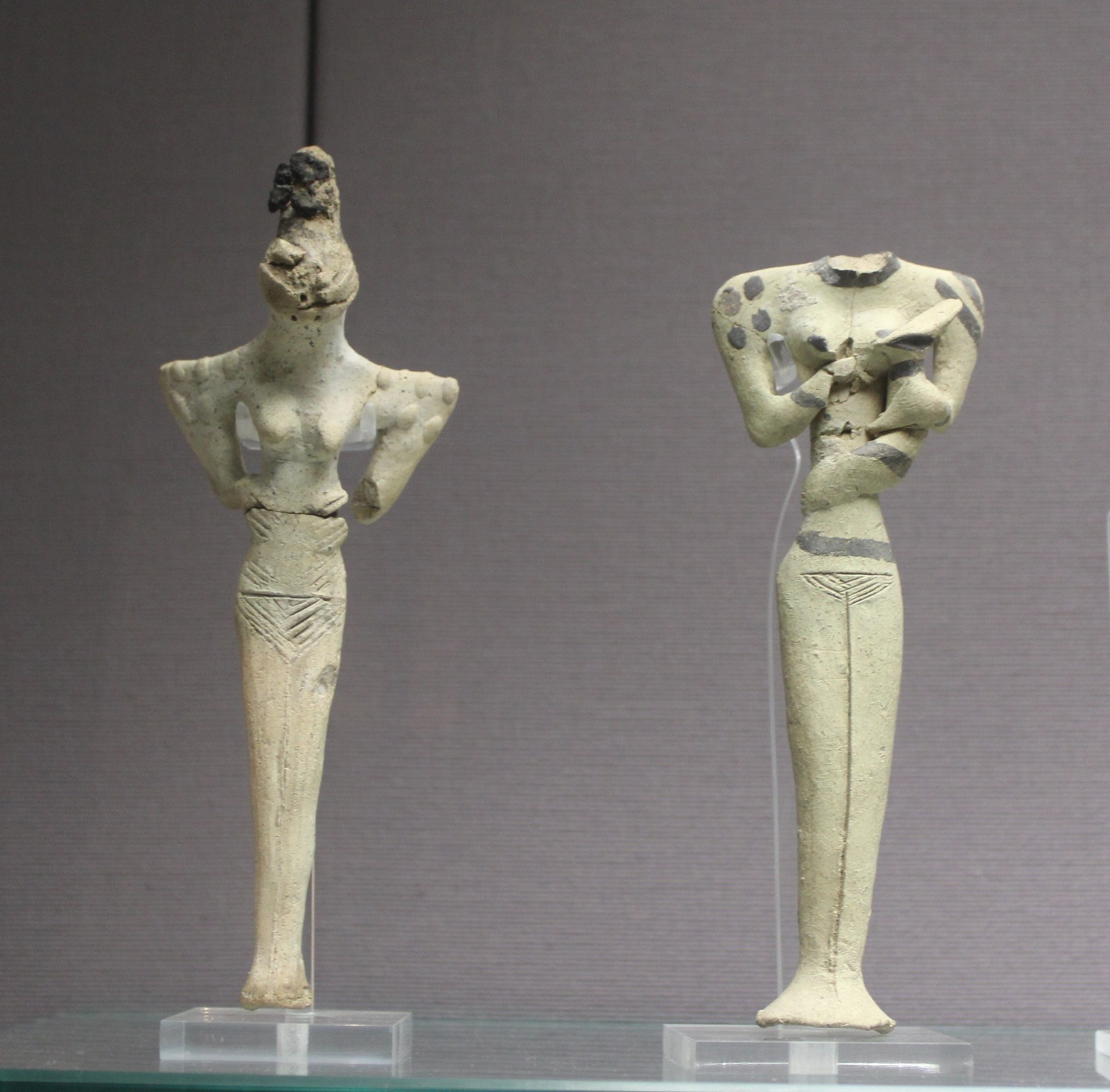
Comparing Ubaid figurines
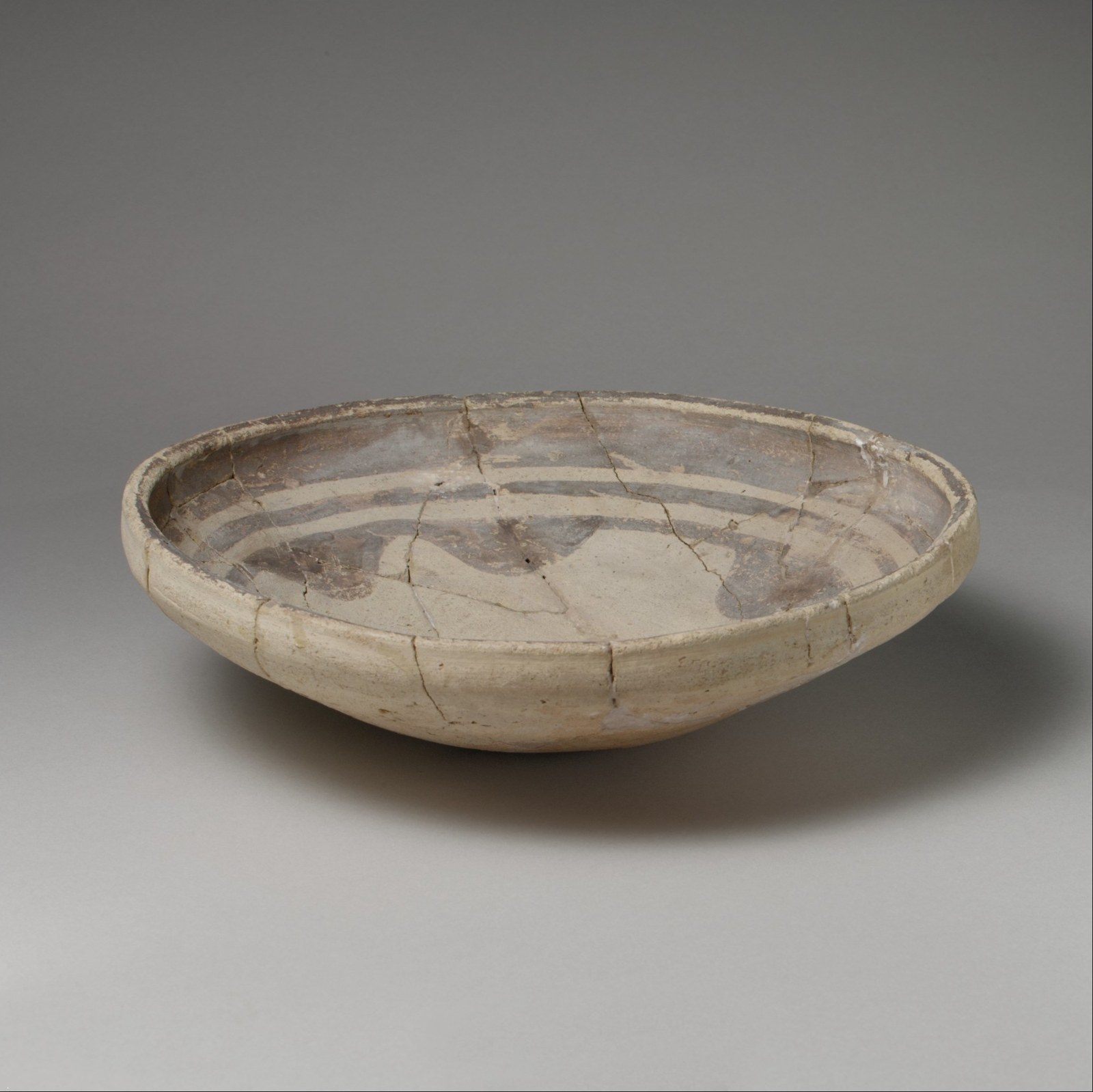
Comparison with small figurinesFigurineSmall three-dimensional representations of people, animals or other beings. Size and appearance alone do not establish a toy, portrait, ritual object or deity; manufacture, discovery context and use require study.Glossary · Click to read the explanation of the UbaidUbaid cultureAn archaeological designation for material traditions originating in southern Mesopotamia with regional diffusion. Broad southern frame c. 6500–3800 BCE; not a known linguistic people, with limits varying by region and phase.Glossary · Click to read the explanation tradition highlights differences of scale, materials and bodily form. But “Ubaid” embraces diverse sites and contexts. We cannot describe all its figurines as domestic or as equally uncertain in function.
Nor can we draw a sequence in which an enigmatic small being gradually becomes a recognizable naturalistic head. Uruk offers clearer connections between certain signs and Inanna’s domain, together with art associated with urban centres. Continuity of one particular figure from an Ubaid figurine to the Warka Head requires an evidentiary sequence that formal similarity or difference alone cannot provide.
Seals: small images with institutional effects
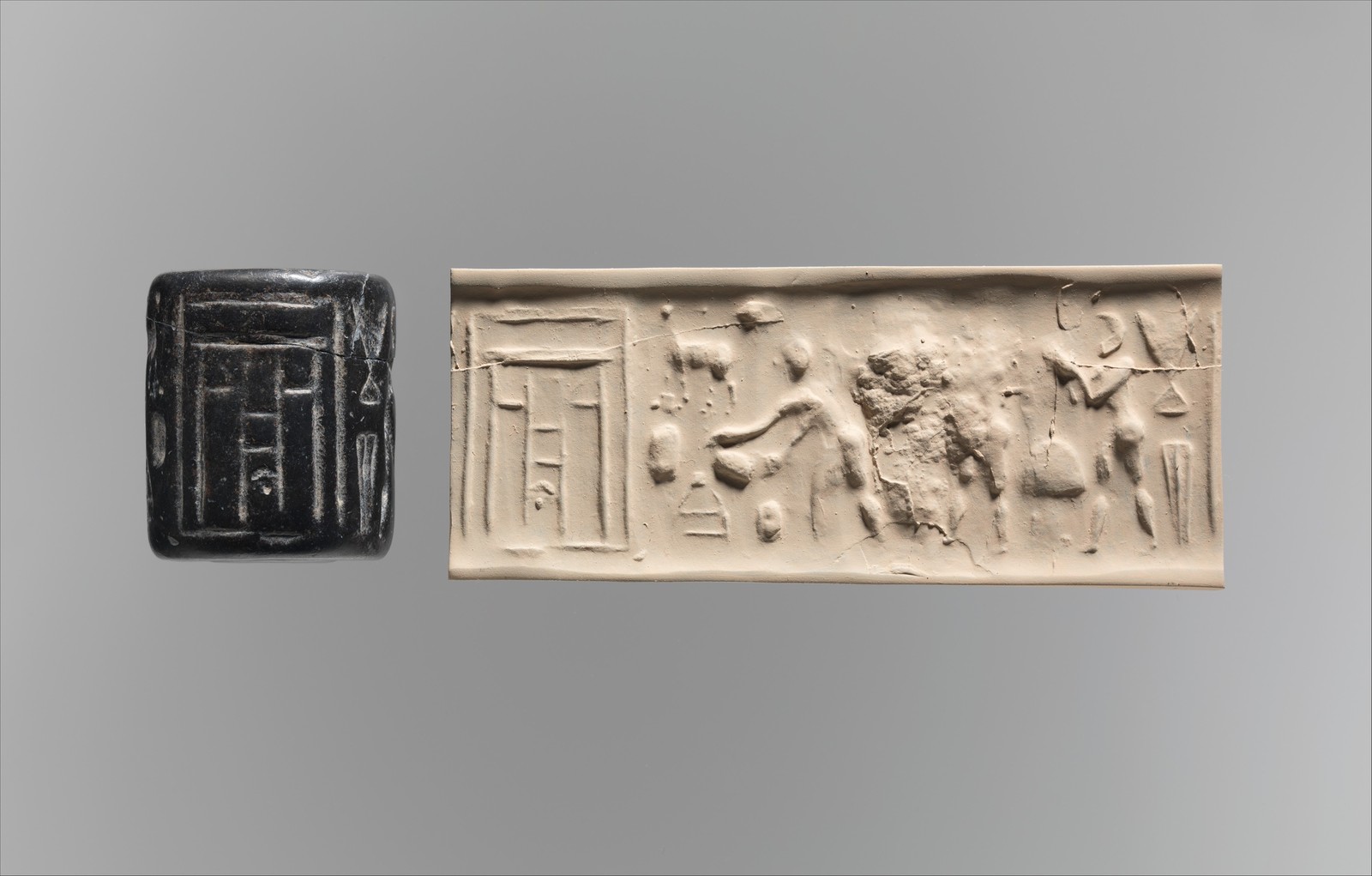
A cylinder sealCylinder sealEngraved cylinder rolled over clay to produce a continuous design; used for documentation, identification and authority, without necessarily encoding language.Glossary · Click to read the explanation repeats a scene on clay when rolled. Images can therefore travel with closures on containers and doors or with administrative documents. This supplies a practical medium for circulating signs and imagery alongside vessels and sculpture.[5]
The example shown here, Met 1983.314.1, depicts a procession towards a structure the museum interprets as a temple. The impression is modern and reveals the ancient design; it is not an ancient tablet preserved beside the cylinder. This seal names no Inanna. Its comparative value concerns presentation and architectural form rather than the identity of every scene.
Symbols strengthen identification before explaining a story
When Inanna’s emblem recurs across media, connections between images become stronger. We can distinguish a religious domain without identifying the woman portrayed within it. Recognizing a symbol differs from identifying the owner of a face.[3]
This proves no universal rule whereby every deity began as a symbol and later acquired a body. It describes what these witnesses allow us to infer. The divine image and its stories may have had older oral histories. Our evidence preserves some means of recognition rather than everything their ancient audience knew.
Inanna and abundance, beyond fertility alone
Water, vegetation, livestock and offerings allow the vase to be read in relation to the city’s prosperity and resources. They cannot reduce Inanna to a “fertility goddess” or extract all her later functions from the carved rows.
Historical traditions assign Inanna wider domains, including love, war and kingship. What the vase more directly shows is a ritual relationship bringing the earth’s resources and human participants into her domain. The difference between this and a comprehensive fertility theology concerns how much we ask an image to establish.
The ruler also became a recognizable type
The recurrence of a ruling figure across media allows comparison of dress, standing and actions. Imagery thus does more than organize sacred identity: it makes human authority recognizable without preserving its bearer’s name.[3]
The type may represent an office or an ideal of authority rather than a portrait of one individual. The vase supplies no king list and records no identifiable historical event. Clothing associated with presentation gives us a language of authority while leaving individual history incomplete.
Writing belongs to this same world
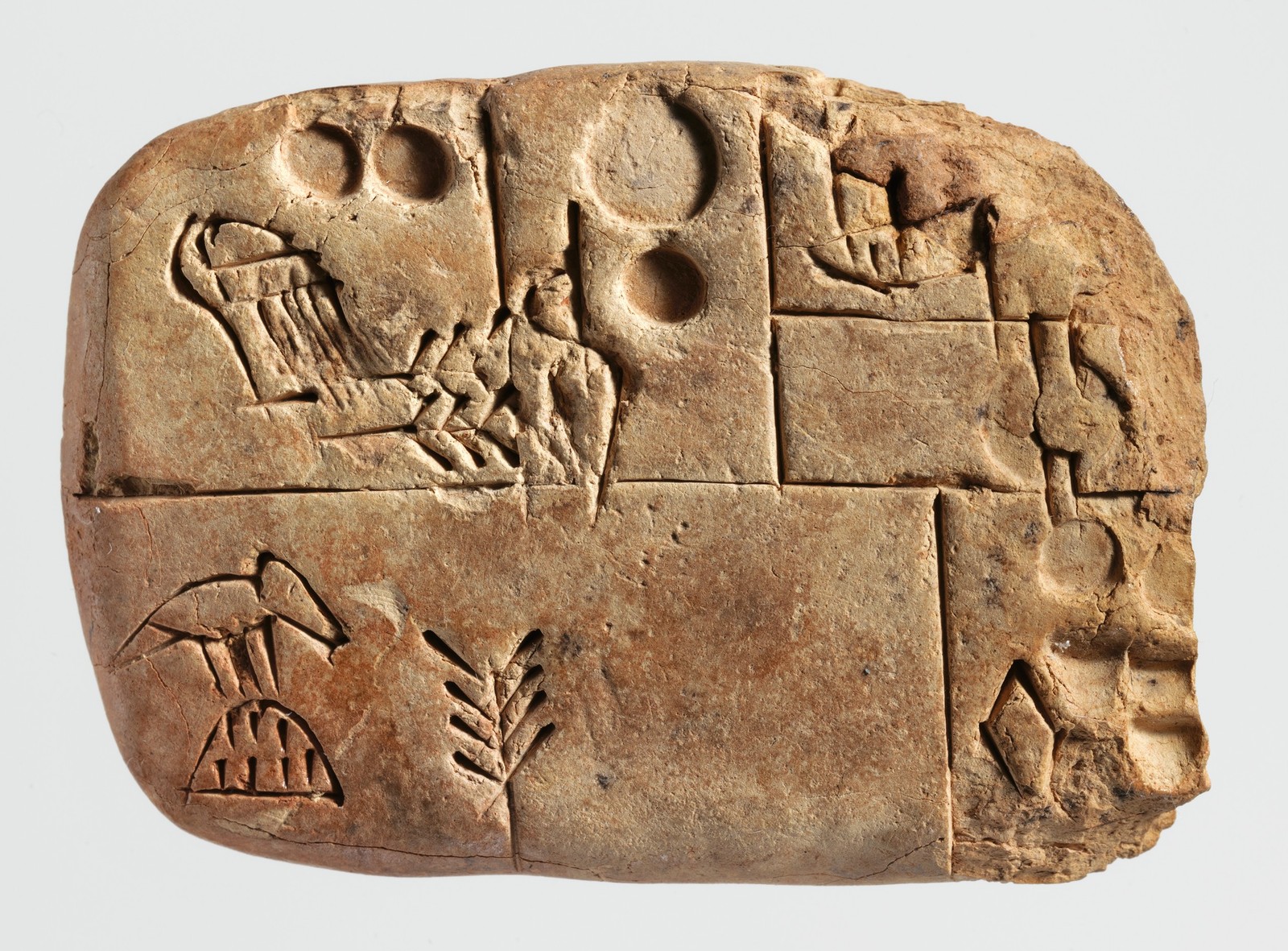
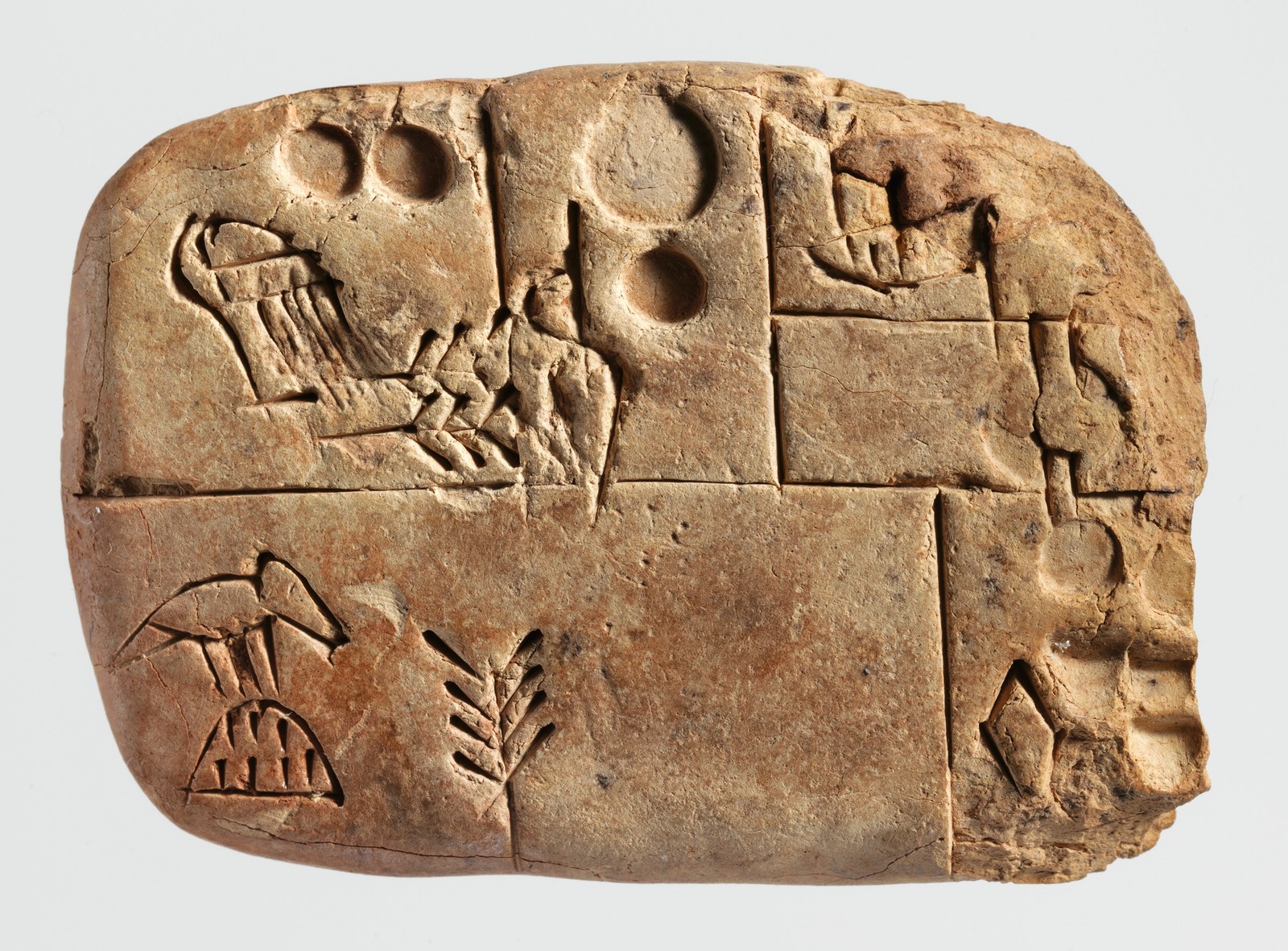
Proto-cuneiform writingProto-cuneiformEarly Mesopotamian writing of the late fourth millennium BCE, combining numerical notation and signs, predominantly accounts with limited phonetic use.Glossary · Click to read the explanation appeared in the late fourth millennium, the same broad period as the two objects. The story should therefore not end by announcing writing “a little later” as though the vase and head necessarily preceded it. Images and writing remained distinct, overlapping media.[6]
Early texts are largely administrative accounts, not invariably labels below images or explanations of rituals. The illustrated grain tablet exemplifies such recording rather than directly deciphering the vase. Even the “signs” in the vase’s CDLI entry are explicitly reminders of possible correspondences with upper-register images, not an actual cuneiformCuneiformWriting with wedge-shaped signs, developed from Mesopotamian recording traditions and used for several languages from the third millennium BCE.Glossary · Click to read the explanation inscription on the object.[1][6]
Degrees of identification and certainty
Established evidence includes the stone vase with its arranged imagery, the female head with missing inlays, and their association with late Uruk contexts. The looped emblems’ connection with Inanna is strong; interpreting the vase as offerings presented in a sacred domain is strongly supported.[1][2][3][4]
Whether the woman is Inanna or her priestess remains unsettled. Comparative identification of the male as a ruler is probable, but no title is legible on the vase. The head probably belonged to a composite image; identifying it as Inanna is possible, while its precise function and full body remain unknown. Sacred marriage is a comparative possibility rather than a documented event on this vessel.
Face, city and sacred presence
The sacred had been visible long before Uruk, but some Uruk evidence gives us a stronger ability to recognize its setting. Water, vegetation, animals, people and presentation connect within one visual programme. A female face approaching life size testifies to the presence an image can create.
Neither object closes the distance between sign and person. We know more securely that a domain belongs to Inanna than that a particular face is hers. That distance gives the two witnesses their value: they reveal the sacred entering the language of the city and its institutions, and also what remains beyond our ability to name.
References and notes
- Cuneiform Digital Library Initiative. Warka Vase, P423593; IM019606 / IM19606, W14873. Object entry: Uruk III, 3200–3000 BCE, alabaster, 1050 × 360 mm, museum and excavation identity. The “text” reminds readers of possible sign correspondences in the upper frieze; it is not an inscription on the vessel. Return to the text ↑
- Ann Louise Perkins (1949). The Comparative Archeology of Early Mesopotamia. Studies in Ancient Oriental Civilization 25. University of Chicago. Printed pp. 135–136: vase, ruler and priestess possibilities; pp. 150–151: marble head, inlays, wig/headdress fastenings and modelling. Selected passages, not the entire book. Older chronology and terminology balanced against a modern catalogue. Return to the text ↑
- Renate Marian van Dijk-Coombes (2018). The Architectural Origin of Mesopotamian Standards in Late Uruk/Jemdet Nasr Period Iconography. Antiguo Oriente 16, 117–146. Selected printed pp. 117–126: standards, ring-post with streamer, MUŠ3, Inanna’s space and seals. Pp. 123–124, notes 19–20: priest-king/EN terminology, female identity and ancient headdress damage. Figure 1 inspected visually. Architectural/reed origin is an argued interpretation. Return to the text ↑
- Clemens Reichel (2008). Cataloging the Losses: The Oriental Institute’s Iraq Museum Database Project. In G. Emberling & K. Hanson (eds), Catastrophe! The Looting and Destruction of Iraq’s Past, OIMP 28; with D. George & M. Gibson, The Looting of the Iraq Museum Complex. Selected pp. 22–25 on looting and the reconstructed vase base; p. 57, Figure 3, visually inspected head entry: ca. 3000 BCE, white marble, height 21 cm. P. 59, Figure 5: four bands and ancient repair. Not the full volume. Recovery month varies internally and is not resolved here. Return to the text ↑
- The Metropolitan Museum of Art. Cylinder seal and modern impression: ritual scene before a temple facade. 1983.314.1. Description and metadata: ca. 3500–3100 BCE; three nude figures, procession and structure interpreted as a temple. Mesopotamian provenance; no deity identified. Modern impression. This case cannot fix the meaning of all nudity or seals. Return to the text ↑
- The Metropolitan Museum of Art. Cuneiform tablet: administrative account concerning the distribution of barley and emmer. 1988.433.2. Description of economic recording, proto-cuneiform and tablet metadata: ca. 3100–2900 BCE, probably Uruk. Does not explain the vase or its figures; late-fourth-millennium writing is a broad context, not an exact date for either sculpture. Return to the text ↑
Suggest a correction · Suggest a source for this record
Cite this record
IL Archive, «The Warka Vase and Head: When the Sacred Became Recognizable», Edition 1, https://ilarchive.com/en/studies/warka-vase-and-head
Continue reading