Study
The son and the sacrifice: how Abraham’s story changed
An extended study of a topic, with evidence and references.
How does Abraham's sacrifice story differ between Genesis and the Qur'an? A historical comparison of Jewish, Christian and Islamic retellings of the son, his rescue and the animal substitute.
Share article
Text
Introduction
Why does the account of AbrahamAbrahamCentral figure in Genesis, the Qur'an and Jewish, Christian and Islamic traditions; the sacrifice study compares what each text says about him.Glossary · Click to read the explanation's threatened sacrifice differ between Genesis and the Qur'an, and how did writings and commentaries between and after them retell it? This study traces what each source says about the son's identity, consent and rescue. It separates the earlier narrative from its reception, then tests the limits of comparison with a Greek story in which an animal replaces a daughter.
The aim is to understand the history of these tellings, not to rank beliefs. A parallel or an earlier attestation raises a historical question; neither alone identifies the route by which a story travelled.
One story, changing questions
A father climbs with his son towards a place of sacrifice. Wood, an altar, a hand preparing to act, and an intervention that prevents the son's death: this may seem a fixed image of Abraham's story. Close reading instead reveals a history of retelling. Who proposes the test? What does the son know? Does he agree? What replaces him? How does the scene become a community's memory or an example of faith?
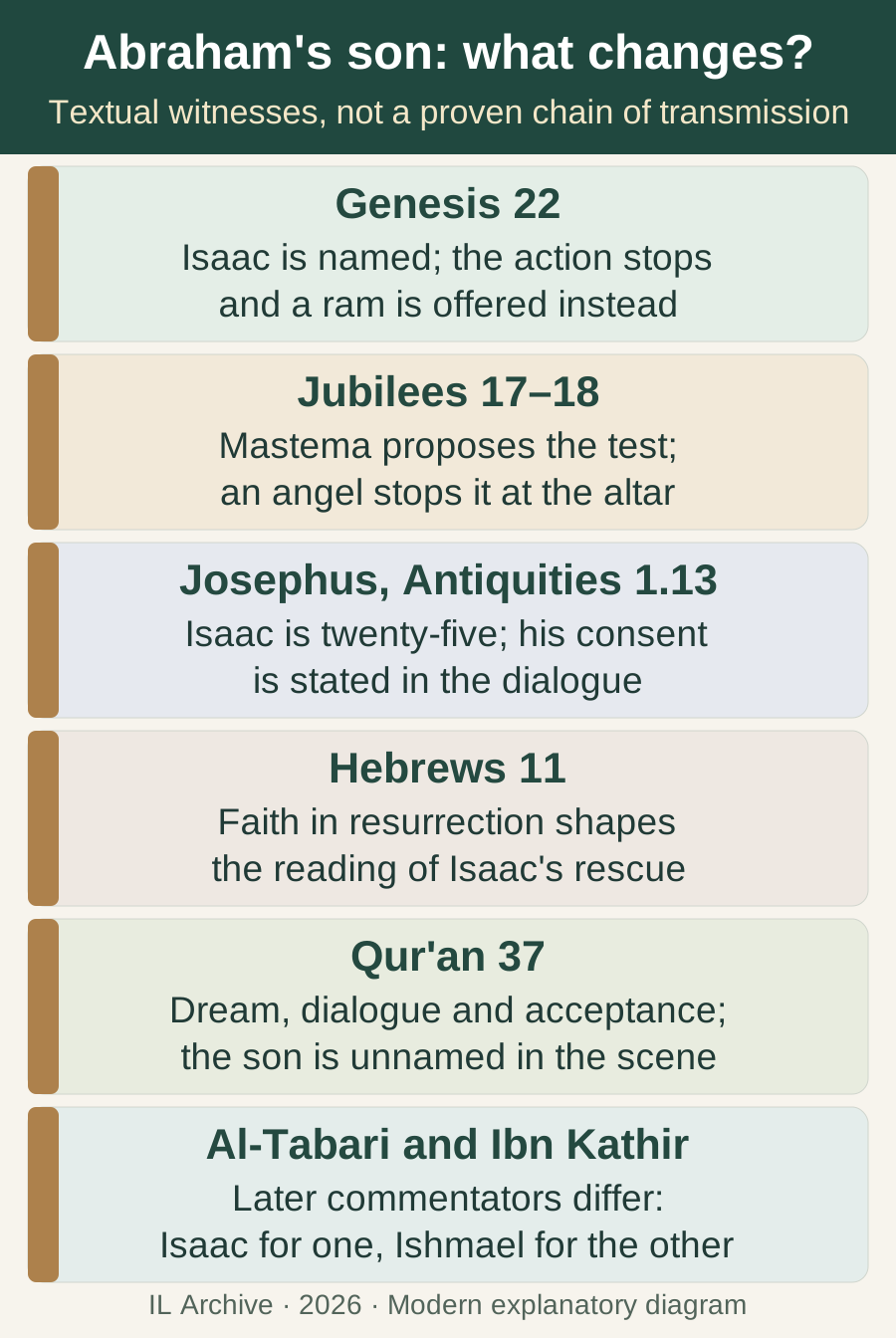
Genesis names IsaacIsaacSon of Abraham and Sarah in Genesis; named explicitly in Genesis 22's sacrifice episode, while named after the unnamed-son scene in Qur'an 37.Glossary · Click to read the explanation. Al Saffat leaves the son unnamed within the sacrifice scene and subsequently announces Isaac. Between these texts, Jewish and Christian writings and interpretive traditions reshape the meaning. Each version is read within its own source and period: a detail stated by a later text need not belong to an earlier one. [1][10][11]
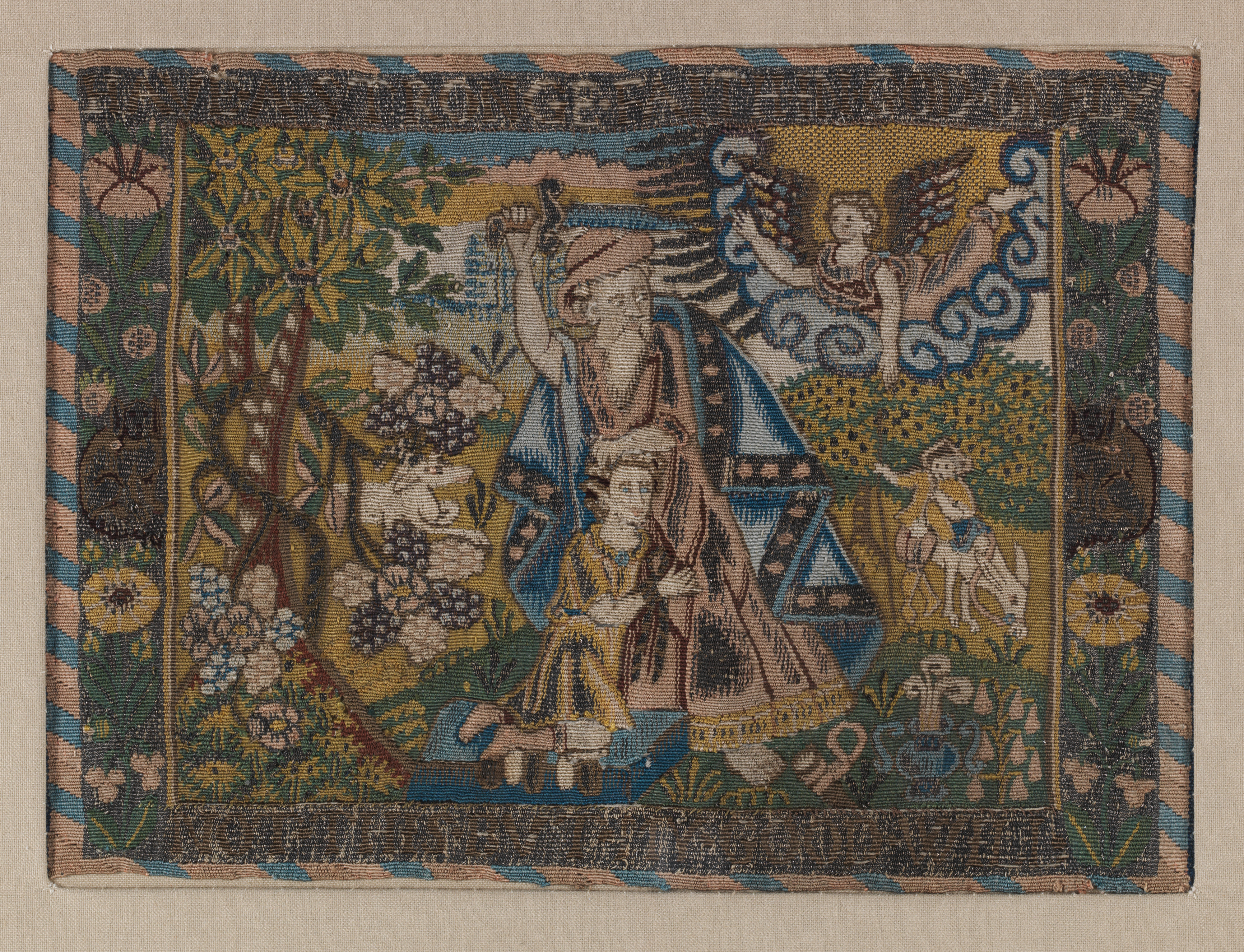
The cover is a European tapestry picture of Isaac's sacrifice, probably made between 1561 and 1613. It witnesses artistic reception, not the historical appearance of Abraham or archaeological evidence of the event. [18]
Genesis: the reader knows what Isaac does not
Genesis is the first book of the HebrewHebrewA Northwest Semitic language in the Canaanite group, with ancient and modern forms.Glossary · Click to read the explanation Bible. Its chapter 22 tells the reader at the outset that God tests Abraham. He must take his beloved, only son Isaac to the land of MoriahMoriahThe land named in Genesis 22 as Abraham's destination; 2 Chronicles later associates Mount Moriah with the Jerusalem Temple site, not an independently located journey.Glossary · Click to read the explanation and offer him as a burnt offering. Abraham prepares the journey, taking two servants and wood, and sees the place on the third day. Leaving the servants, he says that he and the boy will worship and return. These are narrative details, not an independent calendar dating a historical journey. [1]
Isaac carries the wood; his father carries the fire and knife. The son asks about the sacrificial animal, and his father answers that God will provide it. The reader knows the command Abraham received, whereas the text records no disclosure of it to Isaac. Unequal knowledge and the earlier promise of descendants create the tension, rather than a battle or victory over an enemy. [1]
In Genesis 21, before this scene, HagarHagarFigure in Genesis: an Egyptian woman in Sarah and Abraham's household and Ishmael's mother; chapters 16 and 21 narrate her flight and later expulsion and survival.Glossary · Click to read the explanation's son and his mother are sent away, although God affirms that he too is Abraham's offspring and will become a nation. Calling Isaac the only son in 22 therefore requires attention to affection, inheritance and narrative context. The word does not erase the other son from the same book. [2]
Binding, intervention and replacement
Abraham builds the altar, arranges the wood, binds Isaac and places him upon it. The act of binding underlies the designation “AkedahAkedah (binding of Isaac)Jewish designation for Isaac’s binding in Genesis 22, developing through retelling and prayer.Glossary · Click to read the explanation”, the binding of Isaac, which became a Jewish name for the story. The verb occurs in 22:9; the terminology's history and the scene's interpretations extend beyond that verse. [1]
When Abraham reaches for the knife, the angel of YHWHYahwehThe divine proper name written YHWH in the Hebrew Bible.Glossary · Click to read the explanation calls and stops him. He sees a ram caught by its horns in a thicket and offers it instead of his son. A second call connects his response with blessing for his descendants and the nations. The ending joins the son's survival to the continuing promise; it does not describe his actual sacrifice followed by resurrectionResurrection of the deadThe dead returning to life, distinguished from soul immortality, with differing scope and form among texts.Glossary · Click to read the explanation. [1]
The ram exemplifies “sacrificial substitutionSacrificial substitutionAn offering replaces a person or another offering in a particular text; this alone establishes neither ritual origin nor borrowing.Glossary · Click to read the explanation” within this narrative: an animal is offered in place of a person whose killing is halted. Dating a social custom of animal substitution requires other evidence; this one story cannot establish the origins of sacrifices in other cultures.
What Genesis does not say
The chapter supplies no numerical age for Isaac and no speech accepting his death voluntarily. His question about the animal and subsequent silence are not an explicit declaration of consent. Equally, the text describes no resistance. Later tellings develop this opening in the narrative, adding responses that Isaac does not voice here. [1]
Nor does the chapter say Isaac was slaughtered, burned or raised from death. Later interpretation may invoke death, deliverance and resurrection, but identifying its source keeps narrated action distinct from reception. Calling Isaac a son or boy does not by itself make him an infant, particularly when the text has him carry the wood. [1]
Jubilees: Mastema proposes the test
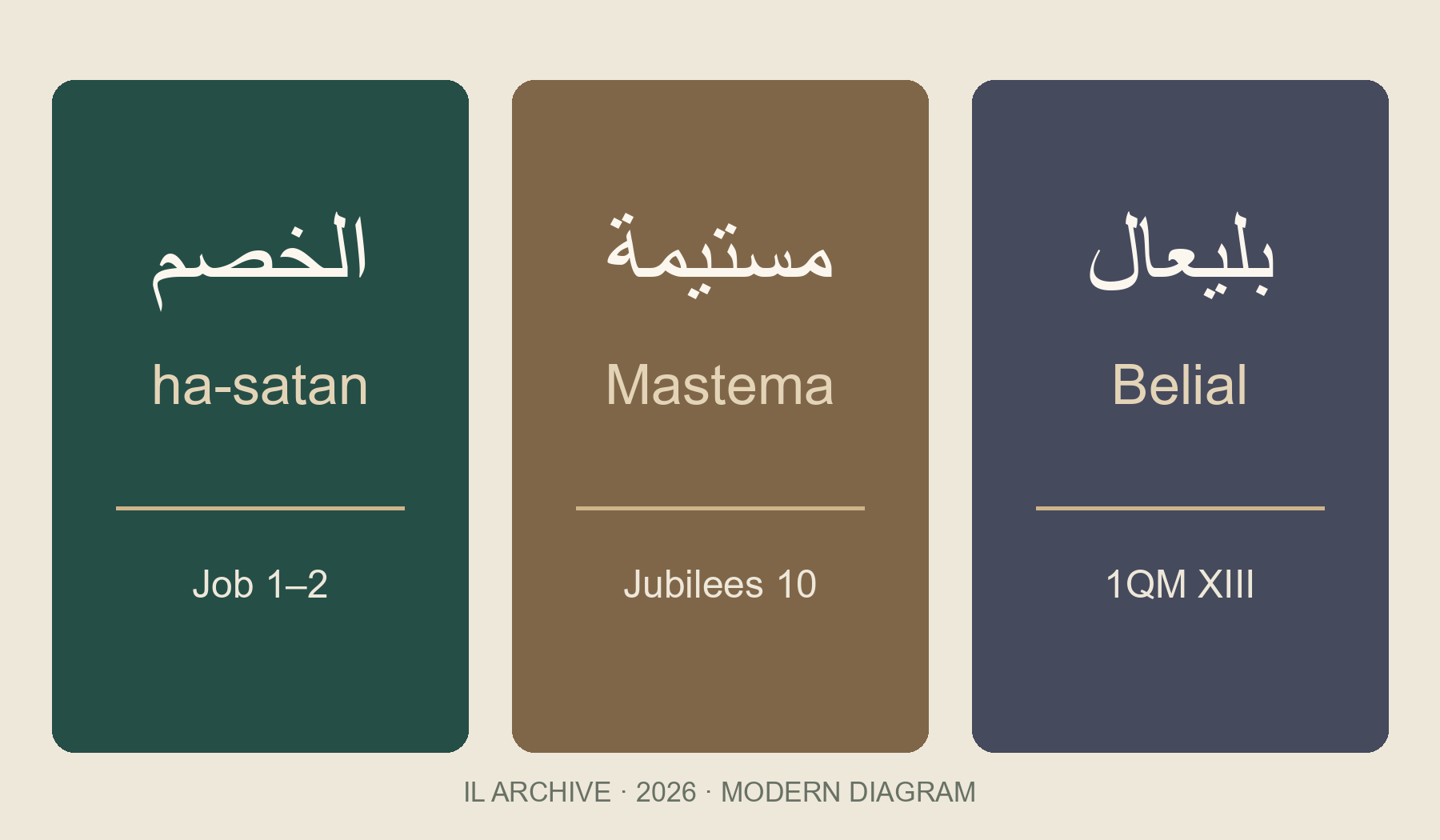
The Book of JubileesBook of JubileesJewish retelling of Genesis and Exodus framed as angelic teaching to Moses, adding chronology, narratives and interpretation.Glossary · Click to read the explanation, a Jewish retelling of Genesis dating broadly to the second century BCE, supplies another framework in 17:15–18. [19] After praise of Abraham, MastemaMastemaLeader of harmful spirits in Jubilees; requests some spirits and proposes Abraham’s test, subject to divine limits.Glossary · Click to read the explanation proposes testing his attachment to Isaac: would he offer the son he loves so much? The narrator stresses that God already knows Abraham's fidelity. A divine command beginning the account becomes a scene incorporating accusation or challenge in the heavenly world. [3]
Chapter 18 continues with journey, binding, intervention and ram. However, its angelic narrator says he stood before God and received God's command to stop Abraham. Mastema is put to shame by the father's demonstrated fidelity. His presence does not identify him as the rescuing angel: the passage distinguishes their roles. [4]
The text connects the location with ZionZionName of a stronghold linked to David's city in 2 Samuel, later extended to Jerusalem and its religious centre; its referent changes across texts.Glossary · Click to read the explanation, then makes a seven-day observance part of sacred memory prescribed in heavenly tablets. This adds calendrical and geographical meanings. Reading a historical translation does not place us before a text composed in Abraham's lifetime, and this account's identification with Zion does not independently locate Moriah archaeologically. [4]
Qumran: surviving words and restoration
QumranDead Sea ScrollsJudaean Desert manuscripts, especially Qumran cave finds. Biblical copies and other works reveal textual diversity; a copy’s age is not the work’s initial date.Glossary · Click to read the explanation, near the Dead SeaDead SeaThe Dead Sea is a salt lake in the Jordan Rift Valley, near sites where ancient manuscripts were foundGlossary · Click to read the explanation, is a site where ancient Jewish manuscripts were found. Joseph FitzmyerJoseph A. FitzmyerAmerican biblical and Dead Sea Scrolls scholar (1920–2016), who studied Qumran retellings of Abraham’s test.Glossary · Click to read the explanation discusses its fragmentary manuscript 4Q225: angels weep while Mastema's angels rejoice. Isaac's request to be bound includes editorial restoration after few surviving letters. He questions how far consent and atoning merit can be inferred. A fragmentary manuscript cannot establish every later development of the story. [5]
Josephus: the son speaks and agrees
The Jewish historian Flavius JosephusFlavius JosephusFirst-century Jewish historian who retold older narratives, including Abraham’s test, in Jewish Antiquities.Glossary · Click to read the explanation completed his Antiquities around 93 or 94 CE. In book 1, chapter 13, he gives the son a clearer role. [20] Isaac is twenty-five; Abraham explains the command in a speech, and Isaac accepts God's and his father's will and approaches the altar. This explicitly attests the son's consent in an ancient retelling, rather than extracting an absent statement from Genesis's silence. [6]
The intervening speech explains that obedience is tested rather than human blood desired. A ram appears; father and son embrace and return to SarahSarahAbraham's wife and Isaac's mother in Genesis; her story with Hagar and Ishmael appears in chapters 16 and 21, not in the Genesis 22 scene itself.Glossary · Click to read the explanation. Ethical meaning and the happy family's portrayal receive more detail here. Age, speeches and embrace belong to Josephus, even when later readers find them natural features of the original account. [6]
The comparison establishes a Jewish witness to the son's consent before Islam. It does not, by itself, identify how a particular detail reached Al Saffat. An earlier witness matters to transmission research but does not name a transmitter or the book-copy a later audience used.
From incident to the memory of prayer
The Mishnah, a collection of early Jewish oral teachings edited around 200 CE, invokes God's answer to Abraham on Mount Moriah in Ta'anit 2:4 [21] in a communal prayer asking that worshippers likewise be answered, alongside other religious memories. This ritualRitualAn organised or distinguished practice meaningful to a community; it may leave traces, but its form alone does not reveal an associated doctrine.Glossary · Click to read the explanation function exceeds retelling the ascent to the altar. [7]
The Babylonian Talmud took shape after the Mishnah over subsequent centuries, reaching a compiled form around the sixth century CE. In Rosh Hashanah 16a it connects the ram's horn with remembering Isaac's binding [22], counting it to worshippers as though they had bound themselves before God. The old scene becomes symbolic participation and a plea for remembrance, not a report that Isaac actually died. [8]
These functions differ from interpreting every offering as an animal bearing punishment for a human. Prayer, horn and remembrance require their particular texts. The dates when Mishnah and Talmud were compiled are not dates for the incident they recall.
Hebrews: resurrection in deliverance's meaning
Hebrews 11:17–19 presents Abraham as an example of faith. Under testing he offered Isaac, despite the promise of offspring through him, reasoning that God could raise the dead. His recovery of Isaac is described figuratively. This Christian reading relates the test to trust in the power to restore life. [9]
These are three verses of the epistle, not a new narrative asserting that the knife killed Isaac and God revived him. Their particular use also differs from every later Christian interpretation reading Isaac in light of Christ. Deliverance's significance can expand without changing Genesis's account of the intervention. [1][9]
Al Saffat: dream, conversation and shared surrender
In al-Saffat 37:99–113, a passage of the Qur'an that emerged in the seventh century CE, Abraham prays for a righteous child [23] and receives the announcement of a forbearing boy. When the boy reaches the stage of working or striving alongside him, the father relates his dream and asks his view. The son accepts and expresses readiness to be patient. The text then describes their surrender and the call announcing that Abraham has fulfilled the vision. [10]
The son's consent is therefore explicit in the Quranic dialogue, whereas Genesis does not record it in this form. The test is also introduced differently: a dream the father tells his son, rather than the command narrated at Genesis's opening. These structural differences can be described without judging a community's beliefs. [1][10]
Verse 37:107 speaks of ransom through a great sacrifice. It does not call the animal a ram, describe horns caught in vegetation, or locate the scene geographically. Isaac is explicitly named in 37:112, in an announcement of a righteous prophet. Precisely stated, the son within the sacrifice scene is unnamed; Isaac is not absent from the entire passage. [10]
Al Tabari: two opinions, preference for Isaac
The historian and Qur'anic commentator al-TabariAl-TabariAbbasid-era historian and Qur'anic exegete (c. 839–923 CE). His commentary records competing views on Abraham's son, then favors Isaac.Glossary · Click to read the explanation (d. 923 CE) collects reports identifying Isaac and others identifying IshmaelIshmaelSon of Hagar and Abraham in Genesis; later Muslim interpretation identified him with the unnamed son in Qur'an 37's sacrifice scene.Glossary · Click to read the explanation in his commentary on 37:107. [24] He then chooses Isaac, explaining his reading of the announcements and understanding the subsequent one to concern Isaac's prophethood. Early Islamic interpretation thus did not offer a single answer about the son's identity. [11]
A report attributed to an early figure within al Tabari's compilation is not a direct recording of that person's speech. Transmission chains, contradictions and compilation need separate scrutiny; the names cannot simply become votes in a historical poll. What this text directly establishes is that its author preserves disagreement and states his preference. [11]
The commentary also transmits details about the ram, location and ritual. They belong to the reports collected, rather than all appearing in Al Saffat's wording. Establishing each source's scope makes the differences intelligible research material.
Ibn Kathir: Ishmael and the sequence of announcements
Centuries later, the historian and commentator Ibn KathirIbn KathirSyrian Qur'anic exegete and historian (c. 1301–1373 CE) who favors Ishmael in his reading of the sacrifice account.Glossary · Click to read the explanation (d. 1373 CE) prefers Ishmael in his reading of 37:101. [24] He invokes the elder son, Isaac's announcement after the sacrifice scene, and the promise of Jacob within his interpretation of the descendants' sequence. He treats the Isaac identification as influenced by biblical reports. These are interpretive arguments, not a name that the verse itself supplies for the boy. [12]
His discussion includes an accusation that the name was changed in the TorahTorah / PentateuchGenesis, Exodus, Leviticus, Numbers and Deuteronomy: Mosaic corpus with a compositional history. Torah can also mean teaching or law beyond these five books.Glossary · Click to read the explanation. The archive reports the commentator's position without adopting it as an established textual-critical result. The passage supplies no earlier manuscript naming Ishmael and a later copy substituting Isaac. The announcement-sequence argument also does not erase al Tabari's different reading. [11][12]
Younus Y. MirzaYounus Y. MirzaScholar of Arabic and Islamic studies whose work compares biblical and Qur'anic narratives; published a 2013 study of Abraham's intended sacrifice.Glossary · Click to read the explanation relates Ibn TaymiyyaIbn TaymiyyaHanbali Muslim scholar (1263–1328) based in Damascus, who wrote on interpretation, law and theology; modern research considers his influence on identifying Abraham's son in the sacrifice story.Glossary · Click to read the explanation's and Ibn Kathir's influence to the spread of the Ishmael reading, noting their biblical and linguistic arguments. Here page 277, including abstract and introduction, was consulted, not the whole article. [13]
Iphigenia: an animal substitute in a Greek story
In the opening of the Greek playwright EuripidesEuripidesFifth-century BCE Greek tragedian, died 406 BCE. In his Iphigenia among the Taurians, the heroine recounts a deer substituted for her.Glossary · Click to read the explanation' Iphigenia among the Taurians, probably performed around 414–412 BCE, IphigeniaIphigeniaMythic and dramatic daughter of Agamemnon. In Iphigenia among the Taurians, Artemis rescues her at the altar and substitutes a deer.Glossary · Click to read the explanation recounts [25] how her father AgamemnonAgamemnonFigure of Greek narrative, commander of the expedition to Troy and Iphigenia's father in Euripides; the play does not independently establish his historicity.Glossary · Click to read the explanation, the fleet's commander in the play, had her brought to AulisAulisAncient place on the Boeotian coast near the Euripus Strait in Greece; setting of Iphigenia's Greek story and site of a fifth-century BCE Artemis temple.Glossary · Click to read the explanation under a marriage pretext. ArtemisArtemisGoddess of hunting in Greek traditions and Apollo’s sister, named among the divine company in the Iliad.Glossary · Click to read the explanation removes her from slaughter, leaves a deer in her place and carries her to TaurisTaurisAncient Greek name for Taurian territory on the Black Sea, associated with today's Crimean peninsula; the setting of Euripides' Iphigenia play.Glossary · Click to read the explanation, on the Black Sea in what is now the Crimean peninsula. Father, daughter, altar, divine intervention and animal replacement form a structure worth comparing. [14]
Yet the crisis concerns the Greeks' stalled expedition and the goddess's demand, rather than Abraham's promised descendants or testing in Genesis. The heroine moves to another land as a priestess; Genesis's son remains within the family's promise. Deliverance performs different functions as characters, crisis and ending change. [1][14]
Raleigh HethRaleigh HethScholar of ancient Mesopotamian and eastern Mediterranean literature; co-authored a 2021 comparison of Isaac and Iphigenia.Glossary · Click to read the explanation and T. E. KelleyT. E. KelleyCo-author with Raleigh Heth of a 2021 article on Isaac and Iphigenia; the published record gives only the initials T. E.Glossary · Click to read the explanation examine possible relations between the stories in a modern study. Only its abstract was consulted here, so it cannot establish a particular direction of borrowing. [15]
Narrative, legislation and practice are different witnesses
Intervention and replacement can be read as redirecting sacrifice, but dating a social prohibition requires other evidence. Deuteronomy 12:31 rejects burning sons and daughters for gods; Jeremiah 7:31 attacks the practice at Tophet. Their statements differ in kind from a story of a father tested and then stopped. [16][17]
Combining these texts cannot establish that one practice disappeared everywhere on a particular day. Legal wording, prophetic accusation and literary scene each provide a kind of knowledge. Actual practice requires independent social and archaeological context.
Likewise, the passages studied provide no demonstrated chain tracing Abraham's story to a particular Mesopotamian narrative. Human offerings and substitutes can be compared across settings, but a specified origin requires an earlier text with precise similarities, chronology, contact and a plausible channel of circulation. A shared word for sacrifice or an endangered child does not settle the question.
What can be traced?
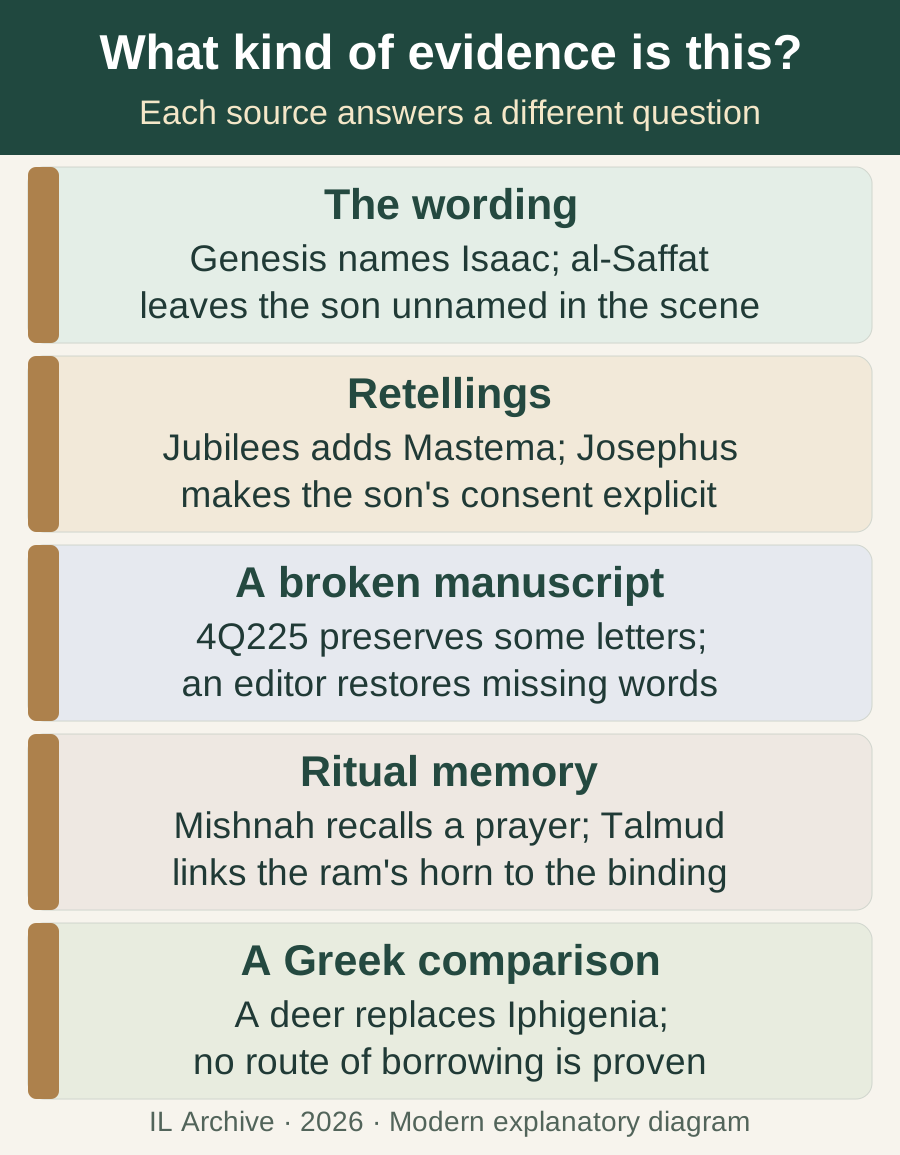
Identifiable differences occur in the texts. Genesis names Isaac, halts the act and supplies a ram; Jubilees adds Mastema and an angelic framework; Josephus records the son's assent; prayer recalls his binding; Hebrews reads deliverance through the power to resurrect; Al Saffat presents dream, dialogue, surrender and ransom, followed by exegetical disagreement over identity. This maps reception rather than treating every stage as one witness. [1][3][4][6][7][8][9][10][11][12]
Three limits remain: a restored fragment is not a complete text; dating a later retelling does not date Abraham's life; and an earlier occurrence of a meaning does not alone establish its route to a newer text. Keeping these limits lets the story reveal changing reflection on testing, sonship, deliverance and memory without turning comparison into accusation or doctrinal defence.
References and notes
- Complete chapter; binding verb 22:9. Genesis 22:1–24; KJV; Hebrew 22:9 checked at Sefaria Return to the text ↑
- The other son and promise. Genesis 21:9–21; KJV Return to the text ↑
- Complete passage; webpage heading misnumbered. Jubilees 17:15–18; R. H. Charles 1902 Return to the text ↑
- Complete chapter; angelic roles distinguished. Jubilees 18:1–19; Charles 1902 Return to the text ↑
- Full main text; restoration limits. Joseph A. Fitzmyer, The Sacrifice of Isaac in Qumran Literature, Biblica 83(2002),211–229 Return to the text ↑
- Specified chapter complete. Josephus, Antiquities 1.13.1–4; Whiston historical translation Return to the text ↑
- Communal prayer formula. Mishnah Ta’anit 2:4; Hebrew and William Davidson English Return to the text ↑
- Ram’s horn and remembrance. Babylonian Talmud, Rosh Hashanah 16a, paragraph 16; Rabbi Abbahu Return to the text ↑
- Allthree verses. Hebrews 11:17–19; KJV Return to the text ↑
- Al Saffat 99–113. Quran, Al Saffat 37:99–113; Arabic text Return to the text ↑
- Both opinions and al Tabari’s preference. Al Tabari, Jami‘ al bayan, commentary on 37:107 Return to the text ↑
- Arguments for Ishmael. Ibn Kathir, Tafsir al Quran al ‘azim, commentary on 37:101 Return to the text ↑
- Page 277 only; not whole article. Younus Y. Mirza, Ishmael as Abraham’s Sacrifice, Islam and Christian–Muslim Relations 24/3(2013),277–298; onlyp 277 Return to the text ↑
- Specified opening scene. Euripides, Iphigenia in Tauris, opening 1–41; Gilbert Murray historical translation Return to the text ↑
- Publisher abstract only. Raleigh Heth and T. E. Kelley, Isaac and Iphigenia, Biblica 102/4(2021),481–502; DOI 10.2143/BIB.102.4.3290253; abstract Return to the text ↑
- Prohibition in specified verse. Deuteronomy 12:31; KJV Return to the text ↑
- Specified prophetic accusation. Jeremiah 7:31; KJV Return to the text ↑
- Tapestry identity and rights. The Sacrifice of Isaac; Met 64.101.1282; probably 1561–1613 Return to the text ↑
- Oxford Bibliographies introduction only: Jubilees is dated to the second century BCE; its full bibliography was not read. Introduction only; second-century BCE dating. Return to the text ↑
- Introduction extract only: Antiquities was completed around 93 or 94 CE. Introduction extract; date of Josephus' Antiquities. Return to the text ↑
- Visible introductory passage only: around 200 CE dates the Mishnah's editing, not every tradition it contains. Introductory passage; editing around 200 CE. Return to the text ↑
- Only the opening identification was read: the Babylonian Talmud was compiled around the sixth century CE, across a longer process. Opening passage; compilation around sixth century CE. Return to the text ↑
- Publisher description only: seventh-century setting of the Qur'an; the book itself was not read. Publisher description; seventh-century context. Return to the text ↑
- Brill preview only: death dates of al-Tabari (923 CE) and Ibn Kathir (1373 CE); the chapter was not read in full. Preview only; death-date identifications. Return to the text ↑
- Chapter abstract only: the play was probably staged around 414–412 BCE. Abstract only; probable performance date. Return to the text ↑
Research history
Substantive changes are retained here. Minor copy edits remain in the internal operational log.
-
Substantive record update
-
Substantive record update
-
Substantive record update
-
Substantive record update
-
Substantive record update
-
Substantive record update
-
Substantive record update
-
Substantive record update
-
Substantive record update
-
Substantive record update
Suggest a correction · Suggest a source for this record
Cite this record
IL Archive, «The son and the sacrifice: how Abraham’s story changed», Edition 11, https://ilarchive.com/en/studies/abraham-sacrifice-and-retellings
Continue reading