Study
Solomon, spirits and birds: from Kings to the Talmud and Quran
An extended study of a topic, with evidence and references.
Wisdom, rings, Ashmedai and the queen: texts and dates, from Josephus and the Testament of Solomon to birds, subjugation and the limits of unseen knowledge.
Share article
Text
Introduction
How did Solomon's image expand from the wise king in Kings to a ruler who hears birds and commands spirits in other narratives? This study compares Kings, Josephus, the Testament of SolomonTestament of SolomonA Greek pseudepigraphal text about Solomon commanding spirits and building the Temple, preserved in different forms.Glossary · Click to read the explanation, the Talmud, Targum Sheni and the QuranQuranCentral text of Islam, used here as evidence of its religious discourse.Glossary · Click to read the explanation. It asks what each detail does in its own story, when its witness reaches us, and how far the parallels support a historical connection. The question concerns the history of narratives and Solomon's changing image, not a judgment on their communities' beliefs.
A king who can hear what others cannot
In Al Naml, SolomonSolomonSolomon is the biblical king, David’s son, associated in Kings with Jerusalem and building the templeGlossary · Click to read the explanation notices the hoopoe’s absence, hears an ant’s warning, and asks for a queen’s throne to be brought from ShebaSaba: the ancient South Arabian kingdomAn ancient South Arabian kingdom centered in present-day Yemen and prominent in the first millennium BCE; its attestation does not establish the Queen of Sheba's biography.Glossary · Click to read the explanation. In Saba, jinn work before him, and his death reveals that they do not know the unseen. This is more than a portrait of a successful king: his authority exceeds human limits, yet remains a divine gift and a test of gratitude. [6][7]
Centuries separate these witnesses. Kings describes Solomon's wisdom; the Jewish historian Josephus links him to exorcism in the late first century CE. The Greek Testament of SolomonTestament of SolomonA Greek pseudepigraphal text about Solomon commanding spirits and building the Temple, preserved in different forms.Glossary · Click to read the explanation tells of a ring and spirits under royal command, while the Talmud, Targum Sheni and Quran present the bird and the queen in different ways. We will read each account in its setting before comparing its details. [1][2][3][4][6][17]
In Kings: wisdom before the ring
In 1 Kings 3, Solomon asks for an understanding heart to judge the people and distinguish good from evil. The story of the two women and the child then makes just judgment evidence of his God-given wisdom. In 4:29–34, his knowledge extends to trees, animals, birds, reptiles, and fish; people come to hear him. [1]
The passage says, however, that he spoke about these creatures. These verses do not describe a conversation with a hoopoe or understanding ants’ speech. Knowledge of animals differs from understanding their words. Later expansions can give wisdom a broader meaning, but we should not attribute their scenes to the earlier verse itself. [1]
The queen in Kings: a visit, questions, and gifts
In 1 Kings 10:1–13, the Queen of ShebaQueen of ShebaThe ruler in narratives of Solomon's encounter with Sheba; neither First Kings nor the Quran gives her a personal name, and her historical identification is unresolved.Glossary · Click to read the explanation comes to JerusalemJerusalemJerusalem is a city of religious importance in Judaism, Christianity and IslamGlossary · Click to read the explanation to test Solomon with difficult questions, bringing gold, spices, and precious stones. He answers her, and she observes his wisdom, palace, and court arrangements. After an exchange of gifts, she returns to her country. [1]
This is a specific narrative unit. It has no hoopoe carrying a letter, transportation of the queen’s throne, or glass palace. Their absence here leaves room for later histories of these details; it prevents us from saying that the whole Al Naml story appears identically in Kings.
Josephus: an early witness to Solomon and exorcism
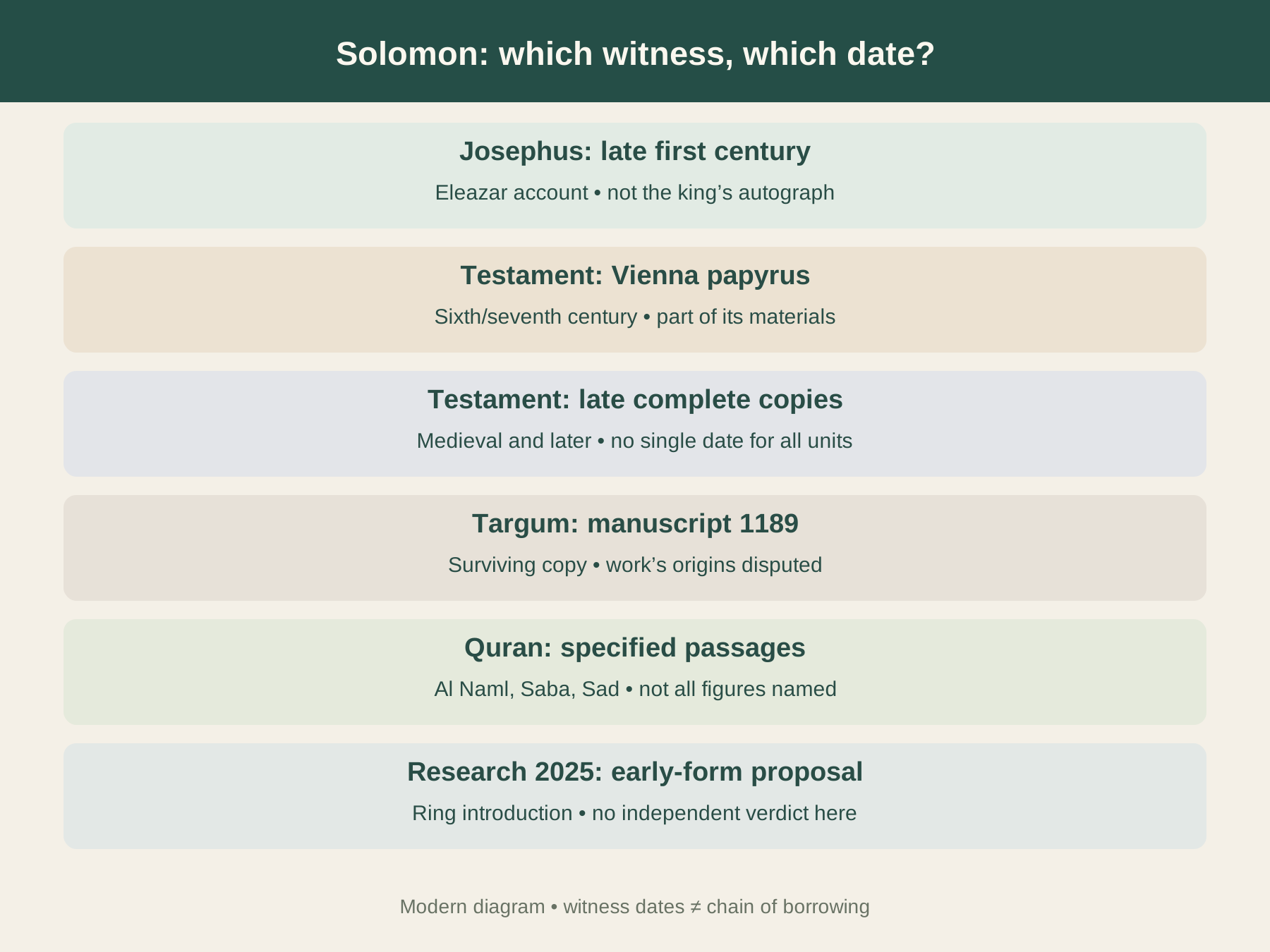
In the late first century CE, JosephusFlavius JosephusFirst-century Jewish historian who retold older narratives, including Abraham’s test, in Jewish Antiquities.Glossary · Click to read the explanation associates Solomon’s wisdom with knowledge that expels harmful spirits, and says he left incantations and methods of healing. He then reports watching a Jewish man named EleazarEleazar in Josephus's exorcism reportA Jewish man whose exorcism Josephus says he witnessed before Vespasian; distinct from the biblical Eleazar son of Aaron.Glossary · Click to read the explanation perform an exorcism before VespasianVespasianRoman emperor from 69 to 79 CE; Josephus names him among the audience of an exorcism linked to Solomon.Glossary · Click to read the explanation and his company. [2]
In this description, Eleazar’s ring holds a root placed near the afflicted person’s nose; formulas attributed to Solomon are invoked. The spirit is told to overturn a vessel of water so that the spectators can see evidence of its departure. We are reading Josephus’s literary testimony about a practice linked to Solomon. This text alone gives us neither independent modern verification of the incident nor a book written by the historical king. [2]
The available extract of Dennis C. DulingDennis C. DulingScholar of ancient Jewish and Christian texts who studied the Solomon-as-exorcist tradition.Glossary · Click to read the explanation’s study stresses the account’s function in Josephus’s address to Greek and Roman readers. It directs attention to literary purpose alongside the event’s details. [14]
The Testament of Solomon: spirits working on the Temple
In the Testament of Solomon, as presented in ConybeareF. C. ConybeareBritish scholar and translator (1856–1924) who published the Testament of Solomon in 1898.Glossary · Click to read the explanation’s translation published in 1898, OrniasOrniasA harmful spirit named in the Greek Testament of Solomon, whose capture begins the ring-and-Temple narrative.Glossary · Click to read the explanation harms a boy working on the Temple. Solomon prays; MichaelMichael / MīkālTheophoric name asking who is like God; borne by humans and a heavenly figure in Daniel. It establishes no former Canaanite deity.Glossary · Click to read the explanation brings a ring granting power to subject spirits. Ornias is captured, their ruler is summoned, and a sequence of interrogations and imposed tasks begins. [3]
The king asks each spirit’s name, the harm it causes, and the authority that defeats it. He uses some of these beings to cut stones and make construction materials. The narrative combines the wise king and builder with knowledge of invisible powers’ names. This is the significant structural resemblance to accounts of subjugation, rather than an identity of every name or task.
This ring is not Eleazar’s ring in Josephus. One is an instrument in an exorcism report; the other an angelic gift in a story of commanding multiple beings. Similar instruments do not make the two accounts the same incident. [2][3]
The Testament cannot easily be given a single date
Sarah L. SchwarzSarah L. SchwarzReligion scholar who has studied the textual diversity and demonology of the Testament of Solomon.Glossary · Click to read the explanation distinguishes early Solomonic traditions from the composite book in its late complete forms. An incantation or Solomon’s name does not establish that all its chapters circulated together. [11]
NASSCAL’s catalogue records a sixth- or seventh-century papyrus fragment in Vienna, alongside medieval and later copies. Preservation of part of the work’s material is not preservation of the entire book; a copy’s date is not the story’s invention date. [12]
In the introduction to a 2025 book, Ittai GradelIttai GradelRoman historian (1965–2026) and coauthor of a study of rings bearing a Solomonic formula.Glossary · Click to read the explanation and Nils Arne PedersenNils Arne PedersenAarhus University scholar of church history and early Christian literature, coauthor of a study of Solomonic rings.Glossary · Click to read the explanation propose that inscriptions on ten third-century rings attest an early Solomon narrative. This is a new proposal. Our reading here covers the available introduction, not the chapters examining the rings, so we do not present it as an independently established dating verdict. [13]
Christ within Solomon’s story
Conybeare’s version refers to Emmanuel, virgin birth, and crucifixion, describing powers defeated through an authority associated with Christ. These belong to the preserved form we are reading. We cannot present all of it as a pre-Christian Jewish book untouched by editing. [3]
Nor does this version represent all Christians’ beliefs. A pseudepigraphal text attributed to a biblical figure can bring together different settings and practices. According to its available abstract, Michael BeshayMichael BeshayScholar of late-antique religions who studies traditions about Mary and Solomon across communities.Glossary · Click to read the explanation’s study explores a possible link between the “air-column” unit and Byzantine building culture. This illustrates why individual units also require dating. [16]
Ashmedai: building the Temple and seeking the shamir
In Gittin 68a, a passage of the Babylonian TalmudBabylonian TalmudA large rabbinic compilation in Hebrew and Aramaic, formed in Mesopotamia through stages; its final redaction remains debated.Glossary · Click to read the explanation, Solomon seeks a way to cut Temple stone without iron. The Talmud is a large collection of rabbinic discussions and stories whose material was formed and edited in stages in late antiquityLate antiquityHistorical frame for late ancient transformations; boundaries vary by region and subject.Glossary · Click to read the explanation. [4][20] The search for the shamirThe shamir in the Talmudic storyA remarkable stone-cutting creature in Gittin 68's Temple-building story, not an identified archaeological tool.Glossary · Click to read the explanation, the story’s extraordinary cutter, leads to AshmedaiAshmedaiThe 'king of demons' in the Babylonian Talmud's Gittin 68 story about Solomon and the shamir.Glossary · Click to read the explanation, king of the demons. BenaiahBenaiah son of JehoiadaA court figure in Kings under David and Solomon, reused in the Talmudic tale as the man who brings Ashmedai.Glossary · Click to read the explanation brings him to the king after a trick involving wine and a chain bearing the divine name. This Talmudic tale expands a building question into a story of authority over spirits. [4]
A bird and glass: resemblance needs its context
In 68b, Ashmedai identifies a bird guarding the shamir. Glass covers its chicks; it brings the cutter to open it, and Solomon’s messenger takes it. Later Ashmedai deprives Solomon of power when the king removes his bonds and gives him the ring. The unit ends with differing views about whether Solomon recovered his kingship. [5]
The modern translation calls the bird a “wild rooster” and mentions the dukhifat and hoopoe. Here the glass covers a nest, not a palace floor; the bird brings a stone cutter, not news from Sheba. A bird, glass, and Solomon in two accounts justify comparison. Treating them as the same scene erases a fundamental difference. [5][6]
Targum Sheni of Esther: another witness to the queen
In Targum Sheni of EstherTargum Sheni of EstherAn Aramaic translation and expansion of Esther containing an excursus on Solomon and the Queen of Sheba.Glossary · Click to read the explanation, an AramaicAramaicA group of Northwest Semitic language varieties with a long history across the Near East.Glossary · Click to read the explanation retelling and interpretation of Esther, Solomon displays animals, birds, and spirits before other kings. We use the appendix in the 1888 English edition of Paulus CasselPaulus CasselGerman theologian and writer (1821–1892) whose Esther commentary included an appendix on the Second Targum.Glossary · Click to read the explanation's commentary on Esther; Aaron BernsteinAaron Bernstein (translator of Cassel)Named translator of the 1888 English edition of Paulus Cassel's Esther commentary.Glossary · Click to read the explanation translated the book into English. [17][21] A “cock of the wood” is absent, then reports a land ruled by a queen. The bird carries a letter threatening her and demanding submission; she sends gifts and visits Solomon. She mistakes his glass chamber for water, raises her clothing, and subsequently tests him with riddles. [17]
The parallels with Al Naml are more specific than a royal visit: an absent bird, a letter, gifts, and glass mistaken for water. Yet the Targum’s display, riddles, and comment about the queen’s legs differ from the Quranic context. The Quran says nothing about hair on her legs. [6][17]
Jillian StinchcombJillian StinchcombScholar of biblical reception who studies the Queen of Sheba across Jewish, Christian and Muslim traditions.Glossary · Click to read the explanation notes a manuscript dated 1189 and a proposed seventh-century origin for the Targum, within wider disagreement. She proposes shared discourse rather than established direct dependence. The surviving manuscript is late; the narrative’s origins and the direction of its relationship are separate questions. [18]
The Quran: knowledge as a gift calling for gratitude
Al Naml 27:15–19 begins with knowledge granted to David and Solomon, then mentions the speech of birds and troops of jinn, humans, and birds. Hearing the ant, Solomon smiles and prays to give thanks and act rightly. This places his capacity in relation to its giver, rather than as an independent possession. [6]
The hoopoe then brings news of something Solomon had not encompassed: a woman rules Sheba, where people worship the sun. The king asks for verification, and the story proceeds through a letter, the queen’s consultation, and gifts. The bird matters not merely because it speaks, but because its knowledge requires the king’s examination. This is an inference from the narrative’s organization. [6]
The throne and palace: figures the text does not name
An ifrit among the jinn offers to bring the throne, but the figure accomplishing the task in 27:40 is described as having knowledge from the Book, without a personal name in the verse. Nor do these verses call the queen Bilqis. We should distinguish this wording from names circulating in later interpretive narratives. [6]
Seeing the throne, Solomon attributes it to his LordRabbTitle of lordship, ownership or care by context; applied to God in Lord of worlds.Glossary · Click to read the explanation’s favor and a test of gratitude. The queen approaches the palace, mistakes glass for water, and declares submission with Solomon to God. This unit does not narrate their marriage or make her a demon because of her legs. Reading within its bounds prevents an automatic merger with every later account of the encounter. [6]
The jinn are workers, but do not know the unseen
Al Anbiya 21:78–82 mentions David and Solomon judging a field dispute, the subjected wind, and beings diving and working for Solomon. Saba 34:12–14 describes wind, molten copper, and jinn making sanctuaries, images, and vessels, before turning to his death. These verses do not specify a building project identical in detail to the Testament’s Temple scenes. [10][7]
A creature of the earth eats his staff; his death becomes apparent, exposing the jinn’s inability to know the unseen. On a literary reading, their continuing work becomes the means of revealing limits to their knowledge. Being subjected does not make these workers omniscient. This ending differs from interrogating spirits for their knowledge in the Testament. [7][3]
A lost ring is not the verse’s wording
Sad 38:34 says Solomon was tested and a body cast upon his throne; he then turned back. The verse neither names this body Ashmedai nor tells of a stolen ring. A Talmudic story of losing kingship does not automatically fill this brevity. Interpreting the body is another question requiring a history of commentary. [8][5]
Sad subsequently mentions wind, builders, divers, and bound beings. Al Baqarah 2:102 denies Solomon’s disbelief, attributing disbelief to the devils teaching magic. This differs from Solomon’s ending in 1 Kings 11 and Conybeare’s version, where religious deviation causes his loss of favor. Comparison records the difference; it does not pronounce a religion true or false. [8][9][1][3]
Mesopotamia: older magic or a specific historical connection?
Older traditions of protection and exorcism do not establish that Solomon’s story was borrowed from a particular Sumerian tablet. We need comparable texts, a route of contact, and appropriate chronology, rather than replacing one king’s name with another. Even “BabylonBabylonBabylon is an ancient city in central present-day Iraq, south of BaghdadGlossary · Click to read the explanation” in Al Baqarah 2:102 does not identify a Sumerian book as the source of Solomon narratives. [9]
According to the chapter abstract we read, Richard KalminRichard KalminProfessor of Talmud and rabbinics who studies rabbinic narratives and Jewish Babylonia.Glossary · Click to read the explanation proposes the movement of elements from the Roman East to Babylonian Jewish settings in late antiquity. This is a specific connection open to investigation, distinct from deriving every account from one Mesopotamian origin. We did not read the full chapter here. [15]
What does the comparison establish?
The witnesses establish that Solomon was associated with extensive wisdom, appears centuries before the Quran in an exorcism account, and elsewhere commands invisible beings. Some bird, queen, and building scenes have clear parallels. These do not by themselves establish the transmission of a particular Greek or Talmudic version into a particular Quranic formulation.
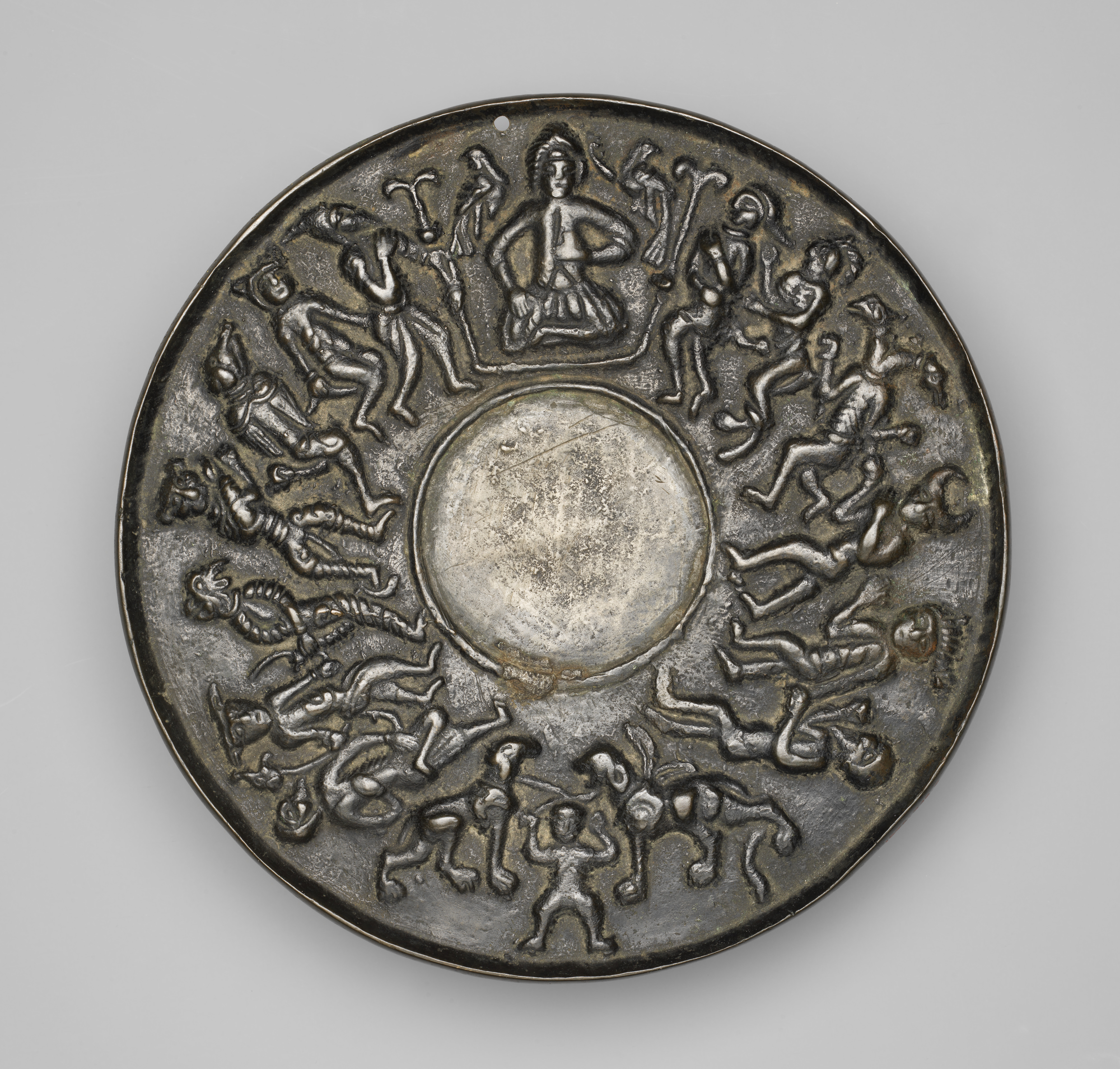
The cover is a medieval bronze mirror whose scene the Metropolitan Museum interprets as Solomon and his demons. It witnesses artistic reception, not the historical king’s appearance or the Quran’s composition date. [19]
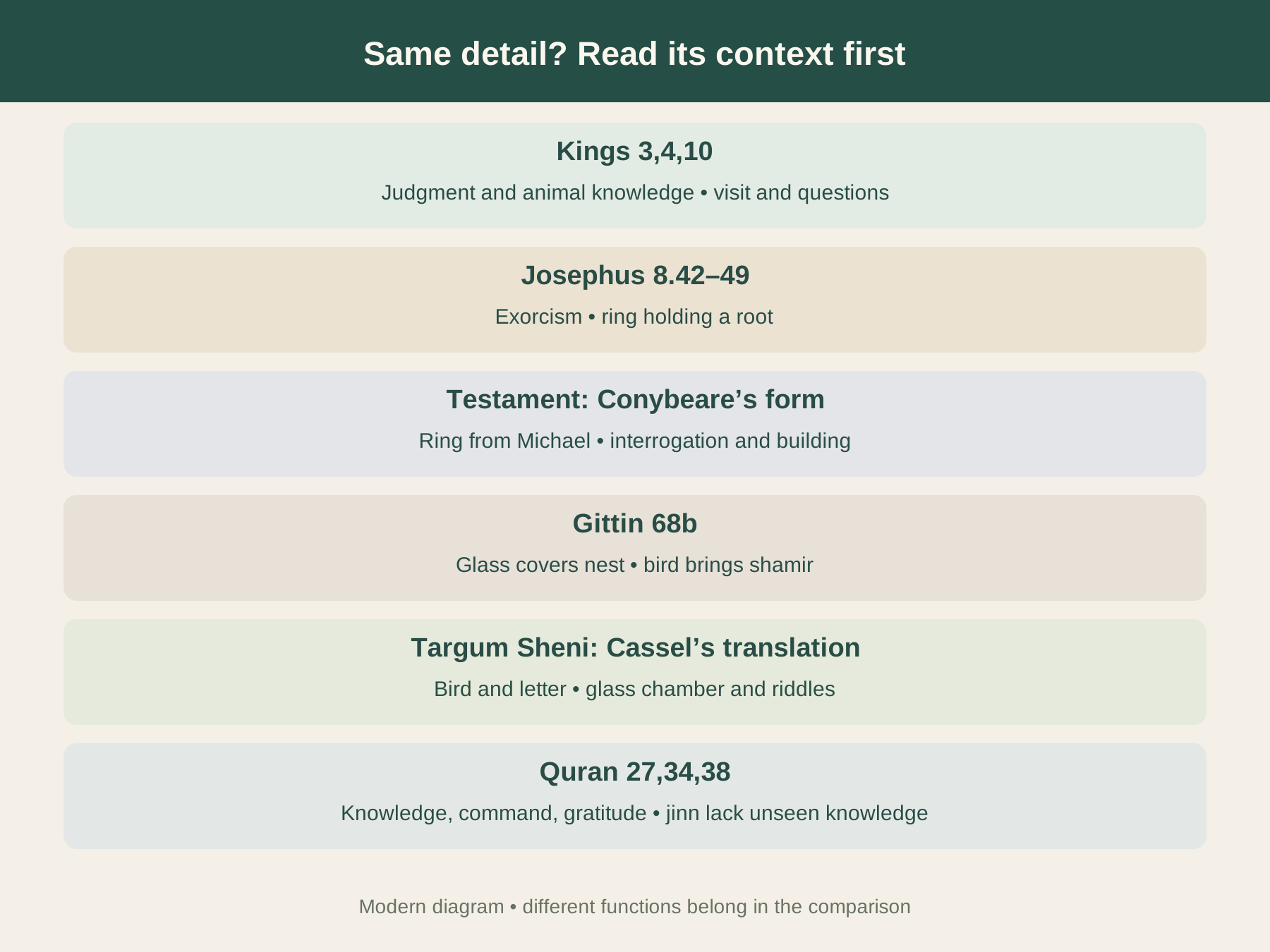
A more precise inquiry follows how texts reshaped a wise king around knowledge, building, subjugation, the limits of authority, and gratitude. Resemblance opens research; difference forms part of the evidence. Without that distinction, a broad narrative network becomes a simple transmission chain unsupported by our surviving record.
References and notes
- Wisdom, queen and the king’s ending. 1 Kings 3:5–28; 4:29–34; 10:1–13; 11:1–13; KJV Return to the text ↑
- Solomon’s wisdom and Eleazar account. Josephus, Antiquities 8.42–49 (= 8.2.5); Whiston translation Return to the text ↑
- Historical translation of a specified form. F. C. Conybeare, The Testament of Solomon, JQR 11 (1898), 1–45; selected §§1–22, 65–82, 119–130 Return to the text ↑
- Shamir and Ashmedai. Babylonian Talmud, Gittin 68a:7–13; William Davidson Edition Return to the text ↑
- Bird’s nest and loss of kingship. Babylonian Talmud, Gittin 68b:1–20; William Davidson Edition Return to the text ↑
- Al Naml15–44. Quran 27:15–44; Arabic text Return to the text ↑
- Work, death and knowledge’s limits. Quran 34:12–14; Arabic text Return to the text ↑
- Body and subjugation. Quran 38:30–40; Arabic text Return to the text ↑
- Solomon and magic. Quran 2:102; Arabic text Return to the text ↑
- Judgment, wind and work. Quran 21:78–82; Arabic text Return to the text ↑
- Tradition and composite book. Sarah L. Schwarz, Reconsidering the Testament of Solomon, JSP 16.3 (2007), 203–237; selected pages Return to the text ↑
- Manuscript catalogue. e-Clavis, Testament of Solomon; manuscript catalogue Return to the text ↑
- Available introduction only. Ittai Gradel and Nils Arne Pedersen, The Lost Novel of King Solomon and the Demons (2025), introduction, 1–4 Return to the text ↑
- Extract and literary purpose. Dennis C. Duling, The Eleazar Miracle and Solomon’s Magical Wisdom, HTR 78 (1985), 1–25; extract only Return to the text ↑
- Chapter abstract only. Richard Kalmin, The Demons in Solomon’s Temple, Migrating Tales (2014), 95–129; abstract only Return to the text ↑
- Study abstract only. Michael Beshay, Solomon the Builder, Journal of Late Antiquity 14.2 (2021), 471–497; abstract only Return to the text ↑
- Historical translation, not its old commentary. Paulus Cassel, An Explanatory Commentary on Esther (1888), Appendix I, The Second Targum, §IV, 275–283 Return to the text ↑
- Read chapter and Targum dating. Jillian Stinchcomb, The Queen of Sheba in the Qur’an and Late Antique Midrash (2021), 85–96 Return to the text ↑
- Object and public-domain image. Metropolitan Museum, Mirror 1978.348.2; 12th–13th century; public domain Return to the text ↑
- The chapter's section on dating was read. Scholars differ on the Talmud's development and final redaction, so the text is situated broadly in late antiquity without a single fixed year. The whole book was not read. Monika Amsler, The Babylonian Talmud and Late Antique Book Culture (2023), chapter 3, dating section only Return to the text ↑
- Bibliographic metadata names Cassel and English translator Aaron Bernstein; the catalogue entry is not a reading of the book. CiNii Books, catalogue entry for Cassel, An Explanatory Commentary on Esther (1888); metadata only Return to the text ↑
Research history
Substantive changes are retained here. Minor copy edits remain in the internal operational log.
-
Substantive record update
-
Substantive record update
-
Substantive record update
-
Substantive record update
Suggest a correction · Suggest a source for this record
Cite this record
IL Archive, «Solomon, spirits and birds: from Kings to the Talmud and Quran», Edition 5, https://ilarchive.com/en/studies/solomon-spirits-and-animals
Continue reading