Modern AI-generated conceptual cover showing an imagined cave entrance, plant imprints and a cereal mortar. This is not a photograph of Raqefet, an excavated object, or a verified reconstruction
Site
A Mount Carmel cave with a multigenerational Natufian cemetery. Plant impressions in four graves support a flowering-plant lining, whereas the proposed brewing function of three mortars remains contested.
Name variants: Raqefet, Raqefet Cave
Context and sources →

Modern AI-assisted illustration of a level balance, evoking impartiality in the Menog i Khrad. Neither a portrait of Rashn nor an excavated balance; the empty pans are a visual choice, not a textual detail
Entity
Rashn is a Zoroastrian divine being linked to uprightness and discerning truth; the Menog i Khrad presents him as an impartial weigher who favors no ruler.
Name variants: Rashn, Rashnu
Context and sources →

Modern generated expressive cover: dawn light on an uninscribed rock and imagined highlands evoke the South Arabian epigraphic context; not a genuine Ḥimyarite inscription or documented place
Entity
A divine designation written rḥmnn in Late South Arabian inscriptions, especially in Ḥimyar (fourth–sixth centuries CE), used in Jewish and Christian contexts; its referent is not always unambiguous.
Name variants: Raḥmānān, Rahmanan, rḥmnn
Context and sources →
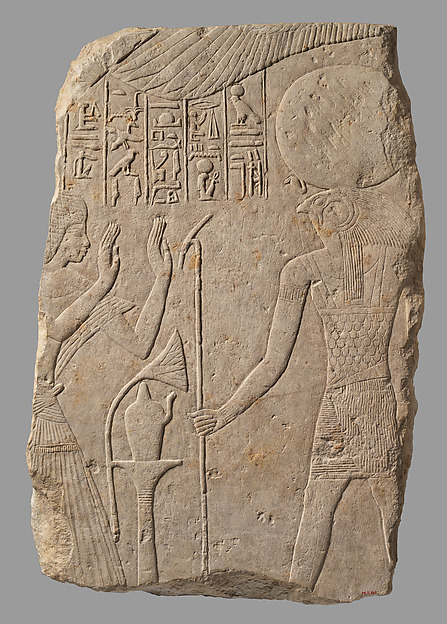
Pay raises his hands before Re-Harakhty, shown with a falcon’s head and solar disk, in a limestone stela fragment from Saqqara. The Met dates the object to about 1328–1318 BCE; inventory 04.2.527
Entity
Re is the Egyptian sun god, associated with creation, life and renewal of cosmic order
Name variants: Ra
Context and sources →
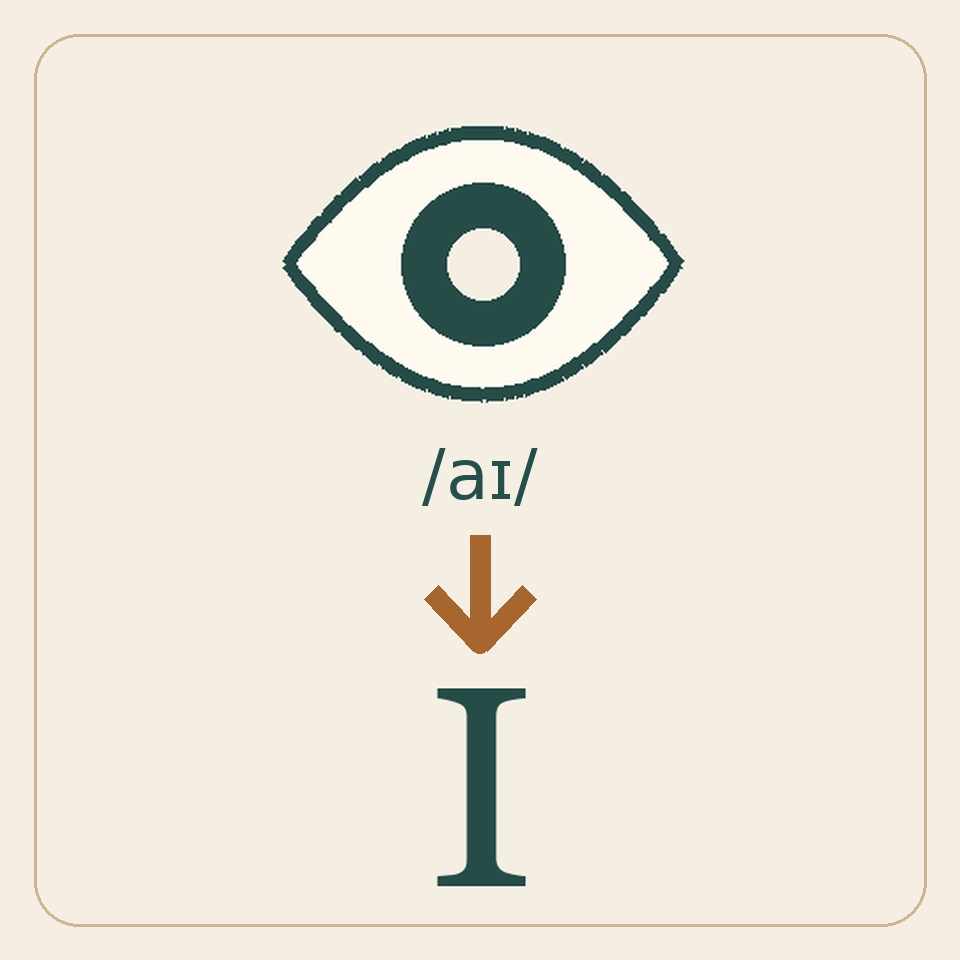
Modern editorial adaptation of an IL Archive diagram: an eye stands for English I through the shared sound /aɪ/. This is not a historical tablet or ancient sign
Entity
A writing principle in which a sign for one word is reused to write another word of similar pronunciation but different meaning; visual similarity alone does not prove an early phonetic use.
Name variants: rebus principle, rebus
Context and sources →
Person
Researcher in ancient West Asian material and visual culture who has studied standards and symbols in Mesopotamian art.
Name variants: Renate Marian van Dijk-Coombes, Renate van Dijk-Coombes
Context and sources →

Modern AI-generated conceptual cover: dawnlight, a new sprout, and luminous human figures symbolize revival and transformation. Neither an ancient artefact nor an established portrayal of resurrection
Entity
Resurrection: the hope of the dead returning to life through divine action. Ancient traditions differ on who rises, what embodiment means, and how this relates to judgment or cosmic renewal.
Name variants: resurrection, resurrection of the dead, raising the dead
Context and sources →
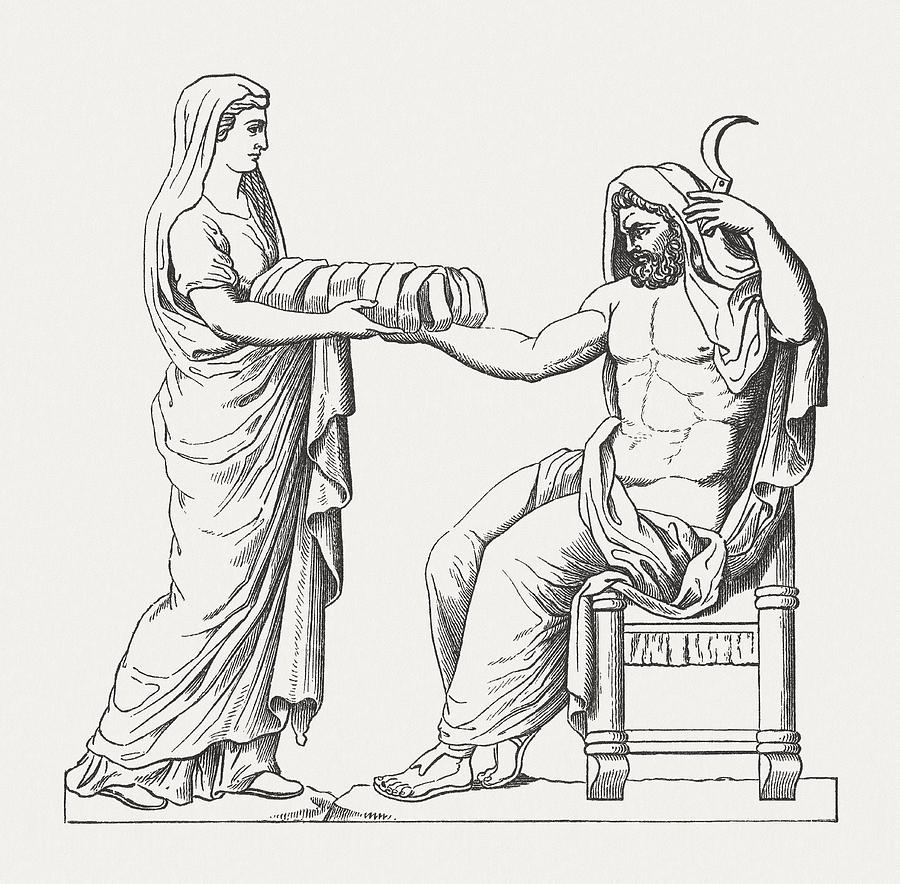
Rhea presents the stone to Kronos; wood engraving published in the 1878 Leipzig edition of Der Olymp. Later printed reception of the scene, not an artifact photograph or a likeness from Hesiod’s time
Entity
Zeus’s mother in Hesiod, hiding the child and giving Kronos a stone instead.
Name variants: Rhea
Context and sources →
Person
New Testament and early Christianity scholar, emeritus professor at St Andrews.
Name variants: Richard Bauckham
Context and sources →
Person
Professor of Talmud and rabbinics who studies rabbinic narratives and Jewish Babylonia.
Name variants: Richard Kalmin
Context and sources →
Person
Old Testament and Semitic-language scholar at Denver Seminary, studying ancient inscriptions, names and religion.
Name variants: Richard S. Hess
Context and sources →
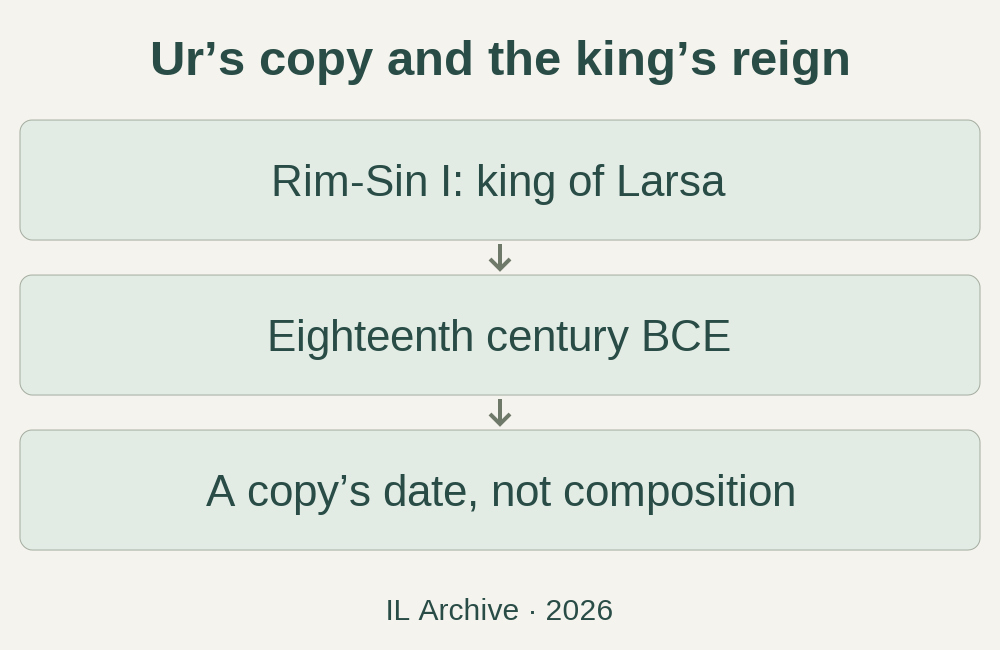
Modern witness-specific explanatory diagram of a sequence or linguistic relationship, not a portrait or fabricated artifact
Person
Eighteenth-century BCE king in southern Mesopotamia, whose reign helps date the Ur copy of the poem.
Name variants: Rim-Sin I, king of Larsa
Context and sources →
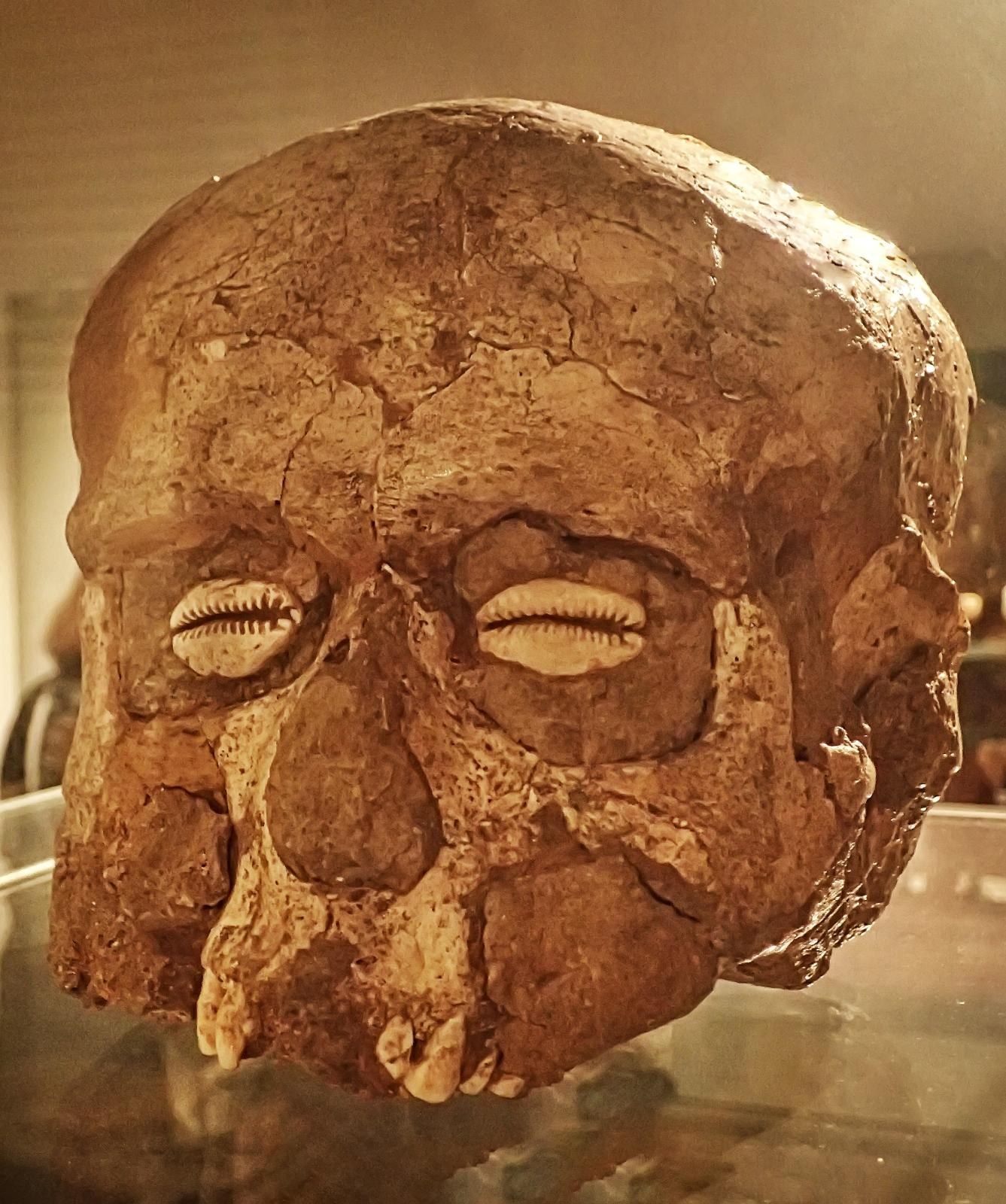
A plastered human skull from Jericho, around 7000 BCE, in the Ashmolean Museum, Oxford. Plaster remodels the face and shells mark the eyes; this treatment alone does not identify the beliefs of its makers
Entity
An organised or distinguished practice meaningful to a community; it may leave traces, but its form alone does not reveal an associated doctrine.
Name variants: ritual, rituals
Context and sources →
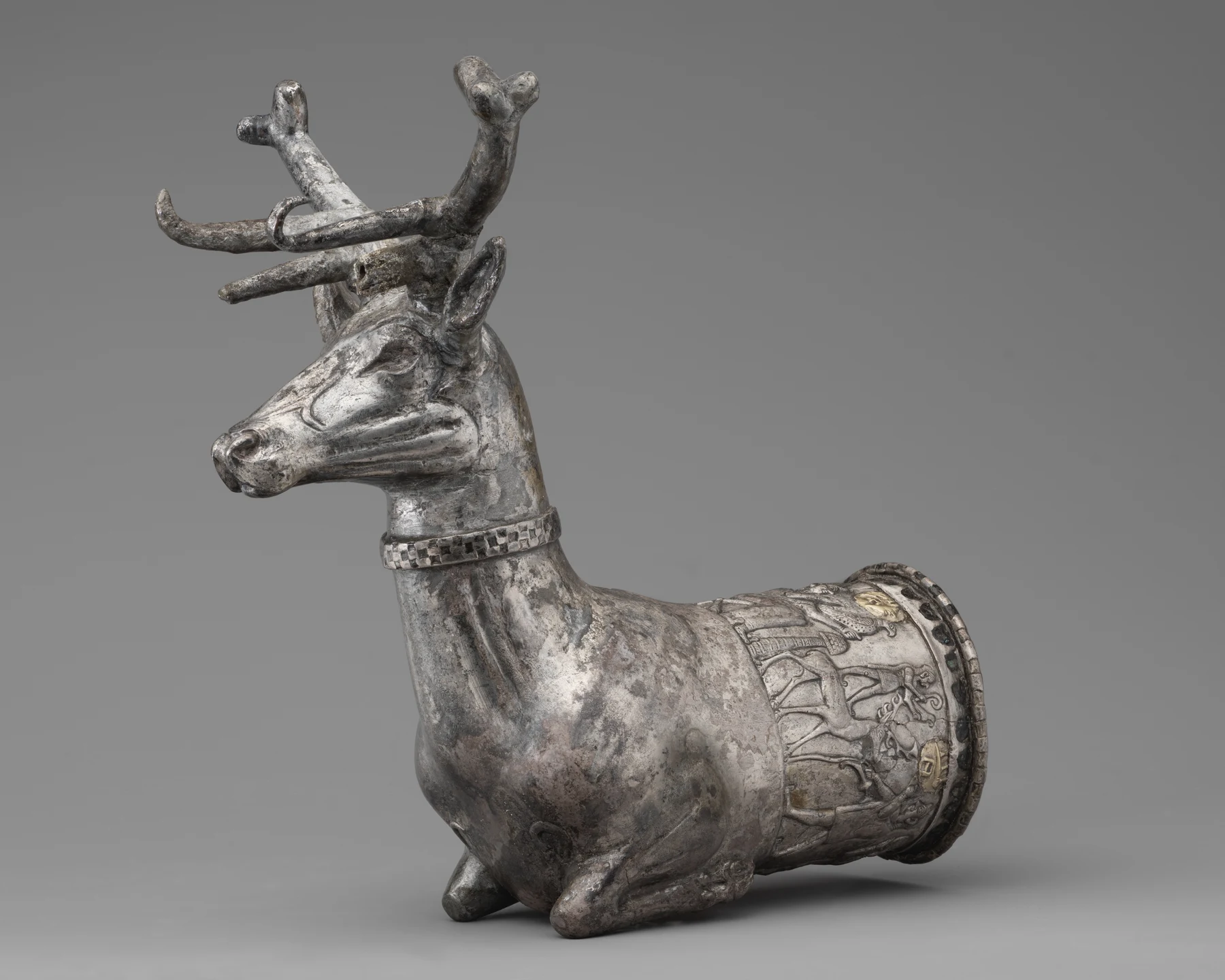
Hittite silver drinking vessel with gold inlay, ending in a stag’s forepart, central Anatolia, ca. 14th–13th century BCE. Its frieze depicts a Hittite cult scene. This is comparative context, not evidence for a kippēr rite or a blood vessel. Metropolitan Museum, 1989.281.10
Entity
Hebrew verb for rites performed on behalf of people or directed at sacred space; the stated outcome may be forgiveness or purification. It does not mean declaring another person an unbeliever.
Name variants: ritual atonement, kippēr
Context and sources →
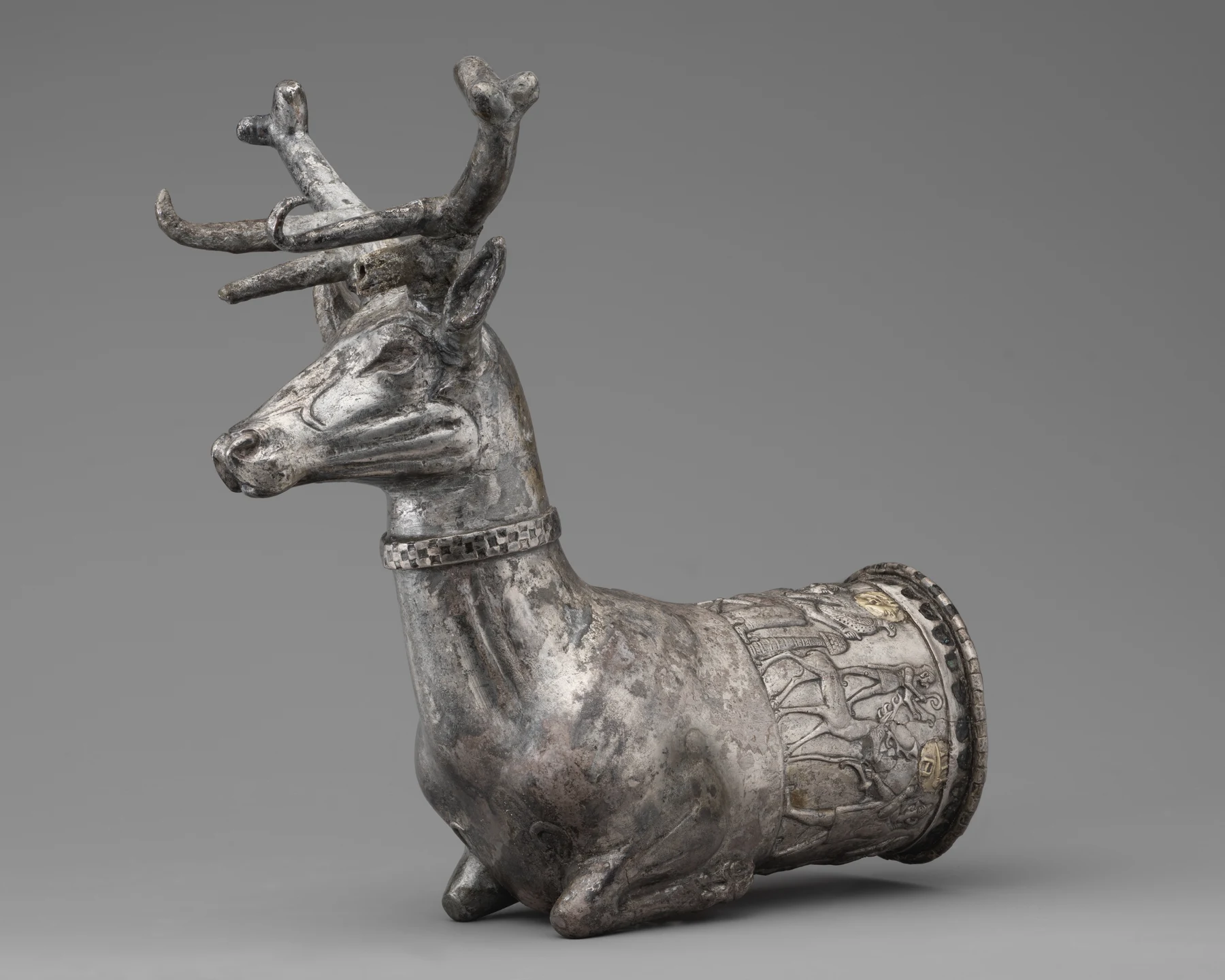
Hittite silver vessel with gold inlay and a stag-shaped forepart, central Anatolia, ca. 14th–13th century BCE. The Metropolitan Museum of Art, 1989.281.10. Its religious frieze has no firmly established specific function; it is not direct evidence of Levitical impurity law
Entity
A religious status regulating contact with the sacred, especially in Leviticus and Numbers. Causes, duration, and remedies vary by context; it does not necessarily imply sin, disease, or diminished dignity.
Name variants: ritual impurity
Context and sources →
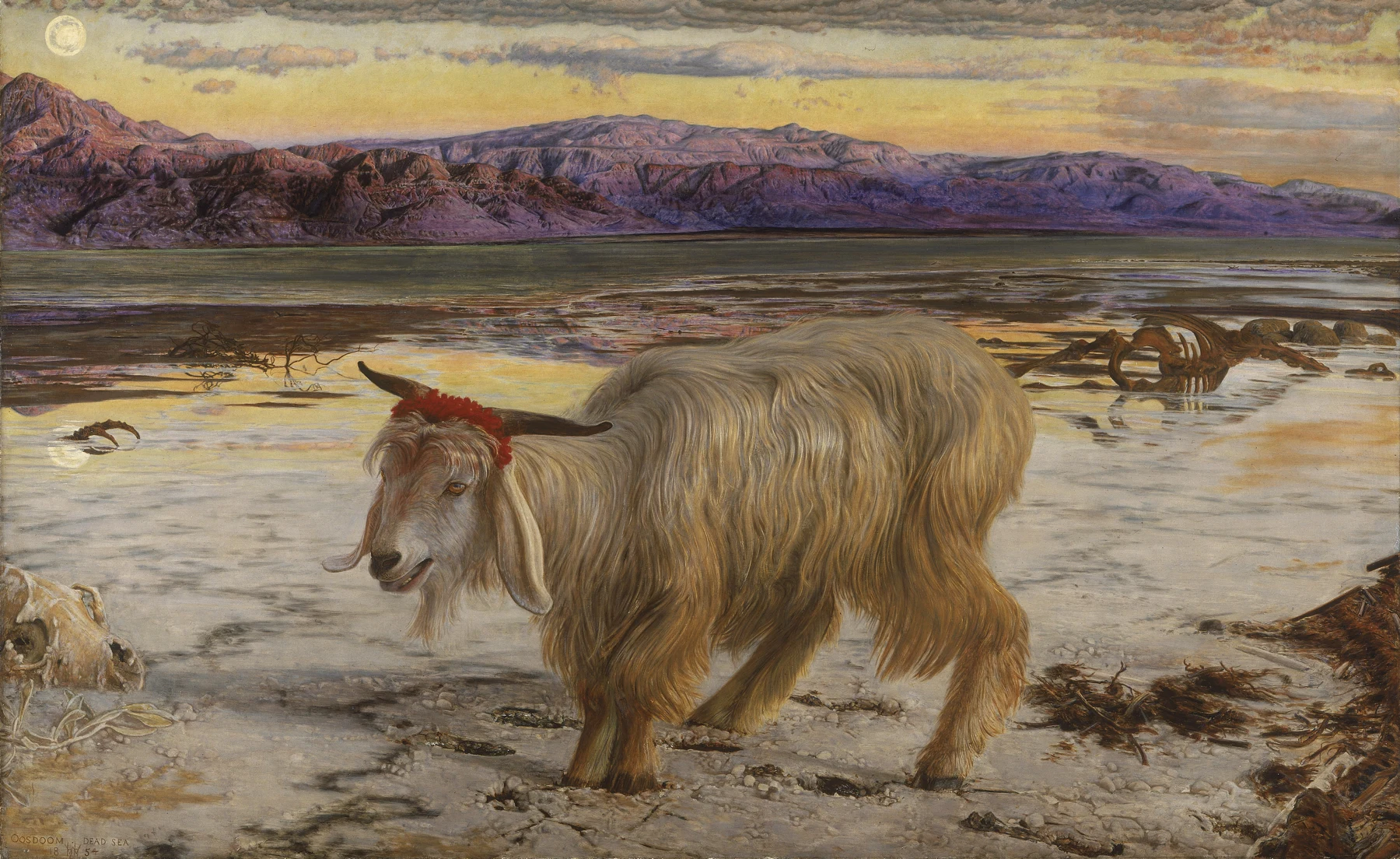
A horned goat stands by saline water before distant hills in William Holman Hunt’s The Scapegoat (1854), Lady Lever Art Gallery, LL 3623. Public-domain image via Wikimedia Commons of a nineteenth-century painting: not archaeological evidence, a depiction of Azazel, or a model for all removal rites
Entity
Analytical term for expelling impurity, harm, or ominous danger from a protected domain; it does not equate transfer, expulsion, slaughter, and destruction.
Name variants: ritual removal
Context and sources →
Modern AI-generated conceptual domestic still life: vessels, grains, cloth and ordinary objects. It depicts no documented ritual or historical house; the meaning of the objects depends on their use and context
Entity
The acquisition of special qualities by familiar practices or places; an analytical concept that need not separate ritual from everyday life.
Name variants: ritualization, ritualisation
Context and sources →
A modern conceptual illustration places river and vessel together to contrast two distinct procedures. It depicts no documented ordeal or specific artifact; the tablet's marks are decorative and not legible text
Entity
Referral of an unresolved dispute to a divinized River for judgment, with procedures and consequences that differ between legal rules and case reports.
Name variants: river ordeal, riverine ordeal
Context and sources →
Person
Robert Henry Charles (1855–1931) was an Irish scholar, editor and translator of 1 Enoch.
Name variants: Robert Henry Charles, R. H. Charles
Context and sources →
Person
UCLA Assyriologist and Sumerologist specializing in early Mesopotamian writing; a pioneer of the Cuneiform Digital Library Initiative.
Name variants: Robert K. Englund
Context and sources →
Person
Scholar of Hebrew texts, religion and comparative mythology; emeritus professor at UC Berkeley.
Name variants: Ronald Hendel, Hebrew Bible scholar
Context and sources →
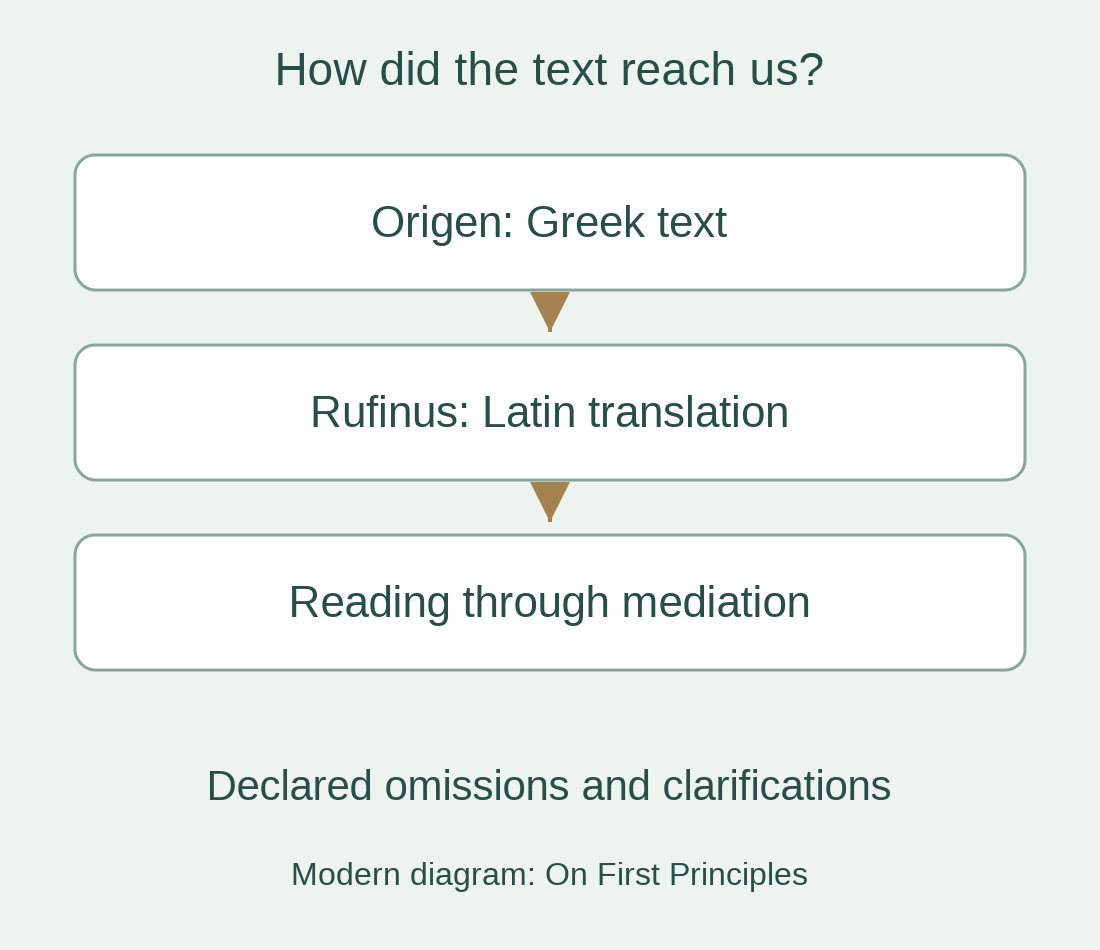
Modern diagram: On First Principles. Declared omissions and clarifications
Person
Christian writer and translator, c.345–411 CE, who translated Greek works including Origen’s On First Principles into Latin.
Name variants: Rufinus of Aquileia, Tyrannius Rufinus
Context and sources →
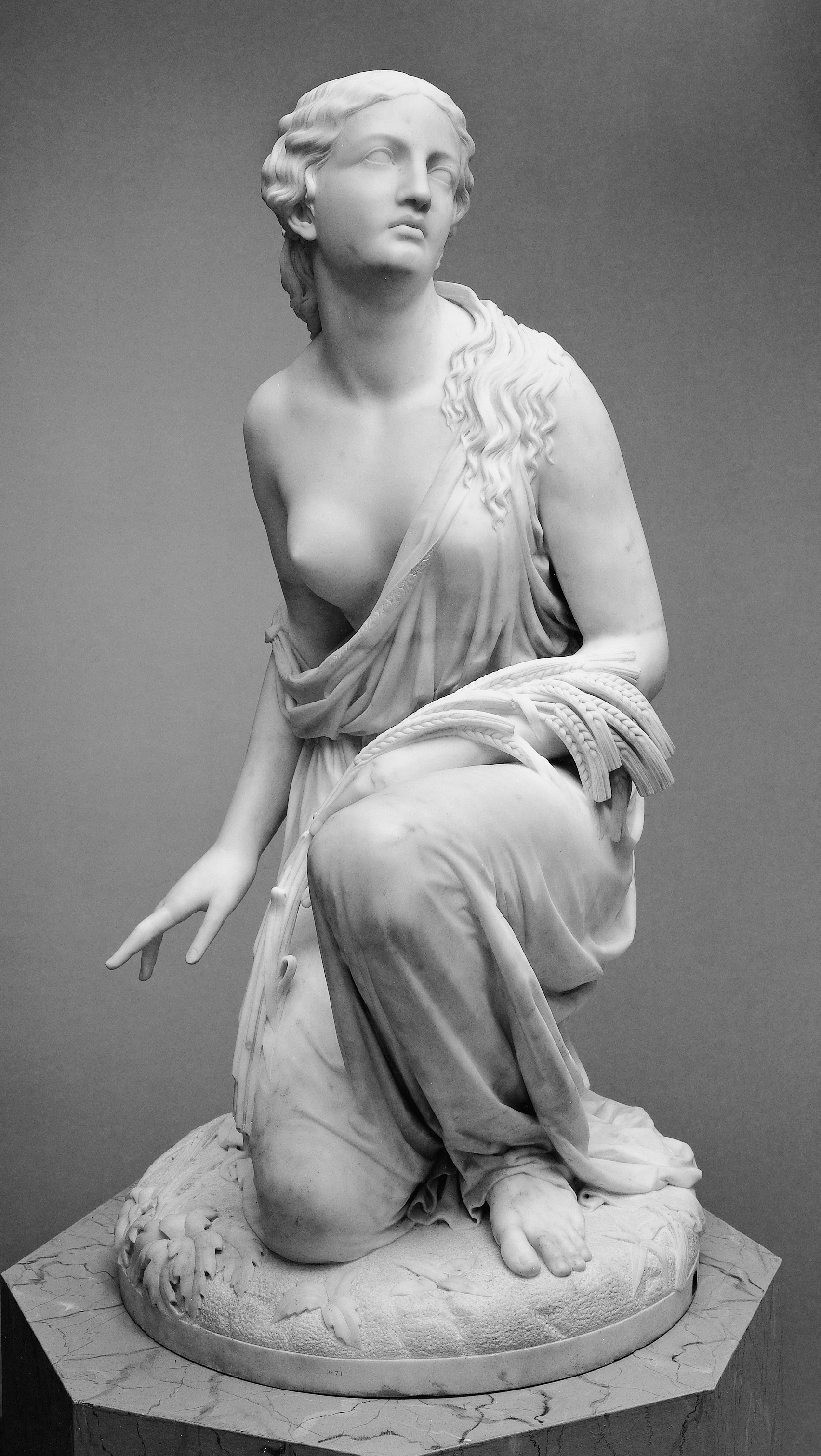
Ruth Gleaning, marble by Randolph Rogers: 1850 design, carved 1855 or 1856; Met 99.7.1. Artistic reception of Ruth 2, not a historical portrait or the chapter 4 redemption scene
Person
Mahlon’s widow and Naomi’s daughter-in-law, marrying Boaz in Ruth.
Name variants: Ruth, biblical character
Context and sources →
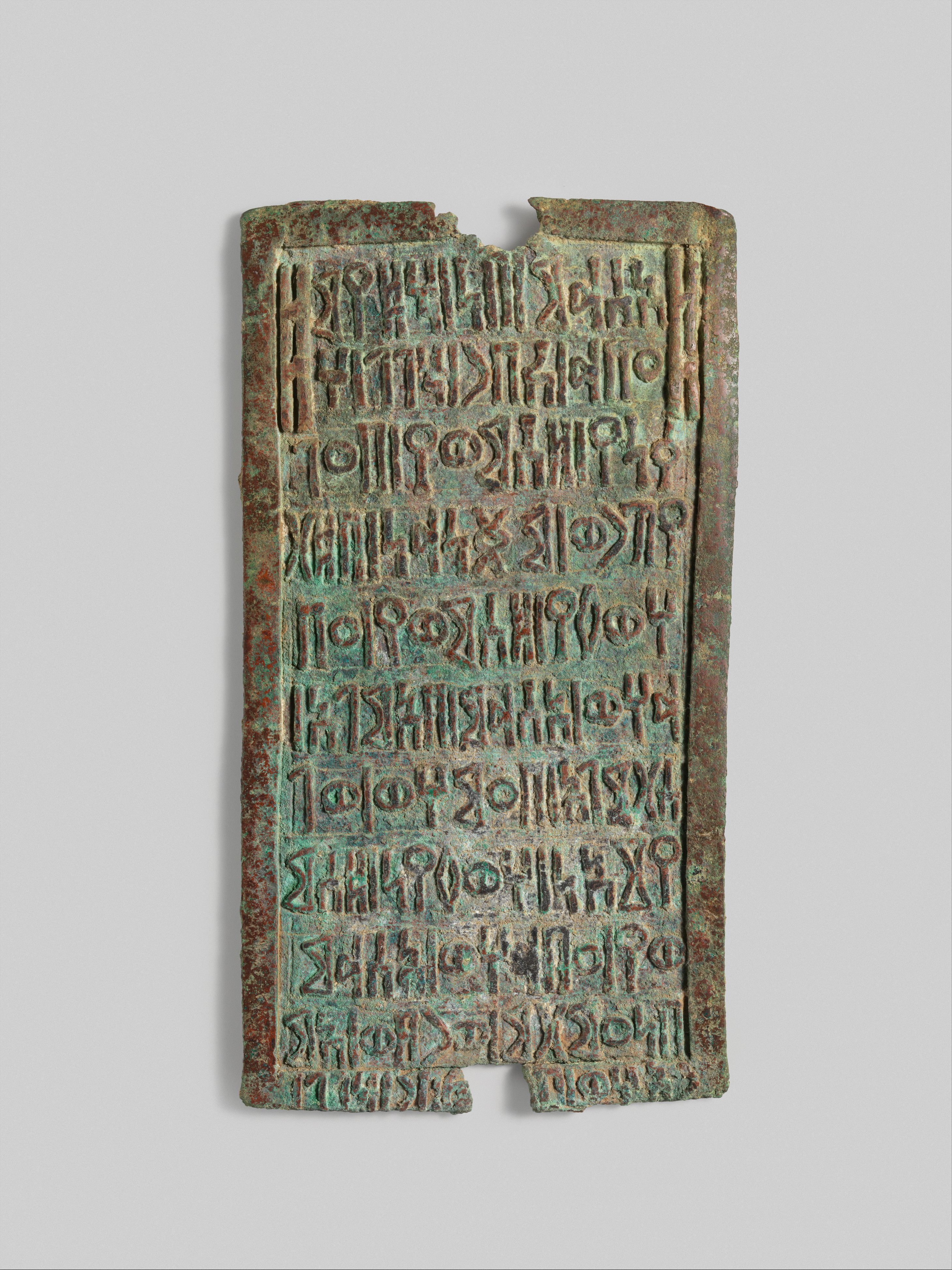
Copper-alloy votive plaque with a Sabaean dedicatory inscription, South Arabia, late first millennium BCE. A witness to Sabaean writing, not to the queen's identity. Met 1993.169; public domain
Site
An ancient South Arabian kingdom centered in present-day Yemen and prominent in the first millennium BCE; its attestation does not establish the Queen of Sheba's biography.
Name variants: Saba, Sheba, kingdom of Saba
Context and sources →
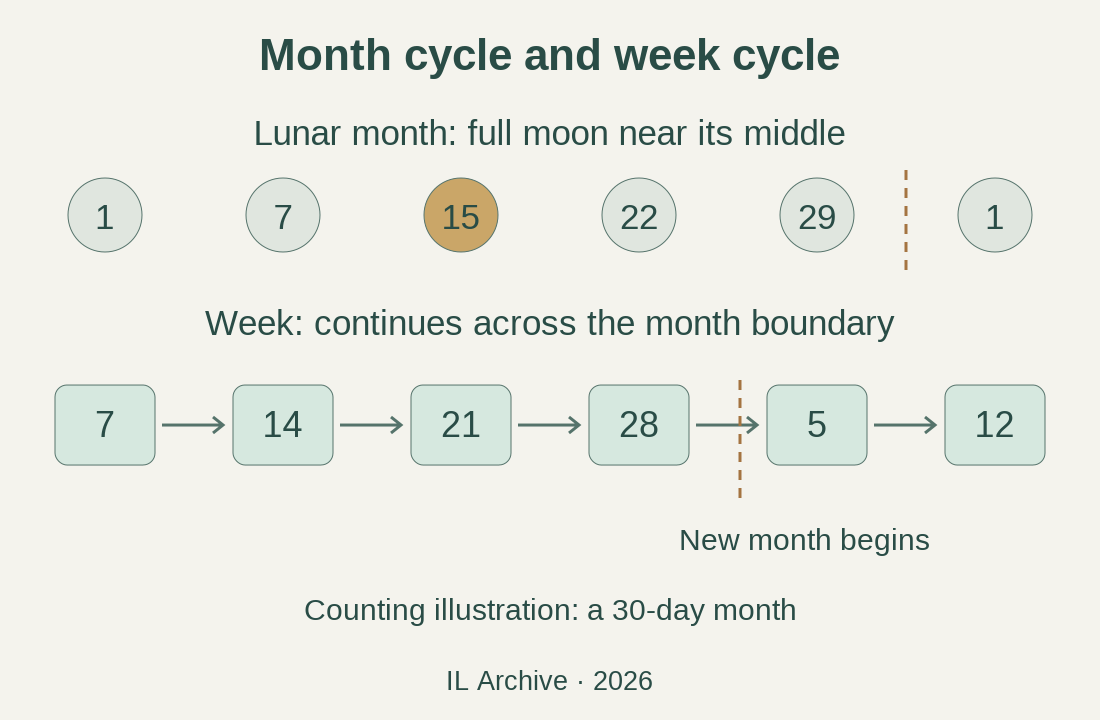
Modern comparison of a monthly lunar date and a continuous week. The counting example assumes a 30-day month and first rest on day 7: after day 28, the next rest falls on day 5 of the following month. Not an ancient calendar or evidence of Sabbath origins
Entity
Sacred seventh day in Jewish traditions, linked by commandments to household rest, creation and liberation.
Name variants: Sabbath, the weekly rest day
Context and sources →
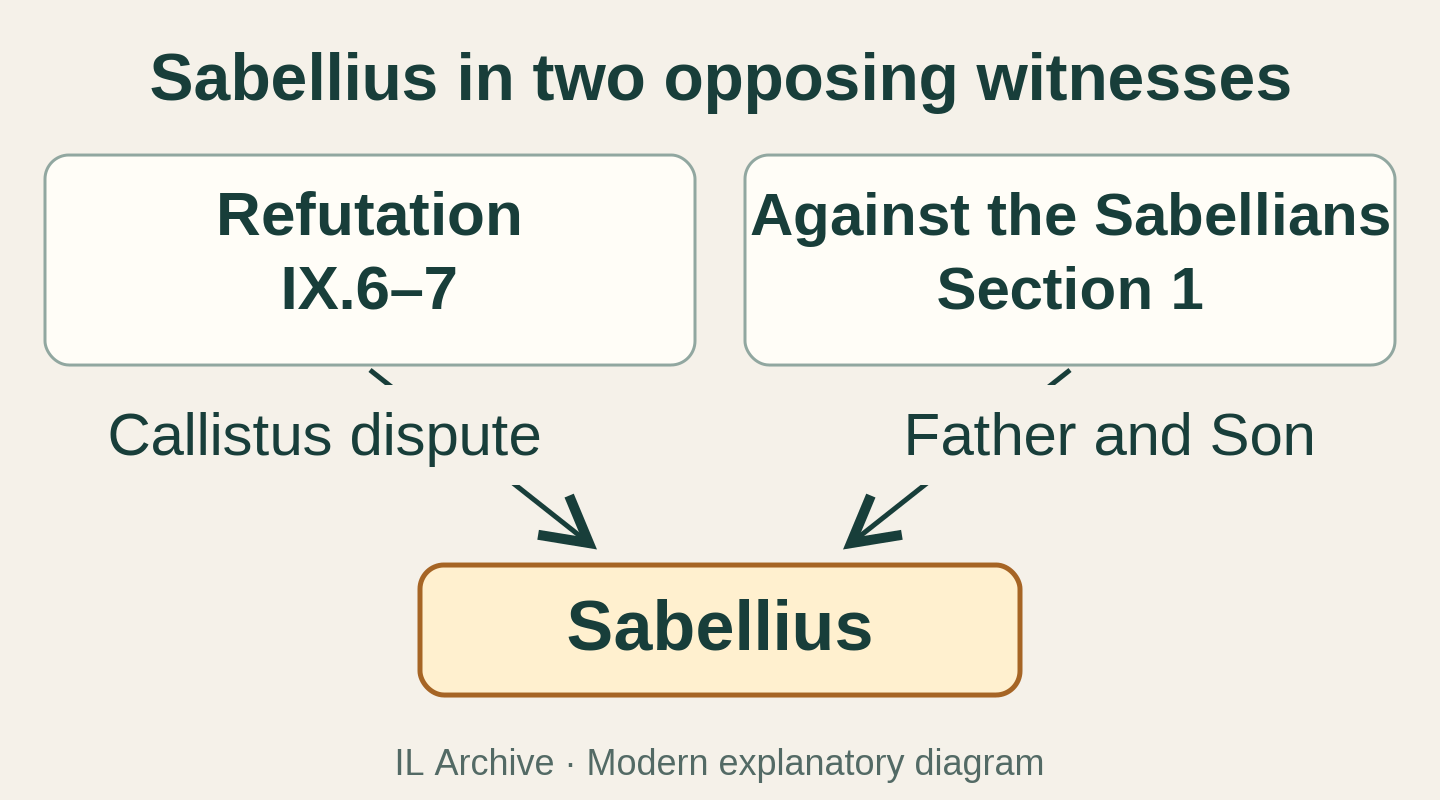
Modern map of two hostile reports about Sabellius: Refutation IX.6–7 and Against the Sabellians 1. Arrows identify their subject, not a surviving work by Sabellius
Person
Christian teacher associated with debates on unity and distinction in the early third century.
Name variants: Sabellius
Context and sources →

Contemporary imaginative composition placing a ram and deer beside a symbolic altar to introduce three distinct narratives; it depicts neither a single historical event nor an archaeological artifact
Entity
An animal or offering replacing a person threatened with slaughter in a narrative. Genesis specifies a ram, Qur’an 37 a “great sacrifice” without naming the animal, and Euripides a deer. The parallel alone does not prove borrowing.
Name variants: Sacrificial substitution
Context and sources →

Modern AI-generated symbolic cover: imagined steps, courtyard and blank scroll evoke debates about scripture and tradition in the Second Temple period. Not a photograph or verified reconstruction of a site, the Temple or the Sadducees
Entity
The Sadducees were a Second Temple Jewish current, known mainly from external or rival accounts such as Josephus, the Mishnah and the New Testament rather than any surviving doctrinal writings of their own.
Name variants: Sadducees, Sadducean
Context and sources →
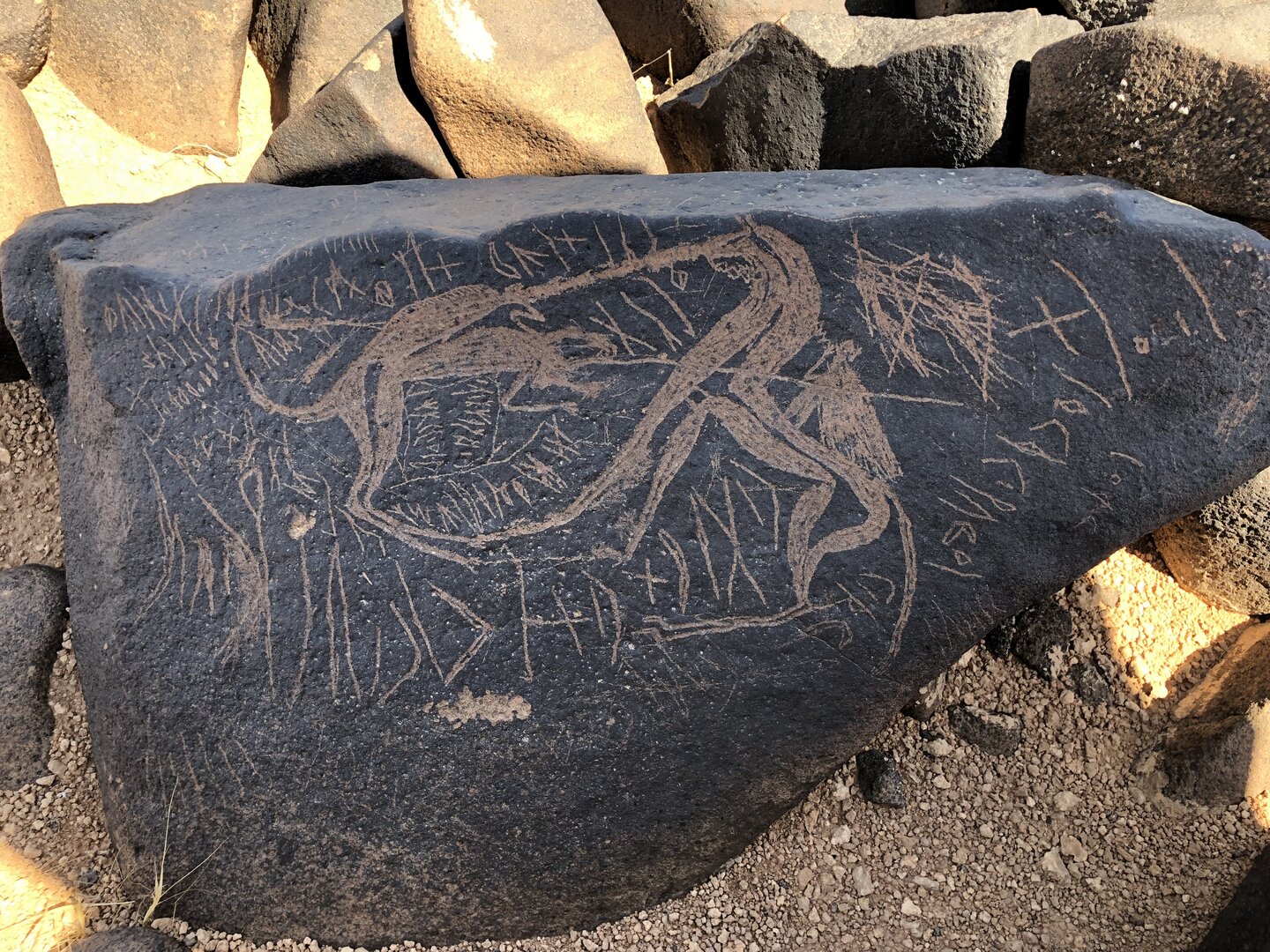
Rock bearing Safaitic inscription BES19s 77.1 and associated carvings, Firʿ Wādī al-Khuḍarī, Al-Mafraq, Jordan; recorded in 2019 and listed in situ by OCIANA. The published reading invokes Allat and later requests relief from lh (interpreted as Allah). OCIANA describes a predator, a person and a mounted rescuer, not images identified as deities
Entity
An Ancient North Arabian consonantal script used for rock inscriptions recording names, kinship, pastoral movement and prayers in the pre-Islamic deserts of Syria, Jordan and northern Arabia.
Name variants: Safaitic, Safaitic script, Safaitic inscriptions
Context and sources →
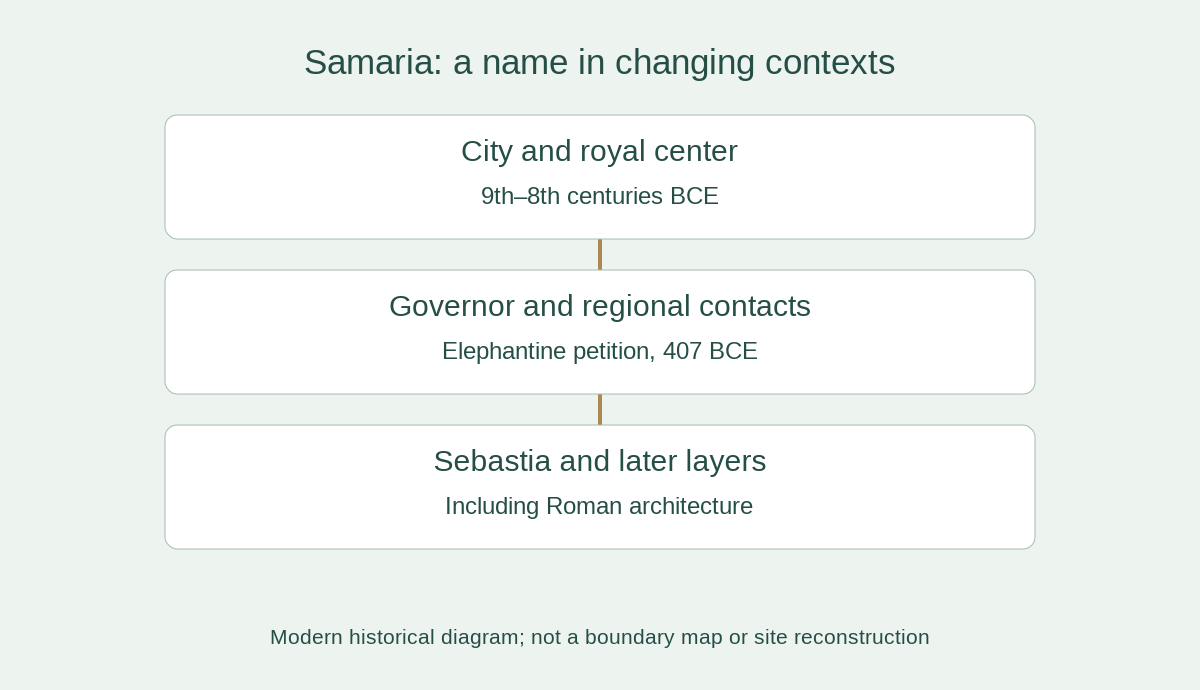
Modern diagram distinguishing the royal city, the governor’s context in the Elephantine petition and Sebastia’s later layers. Not a photograph or a map of boundaries
Site
Ancient city and administrative region; the city’s site is at Sebastia, northwest of Nablus in the West Bank.
Name variants: Samaria
Context and sources →

Modern generated conceptual artwork: abstract scroll-like bands converge before an imaginary mountain landscape, evoking the transmission of the Pentateuch. Not a photograph of a Samaritan manuscript or a documented archaeological site
Entity
Samaritan Hebrew five-book tradition sharing an older textual history, with linguistic and theological variants, including readings involving Mount Gerizim.
Name variants: Samaritan Pentateuch
Context and sources →
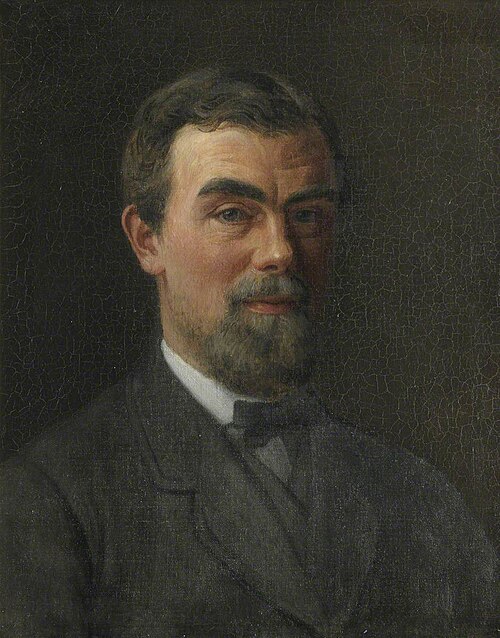
Samuel Butler’s self-portrait of 1878, held by St John’s College, Cambridge. A digital reproduction of a painting, rather than a photograph of the person
Person
English writer and translator of Homer who lived from 1835 to 1902.
Name variants: Samuel Butler
Context and sources →
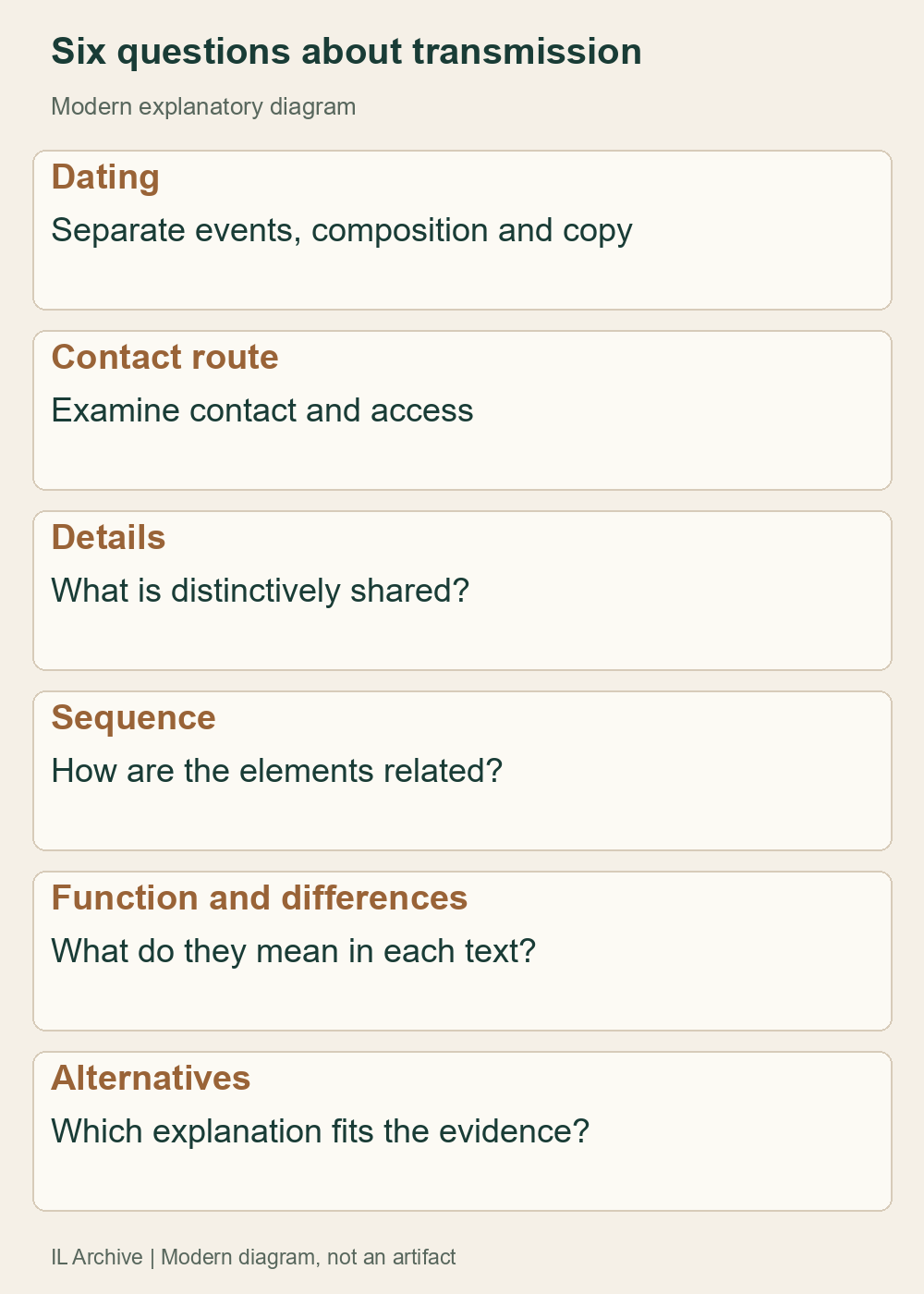
Modern IL Archive diagram of six questions for testing textual relationships; neither a photograph of Sandmel nor a historical document about him
Person
Samuel Sandmel (1911–1979): American Jewish rabbi and scholar of the New Testament and Hellenistic Judaism, author of “Parallelomania” (1962) and works on early Christianity and Jewish–Christian understanding.
Name variants: Samuel Sandmel, Sandmel
Context and sources →
Person
Scholar of Iranian traditions and religious interaction; curator of the National Library of Israel’s Islam and Middle East collection.
Name variants: Samuel Thrope
Context and sources →
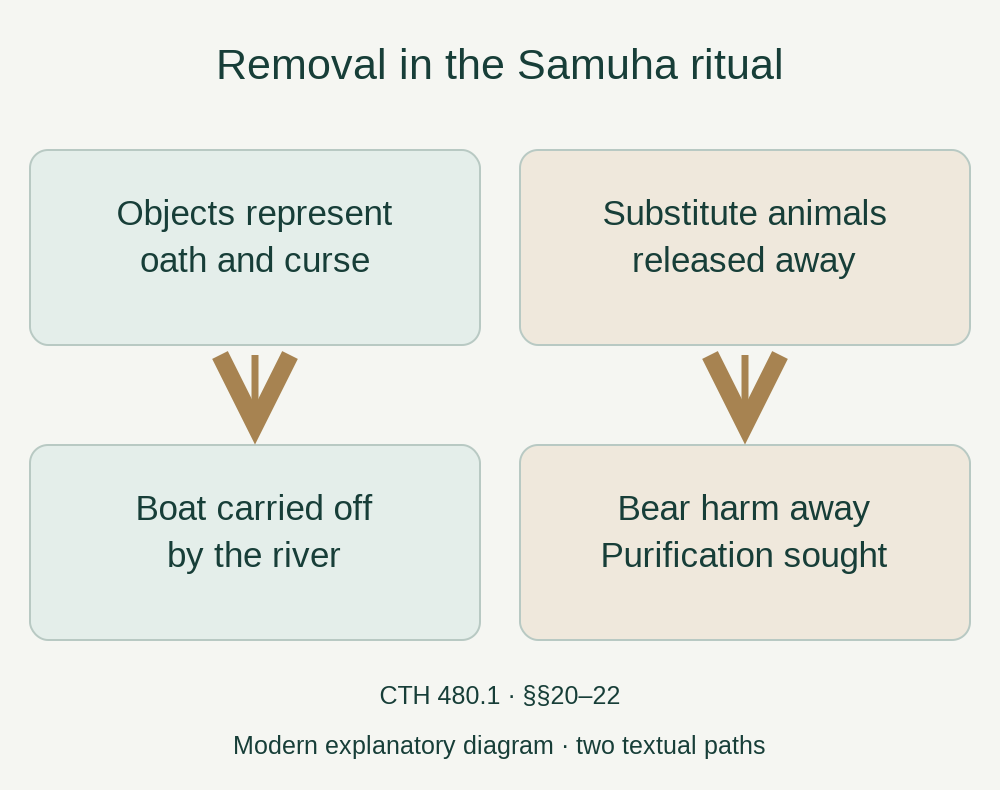
Two means of removal in Samuha, CTH 480.1, §§20–22: a boat with objects representing oath and curse, and animals carrying harm. Modern explanatory diagram
Ancient text
A Hittite purification text, CTH 480.1, removing harmful speech, curse, and impurity by boat and animals in temple and royal contexts.
Name variants: Samuha purification ritual
Context and sources →
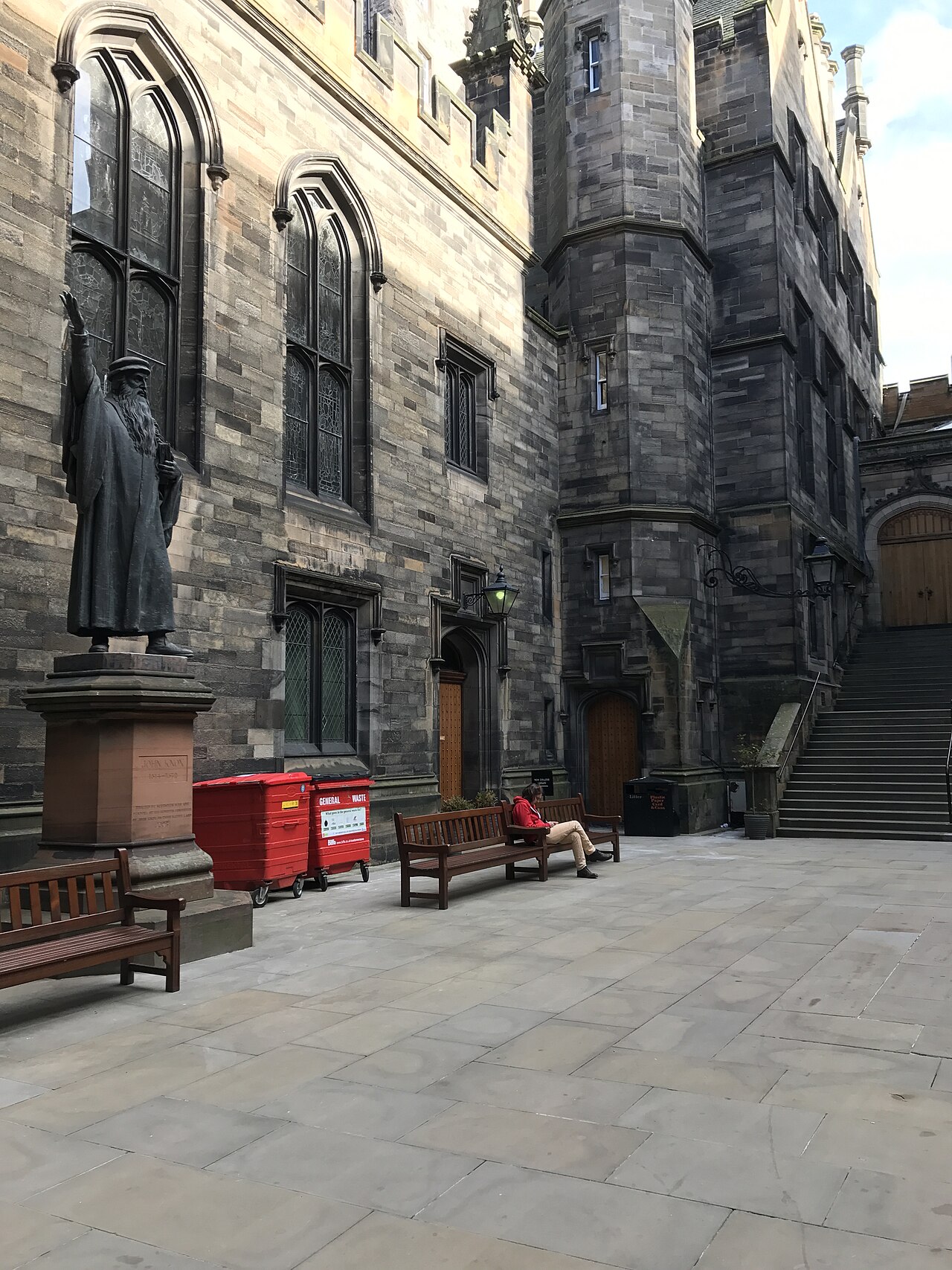
New College courtyard, University of Edinburgh, photographed in 2017. Institutional context for Cho’s thesis, completed in 2007; neither a portrait nor a photograph from the thesis year
Person
Researcher who studied the ranks and roles of heavenly beings in Ugarit and the Hebrew Bible.
Name variants: Sang Youl Cho
Context and sources →
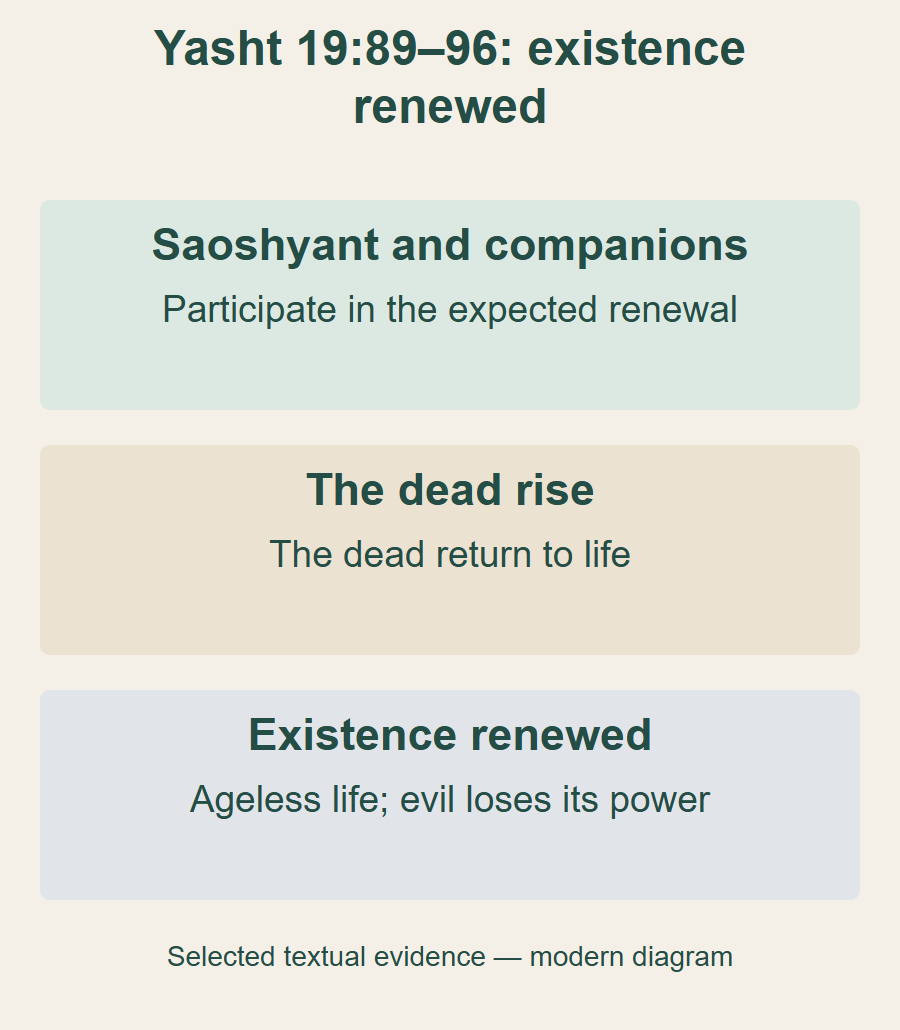
Modern chart of Yasht19:89–96: Saoshyant and companions, the dead rising and existence renewed. A textual sequence without an invented likeness
Entity
Saoshyant is an Avestan term for a benefactor, with an eschatological savior sense in Zoroastrian texts.
Name variants: Saoshyant
Context and sources →
Person
Scholar of biblical texts, scribal education and legal formation.
Name variants: Sara Milstein
Context and sources →
Person
University of Edinburgh scholar of patristics and early Christian history.
Name variants: Sara Parvis
Context and sources →
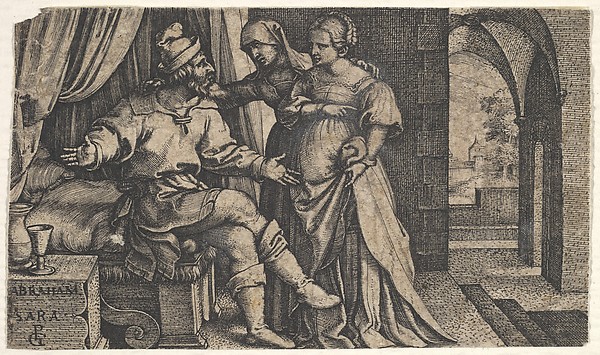
Georg Pencz, Sarah Presenting Hagar to Abraham, ca. 1543, The Met 2012.136.766.2; later artistic depiction
Person
Abraham's wife and Isaac's mother in Genesis; her story with Hagar and Ishmael appears in chapters 16 and 21, not in the Genesis 22 scene itself.
Name variants: Sarai
Context and sources →