Study
Enoch and the Apkallu: Wisdom before the Flood
An extended study of a topic, with evidence and references.
- Timeline
- From 883 BCE to 165 BCE
Kings,sages and the ancient scribe: primeval knowledge,instruction and limits of proposed transmission into Enochic literature.
Share article
Text
Before the Flood: who owns knowledge?
In narratives of beginnings, the Flood threatens more than human lives. It raises a question about knowledge: how did people learn writing, building and farming? What happened to those skills when the old world ended?
Some Mesopotamian traditions portray wise figures connected with the divine world who teach humanity. Enochic literature gives us an ancient human who becomes a scribe and visionary, and heavenly beings who also teach, but whose instruction enters a narrative of transgression and violence. Comparison begins here; a proven borrowing does not yet begin.
The AkkadianAkkadianAn ancient East Semitic language written in cuneiform in Mesopotamia.Glossary · Click to read the explanation word apkalluApkalluAkkadian word for sage; lists,images and roles require their own textual contexts.Glossary · Click to read the explanation is usually translated as sage. CuneiformCuneiformWriting with wedge-shaped signs, developed from Mesopotamian recording traditions and used for several languages from the third millennium BCE.Glossary · Click to read the explanation indexes record several forms and writings. The word does not make every bearer the same individual, or attach a personal name to every winged image. [1]
Three different times
There is the time in which a story takes place: before the Flood. There is the formation of its tradition, whose beginning may be unknown. And there is the date of the surviving witness. Confusing these turns a character’s legendary antiquity into a false date for a book.
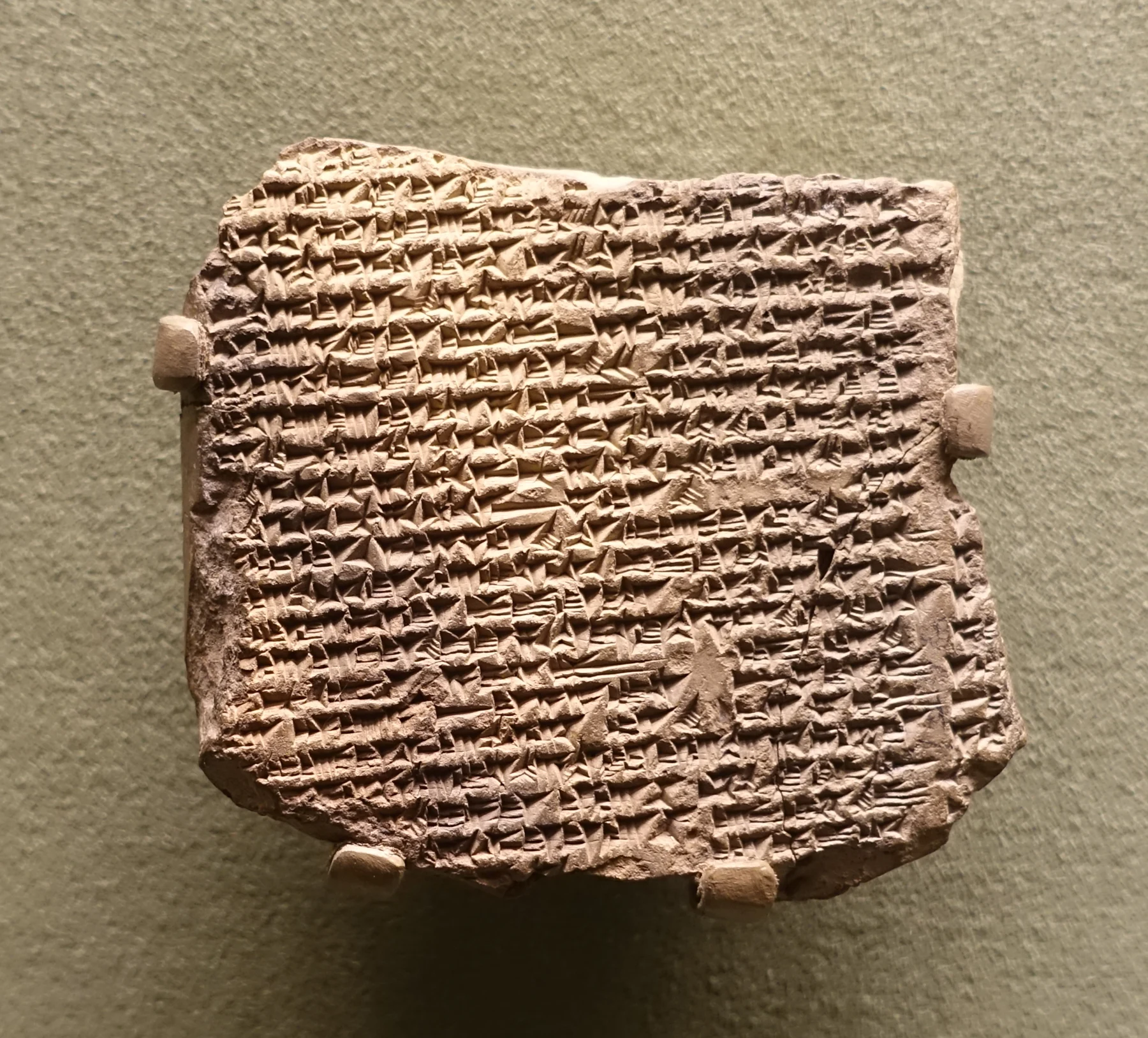
The surviving UrukUrukAncient city at Warka in southern Iraq, a major urban centre around 3200 BCE that preserved early writing and accounting tablets.Glossary · Click to read the explanation List of Kings and Sages is dated to 165 BCE: the tablet, not its primeval rulers. [3] Reed places composition of the Book of the WatchersBook of the WatchersOpening section of1 Enoch, 1–36; includes the Watchers’ descent and transgression and Enoch’s journey.Glossary · Click to read the explanation around the third century BCE, within a collection containing several parts. [12]
Setting a story in the remote past does not establish that every detail predates every text with which we compare it. Historical priority requires a specific witness or a reasoned argument for dating a tradition, not merely the order of events inside a narrative.
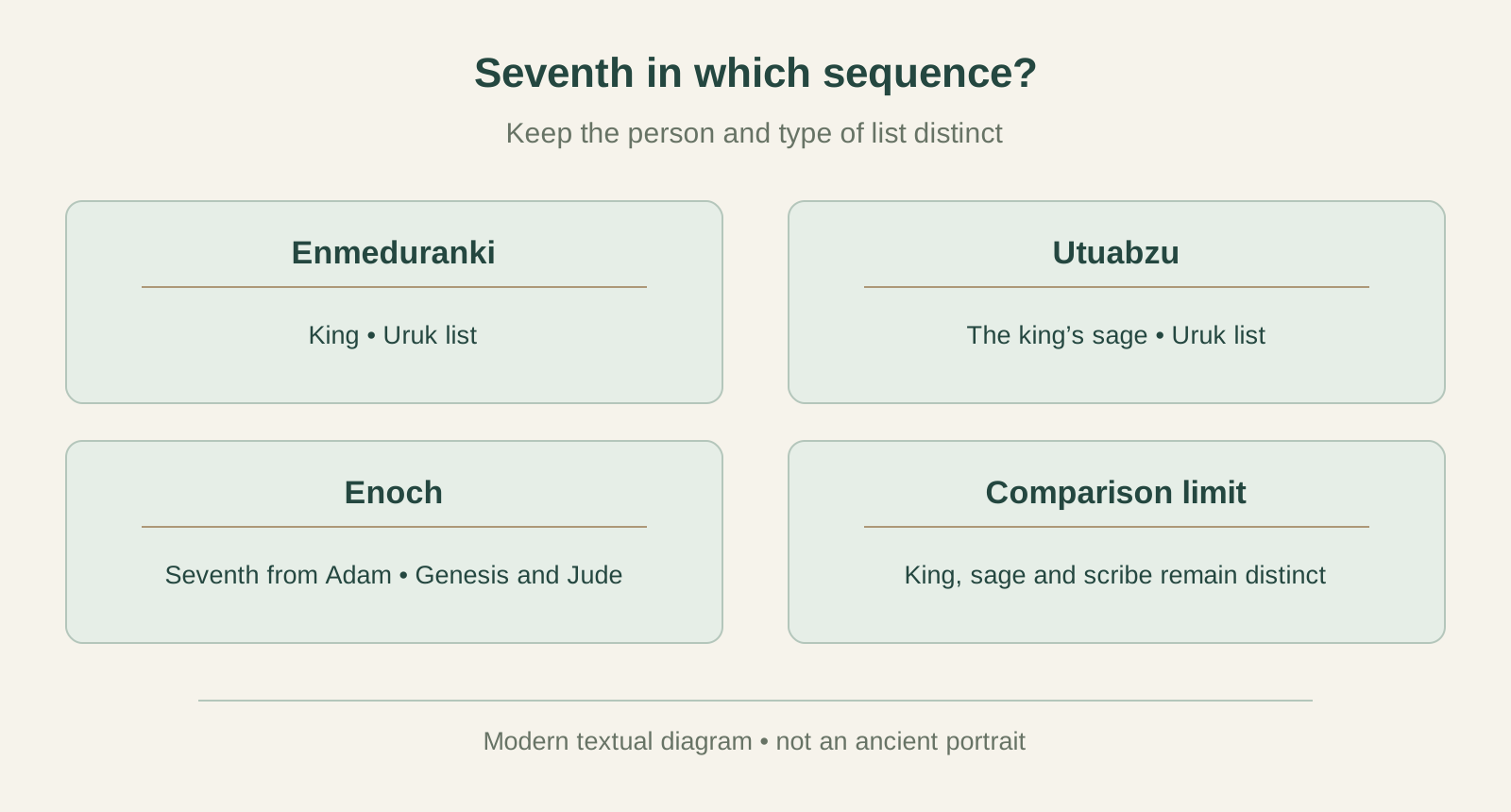
The seventh king is not the seventh sage
The Uruk list pairs seven primeval kings and sages. The seventh king is EnmedurankiEnmedurankiPrimeval king in Mesopotamian wisdom tradition; distinguish from his sage and Enoch.Glossary · Click to read the explanation, his sage Utuabzu; Nungalpirigal and human scholars follow. Its damaged transition to the post-Flood period is restored in the edition. [3]
This small distinction changes the comparison. Finding a seventh figure does not entitle us to merge a king with his adviser and compare the resulting composite with Enoch. We must ask: seventh in which sequence—kings, sages or ancestors? Does the trait we seek belong to that same individual in this text?
Numbering organizes a sequence; it does not establish identity. Two lists can use the same number without being versions of the same list.
Sages in a protected house
The ritualRitualAn organised or distinguished practice meaningful to a community; it may leave traces, but its form alone does not reveal an associated doctrine.Glossary · Click to read the explanation texts studied by Wiggermann employ representations of sages to protect a house. A Bīt mēseri incantation contains seven fish sages followed by four sages of human descent. [2]
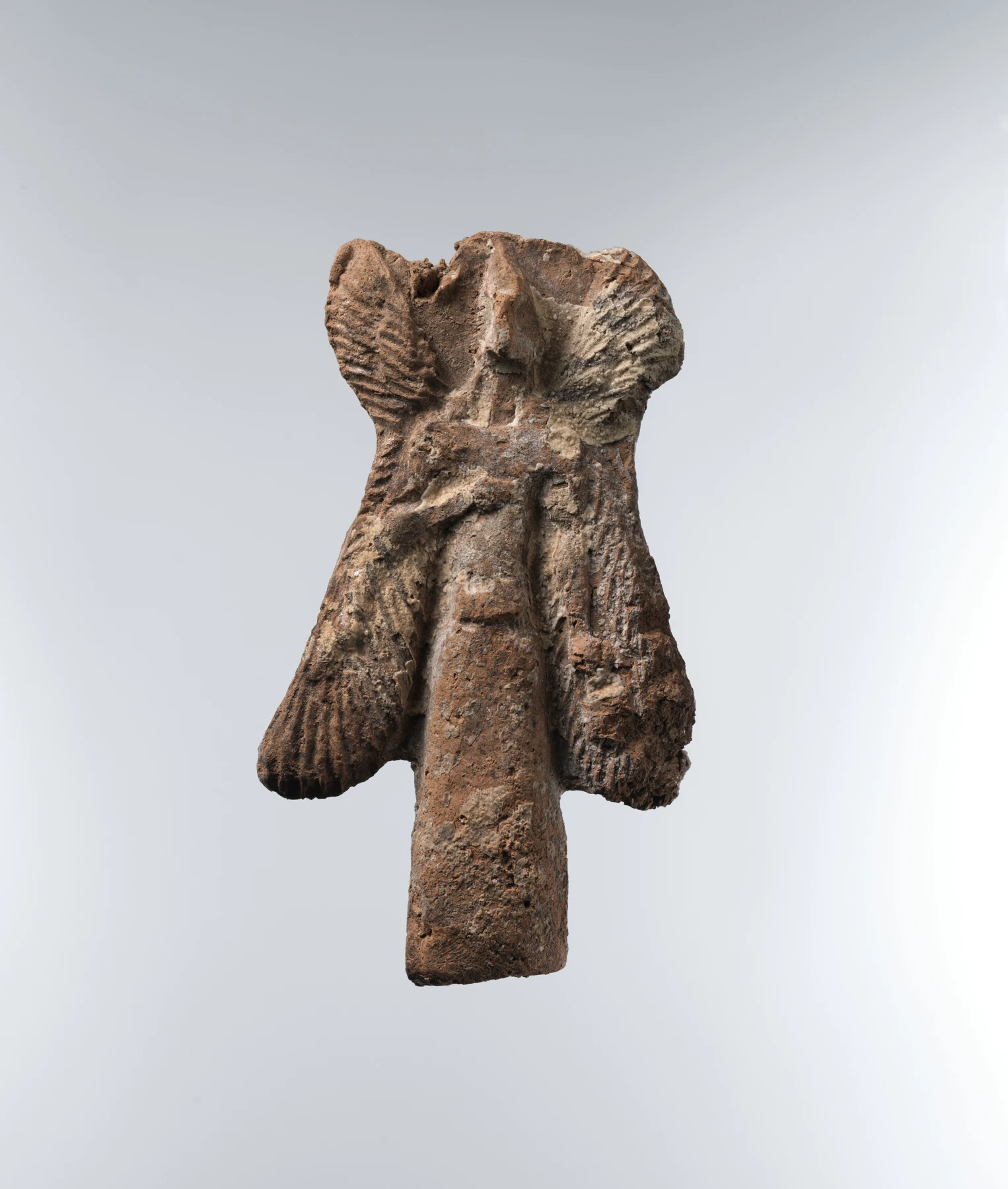
This setting differs from a genealogy or list of advisers. A figure’s ritual function, location and use come before matching its name with a character in another narrative. Wings or a nonhuman appearance do not automatically turn a guardian into a fallen angel.
Even where ritual and list share the word sage, their membership and numbers need not coincide. A group prescribed for one rite is not a complete census of every wise being in Mesopotamian religion.
Oannes teaches humanity
The fragment attributed to Berossus and transmitted by Alexander Polyhistor makes Oannes emerge from the sea in a form combining fish and human. It credits him with teaching writing and arts, founding cities and temples, laws, geometry and agriculture. At night he returns to the sea. [5]
This explains civilization’s first source; it is not an archaeological report of a man living inside a fish. Knowledge here neither humiliates humanity nor automatically invites punishment. It enables ordered life.
We are not reading Berossus’s complete original book. The passage survives through later transmitters. The fragment transmitted from Apollodorus itself reports differences in the order and timing of these figures’ appearances. Combining fragments must not create the illusion of an uninterrupted book without gaps. [6]
Knowledge survives the water
The same fragment narrates the Flood of Xisuthrus. Its hero is told to bury written records at Sippar, the city of the Sun, and prepare a vessel. After the disaster, the survivors are instructed to recover the writings and rebuild Babylonia. [5]
The vessel preserves life; the archive preserves the resources for resuming it. This is IL Archive’s reading of the narrative structure: survival concerns both living bodies and the community’s memory and skills.
That structure does not prove that every later story about an ancient book borrowed directly from Berossus. We need more specific features than a book and a flood: who buried it, where, how it was retrieved, and whether the actions retain their order and function. Each answer adds evidence or reveals a difference.
Enmeduranki and divine knowledge
The Enmeduranki text presented by Orlov depicts ShamashShamashMesopotamian god of the sun and justice, shown before Hammurabi on an eighteenth-century BCE stele preserved in the Louvre.Glossary · Click to read the explanation and Adad granting him divinatory knowledge; he then teaches people of NippurNippur / NuffarMesopotamian city and major Enlil cult centre, connected with kings’ legitimacy beyond the city.Glossary · Click to read the explanation, Sippar and BabylonBabylonBabylon is an ancient city in central present-day Iraq, south of BaghdadGlossary · Click to read the explanation. [4]
We must distinguish knowledge authorized within one narrative from disclosure condemned within another. A researcher should not judge divination from a modern religious position and make that judgment the ancient text’s own.
Comparison examines the authority giving permission, the kind of instruction, the means of transmitting secrets, and the narrative’s consequences. Disclosure may resemble disclosure while its legitimacy differs. The difference matters as much as the likeness: it shows what each text seeks to justify or warn against.
Enoch in Genesis
Genesis 5 does not present Enoch as the teacher of every civilized art. It gives his ancestry and offspring, his age of 365 years, his walking with God, and God taking him. Counting from Adam in this sequence puts him seventh; Jude says so explicitly. [7] [8]
These are real points of comparison: an ancient figure, a distinctive position in a sequence, and an exceptional divine relationship. They do not make Genesis say he ruled Sippar, learned liver divination, or was the sage Utuabzu under another name.
One may propose solar symbolism for 365 when comparing Enoch with Shamash. That remains interpretation. The number is present; a declaration that it proves borrowing from the sun god is not. Observation must remain distinct from the explanation proposed for it.
A scribe who cannot revoke the sentence
Enoch’s role expands in 1 EnochFirst EnochLayered collection of Jewish writings about heaven, evil and judgment.Glossary · Click to read the explanation 12–14. He becomes a scribe and envoy. The WatchersWatchersDesignation for heavenly beings in Daniel and Enochic literature, covering an obedient holy watcher or a rebellious group according to context.Glossary · Click to read the explanation ask him to convey their petition; he writes it, but his vision brings a reply refusing restoration to their former position. He carries the judgment without power to cancel it. [11]
Enoch does not belong to the transgressing group. He is the human standing between petitioners and the authority deciding their fate. MediationIntercessionMediation subject in the cited Quranic texts to permission and approval, not divine independence.Glossary · Click to read the explanation nevertheless does not place him above divine authority. The narrative distinguishes receiving revelation from controlling its outcome.
This makes comparison more complicated than an ancient sage becoming an angel. A human authorized to speak differs from a heavenly being that oversteps a boundary. Even inside Enochic literature, teacher, scribe and mediator should not be collapsed into one role without examination.
Instruction connected with violence
In 1 Enoch 6, two hundred Watchers descend and take an oath. Chapter 8 names weapon manufacture, adornment and kinds of celestial knowledge within a narrative leading to corruption, complaint and punishment. [9] [10]
Yet the narrative does not abolish all knowledge. Enoch himself receives a vision and writes a message. The distinction is not between knowing and rejecting every kind of knowledge. It concerns disclosure the narrative approves and disclosure made part of a harmful transgression. [11]
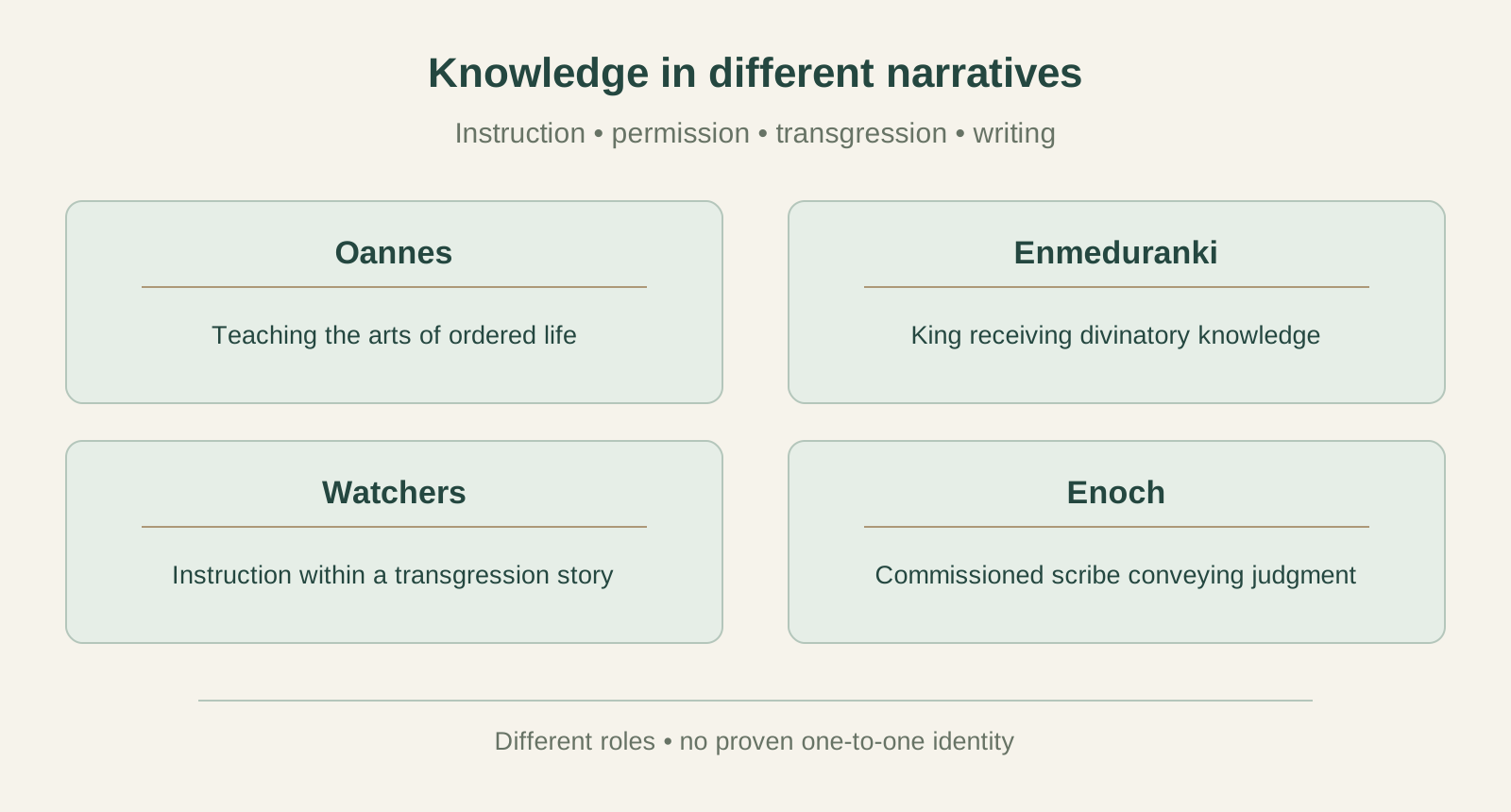
Comparison between Oannes and the Watchers therefore preserves two features together. Both involve instruction arriving from beyond ordinary human life. But the Berossian passage gives the teacher a foundational role, whereas Enoch connects particular instruction with disorder. This is IL Archive’s comparison of the passages, not an ancient declaration that one author answered another book. [5] [9] [10]
The counter-narrative hypothesis
Annus proposes that the Watchers story critically reinterpreted Mesopotamian sages: ancient instruction supported by superhuman authority becomes transgression. This influential scholarly model is not a document identifying a transmitter or matching each Watcher with a sage. [13]
A counter-narrative involves more than renaming characters. If established, it makes familiar elements perform a new moral function. But reversing a value does not itself prove textual dependence. Two traditions can assess knowledge differently without one being a direct reading of the other.
Testing a route of transmission
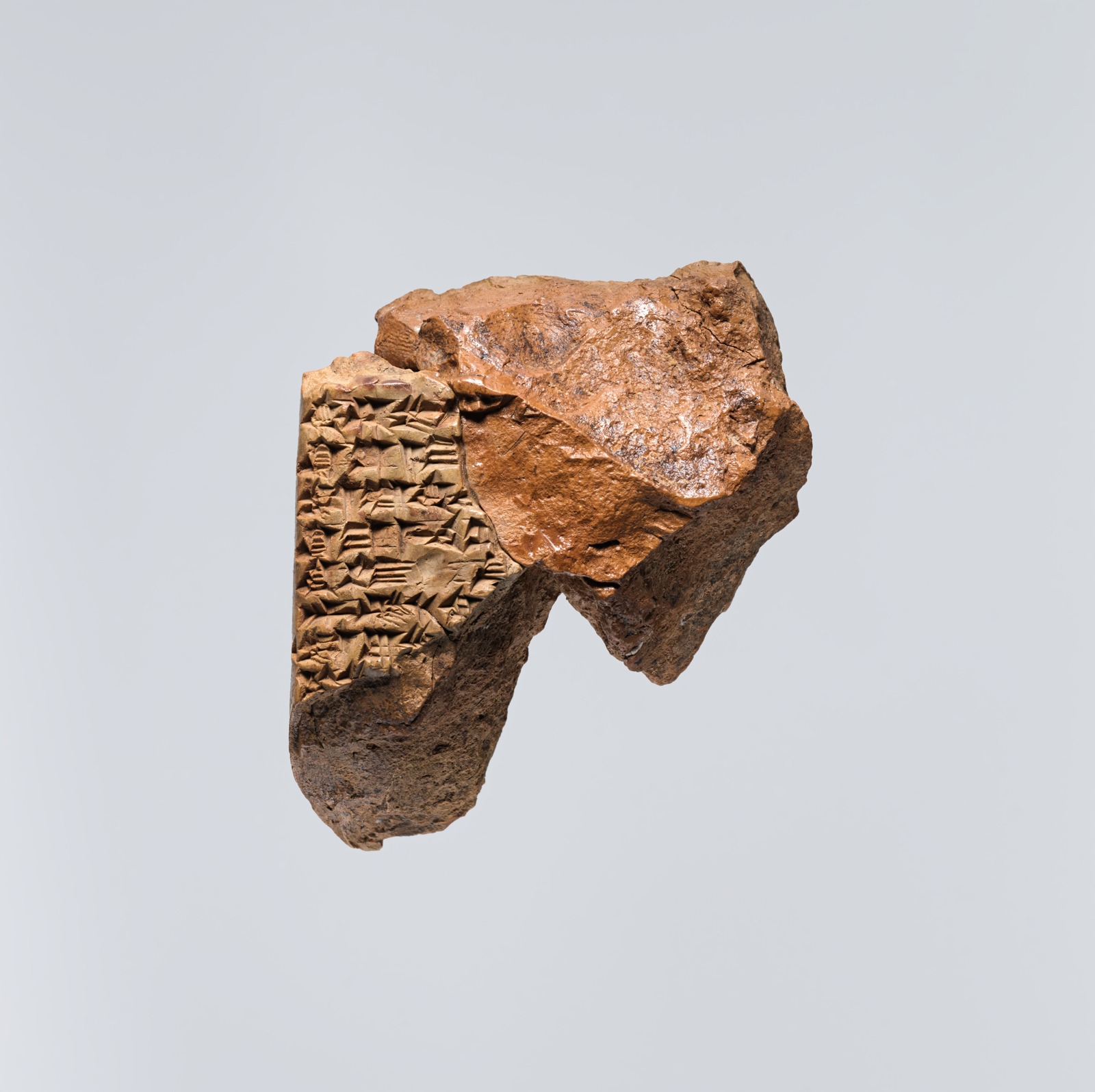
One later Uruk entry includes an AramaicAramaicA group of Northwest Semitic language varieties with a long history across the Near East.Glossary · Click to read the explanation identification with Ahiqar. [3] That is a specific contact clue; it names neither the author of the Book of the Watchers nor that author’s supposed Mesopotamian copy.
IL Archive tests a proposed transfer with six questions:
- Chronology: was the required element known before the text supposedly receiving it?
- Contact: could communities, languages or institutions make it accessible?
- Specificity: are we comparing writing and wisdom generally, or uncommon details?
- Structure: do the details occur in the same order and perform the same roles?
- Route: can an intermediary or setting of circulation be identified, with appropriate uncertainty?
- Alternatives: does shared traditionShared traditionInherited material reaching several texts without direct dependence between them.Glossary · Click to read the explanation or independent developmentIndependent developmentSimilar elements arising without historical transmission between them.Glossary · Click to read the explanation explain the resemblance better?
Success with one question does not supply the missing answers to the others. A plausible environment is not automatically a specific tablet’s journey between two writers. A particular route remains unproven even when the comparison deserves investigation.
What does the image show?
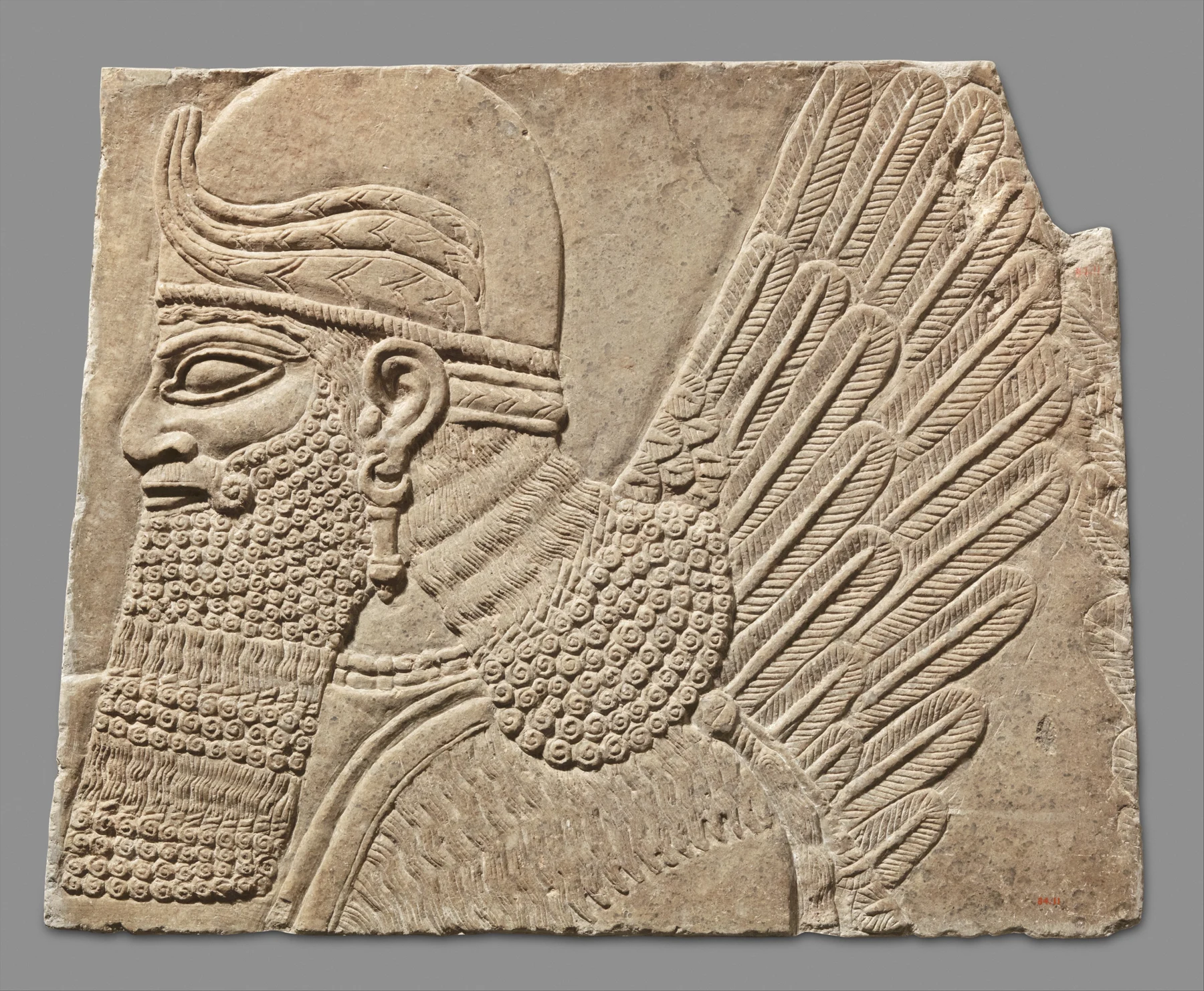
The cover is an Assyrian relief from Nimrud, ca. 883–859 BCE, Met 84.11. Connecting such figures with apkallu is proposed, with multiple meanings acknowledged. It neither portrays Enoch nor proves transmission of his story. [14]
An image reveals an ancient form of representation, but does not by itself identify a figure or membership in a list. This applies to comparative articles generally: a caption preserving the object’s identity and interpretive limits is part of the evidence, not decorative detail.
What can be concluded?
The passages allow comparison of primeval wisdom, authorized knowledge, harmful teaching, the Flood and the scribe’s standing. Their differences prevent us from making them one story about identical individuals.
We lack sufficient evidence to say that Enoch is Enmeduranki himself, that two hundred Watchers are seven sages with a changed number, or that all their knowledge came from one book. We do have grounds to study how different texts connected knowledge with authority, responsibility and danger.
This inquiry concerns narrative history and comparison. Accepting a literary connection does not validate or invalidate a belief; lacking proof of borrowing does not isolate a text from its entire environment. Conclusions begin with each witness and identify what remains hypothetical.
Continue reading: Sons of God and Watchers, Adapa and Eden, The Flood before Noah, and From Gods to Angels.
References and notes
- Indexed lexical entry; full opening timed out. ORACC TSAE Akkadian apkallu lexical index Return to the text ↑
- Pages63,65–67,105–109 and title; selected visual reading. F.A.M.Wiggermann, Mesopotamian Protective Spirits: The Ritual Texts (1992) Return to the text ↑
- Selected219,222–223,229–230,232–234; not whole article. Sophus Helle, JNES 77/2 (2018),219–234 Return to the text ↑
- Selected first five pages; displayed translation after Lambert. Andrei Orlov, Scrinium1 (2005), PartI, The Learned Savant Who Guards the Secrets of the Great Gods Return to the text ↑
- Complete fragment in historical translation; not Berossus’s original. Berossus through Alexander Polyhistor; I.P.Cory, Ancient Fragments (1832), historical public-domain translation Return to the text ↑
- Complete fragment in historical translation. Berossus through Apollodorus; Cory1832 Return to the text ↑
- Selected Hebrew genealogy. Genesis5:3–24, Hebrew genealogy Return to the text ↑
- Both complete verses in historical translation. Jude14–15; historical KJV Return to the text ↑
- Complete chapter6 in historical translation. 1Enoch6:1–8; R.H.Charles historical translation Return to the text ↑
- Complete chapter8 in historical translation. 1Enoch8; Charles historical translation Return to the text ↑
- Complete chapters12–14,each on a separate page. 1Enoch12–14; Charles; separate chapters12,13,14 Return to the text ↑
- Selected excerpt; not whole book. Annette Yoshiko Reed, Fallen Angels and the History of Judaism and Christianity(2005), excerpt1–6,opening7 Return to the text ↑
- Pages282–286 and a selected passage near303; attributed model. Amar Annus, JSP19/4 (2010),277–320; DOI10.1177/0951820710373978 Return to the text ↑
- Catalogue,original and rights; identification proposed. Metropolitan Museum, relief84.11, ca.883–859BCE Return to the text ↑
Suggest a correction · Suggest a source for this record
Cite this record
IL Archive, «Enoch and the Apkallu: Wisdom before the Flood», Edition 1, https://ilarchive.com/en/studies/enoch-apkallu-and-primeval-wisdom
Continue reading