Study
Before We Knew the Names of Gods
An extended study of a topic, with evidence and references.
What can burials, skulls, figurines and buildings tell us about early beliefs? A study of archaeological evidence and the boundary between observation and interpretation, from Jericho to Göbekli Tepe and Çatalhöyük.
Share article
Text
Introduction
What can a grave, a skull or a figurineFigurineSmall three-dimensional representations of people, animals or other beings. Size and appearance alone do not establish a toy, portrait, ritual object or deity; manufacture, discovery context and use require study.Glossary · Click to read the explanation tell us about belief before writing? Archaeology preserves actions and locations, but not necessarily the meaning their makers gave them. This study explains the difference between describing evidence and interpreting it, from the skulls of JerichoJericho / Tell es-SultanArchaeological mound near present-day Jericho in Palestine’s Jordan Valley, preserving early Neolithic settlement and Bronze Age layers.Glossary · Click to read the explanation to the buildings of Göbekli TepeGöbekli TepeA Neolithic site in southeastern Turkey, known for communal buildings and T-shaped pillars; the excavation team describes a settlement with a pronounced ritual component.Glossary · Click to read the explanation and the houses of ÇatalhöyükÇatalhöyükA Neolithic site in central Anatolia where domestic houses combined dwelling with burial, symbolism and social memory.Glossary · Click to read the explanation.
These sites are not one moment. UNESCO dates Göbekli Tepe’s famous monuments approximately to 9600–8200 BCE, Çatalhöyük’s Neolithic levels to about 7400–6200 BCE, and the Jericho skulls belong to another Neolithic context. The question is shared: where does description end and an interpretation of religion begin? [5] [12] [13]
Stones remained, words did not
Before divine names reached us in writing, people had buried their dead, preserved some of their skulls, depicted animals, carved human bodies, built places unlike ordinary dwellings, and returned to the same locations across generations.
Stones, bones, figurines and graves survived. The words spoken around them did not.
We do not know the name someone uttered ten thousand years ago while burying a member of their community. Did they understand the deceased as an ancestor still present among the living, a spirit in another world, or simply a body whose life had ended? Nor do we know whether a stone figure represented a god, a person, or a being from a story that has not survived.
This is the central difficulty in studying the earliest religion: a practice can leave a trace without preserving its full meaning. Archaeology can reveal aspects of what people did. Why they did it, and what they imagined, are harder questions.
When evidence has no words
Societies that left texts give us an extraordinary advantage. We can read MardukMardukBabylon’s god, elevated with the city’s history. Enuma Elish celebrates his rise and cosmic ordering; sources associate him with Nibiru and Jupiter. Earliest origins and functions remain uncertain.Glossary · Click to read the explanation on a Babylonian tablet, ElEl at UgaritA deity prominent in West Semitic traditions, especially as head of the divine family in Ugaritic texts.Glossary · Click to read the explanation and BaalBaalStorm god and protagonist of Ugarit’s Baal Cycle; exercises active kingship while El retains importance and authorizes the palace.Glossary · Click to read the explanation in an Ugaritic text, or YahwehYahwehThe divine proper name written YHWH in the Hebrew Bible.Glossary · Click to read the explanation and ElohimElohimA Hebrew word with plural morphology, used for “gods” or for a singular deity according to context.Glossary · Click to read the explanation in the HebrewHebrewA Northwest Semitic language in the Canaanite group, with ancient and modern forms.Glossary · Click to read the explanation Bible. When a text calls a deity a king, father or creator, we have surviving words whose language and context can be analysed. A text does not reveal every belief in a society, but it gives us some of its people's words.
Before writing, the evidence under consideration contains no words explaining a symbol or names identifying its figures. There may be a grave, bone, red pigment, a bull's horn, a figurine, a large building, a hearth, meal remains, or a repeatedly replastered wall.
Researchers cannot simply “read religion” from these objects. They examine location, dating, repetition and associations, then compare possible explanations. In a methodological study published in 2018, Gantley, Whitehouse and Bogaard discuss how ethnographic comparison and statistical analysis can support inference from incomplete archaeological records. Such inference tests an interpretation; it does not directly recover an ancient person's mind.[1]
Ritual alone does not reveal doctrine
Imagine a carefully prepared grave, a body positioned in a recurring manner, selected objects added, and a skull later removed and treated differently. This hypothetical example combines actions known from different archaeological contexts; it does not describe one presumed burial.
These actions may suggest care for the dead and collective memory, and their context may make a ritualRitualAn organised or distinguished practice meaningful to a community; it may leave traces, but its form alone does not reveal an associated doctrine.Glossary · Click to read the explanation interpretation likely. Yet a skull might stand for an ancestor, the deceased person's continued presence, status or descent, or a practice without a precise modern equivalent. Ritual is an action that may leave material traces; doctrine is one aspect of the meaning a community gives that action. The remains alone do not preserve that meaning as an explicit statement.
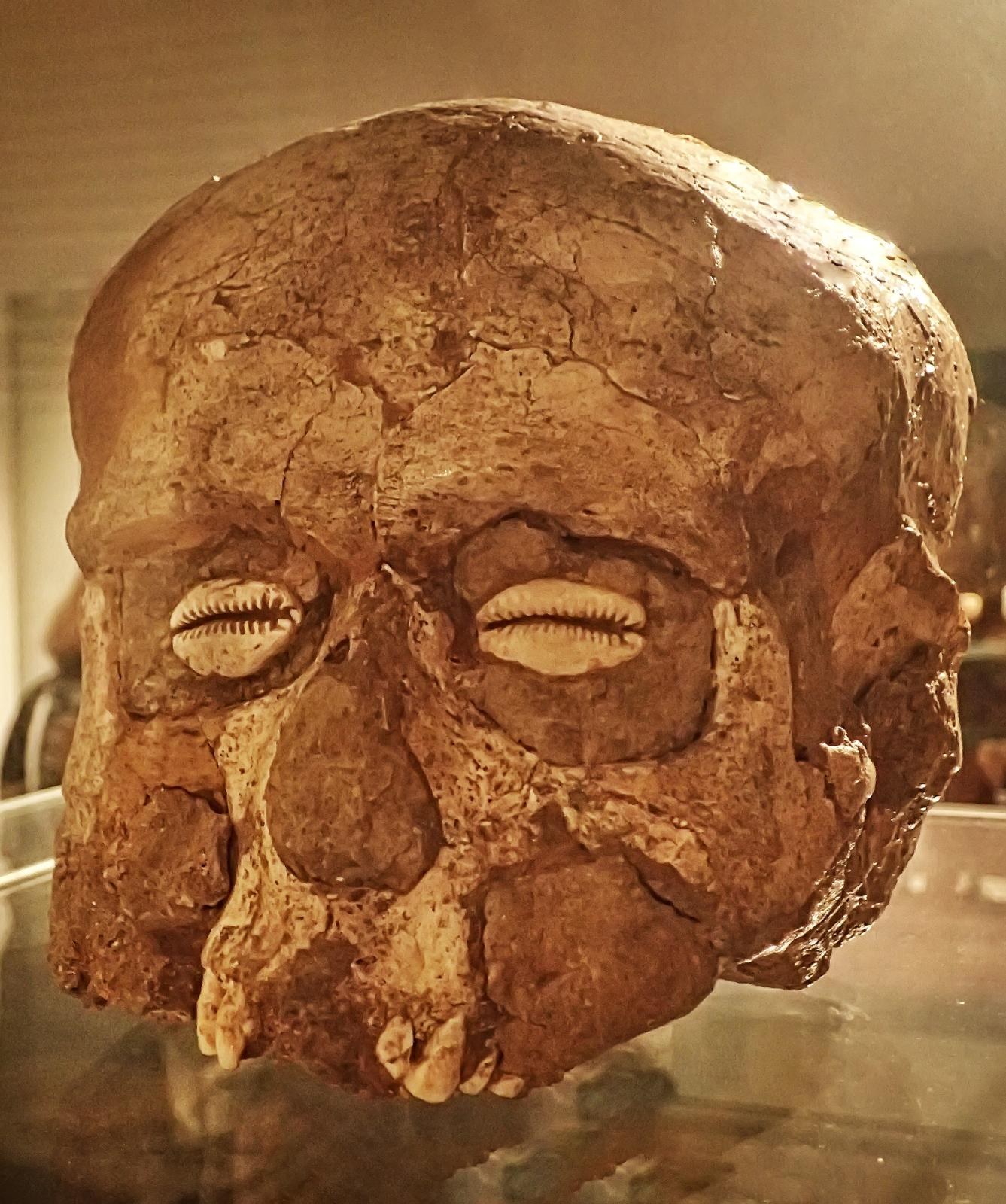
At Jericho, for example, human skulls had faces remodelled in plaster and eyes marked with shells. The Ashmolean Museum presents an interpretation connecting one such skull with representation of the dead and remembrance, while retaining uncertainty about some details.[12] Yosef Garfinkel interpreted certain deposits of statues and treated skulls as ritual burial of objects with cultic significance. This is a reading of particular contexts, not a surviving declaration by their makers.[2]
Perhaps “religious” and “everyday” were not separate
We often divide objects into practical and religious: houses for living, temples for worship; vessels for food, others for ritual. Ancient societies did not have to draw the same boundaries.
A house could shelter people and their dead. A meal could be food and a significant communal event. A pillar could support a roof and embody collective memory. Joanna Brück examines the problems of imposing modern ideas of usefulness and rationality on ritual, arguing that acts researchers classify as ritual may have been regarded by participants as practical and effective.[3] An unusual object, or one without an obvious use, is not therefore sufficient evidence of religion.
Did the sacred begin with a god?
We have no answer that puts all human societies on a single line. Evidence does not establish that religion everywhere began with a personal godPersonal godAn analytical concept for a deity’s relationship with an individual or family; it may overlap city worship and does not identify the god from a name alone.Glossary · Click to read the explanation, nor that it always began with a spirit, ancestor or sacred animal.
Within one society, special treatment of ancestors, restrictions attached to places, animal imagery, powers associated with rain or fertility, and superhuman beings might coexist. But distinctions we draw between “god,” “spirit” and “sacred ancestor” may not match that society's categories.
It is useful to ask first which patterns suggest that people, places or objects received special treatment, and then what meaning the evidence permits us to propose. Even special treatment is not, by itself, proof of a particular religious belief.
A figurine is not automatically a god
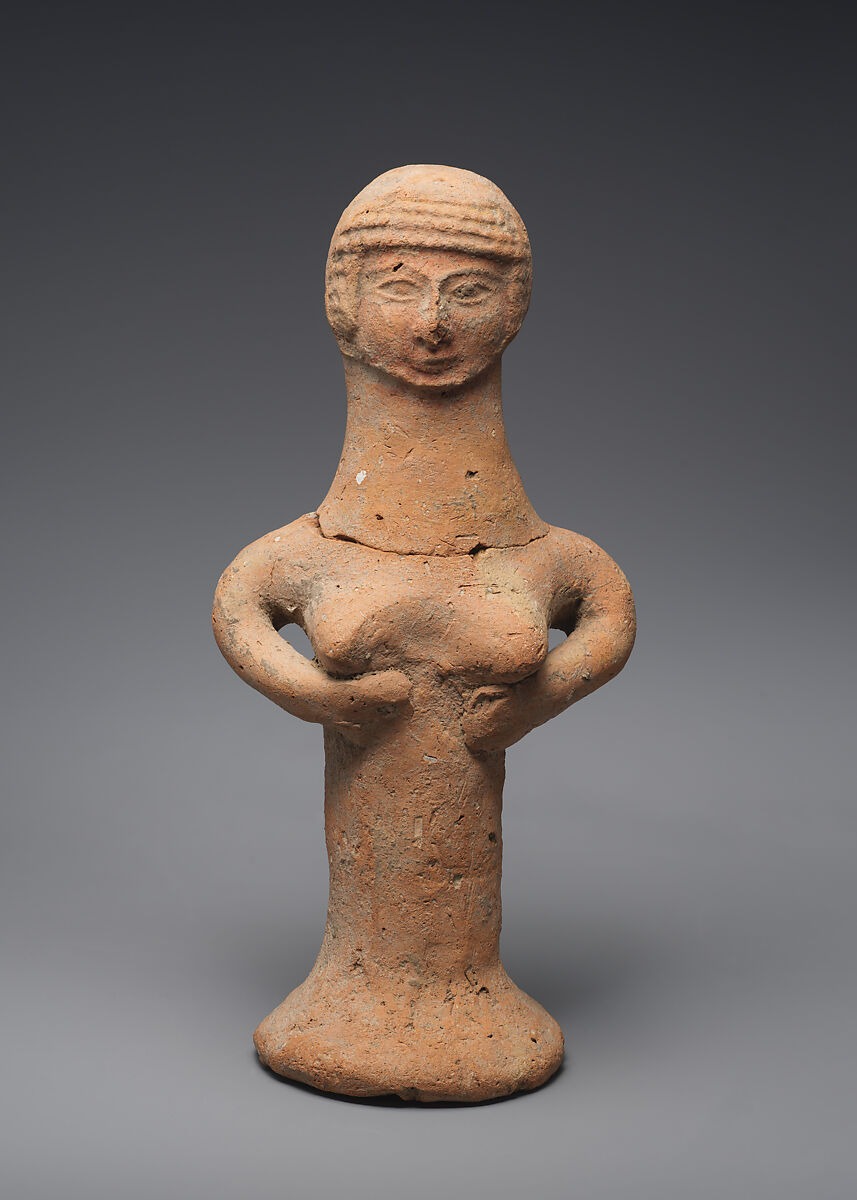
A figurine might depict a person, ancestor, prominent individual, animal, story character, or indeed a deity. Its shape alone does not settle its identity.
Context gives an interpretation its strength. Was it found in a grave, house or communal building? Are there repeated examples? Was it repaired or carefully buried? Does it recur in a particular kind of deposit across generations?
Repeated, dated associations make explanations more testable. An impressive object without a clear context cannot reconstruct an entire belief system. “Female figurine” describes a depicted feature; “mother goddess” is an interpretation requiring additional evidence.
A large building is not automatically a temple
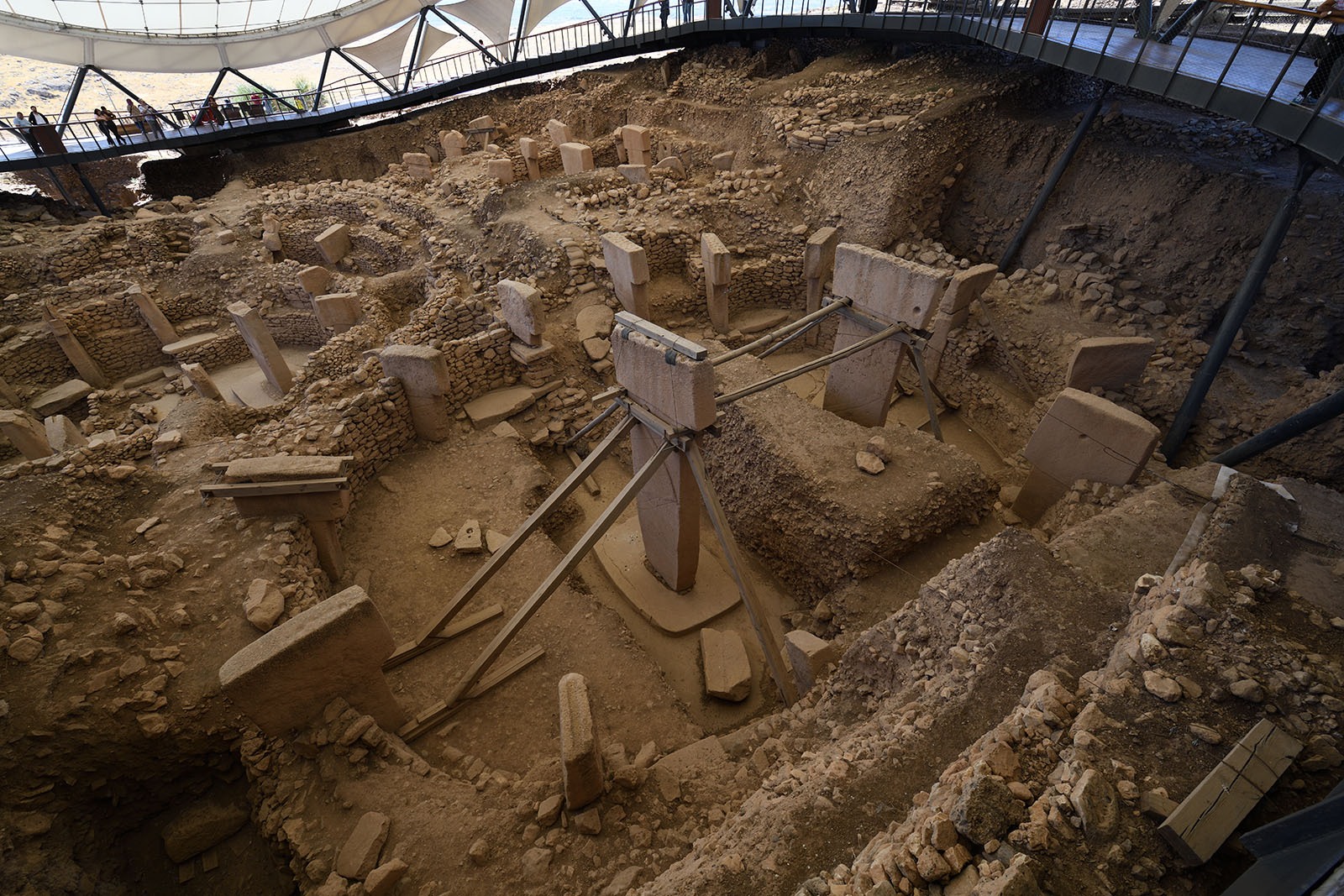
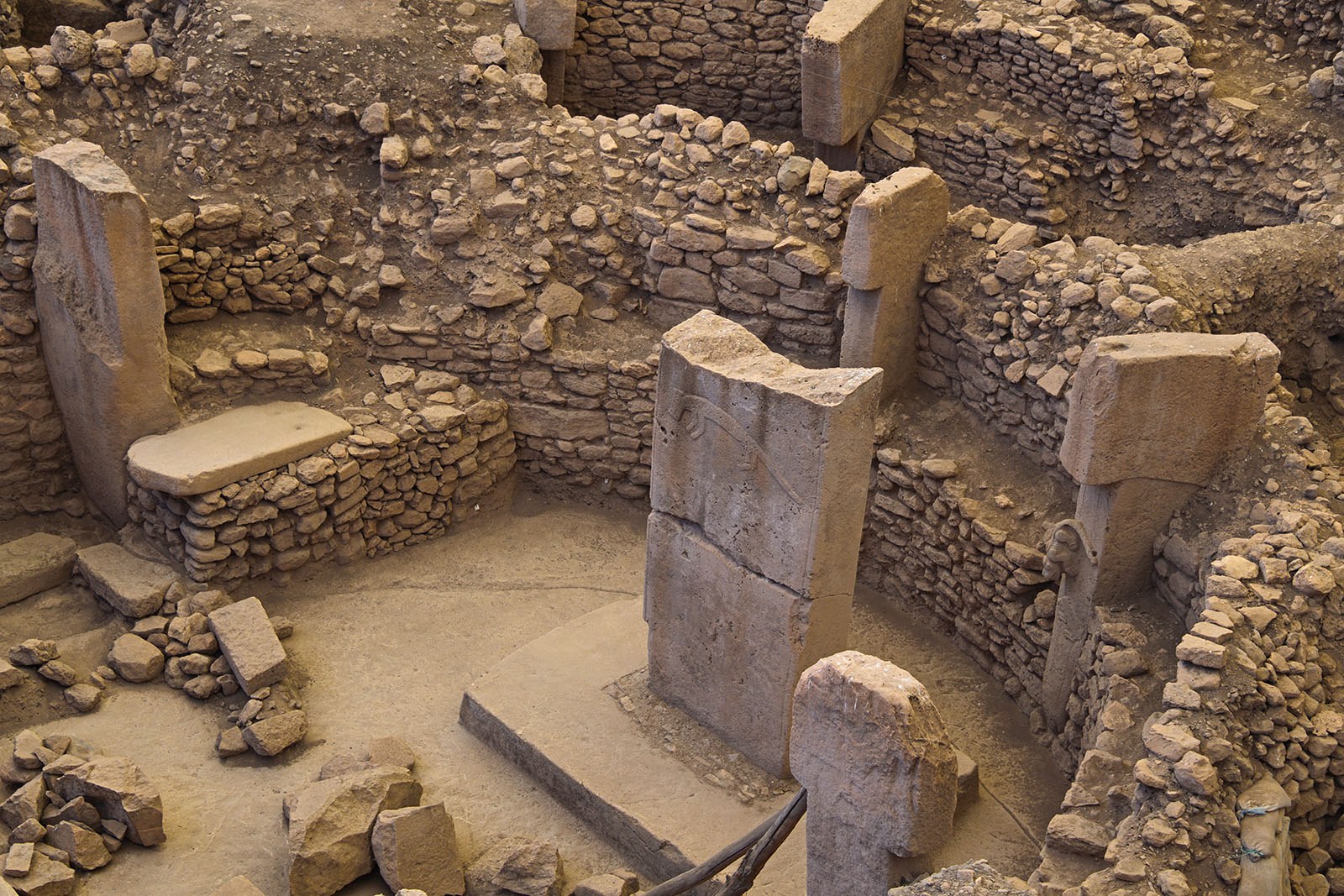
A monumental building may be a temple, meeting hall, storehouse, feasting place, or an institution combining several functions. Göbekli Tepe, in present-day southeastern TurkeyTurkeyTurkey is a modern country including Anatolia and territory in southeastern EuropeGlossary · Click to read the explanation, is an important example. Its famous structures date to roughly 9600–8200 BCE, and it is widely described as the “world's first temple.”[5]
The German Archaeological Institute's current account places that interpretation in a broader setting. Evidence of domestic activities and indications of permanent habitation support describing the site as a settlement with a pronounced ritual component.[4]
UNESCO describes monumental communal buildings probably associated with social events and rituals, alongside remains that appear domestic. It also notes the architectural functions of the T-shaped pillars.[5] This does not exclude religious functions; it makes “temple or village?” too narrow a choice. The same feature can be structural and symbolic.
When does a symbol become evidence?
A carved snake alone does not demonstrate snake worship. Bull horns do not identify a doctrine, and a bird near a burial does not automatically explain a belief about the soul.
We look for a system of associations. Does the image recur in particular places, buildings or burials? Are objects bearing it treated differently? Can its continuity be dated? Duff, Clark and Chadderdon examined the difficulty of inferring symbolic behaviour directly from an object's features and argued for stricter criteria.[6]
The claim that a symbol mattered may be stronger than the claim that we know what it meant. The distance between those statements is where caution belongs.
Was practice older than organised doctrine?
It is misleading to say that people performed rituals for millennia without ideas and invented meaning later. Yet having meaning is not the same as having written theology or one uniform explanation.
A community might return to a place for generations without leaving us a text explaining its importance. Practice seems older in our record because actions can survive materially before written words appear. That difference between kinds of evidence does not establish the order in which thought and action arose.
An accumulation linking practice, memory, interpretation and more organised traditions can be proposed as an interpretive hypothesis, not a universal ladder for all societies. The visibility of actions does not prove that they preceded every belief.
How can everyday life acquire special meaning?
A roof-supporting pillar might become a meeting point and later connect with community memory. This illustrates a possible accumulation of meaning, not an archaeological sequence established at a particular site. We need not imagine one moment when somebody declared a stone sacred.
Richard Bradley proposes ritualizationRitualizationThe acquisition of special qualities by familiar practices or places; an analytical concept that need not separate ritual from everyday life.Glossary · Click to read the explanation as a way to investigate how aspects of domestic life acquired special qualities, instead of placing “practical” and “ritual” in separate boxes. His study concerns prehistoric Europe. It is a comparative starting point here, not proof of one trajectory in AnatoliaAnatoliaAnatolia is the region occupying the Asian part of present-day TurkeyGlossary · Click to read the explanation or the LevantThe LevantThe Levant is a regional name for lands along the eastern MediterraneanGlossary · Click to read the explanation.[7]
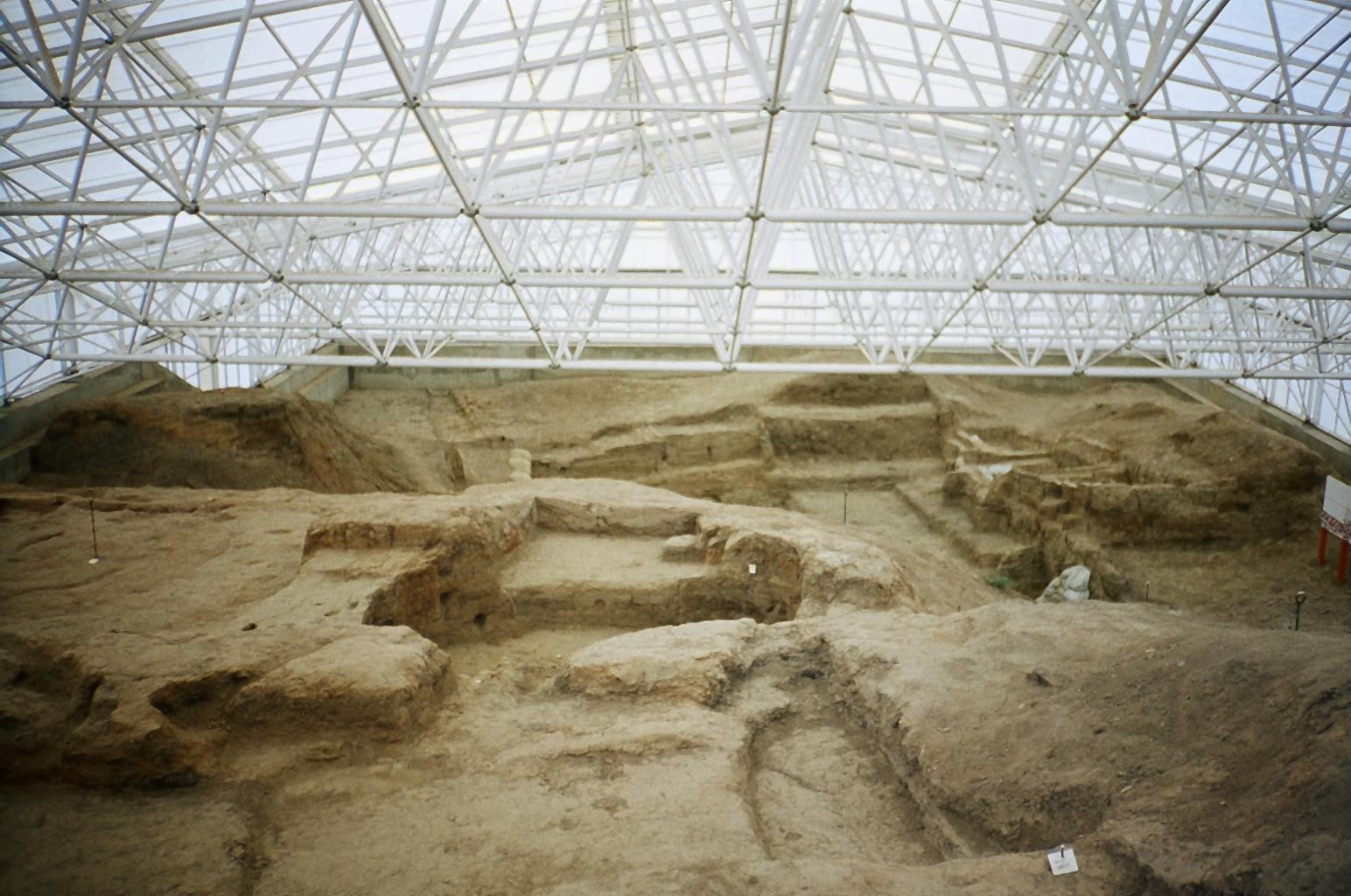
How does a place become memory?
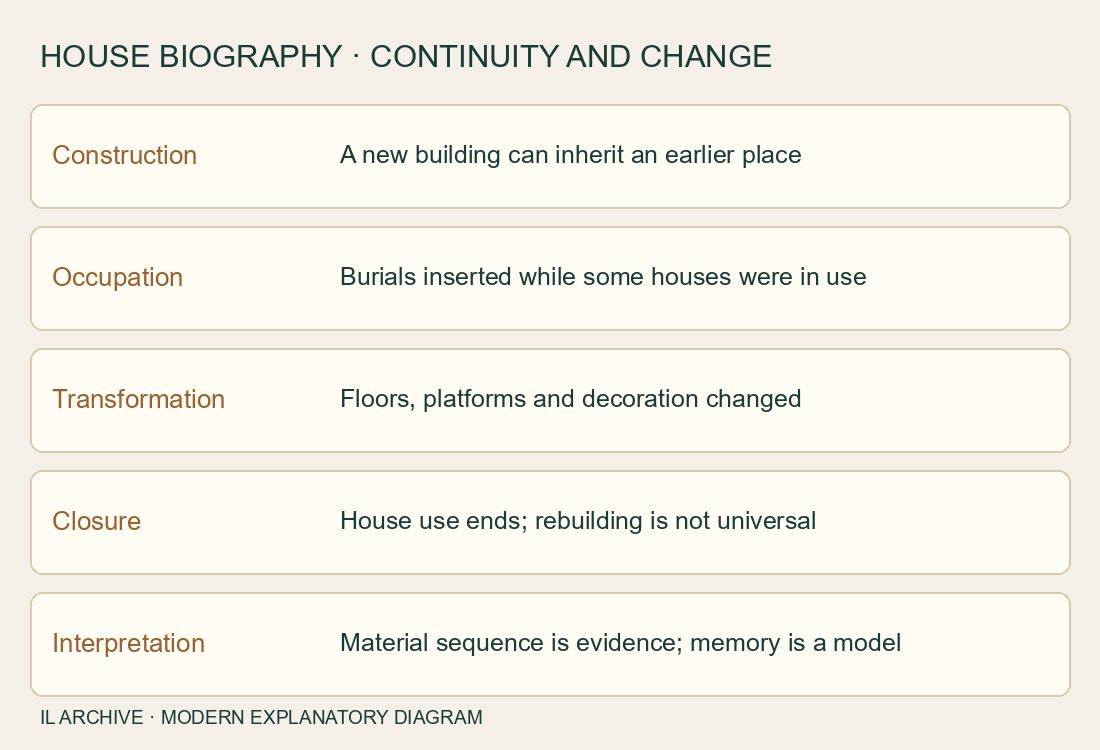
At Çatalhöyük in central AnatoliaAnatoliaAnatolia is the region occupying the Asian part of present-day TurkeyGlossary · Click to read the explanation, Neolithic occupation levels on the eastern mound date to approximately 7400–6200 BCE.[13] Ian HodderIan HodderAn archaeologist who directed the Çatalhöyük project from 1993 to 2018 and read its buildings as houses of dwelling and memory, not necessarily separate temples.Glossary · Click to read the explanation and Pels discuss how buildings rich in decoration, burials and symbolism also served as houses, and how variation might be interpreted through “history housesHistory housesA modern concept for certain Çatalhöyük houses accumulating rebuilding, burials and elaboration over time. It concerns a place’s history and group, without making the house a temple or every building identical.Glossary · Click to read the explanation” rather than a simple division into houses and separate temples.[8]
Hodder and Cessford studied the relationship between recurring construction, domestic practice and social memorySocial memoryHow a group forms relationships to the past through narratives, practices, objects and places.Glossary · Click to read the explanation.[9] Ian Kuijt also proposes the “House” as a social unit potentially encompassing more than one family and connecting the living through narratives of descent and ancestors.[10] These are modern interpretive models grounded in the distribution and associations of remains.
Repeated dwelling, burial and rebuilding can make people's relationship with a place exceed its use as shelter. The stone need not have changed; its history and relationships may have accumulated.
Could there have been a god we cannot see?
That is possible. If a community did not depict a supreme being, we cannot expect a statue of it. Some ideas might have been expressed through sounds, names, directions or perishable materials.
“We have found no image of a god” therefore does not mean that no such idea existed. The reverse matters equally: the possibility of an unpictured god is not evidence that one was worshipped. Possibility and evidence are different things. This distinction is essential when testing “the first high godHigh godA deity with a senior position among other gods; this does not itself mean monotheism.Glossary · Click to read the explanation” or “original monotheismMonotheismBelief in a single God as the only deity, rather than merely the highest among several gods.Glossary · Click to read the explanation” in societies without texts.
When does absence itself become evidence?
Absences differ in their value. A small excavated area, or an expected object made of decayed wood, gives a weak test. Where preservation and investigation make a particular trace reasonably expectable, failure to find it can become meaningful.
Thomas and Darvill discuss negative evidenceNegative evidenceFailure to find an expected trace can test a hypothesis when preservation and investigation make discovery expectable; not every absence is evidence.Glossary · Click to read the explanation using large-scale archaeological investigations in Britain.[11] Applying the principle to religion requires an explicit, testable expectation: what should survive if a particular hypothesis is correct?
In a culture with many preserved images, the absence of a recurrent central figure could weaken the hypothesis that a high god was visually represented in a dominant manner. It cannot establish that people had no concept of a high god. A specific expectation is being tested, not everything that might have existed in their minds.
From description to interpretation: where do mistakes begin?
Mistakes often begin by naming an object faster than evidence permits: a female figure becomes a “fertility goddess,” a bull a “bull god,” and a larger pillar the “supreme deity.” Repetition lets the interpretation enter the object's name and resemble direct description.
“A female figurine was found” differs from “a figurine of the mother goddess was found.” The second may be correct, but needs its own justification. Readers should be able to see the step from describing material to interpreting it.
Four degrees that keep possibility from becoming fact
IL Archive uses four epistemic degrees as an editorial vocabulary for evidential strength, not as a classification attributed to every researcher cited:
Confirmed: a documented direct observation, such as carved arms and hands on a specified pillar or burial beneath a floor in an established context.
Probable: an interpretation supported by converging evidence that makes alternatives weaker, such as a particular building's communal and ritual role after examination of its context.
Possible: an interpretation with supporting clues and viable competitors, such as a figure representing an ancestor or superhuman being.
Unproven: a possible idea exceeding the available evidence, such as assigning a known deity's name to an unidentified figure or establishing monotheism from a single symbol.
The degree applies to a specific claim in a particular context, not to an entire site or period. These degrees do not prohibit hypotheses; they prevent presenting them as settled facts.
Disciplined imagination belongs in research
Archaeology cannot work without hypotheses. We may ask whether differences in pillar size express rank, whether skull treatment relates to ancestors, or whether rebuilding connects a place with identity.
A useful hypothesis states its support, alternatives, and what could weaken it. The problem does not begin with “perhaps.” It begins when “perhaps” disappears from the next sentence without new evidence. This is a methodological principle adopted by the archive, not a quotation from an unidentified source.
So what do we know about the “first religion”?
Less than some popular accounts imply, and more than total silence suggests. We cannot name the first god, demonstrate that all earliest communities began with monotheism or polytheism, or construct a universal ladder from “spirit” to “god” to “one god.”
We can document burials, treatment of bodies and objects, choices of materials and places, recurring actions, and construction and reuse of buildings. In particular contexts, such patterns make social, symbolic and ritual meanings beyond immediate utility probable. Documenting an action does not establish every interpretation of it.
These remains bring us closer to a history of the sacred without letting us hear the vanished words. An object may reveal extraordinary attention before revealing precisely what that attention meant.
Divine names did not need writing to exist in speech. They needed means of preservation, including writing, to reach us as documented names. Thousands of years before the earliest written attestations, human relationships with death, place, bodies and symbols had already left traces in the ground. Those traces begin an investigation; they are not a ready-made answer about the first religion.
References and notes
- Michael Gantley, Harvey Whitehouse & Amy Bogaard (2018). Material Correlates Analysis (MCA). Advances in Archaeological Practice 6(4), 328–341. Abstract and introduction; limits of inference and comparison, not proof of a first religion. Return to the text ↑
- Yosef Garfinkel (1994). Ritual Burial of Cultic Objects: The Earliest Evidence. Cambridge Archaeological Journal 4(2), 159–188. Publisher extract; an interpretation of deposits of cultic objects in specific contexts, not a textually documented doctrine. Return to the text ↑
- Joanna Brück (1999). Ritual and Rationality: Some Problems of Interpretation in European Archaeology. European Journal of Archaeology 2(3), 313–344. Abstract; critique of imposing a modern separation between ritual and practical action. Return to the text ↑
- Deutsches Archäologisches Institut. Göbekli Tepe, project 5746. Current project overview; domestic evidence, settlement and a ritual component. The team gives an approximate site chronology broader than UNESCO’s range for the monuments. Return to the text ↑
- UNESCO World Heritage Centre. Göbekli Tepe, property 1572. Description and Outstanding Universal Value; monuments approximately 9600–8200 BCE, communal and architectural functions. Return to the text ↑
- Andrew I. Duff, Geoffrey A. Clark & Thomas J. Chadderdon (1992). Symbolism in the Early Palaeolithic: A Conceptual Odyssey. Cambridge Archaeological Journal 2(2), 211–229. Publisher extract; criteria for inferring symbolic behaviour, not identification of a particular symbol’s meaning. Return to the text ↑
- Richard Bradley (2003). A Life Less Ordinary: the Ritualization of the Domestic Sphere in Later Prehistoric Europe. Cambridge Archaeological Journal 13(1), 5–23. Abstract; ritualization in prehistoric Europe, used for methodological comparison rather than a universal sequence. Return to the text ↑
- Ian Hodder & Peter Pels (2010). History houses: A new interpretation of architectural elaboration at Çatalhöyük. In Religion in the Emergence of Civilization, 163–186. Chapter summary; domestic functions and variation in architecture. Print publication 2010; online publication 2012. Return to the text ↑
- Ian Hodder & Craig Cessford (2004). Daily Practice and Social Memory at Çatalhöyük. American Antiquity 69(1), 17–40. Abstract; recurring domestic practice and social memory. The article dates to 2004, not its later platform upload. Return to the text ↑
- Ian Kuijt (2018). Material Geographies of House Societies: Reconsidering Neolithic Çatalhöyük, Turkey. Cambridge Archaeological Journal 28(4), 565–590. Abstract and opening House Societies section; an interpretive proposal for social units beyond a single small family. Return to the text ↑
- Roger Thomas & Timothy Darvill (2022). What haven’t we found? Recognising the value of negative evidence in archaeology. Antiquity 96(388), 955–967. Abstract; negative results in large-scale British archaeology. The religious-image example is the archive’s methodological application, not a finding of that paper. Return to the text ↑
- Ashmolean Museum, University of Oxford. Jericho Skull, AN1955.565. Object description and interpretation of its treatment; the museum dates it approximately around 7000 BCE. Return to the text ↑
- UNESCO World Heritage Centre. Neolithic Site of Çatalhöyük, property 1405. Eastern mound Neolithic levels, approximately 7400–6200 BCE; this does not encompass the later western mound’s full history. Return to the text ↑
Research history
Substantive changes are retained here. Minor copy edits remain in the internal operational log.
-
Substantive record update
Suggest a correction · Suggest a source for this record
Cite this record
IL Archive, «Before We Knew the Names of Gods», Edition 2, https://ilarchive.com/en/studies/before-divine-names
Continue reading