Study
Leviathan and Lotan: the serpent across Ugaritic and Hebrew poetry
An extended study of a topic, with evidence and references.
- Region
- The Levant
An Ugaritic tablet and Isaiah 27 share the fleeing and twisting serpent. Follow the poetic inheritance and Leviathan’s changing roles in Psalms, Job and later reception.
Estimated reading time: 8 min Published Last reviewed:
Share article
Text
Introduction
What connects the serpent of Ugaritic poetry with Leviathan in the HebrewHebrewA Northwest Semitic language of the Canaanite group, encompassing Iron Age epigraphy, Biblical, Rabbinic, medieval and Modern Hebrew; its scripts and pronunciations changed over time.Glossary · Click to read the explanation Bible? This study compares Lotan and LeviathanLeviathanLeviathan, a poetic sea creature: its heads are crushed in Psalm 74, it belongs to creation in Psalm 104, and its daunting strength figures in Job. Ugaritic Lotan is a close parallel, not proof of a single fixed myth.Glossary · Click to read the explanation through a specific combination: a related name followed by the fleeing and twisting serpent. It traces a shared poetic tradition and asks what changed when texts from different periods and settings used it. [2][3][4]
We begin with a Late Bronze AgeLate Bronze AgeAn archaeological period around 1600–1200 BCE in much of the Near East, with international diplomacy, exchange and religious diversity; its endpoints vary by region.Glossary · Click to read the explanation tablet, then read IsaiahBook of IsaiahProphetic collection in the Hebrew Bible; its first chapter addresses justice and the cases of the fatherless and widow.Glossary · Click to read the explanation, PsalmsBook of PsalmsCollection of ancient Hebrew poems and prayers; Leviathan has different roles in Psalms 74 and 104.Glossary · Click to read the explanation and the Book of JobBook of JobHebrew wisdom text exploring suffering, justice and the limits of human knowledge through dialogue and poetry.Glossary · Click to read the explanation, before turning to later reception in RevelationBook of RevelationChristian apocalypse commonly dated in its present form to the late first century CE, reusing earlier scriptural imagery.Glossary · Click to read the explanation and the Babylonian TalmudBabylonian TalmudA large rabbinic compilation in Hebrew and Aramaic, formed in Mesopotamia through stages; its final redaction remains debated.Glossary · Click to read the explanation. The witnesses’ dates and purposes help distinguish the transmission of an old tradition from copying a particular tablet. [1][2][16][17]
A serpent preserved in words
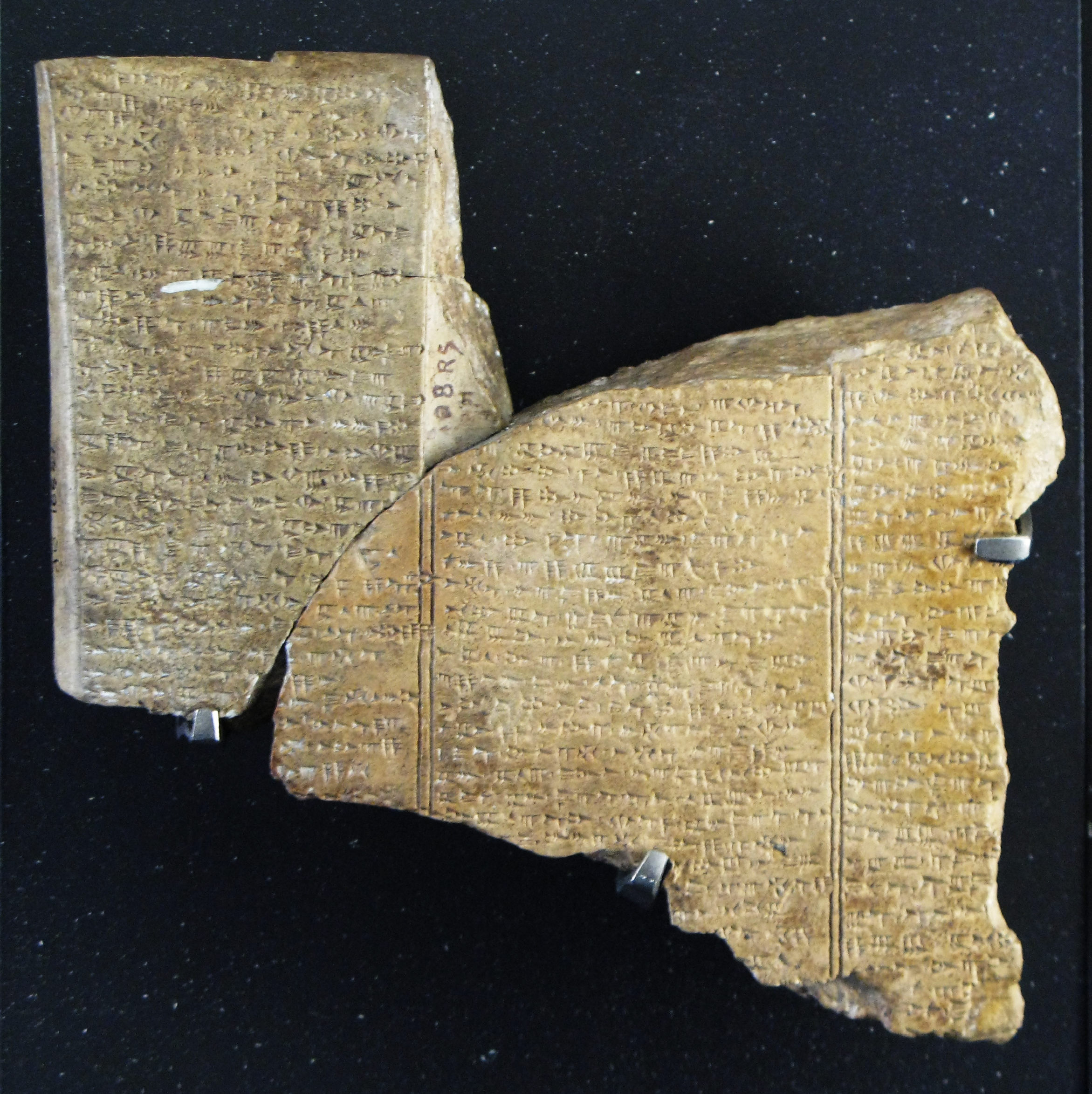
At UgaritUgaritAncient city and kingdom at Ras Shamra on the Syrian coast, flourishing between the fourteenth and early twelfth centuries BCE and preserving multilingual archives.Glossary · Click to read the explanation, the ancient city at Ras Shamra on the Syrian coast, the god MotMotGod of death in the Baal Cycle; an adversary who returns even after a violent attack.Glossary · Click to read the explanation reminds his opponent BaalBaalUgaritic storm god and warrior king who defeats Yamm, builds his palace with El’s consent and confronts Mot. References to El and Dagan as fathers do not define a single genealogy.Glossary · Click to read the explanation of an earlier victory over a serpent. The scribe wrote its name with the Ugaritic consonants ltn, describing it as fleeing, twisting and seven-headed. A clay tablet preserves these words; poetry supplies the serpent’s appearance. [1][2]
Isaiah 27:1 uses a closely related formula: Leviathan, the fleeing serpent, and the twisting serpent. Here the action points forward to punishment by YHWHYahwehThe proper name of Israel’s deity, written יהוה (YHWH), the Tetragrammaton. Its exact ancient pronunciation is not directly preserved; texts and inscriptions witness its history.Glossary · Click to read the explanation, the divine name in the Hebrew text. This particular combination of name and descriptions grounds the comparison. [2][3]
The tablet: the copy and the poem
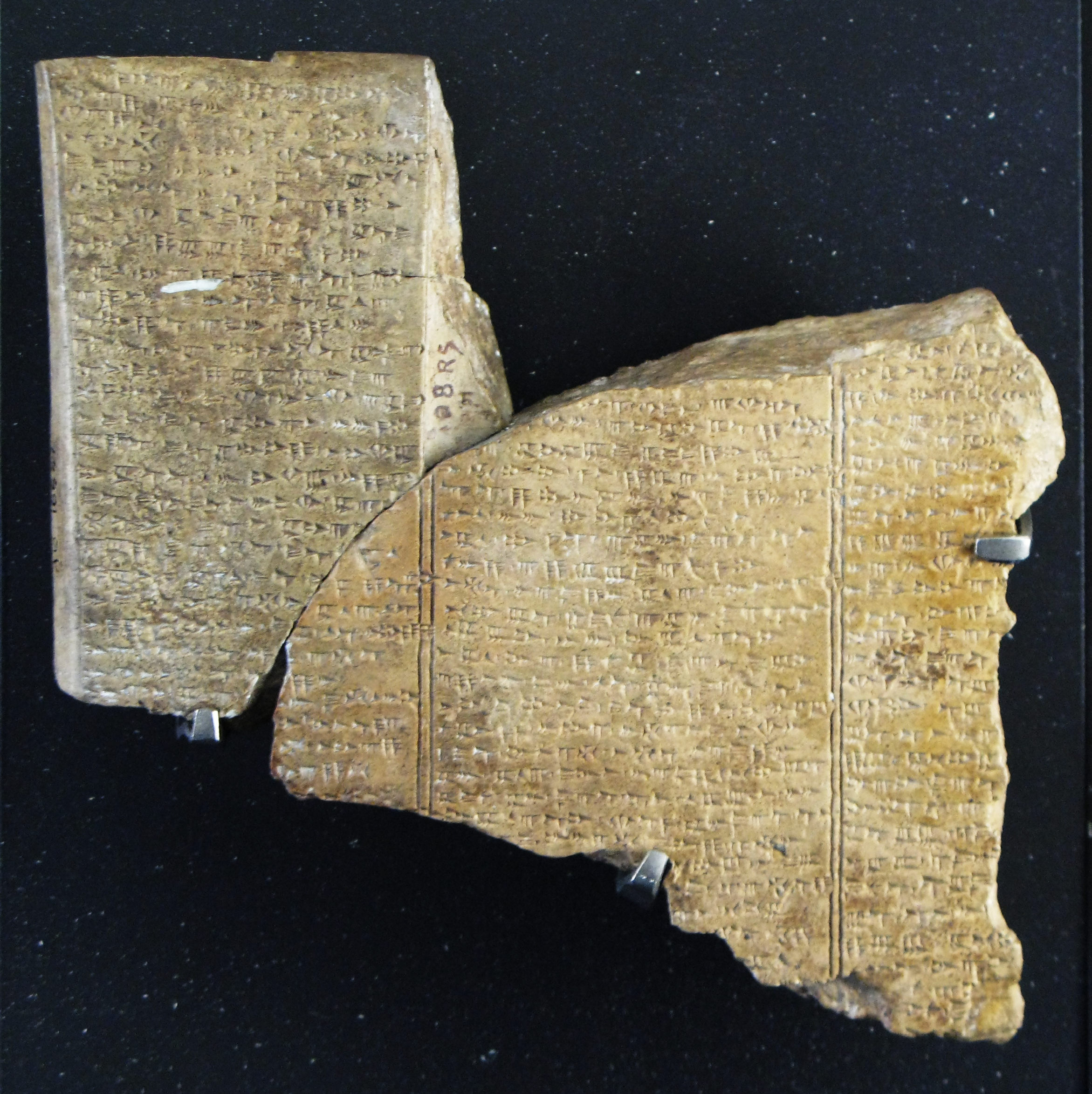
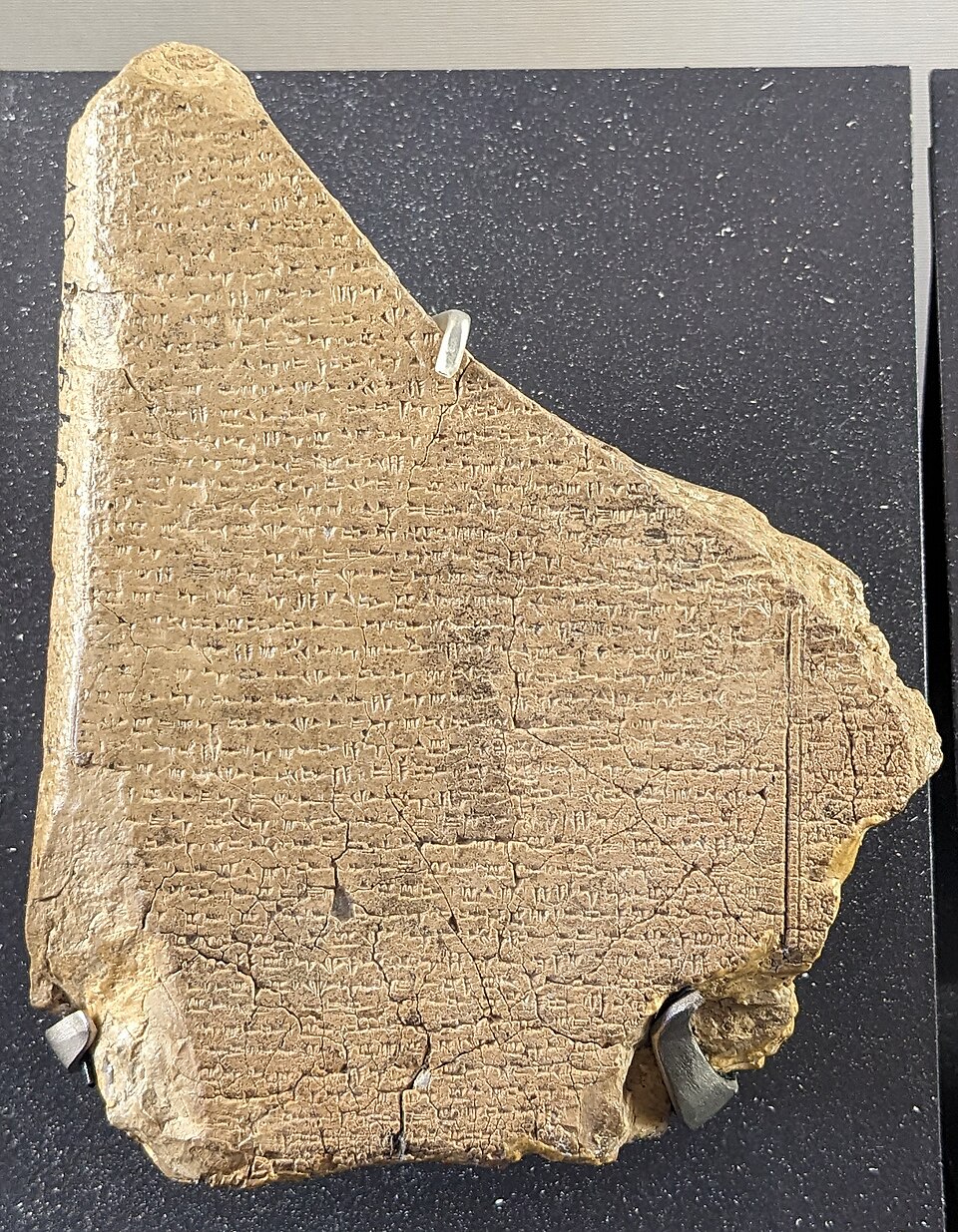
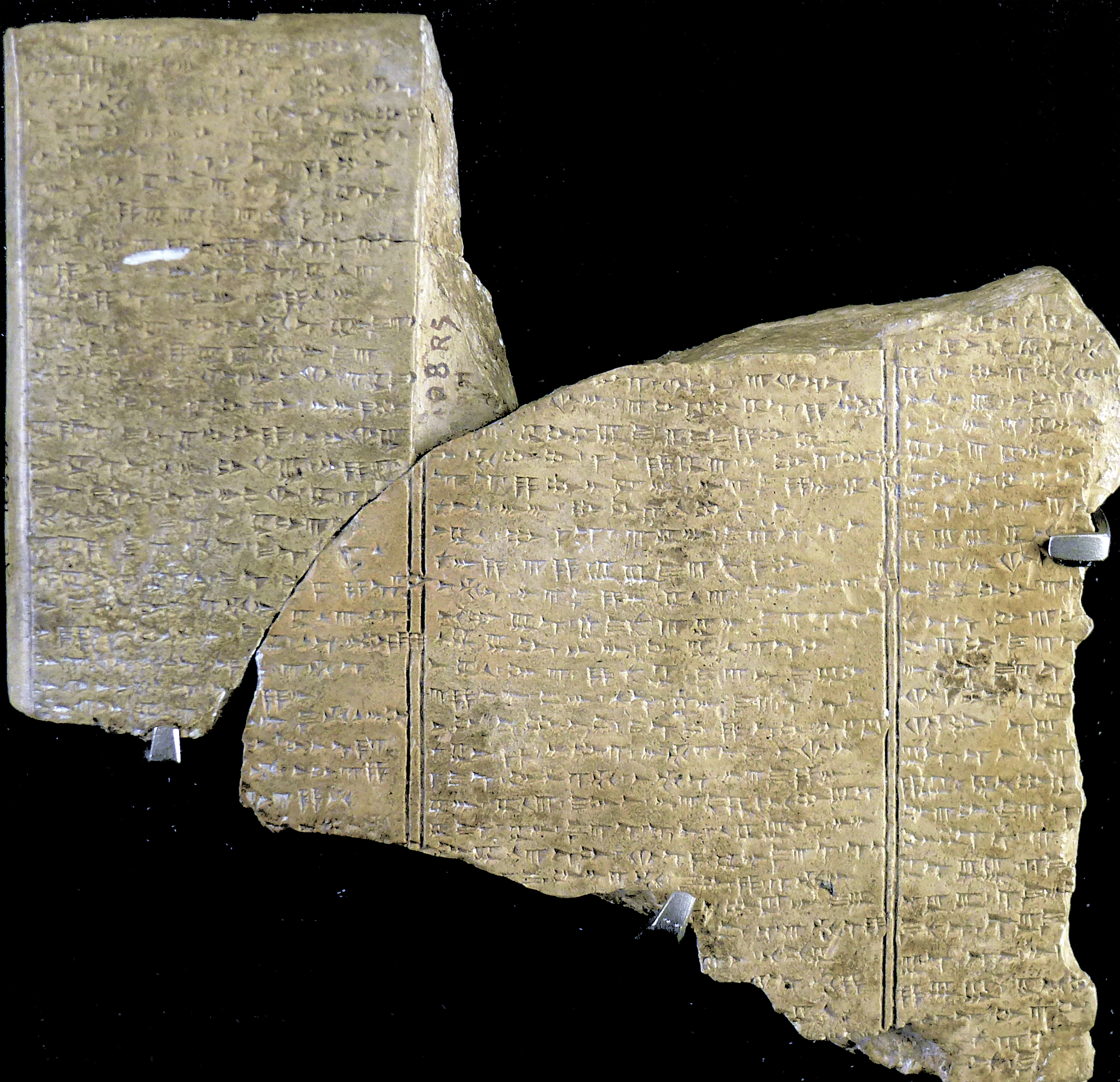
The cover photograph shows two fragments in the Louvre, AO 16641 and AO 16642. They belong to the Baal CycleBaal CycleA group of Late Bronze Age Ugaritic religious texts recounting Baal’s conflicts, relationships with the gods and the building of his palace.Glossary · Click to read the explanation and are studied as KTUKTU: Ugaritic Text ReferencesAbbreviation for a modern edition of alphabetic cuneiform texts. Its text references can be cross-identified with find numbers such as RS or RIH; they are not dates.Glossary · Click to read the explanation 1.5: text five in the catalogue’s first section. The museum dates the object to about 1400–1200 BCE and locates its findspot in the House of the High Priest on the Ras Shamra acropolis. This dates the material witness; its poetic tradition may be older. [1][12]
The serpent appears at the opening of Mot’s confrontation with Baal. Scholar Ola WikanderOla WikanderScholar of ancient Near Eastern texts and the Hebrew Bible at Lund University, studying Ugaritic and shared poetic imagery.Glossary · Click to read the explanation quotes the lines from the KTU3 edition: their essential sense is that Baal struck ltn and finished off the twisting serpent with seven heads. The poem appears to draw on a story familiar to its audience, recalling a victory rather than narrating the entire battle. [2]
What do the two formulas share?
Four features make the relationship clear:
- Name: ltn on the tablet, Leviathan in Isaiah. “Lotan” is a conventional pronunciation of the Ugaritic name.
- Descriptions: the fleeing or swift serpent, then the twisting serpent, in the same order. The word for serpent differs: Ugaritic bṯn and Hebrew nāḥāš.
- Heads: the tablet counts seven; Isaiah 27:1 leaves the number unspecified.
- Time: Mot recalls Baal’s earlier blow; Isaiah announces future divine punishment. [2][3][4]
The related name combined with both descriptions is more specific than a general theme of divine combat with a sea monster. Wikander therefore treats it as an inherited poetic formula within the Northwest Semitic milieu to which Ugaritic and Hebrew belong. The changed action and setting show how that inheritance was put to new use. [2]
Why do scholars debate the pronunciation “Lotan”?
The tablet preserves ltn; scholars reconstruct its vowels through linguistic comparison. Aren Wilson-WrightAren Wilson-WrightNorthwest Semitic scholar studying ancient Israel and its neighbours, and coauthor of a linguistic study of Lotan and Leviathan.Glossary · Click to read the explanation, a specialist in Northwest Semitic languages, and John HuehnergardJohn HuehnergardSemitic and historical linguist and emeritus professor at the University of Texas at Austin.Glossary · Click to read the explanation, a scholar of Semitic languages and their history, propose /lītan-/, approximately “Litan.” They derive this and Hebrew Leviathan from a common linguistic ancestor through the sound changes examined in their article. [4]
They also investigate the syntax of ʿqltn: is it the description “twisting,” or an alternative name placed beside the word serpent? Their account favours the possibility of an alternative name in the older formula, subsequently interpreted as an adjective in Hebrew. This affects translation and the relationship between the names while retaining the clear poetic connection. [4]
Yamm and Anat: overlapping opponents
In another Baal Cycle passage, KTU 1.3 III 38–42, the goddess AnatAnatAnat is an ancient Near Eastern goddess attested at Mari, Ugarit and in Egypt. In Ugaritic narratives she is a warrior, Baal’s ally and a mourner for him; her roles vary by tradition and context.Glossary · Click to read the explanation speaks of victories over Yamm, Sea, and Nahar, RiverYam / NaharSea god in Ugaritic texts, associated with the name Nahar and portrayed in the Baal Cycle as Baal’s rival for authority among the gods.Glossary · Click to read the explanation, Tunnan, and then the twisting, seven-headed serpent. The similar descriptions invite comparison of these names and forms. [5][6]
Paul K.-K. ChoPaul K.-K. ChoHebrew Bible scholar studying sea imagery, monsters and the literary construction of space.Glossary · Click to read the explanation, a scholar of ancient Hebrew literature, describes fluid identities between the sea and the monster, arguing that Yamm and Litan could be understood as the same being at Ugarit. Jürg EgglerJürg EgglerAncient Near Eastern iconography scholar and author of the IDD entry on Yam.Glossary · Click to read the explanation, a specialist in ancient Near Eastern imagery, leaves the identification of the seven-headed creature with Yamm in this passage open. These readings convey both the strength of the parallels and the uncertainty of precise identification. [5][6]
The victorious figure also changes: Mot recalls Baal’s victory, whereas Anat credits herself with deeds. These passages illuminate variation in narrative and divine praise; arranging them as one continuous story requires additional interpretation. [2][5][6]
Isaiah and Psalm 74: victory promised and recalled
Isaiah 27 places the serpent in a future punishment scene, then moves to Israel as a vineyard and the gathering of exiles. The older formula now serves a prophecy about the community and its future. Scholars disagree on the date of chapters 24–27. Wikander surveys widely differing proposals, including composition after the sixth-century BCE Babylonian exileBabylonian exileJudean deportations to Babylonia and the kingdom’s collapse in the early sixth century BCE; several phases, not everyone removed or returned at once.Glossary · Click to read the explanation, and leaves the question open. The imagery’s antiquity extends beyond the date of this particular passage. [3][10]
Psalm 74 recalls victory in the past: the crushing of sea monsters’ heads and the heads of Leviathan. “Heads” is plural, while the number seven belongs specifically to the Ugaritic witness in this comparison. The recollection occurs in a plea over the sanctuary’s destruction; past divine strength supports the request for intervention in the present crisis. [7]
Psalm 104: the sea as a place of life
In Psalm 104:25–26, ships cross the sea, large and small creatures inhabit it, and Leviathan appears among what God has formed. The relationship moves from crushing the monster to its existence in a world of life. Cho contrasts this image with the hostile sea elsewhere within the same psalm. [5][8]
The concluding Hebrew phrase allows either Leviathan being formed “to play in it,” the sea, or God forming it “to play with.” The United Bible Societies commentary presents both possibilities and notes that many translations favour the second. The actor and relationship differ, but neither reading supplies a battle in these two verses. [8][9]
Job: a curse and the limits of human power
The Book of Job uses the imagery for other purposes. In 3:8, JobJobCentral figure of the Book of Job, introduced as upright and subjected to suffering after a heavenly discussion of his fidelity.Glossary · Click to read the explanation calls on those able to rouse Leviathan to curse the day of his birth. In 26:12–13, he describes divine power over Sea, Rahab and a fleeing serpent. Those two verses do not name Leviathan, although their imagery belongs in the comparison. [11][13]
In God’s later address the question becomes: can a human catch Leviathan, make a covenant with it, or master its strength? The description expands to teeth, armour, smoke and fire, highlighting human inability before this creature. The passage begins at 40:25 in Hebrew numbering, corresponding to 41:1 in common English translations. These images serve the poem’s exploration of knowledge and power; identifying them with one animal or a complete Ugaritic story remains an interpretation requiring argument. [14]
The term tannîn likewise varies with its setting: beside Leviathan in Isaiah, in the plural in Psalm 74, and among the great sea creatures in GenesisBook of GenesisHebrew book of the Torah containing Noah’s flood, survival offering and covenant with living creatures.Glossary · Click to read the explanation 1:21. Comparison follows this field of imagery while reading each occurrence in context. [3][7][15]
Later reception: Revelation and the Talmud
Revelation, a Christian text whose present form is commonly dated to the late first century CE, depicts a seven-headed dragon. Verse 12:9 identifies it as Satan and the ancient serpent. This is an explicit identification in the later text, which reuses combat imagery within its own vision without naming the dragon Leviathan. [16]
In Bava BatraBava Batra in the TalmudRabbinic tractate containing later Leviathan traditions in Babylonian Talmud 74b.Glossary · Click to read the explanation 74b of the Babylonian Talmud, a Leviathan story concerns its fate and the preservation of the female for the future banquet of the righteous. This Jewish reception belongs to late-antique literature, more than a millennium after the Bronze Age tablet. Each witness adds to the image’s history within its own setting. [17]
What historical relationship best fits the evidence?
The particular name and ordered descriptions indicate a close poetic connection. Wikander explains it through inheritance within a shared linguistic culture. Wilson-Wright and Huehnergard support this aspect of the explanation by reconstructing the formula and the history of its words. On this view, Ugaritic and Hebrew poetry represent branches preserving older material; their relationship does not require Isaiah’s writer to have read the photographed tablet. [2][4]
The earlier surviving tablet still matters: it gives us a material witness to the formula in the second millennium BCE. That differs from establishing where the tradition first arose or how a particular copy travelled. Following the witnesses also reveals more than the survival of a name: Mot recalls Baal’s victory, Isaiah announces future punishment, Psalm 74 recalls conquest, and Psalm 104 places the creature in a living world. These transformations form part of the inheritance’s history. [1][2][3][7][8]
Related reading
- El and Baal: the old father and the young god: Baal’s place in the Ugaritic Cycle and relationship to the divine councilDivine councilA divine council is a religious and literary scene in which divine beings gather before a superior authority for discussion, commissioning or judgment; it is not identical to a pantheon list.Glossary · Click to read the explanation’s head.
- El at Ugarit: the religious setting of the Baal Cycle tablets.
- Genesis and Enuma Elish: another comparison of sea and creation imagery and its transmission.
- Marduk and Babylon: the purpose of sea combat in a different Babylonian text.
References and notes (17)
- Louvre object catalogue identity,1400–1200 BCE dating, findspot and catalogue data read; no in-person examination. Louvre, AO 16641 + AO 16642, RS 2.[022] + RS 3.[565], KTU 1.5 Return to the text ↑
- Ola Wikander, From Indo-European Dragon-Slaying to Isaiah 27.1, printed 116–121, PDF 1–6 read in full. Ugaritic lines quoted there from KTU 3, not independently collated on clay. Not the rest of the 20-page chapter. Ola Wikander, “From Indo-European Dragon-Slaying to Isaiah 27.1,” pp. 116–121; KTU 1.5 I 1–4 Return to the text ↑
- Isaiah 27 read in full in JPS 1917, with Hebrew verse 1 checked; vineyard and gathering of exiles retained as context. Isaiah 27, especially 27:1; Hebrew and JPS 1917 Return to the text ↑
- Aren Wilson-Wright and John Huehnergard, How to Kill a Dragon in Northwest Semitic,VT 72(2022),151–162; online 1 July 2021. Publisher abstract and indexed p.159 passage on alternative name and Hebrew reinterpretation read; full file unavailable, not a whole-paper reading. DOI:10.1163/15685330-bja10047. Aren M. Wilson-Wright and John Huehnergard, Vetus Testamentum 72 (2022), 151–162 Return to the text ↑
- Paul K.-K. Cho, The Sea as Everyday Space (Psalms 104 and 107); PDF 1,14–17,21–23 of 28 read. Sea/serpent identities are discussed on printed 93–95. Not the whole chapter. Paul K.-K. Cho, “The Sea as Everyday Space (Psalms 104 and 107),” selected pages Return to the text ↑
- Jürg Eggler, Yam, IDD prepublication revised 9 June 2008; all three pages read. Uncertainty about the seven-headed being’s identification retained. Jürg Eggler, Iconography of Deities and Demons, “Yam,” prepublication (2008), pp. 1–3 Return to the text ↑
- Psalm 74 read in full in JPS 1917; Hebrew 13–14 checked: plural heads without seven, in a sanctuary-destruction lament. Psalm 74, especially 74:13–14; Hebrew and JPS 1917 Return to the text ↑
- Psalm 104 read in full in JPS 1917; Hebrew 25–26 checked for ships, sea creatures and Leviathan formed by God. Psalm 104, especially 104:25–26; Hebrew and JPS 1917 Return to the text ↑
- Bratcher/Reyburn, UBS commentary on Psalm 104:24–26 (1991); complete online note read, including play in the sea or God playing with Leviathan. Not the whole commentary book. UBS translation commentary, Psalm 104:24–26 Return to the text ↑
- Wikander, same chapter, printed 118–121: dating disagreement over Isaiah 24–27 and formula versus composition dates read; no fixed date inferred. Wikander, same sample chapter, discussion of Isaiah 24–27 date, selected pages Return to the text ↑
- Job 3 read in full in Hebrew/JPS 1917, especially 3:8, rousing Leviathan within a birthday curse. Job 3, especially 3:8; Hebrew and JPS 1917 Return to the text ↑
- Rama file page,20 October 2007 date and CC BY-SA 2.0France licence read; published image 1784 actually viewed and matched to Louvre object identity and preserved original hash. Rama, original photograph, 20 October 2007, CC BY-SA 2.0 France Return to the text ↑
- Job 26 read in full in Hebrew/JPS 1917; Sea, Rahab and fleeing serpent in 12–13 without the name Leviathan. Job 26, especially 26:12–13; Hebrew and JPS 1917 Return to the text ↑
- Job 40 and 41 read in full in Hebrew/JPS 1917;40:25 corresponds to 41:1 in common English numbering. Chapter 41: https://mechon-mamre.org/p/pt/pt2741.htm . Not all of Job. Job 40:25–41:26 in Hebrew numbering; also https://mechon-mamre.org/p/pt/pt2741.htm Return to the text ↑
- Genesis 1 read in full in Hebrew/JPS 1917;1:21 names great sea creatures, not Leviathan. Genesis 1:21; Hebrew and JPS 1917 Return to the text ↑
- Revelation 12:3,7–9,KJV read in full: seven heads and Satan, without Leviathan. Full USCCB introduction also read for late-first-century dating: https://bible.usccb.org/bible/revelation/0 . Not the whole book. Revelation 12:3, 7–9; public-domain KJV Return to the text ↑
- Bava Batra 74b: indexed Leviathan passages, particularly 74b:6–8, read on male/female creation, banquet and play; direct page showed only loading. Not the full discussion or critical edition. Bava Batra 74b, selected Leviathan traditions; compare https://www.sefaria.org/Sheet.131053 Return to the text ↑
Suggest a correction · Suggest a source for this record
Cite this record
IL Archive, «Leviathan and Lotan: the serpent across Ugaritic and Hebrew poetry», https://ilarchive.com/en/studies/leviathan-and-lotan
Continue reading