Study
Ptolemy II and the Seventy: Was the Torah Composed in Alexandria?
An extended study of a topic, with evidence and references.
- Timeline
- From 700 BCE to 200 CE
Aristeas, inspired translation and earlier witnesses: what the Seventy tradition says, and what it cannot establish about Torah composition in Alexandria.
Share article
Text
A story, told quickly, can appear to overturn the entire history of the TorahTorah / PentateuchGenesis, Exodus, Leviticus, Numbers and Deuteronomy: Mosaic corpus with a compositional history. Torah can also mean teaching or law beyond these five books.Glossary · Click to read the explanation. In the third century BCE, the Ptolemaic king Ptolemy II PhiladelphusPtolemy II PhiladelphusPtolemaic ruler of Egypt, sole reign c.282–246 BCE. Aristeas associates him with Greek Torah translation; royal sponsorship details lack independent confirmation.Glossary · Click to read the explanation wanted the Jewish law in the Library of Alexandria. Scholars were summoned, brought to Egypt and set to work; the resulting Greek version became known as the SeptuagintSeptuagintTraditional designation for ancient Greek translations of Jewish scriptures, whose readings sometimes differ from the Hebrew Masoretic Text.Glossary · Click to read the explanation.
From this story comes a much stronger suggestion: perhaps they did not translate the Torah but composed it in Alexandria for the first time. Some versions speak of seventy or seventy-two Jewish scholars, perhaps joined by an equal number of Greeks, assembling older traditions into the five books of Moses.
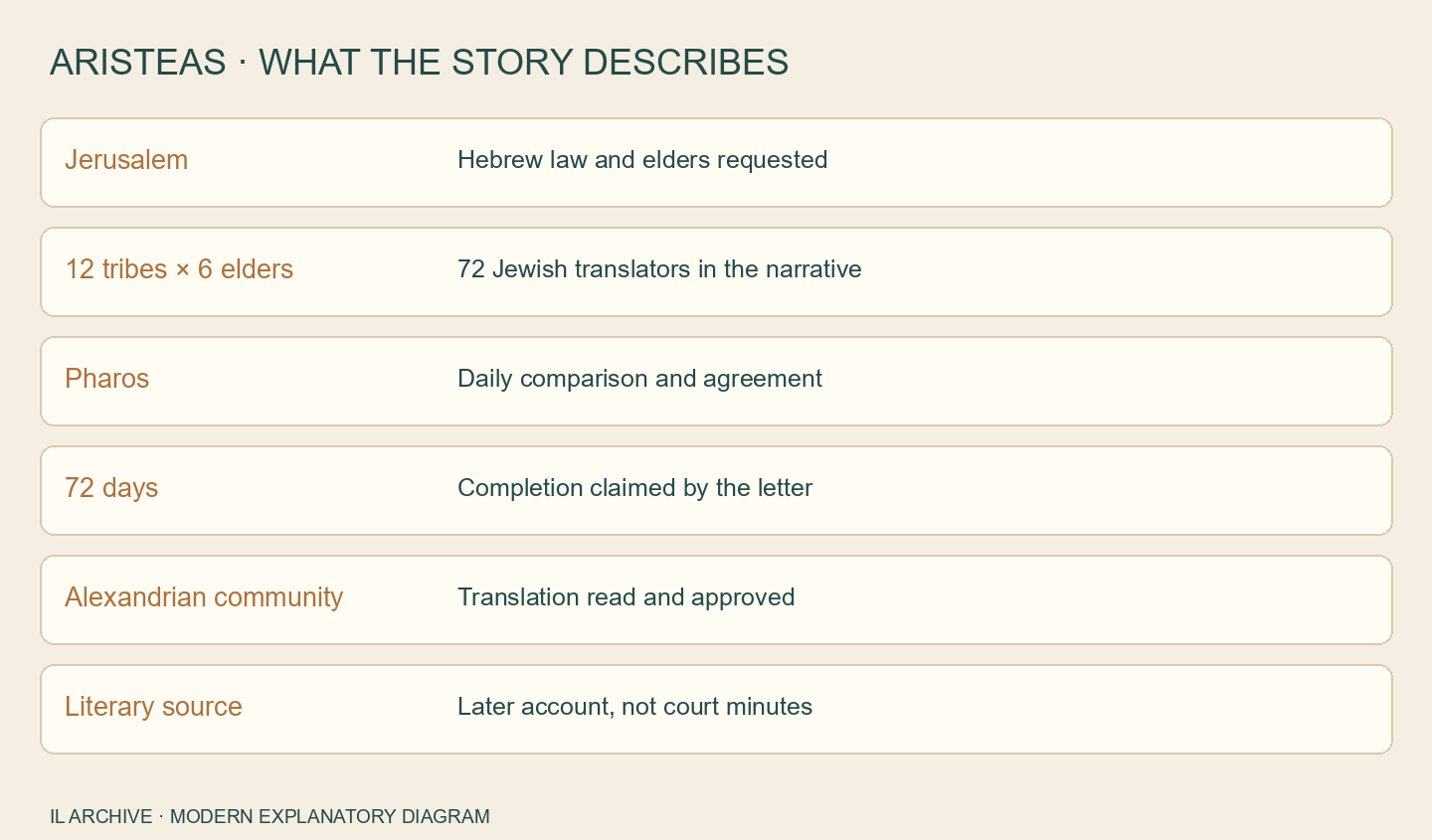
The earliest surviving detailed narrative of this episode does not say that. The Letter of AristeasLetter of AristeasHellenistic Jewish account, commonly dated to the second century BCE, of 72 elders translating Hebrew law in Egypt. Not contemporary minutes or a Torah-composition account.Glossary · Click to read the explanation describes law already available in Judaea, written in HebrewHebrewA Northwest Semitic language in the Canaanite group, with ancient and modern forms.Glossary · Click to read the explanation language and characters, with a copy supplied from JerusalemJerusalemJerusalem is a city of religious importance in Judaism, Christianity and IslamGlossary · Click to read the explanation. Its purpose is to obtain that law and translate it into Greek. It describes seventy-two Jewish elders, six from each tribe, rather than seventy Jews and seventy Greeks writing a new book.
This does not make Aristeas a reliable record of every event. The letter was written a century or more after its supposed setting, and later versions added further legendary details. A literary origin story can be historically problematic while still failing to support a claim that reverses what it actually says.[1][2]
Before Ptolemy II, there was Ptolemy I
After Alexander’s death in 323 BCE, his empire was divided among competing commanders. Ptolemy I Soter became the dominant ruler in Egypt, and Ptolemaic armies entered Syria and Palestine during the conflicts of the late fourth century BCE.
Ancient sources, including Josephus, preserve traditions about Jews moving to Egypt through captivity and voluntary migration. Aristeas tells a more specific story: Ptolemy II’s father brought large numbers of captives from Judaea, and his son liberated them before the translation project. The letter gives a figure of 100,000.
That figure belongs to the narrative’s portrayal of royal generosity. These witnesses do not supply an independent contemporary census confirming it. Traditions about captivity and migration must be distinguished from their numerical scale. Josephus, too, is a later witness, rather than a contemporary administrative register.
Wars, displacement and Jewish settlement in Egypt form a plausible historical background. Aristeas’ precise sequence and numbers remain claims to examine. The sources used here do not employ “the third Ptolemaic captivity” as a standard event comparable to the Assyrian or Babylonian exileBabylonian exileJudean deportations to Babylonia and the kingdom’s collapse in the early sixth century BCE; several phases, not everyone removed or returned at once.Glossary · Click to read the explanation; such a label needs a source defining it.[3][4]
Ptolemy II and Alexandria
Ptolemy II’s sole reign was approximately 282–246 BCE, following a period of co-rule with his father beginning around 285/284 BCE. Alexandria was a major cultural and political centre, and Greek played an important role in the public life of Egyptian Jews.
A Greek Torah is understandable in that setting: communities living in a Greek-speaking world needed access to their law in a language they could use. Scholars widely place the Greek translation of the Pentateuch in third-century BCE Egypt. This is a stronger historical conclusion than accepting every detail of the royal story.
We do not possess contemporary court minutes independently confirming the king’s personal order. The detailed narrative comes from another kind of source: the Letter of Aristeas.[5][6][21]
Aristeas was not a contemporary eyewitness letter
The text presents its narrator as a non-Jewish court official who witnessed events and joined the embassy to Jerusalem. Modern scholarship does not accept that identity at face value.
The author was probably an Alexandrian Jew. Most scholars place the letter in the second century BCE, with recent work favouring its latter part. It describes events supposedly occurring in the early third century, a century or more before its composition.
Two distinctions follow. Aristeas does not prove that everything happened as narrated. Yet we cannot change the narrative’s content and then cite it for a claim it never makes.[2]
What does the letter actually say?
Early in the story, Demetrius explains that the Jewish law is written in Hebrew characters and language and requires translation. The narrative proposes contacting the high priest in Jerusalem and obtaining experts in the law.
The letter attributed to Ptolemy explicitly requests translation from Hebrew into Greek. Eleazar is asked to select six elders from each tribe who can carry out the work, and Jerusalem supplies the law and its interpreters.
The source thus describes a text to be translated. It does not describe a commission to invent that text.[1]
Seventy-two Jews, not seventy Jews and seventy Greeks
Aristeas gives a precise narrative formula: twelve tribes, six elders from each, making seventy-two Jewish translators. The text lists their names and presents them as experts in the law and both languages.
Their ability to speak Greek does not make them a separate group of Greek authors. Demetrius of Phalerum has a coordinating role in the story; he is not the representative of seventy-two Greek translators matched against seventy-two Jews.
The traditional name “Seventy” abbreviates the seventy-two of this account; the wider symbolic significance of seventy may also matter. It does not introduce a second team.[1]
What happened on Pharos?
In Aristeas’ account, the king receives the scholars in Alexandria, after which they work in a quiet house on Pharos. This matters because later versions tell the episode differently.
Here, each translator is not placed in a separate room to write a book independently. They meet daily, compare their results and agree on wording, which is copied under Demetrius’ supervision. The narrative says the work takes seventy-two days.
The Greek text is then read to the Alexandrian Jewish community, which accepts it. Even within the literary story, this is collaborative translation rather than seventy-two authors independently composing a new Torah.[7]
Where did the separated translators come from?
They belong to later versions, but inspiration must be distinguished from explicit confinement in separate rooms.
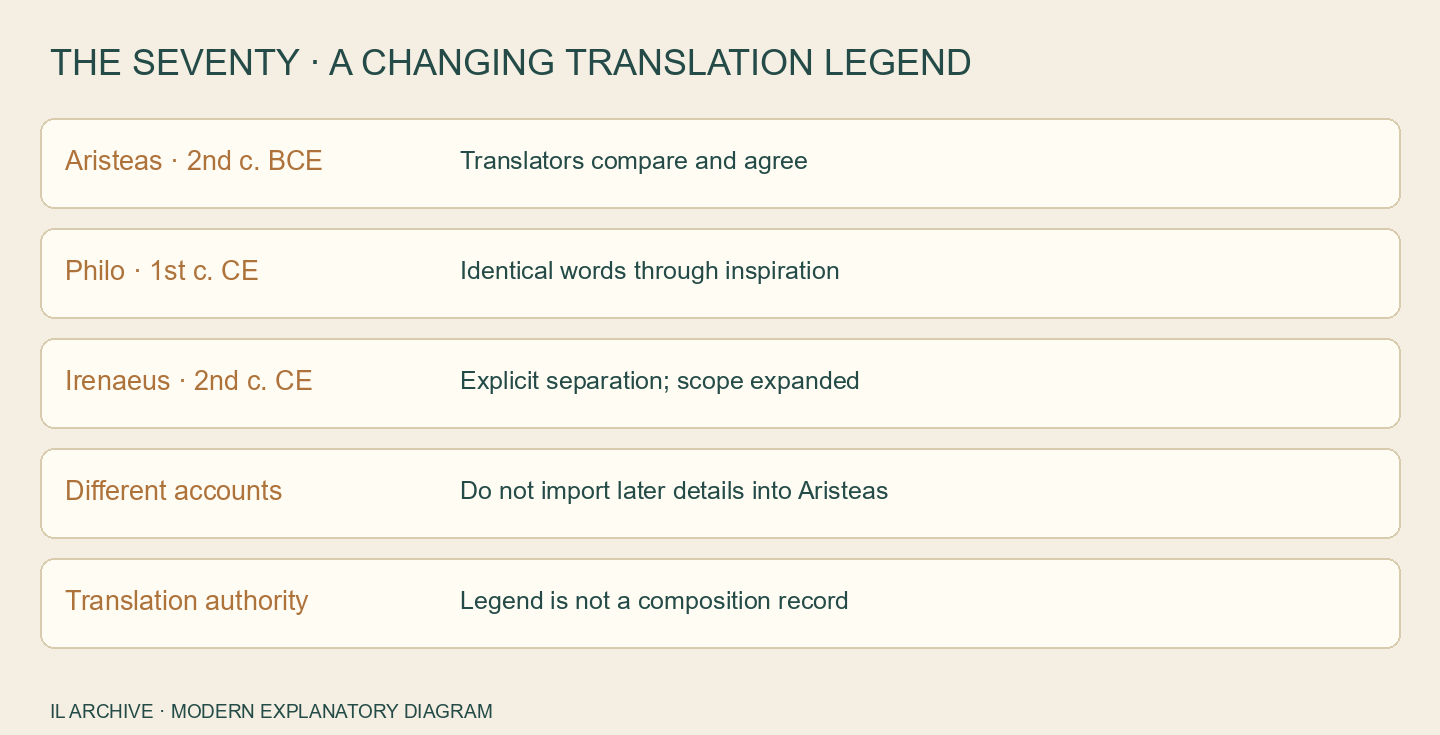
In Life of MosesMosesCentral figure in Exodus, Torah traditions and the Qur’an; childhood accounts differ in detail.Glossary · Click to read the explanation II.37–40, the Alexandrian Jewish author PhiloPhilo of AlexandriaFirst-century CE Alexandrian Jewish author. In Life of Moses he presents Greek translation as inspired; the passage does not explicitly assign a separate room to each translator.Glossary · Click to read the explanation describes translators employing identical nouns and verbs as if divinely inspired. This first-century CE passage does not explicitly say that each was locked in an individual room.
Explicit separation appears in later accounts. In the late second century CE, Irenaeus says the king separated translators to test them, yet their versions agreed. He broadens the story to the books and calls the ruler Ptolemy son of Lagus, showing that its details had changed.
Aristeas describes comparison and agreement; Philo emphasizes inspiration and verbal identity; later witnesses explicitly separate the translators. These layers cannot all be attributed to the earliest account. When a striking detail appears, we should ask which witness actually contains it.[8][9]
Does “Septuagint” mean the Torah or the whole Bible?
In later Christian usage, Septuagint commonly denotes a broader collection of Greek Old Testament books. The seventy-two translators’ origin story concerns the Torah: Genesis, Exodus, Leviticus, Numbers and Deuteronomy.
Other Hebrew biblical books were translated into Greek at different times by different translators. The broader collection was not all produced in a single session on Pharos.
This distinguishes the origin of the Greek Pentateuch from the later scope of the name Septuagint. The oldest detailed account does not say seventy-two scholars composed the entire Bible.[6]
The translation itself attests an earlier source text
We have evidence beyond Aristeas’ story: the Greek Torah itself. It bears repeated traces of Hebrew expressions, meanings, word order and translation choices. Its relationship to Hebrew witnesses is studied through language and textual comparison.
Textual critics therefore discuss the Hebrew source textHebrew VorlageHebrew text underlying a translation; may survive partly or be inferred, so reconstruction is not a discovered copy.Glossary · Click to read the explanation, or Vorlage, available to a translator. Differences between the Septuagint and the Masoretic textMasoretic TextA Hebrew textual transmission and reading tradition, compared in textual criticism with ancient manuscripts and translations.Glossary · Click to read the explanation can help reconstruct alternative Hebrew readings.
The central question is often which Hebrew form the translator used. A difference is not automatically evidence of an older Hebrew reading: it can also reflect translation technique, interpretation or developments within Greek transmission.
These observations oppose a model in which the Greek Torah was the original subsequently translated wholesale into Hebrew. They support Hebrew source texts for the Greek translation. They do not, by themselves, tell us how many years those texts had existed before translation.[10][11]
Was the pre-Ptolemaic Torah identical to today’s text?
That is a different question. Challenging a claim of Ptolemaic invention does not establish an unchanged Torah from Moses’ time, identical letter for letter to medieval Masoretic manuscripts.
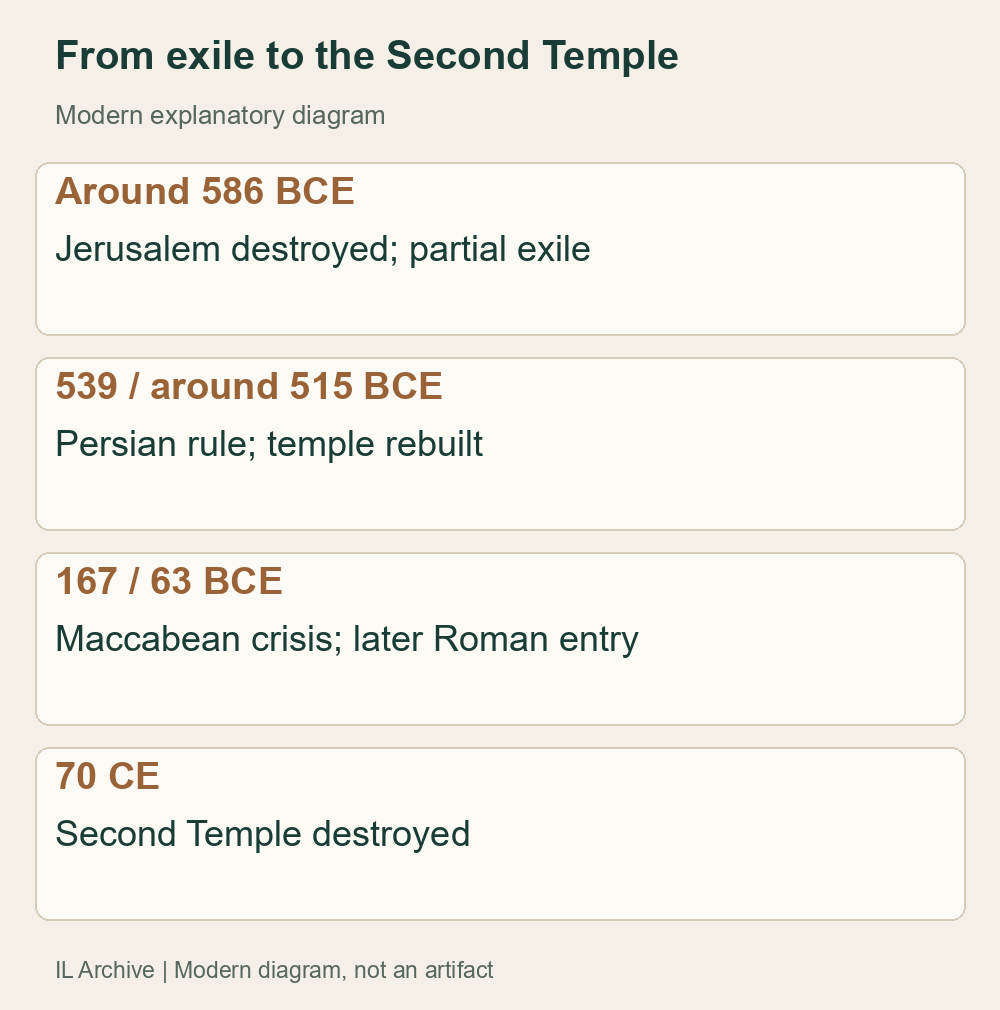
Critical scholarship examines inherited narratives, law, genealogies, priestly materials and successive editorial activity. Models differ on sources, dates and the relationship between composition and supplementation. Many assign major roles to the Babylonian and Persian periods, while dates for particular stages and possible later revisions remain disputed.
The claim that the Torah has a compositional history is therefore distinct from a claim that the entire work was first authored at Ptolemy II’s court. The latter requires independent evidence; a translation narrative does not supply it.[12][19]
What about evidence before the Ptolemies?
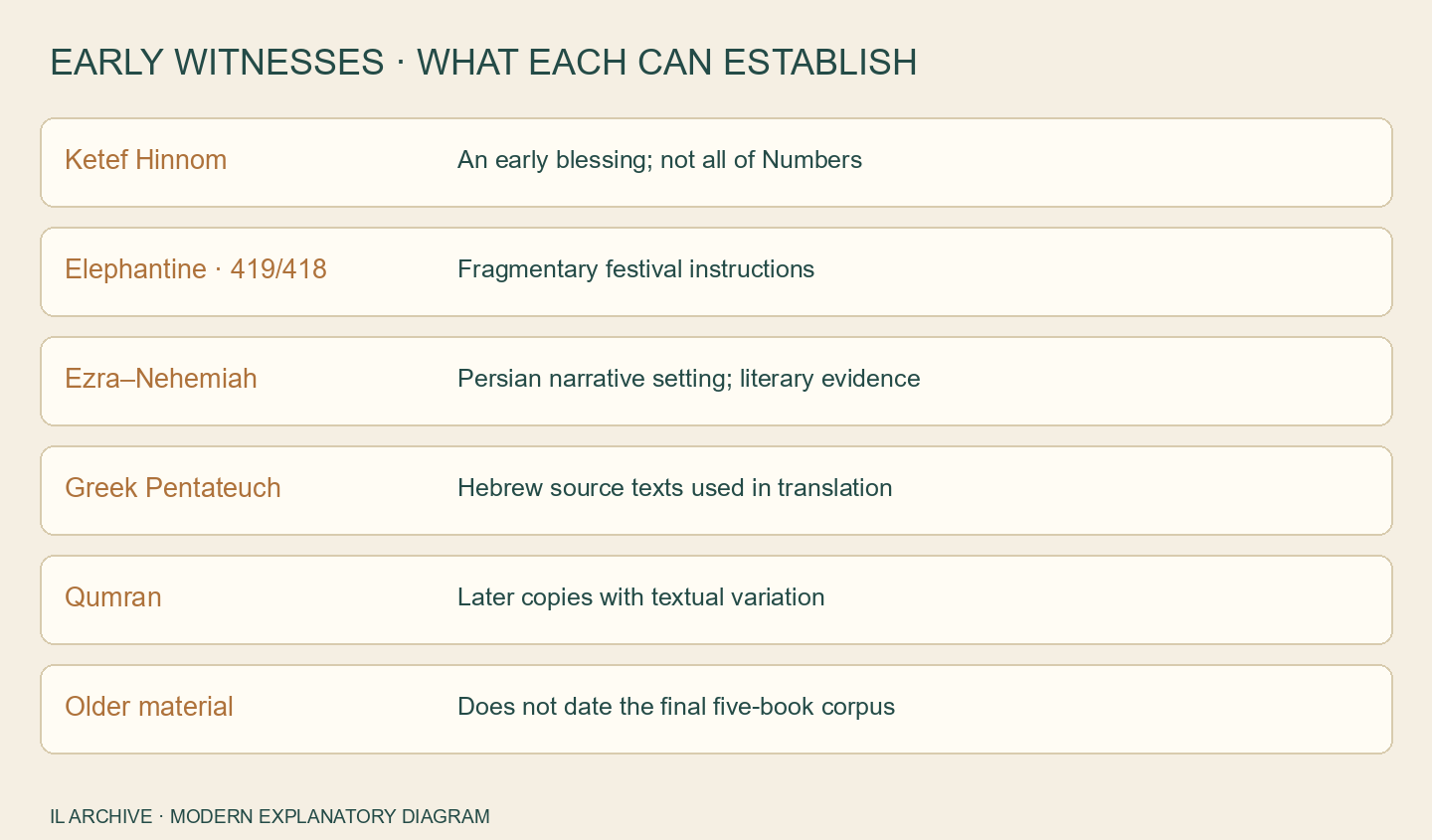
To test whether all Torah material began in the third century BCE, we must look beyond Aristeas. Earlier witnesses do not necessarily attest the five books in their final form, but they can establish that related wording, practices and traditions already circulated.
An important example comes from a burial site near Jerusalem; another from Persian-period Egypt. Their value depends on respecting what each actually preserves.[13][14]
Ketef Hinnom: a blessing centuries before Alexandria
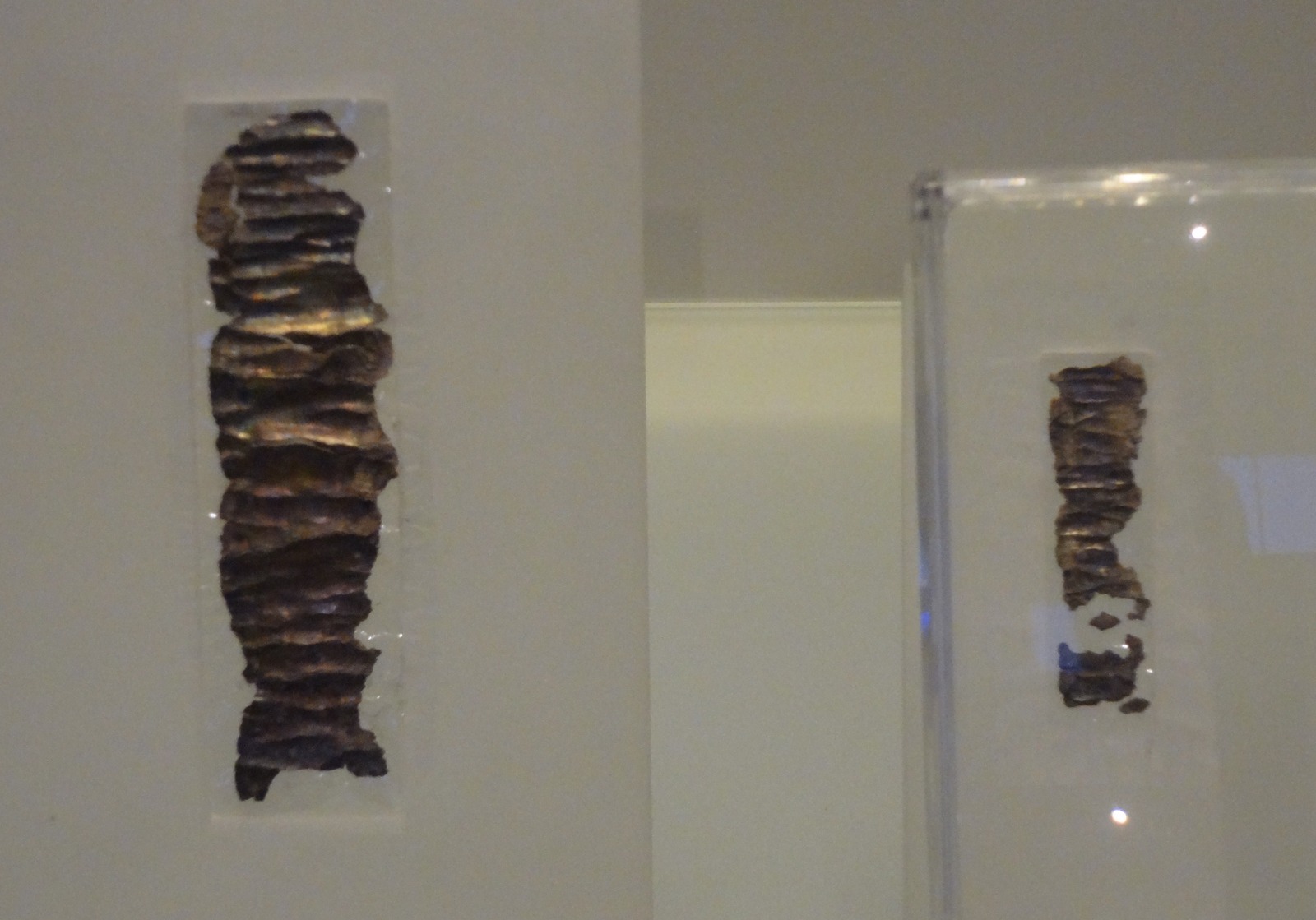
In 1979, two small inscribed silver amulets were discovered at Ketef HinnomKetef Hinnom amuletsTwo silver scroll amulets found in Jerusalem in1979, with wording related to Numbers6. Usually late seventh/early sixth century BCE; they do not date the whole book.Glossary · Click to read the explanation, southwest of Jerusalem’s Old City. The new imaging and evaluation published in 2004 supported a late seventh- or early sixth-century BCE date, roughly three centuries before Ptolemy II. This is a scholarly dating, not an exact year.
The inscriptions contain wording closely related to the priestly blessing in Numbers 6:24–26, including YHWHYahwehThe divine proper name written YHWH in the Hebrew Bible.Glossary · Click to read the explanation’s blessing and protection. The editors described them as very early witnesses to biblical wording and confessional language concerning YHWH. They are not the earliest occurrence of his name in any context.
The amulets do not prove that all of Numbers existed in its current form at that date. An older blessing could later have been incorporated into the book, and close wording does not settle the direction of dependence.
They do contradict an extreme assertion that this material was invented for the first time in third-century Alexandria. Older material, however, can still be used in a later compilation.[13]
Elephantine: religious instructions in the fifth century BCE
A Jewish community lived on ElephantineElephantine / YebIsland near Aswan at the Nile’s first cataract; Persian-period Aramaic papyri document a Jewish community and Yaho’s temple.Glossary · Click to read the explanation near Aswan in Persian-period Egypt and left dated AramaicAramaicA group of Northwest Semitic language varieties with a long history across the Near East.Glossary · Click to read the explanation documents. One fragmentary letter, often called the Passover LetterElephantine “Passover Letter”Fragmentary Aramaic letter, Berlin P.13464, dated 419/418 BCE, on Nisan dates and ritual instructions. “Passover” is restored in a lacuna; no complete Torah is attested.Glossary · Click to read the explanation, is dated to year five of Darius II, 419/418 BCE.
The name is modern. “Passover” itself and parts of the instructions are editorial restorations in missing portions. The museum project displays those restorations in brackets and notes current disagreement about the letter’s interpretation.
Surviving wording includes days fifteen and twenty-one of Nisan and instructions concerning purity and leaven, related to practices discussed in Torah legislation. This does not attest a complete, final five-book text in 419 BCE.
Elephantine makes the picture more complex. A separate petition of 407 BCE attests a YHW temple outside Jerusalem, its destruction and requests for rebuilding. This sits uneasily with a simple assumption that all communities uniformly followed the centralizing laws associated with Deuteronomy.
The documents attest pre-Ptolemaic practices and varied religious authority. They do not independently show that every law was known and observed, nor do they rule out a later literary collection incorporating earlier material.[14][15]
Ezra and the “book of the law of Moses”
Ezra–Nehemiah portrays Persian-period Judaea with a written law attributed to Moses. In Nehemiah 8, Ezra reads the book before the assembled community.
If we follow the narrative setting, this belongs to the fifth century BCE, well before Ptolemy II. But this is internal literary evidence. The dates of the text’s composition and editing, and the precise contents of the law book depicted, remain questions for research.
Nehemiah 8 cannot simply be equated with a manuscript identical to our current Torah. A tradition linking Mosaic written law with the Persian community is consistent with models assigning that period an important role, without providing independent proof of the full corpus at a particular date.[16][19]
The Samaritans further complicate the picture
The Samaritans’ central scripture is the Torah, in a particular form known as the Samaritan PentateuchSamaritan PentateuchSamaritan Hebrew five-book tradition sharing an older textual history, with linguistic and theological variants, including readings involving Mount Gerizim.Glossary · Click to read the explanation. A prominent religious difference concerns Mount Gerizim as the chosen sacred place, rather than Jerusalem.
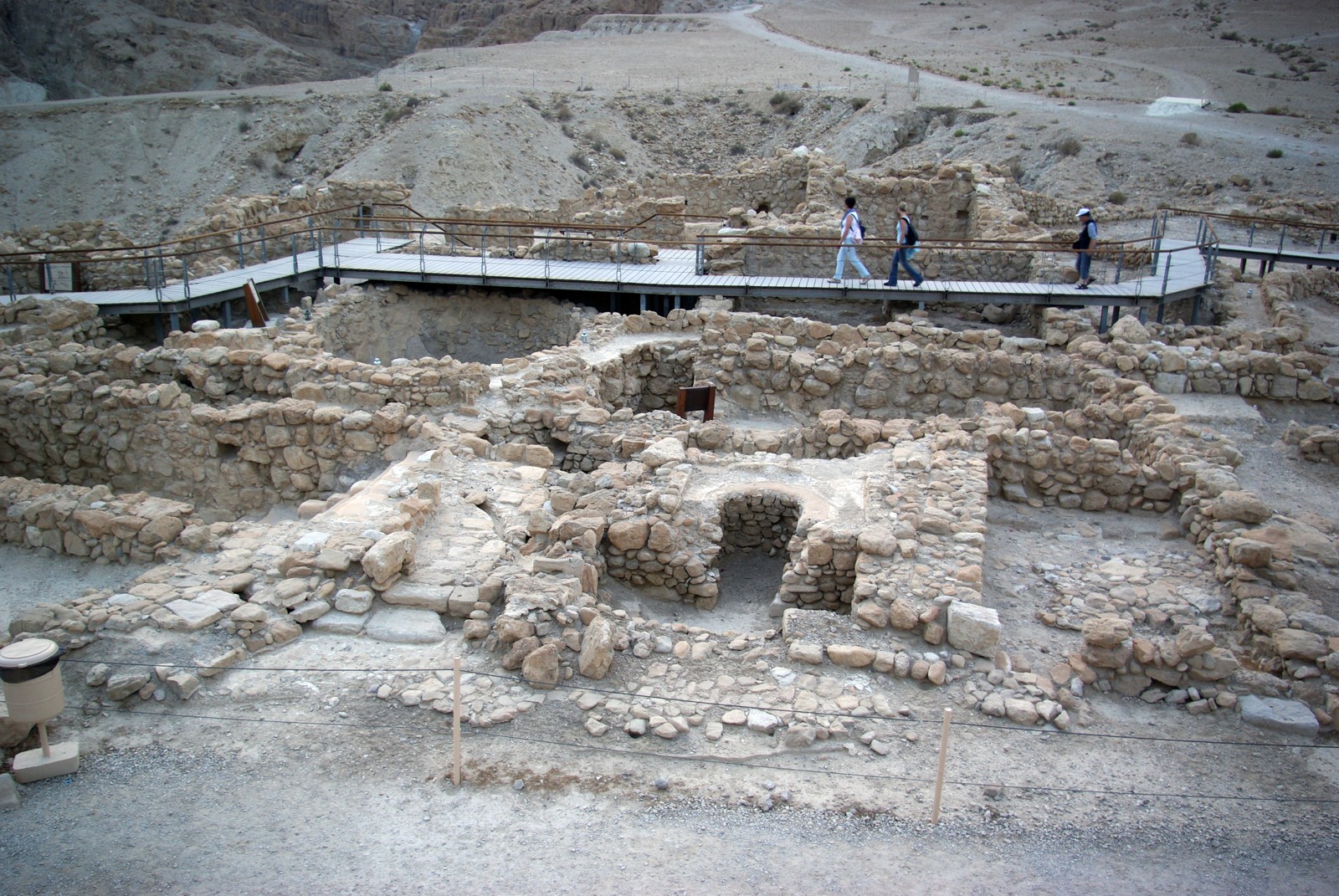
Jewish and Samaritan versions were not necessarily fixed from their beginnings. QumranDead Sea ScrollsJudaean Desert manuscripts, especially Qumran cave finds. Biblical copies and other works reveal textual diversity; a copy’s age is not the work’s initial date.Glossary · Click to read the explanation manuscripts preserve harmonizing features once associated chiefly with the Samaritan text, without necessarily carrying specifically Samaritan sectarian modifications. Scholars often call such forms pre-Samaritan.
This reveals overlapping Hebrew textual traditions rather than a single frozen copy. A corpus can be recognized, sacred and used while its wording varies among manuscripts and communities.[17]
Qumran: texts existed in multiple forms
Qumran manuscripts are broadly dated from the mid-third century BCE to the first century CE. The collection includes witnesses to all five books; its earliest fragment does not independently attest every book at the same date.
Some manuscripts resemble the later Masoretic text, some have harmonizing features associated with pre-Samaritan forms, and some correspond in places to Hebrew readings inferred behind Greek translations. These affinities are not always three neatly closed families.
Qumran transformed the study of textual plurality in the Second Temple periodSecond Temple JudaismDiverse Jewish traditions under Persian, Hellenistic and Roman rule, not one creed.Glossary · Click to read the explanation. Yet most surviving copies postdate Ptolemy II or are close to the end of his reign; they are not the principal independent proof that the full Torah preceded the proposed royal project.
Their great value is revealing varied Hebrew transmission and enabling comparison with Greek and Samaritan witnesses. This does not exclude every possible Greek influence, or automatically date the initial composition of each book.[18]
Could Ptolemy have commissioned a standardized version?
That possibility differs from inventing the Torah. Translation can require selecting among readings, resolving ambiguous expressions and deciding how to render existing wording.
Aristeas’ ending is concerned with accuracy and stability: the community approves the translation and prohibits additions, changes or omissions. That is the letter’s account of the Greek version’s authority, rather than independent evidence that all Hebrew copies were standardized by royal decree.
Editing an existing text, choosing a source for translation, stabilizing a version and creating a work from scratch are different processes. Even if translation helped establish a particular Greek form, it does not follow that translators first invented all its narratives and laws.[7]
Could parts of the Torah be Hellenistic?
Yes. Critical scholarship cannot assign a certain date to every verse. Scholars have proposed Hellenistic dates for materials or editorial stages, and some models date formation of the corpus itself considerably later.
Russell Gmirkin, for example, proposes composition around 270 BCE using Greek sources in the Library of Alexandria. Mentioning his model acknowledges a real scholarly argument; it does not demonstrate its correctness or represent it as the dominant position.
Such a model requires examination of literary comparisons and source dates. Aristeas does not establish it, because the letter describes translation of Hebrew law. Conversely, an older blessing or earlier legal practice does not logically disprove later compilation from pre-existing material.
The scholarly debate over Hellenistic composition must therefore be distinguished from the claim that seventy Jews and seventy Greeks jointly wrote the Torah. Aristeas does not support that claim. Nor is there a consensus that every passage was closed on one particular day in the Persian period. Possible late editing does not turn a translation story into a composition record.[19][20]
What probably happened in Alexandria?
The broad picture most consistent with mainstream reconstruction is a Greek translation of Hebrew Torah in third-century BCE Ptolemaic Egypt, serving a Greek-speaking Jewish community.
Was Ptolemy II personally responsible? Was the library the principal cause? Both belong to the later literary account and require more caution than the existence of the translation itself. The community’s need for scripture in Greek offers a reasonable historical explanation, without excluding possible royal involvement.
The full tableau of court, library, gifts and seventy-two days cannot be treated as a contemporary administrative report. The historical translation and its later legitimizing narrative are related but distinct questions.[6][2]
The story became a miracle
Aristeas describes seventy-two Jewish elders, an existing Hebrew law, collaborative work on Pharos and completion in seventy-two days. Philo, in the first century CE, emphasizes inspired verbal agreement.
Later Christian accounts, including Irenaeus, explicitly separate the translators and expand the story’s scope. The translation narrative becomes a way of asserting divine inspiration and authority.
Not every later detail is present in the oldest witness. Ordering the surviving accounts also does not prove precisely how each detail passed between them.[7][8][9]
What does the Ptolemy story establish?
The conclusions have different evidential strengths. Greek translation of the Pentateuch in third-century BCE Egypt is widely accepted in scholarship. A historical connection with Alexandria and the period of Ptolemy II is plausible, even though all the letter’s details cannot be accepted as contemporary evidence.
It is not independently established that the king ordered every act described, that exactly these seventy-two named men participated, or that completion took precisely seventy-two days.
And the source does not claim that they composed the Torah. It explicitly presents them as translating Hebrew law available before their arrival in Egypt.[1][2][6]
What about “seventy Jews and seventy Greeks”?
Aristeas does not support this formula. It describes seventy-two Jewish elders, six from each tribe, sent from Jerusalem by the high priest. There is no corresponding group of seventy or seventy-two Greek co-authors.
If a modern version adds that group, it requires another independent source. It cannot legitimately be attributed to Aristeas.[1]
The central conclusion
The problem with citing Aristeas for Ptolemaic composition is not recognition that the Torah has a long and complex history. It is substitution of a composition event for what the source actually describes as translation. Serious late-composition models must be assessed through their own evidence.
We have earlier wording related to the priestly blessing, fifth-century BCE ritualRitualAn organised or distinguished practice meaningful to a community; it may leave traces, but its form alone does not reveal an associated doctrine.Glossary · Click to read the explanation practices at Elephantine, and scholarly models assigning major compositional roles to the Persian period. We then have a Greek translation of Hebrew texts in the third century BCE.
This does not establish a Torah unchanged since Moses, or imply that all textual development ended before Alexander. Before translation, Hebrew texts were available; some materials and traditions have witnesses centuries older. These facts alone do not settle when the complete five-book corpus took shape.
The striking point remains that Aristeas, sometimes invoked for Alexandrian composition, describes something else. The king in its story requests law that the Jews already possess. Jerusalem is asked for a text and translators.[1][13][14][19][20]
References and notes
- Letter of Aristeas, §§9–11,35–50; English translation in R. H. Charles, ed., The Apocrypha and Pseudepigrapha of the Old Testament (1913). Selected sections on Hebrew law requested from Jerusalem, translation and six elders per tribe. The narrative is not contemporary court minutes. Return to the text ↑
- Max Leventhal (2022). Envisioning the Art of Empire in the Letter of Aristeas. The Cambridge Classical Journal 68, pp.164–180. doi:10.1017/S175027052200001X. Introduction and note 4: literary narrator, Alexandrian Jewish author and second-century BCE dating. Other sections not used to establish translation history. Return to the text ↑
- Josephus, Antiquities of the Jews XII.1; William Whiston translation, University of Chicago Penelope edition. XII.1 on captives, settlement and voluntary migration. Josephus attests a later tradition, not an independent contemporary census. Return to the text ↑
- Letter of Aristeas, §§12–27, on captives and their liberation. Claim of 100,000 captives and release within the narrative; not a documented census. Return to the text ↑
- University College London, Digital Egypt for Universities (2002). Ptolemy II Philadelphos. Entry gives sole reign 282–246 BCE and Alexandrian cultural context; it does not document a royal Torah-translation order. Return to the text ↑
- Oxford Bibliographies in Biblical Studies. Septuagint, Introduction. Open introduction: Pentateuch translated in Ptolemaic Egypt, likely Alexandria, mid/late third century BCE. Full entry not read. Return to the text ↑
- Letter of Aristeas, §§301–311, on Pharos, comparison, completion and communal approval. Collaborative comparison, 72 days, reading, approval and prohibition on changes, as claims of the letter. Return to the text ↑
- Philo of Alexandria, On the Life of Moses II.25–44; C. D. Yonge translation, CCEL. Especially II.37–40: inspired verbal agreement; no explicit separate room for each translator in this passage. Return to the text ↑
- Irenaeus of Lyons, Against Heresies III.21.2; Alexander Roberts and William Rambaut translation, New Advent. Explicit separation and identical translations with expanded scope; king called Ptolemy son of Lagus. Evidence of changing legend, not a historical correction. Return to the text ↑
- Jan Joosten (2013). Varieties of Greek in the Septuagint and the New Testament. The New Cambridge History of the Bible, pp.22–45. doi:10.1017/CBO9781139033671.005. Public summary on biblical Greek, Hebrew meanings and diversity; full chapter not read. Return to the text ↑
- Emanuel Tov (2015). The Text-Critical Use of the Septuagint in Biblical Research, 3rd ed. Eisenbrauns. Publisher description and contents on Hebrew-source reconstruction and variant evaluation. Full book not read; Greek readings are not automatically earlier. Return to the text ↑
- Joel S. Baden & Jeffrey Stackert (2021). Introduction: Convergences and Divergences in Contemporary Pentateuchal Research. The Oxford Handbook of the Pentateuch, pp. 1–19. Diverse approaches and scholarly agreement/disagreement. Publisher abstract only; full chapter not read. Return to the text ↑
- Gabriel Barkay, Marilyn J. Lundberg, Andrew G. Vaughn & Bruce Zuckerman (2004). The Amulets from Ketef Hinnom: A New Edition and Evaluation. BASOR 334, pp. 41–71. doi:10.2307/4150106. Abstract: image rereading, late preexilic dating and protective amulet function. Does not date the entire book of Numbers. Return to the text ↑
- ERC Elephantine Project, Staatliche Museen zu Berlin. Pap. Berlin P.13464, TAD A4.1 / Cowley 21. Object metadata and edited translation with restoration brackets; 419/418 BCE. Passover is restored, interpretation disputed. Restricted image licence not used for a purported papyrus photograph. Return to the text ↑
- ERC Elephantine Project, Staatliche Museen zu Berlin. Pap. Berlin P.13495, TAD A4.7. 407 BCE petition, especially R6–14 and V6–13: YHW temple, rebuilding request, Jerusalem and Samaria contacts. Return to the text ↑
- Hebrew Bible, Nehemiah 8:1–8,13–18; Mechon-Mamre. Ezra’s reading, interpretation and booths festival. Persian setting is narrative time, not independent dating of the book’s composition. Return to the text ↑
- Ingrid Hjelm (2020). The Samaritan and Jewish Versions of the Pentateuch: A Survey. Religions 11(2), 85. doi:10.3390/rel11020085. University abstract: Samaritan five-book Bible, shared tradition, textual/theological variants and cult place. Full article not read. Return to the text ↑
- Ronald S. Hendel (2011). Assessing the Text-Critical Theories of the Hebrew Bible after Qumran. The Oxford Handbook of the Dead Sea Scrolls, pp. 281–302. General mid-third-century BCE to first-century CE dating and relationships among Exodus witnesses. Publisher abstract only; full chapter not read. Return to the text ↑
- Reinhard Müller (2021). Positions on Redaction. The Oxford Handbook of the Pentateuch, pp. 237–254. Redactional theories, compositional models and Persian/Hellenistic witnesses. Publisher abstract only; full chapter not read. Return to the text ↑
- Russell E. Gmirkin (2017). Plato and the Creation of the Hebrew Bible. Routledge. Publisher description states a c.270 BCE Alexandrian composition model using Greek sources. Description only; records a competing proposal without endorsing unread arguments. Return to the text ↑
- The Metropolitan Museum of Art. Gold oktadrachm of Ptolemy II Philadelphos, 30.115.23 / object 253074. Alexandria c.261–246 BCE; portrait of Arsinoe II. Museum identity, date and rights; not translation evidence. Return to the text ↑
Suggest a correction · Suggest a source for this record
Cite this record
IL Archive, «Ptolemy II and the Seventy: Was the Torah Composed in Alexandria?», Edition 1, https://ilarchive.com/en/studies/ptolemy-seventy
Continue reading
![Gold coin of Ptolemy II, Alexandria, ca. 261–246 BCE; the illustrated obverse bears Arsinoe II’s head. Context for Hellenistic Egypt, not a portrait of Philo or proof of a Torah translation commission. [24]](/media/1436)